Torquay
United
Formed 1899
Elected to Division Three (South) 1927. Relegated to the Conference 2007.
Promoted to League Two 2009. Relegated to the Conference 2014.
Kit History
Torquay United
1899-1910
Merged with Ellacombe in 1910 to form Torquay Town
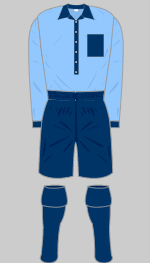
1901-1902 a p
Torquay Town
1910-1921
Merged with Babbacombe in 1921 to form Torquay United
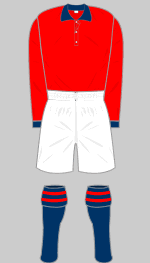
1910-1911 a
Babbacombe
1903-1921
Merged with Torquay Town in 1921 to form Torquay United
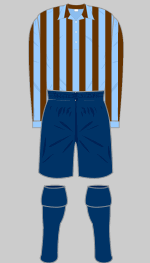
1904-1910 a
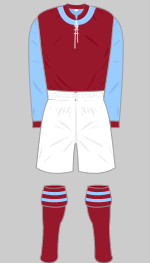
1910-1911 a
Torquay United
1921
Formed by the merger of Torquay Town and Babbacombe
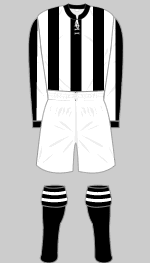
1921-1929 a
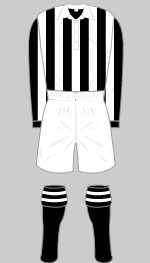
1931-1933 a
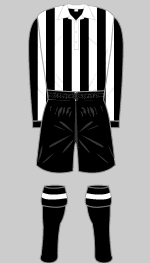
1933-1934 a
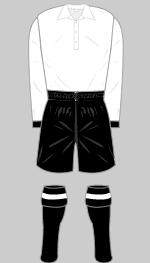
1934-1935 a
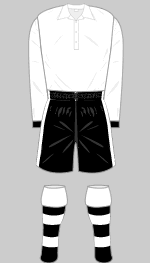
1938-1939 a
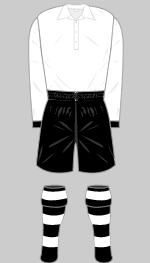
1947-1948 a
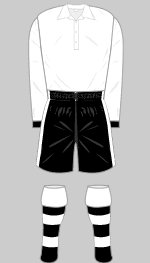
1949-1950 a
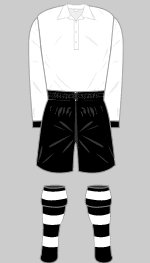
1950-1954 a
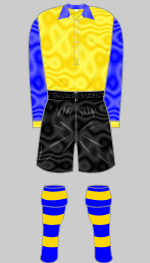
1954-1955 a
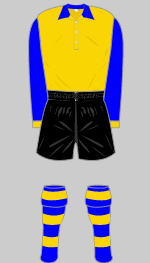
1956-1959 a
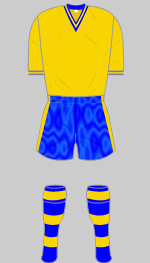
1959-1963 a p
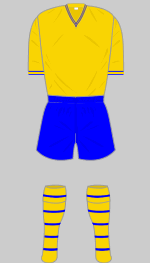
1963-1964 u
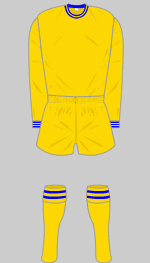
1964-1965 a
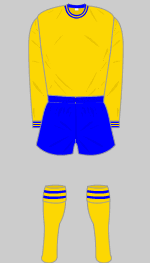
1965-1966 a
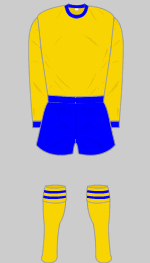
1966-1967 b
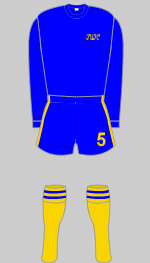
1967-1968 a u
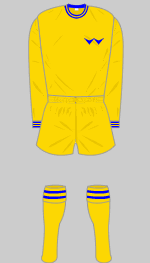
1968-1969 a

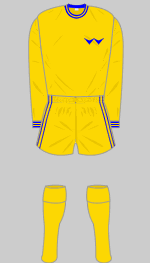
1969-1970 a
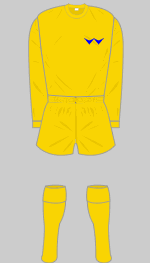
1970-1971 a m
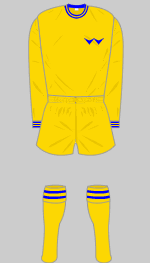
1971-1972 c n
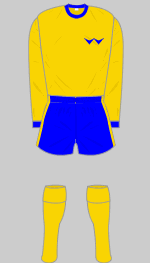
1972-1973 a
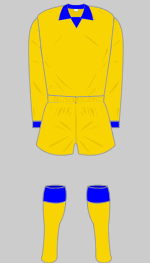
1973-1974 i n
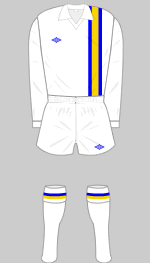
1974-1977 i n o r
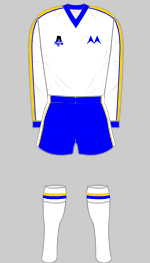
1977-1978 i n
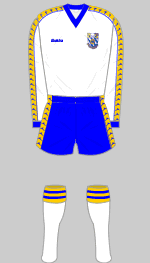
1978-1980 a i n
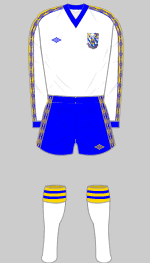
1980-1981 a i n
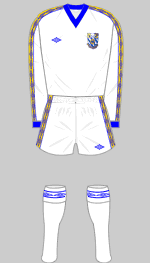
1981-1982 i
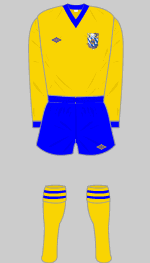
1982-1983 i j
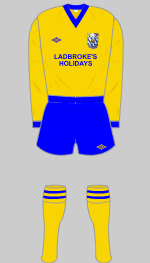
1983-1984 i
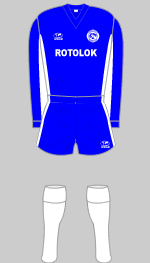
1984-1986 a h i
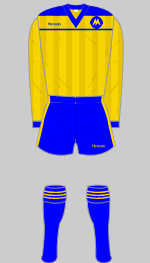
1986-1987 a f h i j
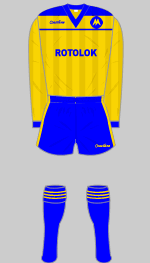
1987-1988 i
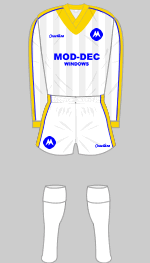
1988-1989 i s
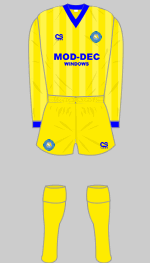
1989-1990 a h i t
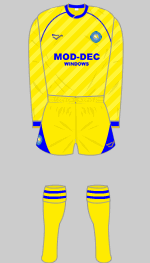
1990-1991 i k
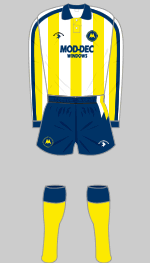
1991-1993 a k t
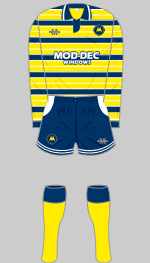
1993-1995 b i k t
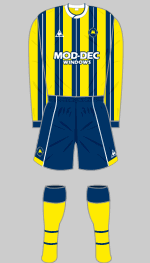
1995-1997 b k t
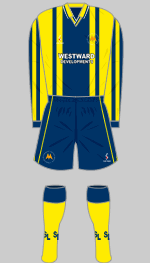
1997-1999 b t
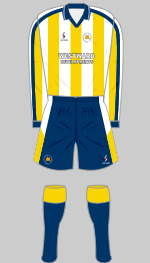
1999-2000 b k
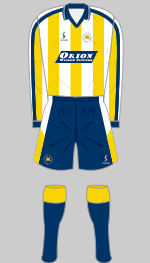
2000-2001 b k t
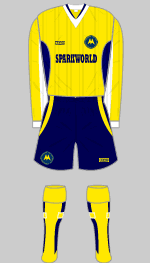
2001-2002 b g i
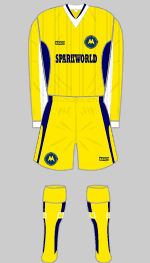
2002-2003 b i
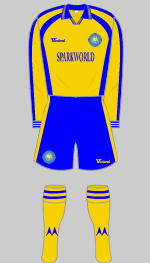
2003-2005 e
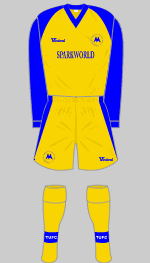
2005-2007 e
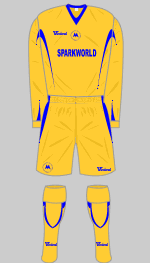
2007-2008 l
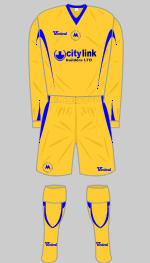
2008-2009 l
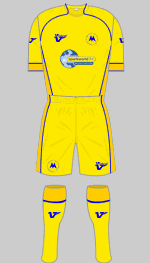
2009-2011 l
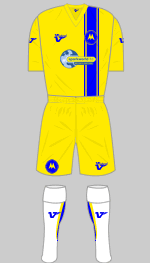
2011-2012 l
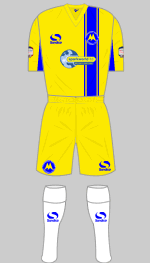
2012-2013 l q
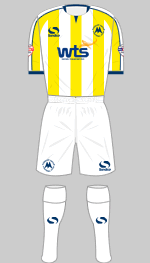
2013-2014 l
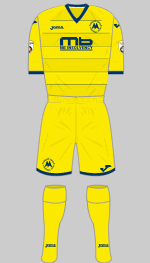
Aug-Nov 2014 l
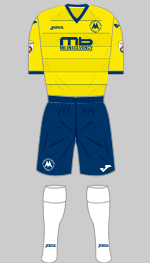
Nov 2014-2015 i l
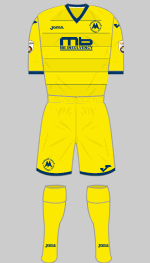
2015-2016 l
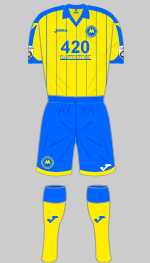
2016-2017 l
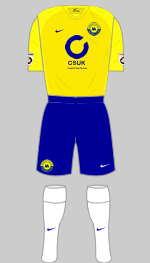
2017-2018 l
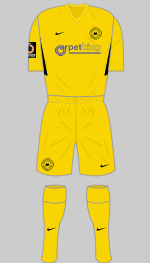
2018-2019 l
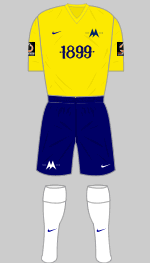
2019-2020 i
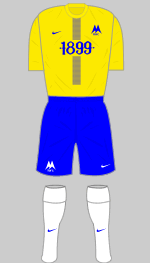
2020-2021 i
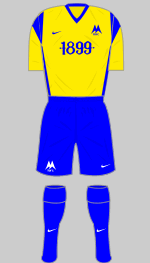
2021-2022 i
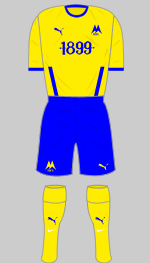
2022-2023 i
Background
 Torquay United was formed by
a group of young men under the guidance of Sergeant-Major Edward Tomney.
A year later the club joined the East Devon League playing their home
games at the Recreation Ground. In 1904, Torquay Athletic RFC took over
the lease of this ground after leaving their previous home at Plainmoor,
which was taken over by Ellacombe FC. United were effectively homeless
and for several years led a nomadic existence before United and Ellacombe
merged in 1910 to become Torquay Town. The club shared Plainmoor with
Babbacombe FC: these two clubs finally merged in 1921 when the club became
known once more as Torquay United.
Torquay United was formed by
a group of young men under the guidance of Sergeant-Major Edward Tomney.
A year later the club joined the East Devon League playing their home
games at the Recreation Ground. In 1904, Torquay Athletic RFC took over
the lease of this ground after leaving their previous home at Plainmoor,
which was taken over by Ellacombe FC. United were effectively homeless
and for several years led a nomadic existence before United and Ellacombe
merged in 1910 to become Torquay Town. The club shared Plainmoor with
Babbacombe FC: these two clubs finally merged in 1921 when the club became
known once more as Torquay United.
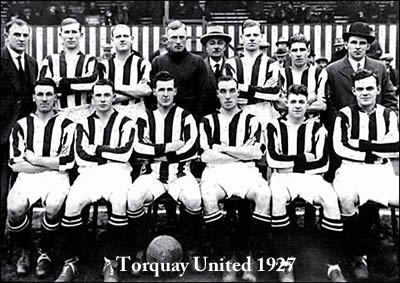
The new club joined the Western League and rather audaciously applied to join the Football League. United received no votes at all but neighbours Boscombe did gain entry in 1924. Fortune favoured Torquay three years later when they were elected at the expense of Aberdare Athletic. Their first season proved disastrous and Torquay had to apply for re-election, surviving the vote comfortably. The "Magpies" as they were then known because of their black and white striped shirts, had an uninspired record and never finished higher than tenth in the period between the wars. Things did not improve until after the Second World War when they managed to finish fifth in 1950. In 1954 the club adopted a new gold and blue strip, supposedly evocative of the golden sands and blue skies of the resort. The Magpies became The Gulls. The shirts and shorts were manufactured from a new synthetic material that resembled silk and they must have cut quite a dash in this dour period.
Runners up in 1957 (only the champions were promoted
at that time), in 1958 they finished third from bottom and went into the
new Fourth Division. In 1960 they won promotion and even though they lasted
only two 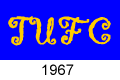 season at the higher level it was the first taste of success
for this modest club.
season at the higher level it was the first taste of success
for this modest club.
In 1966 they went up again only to fall back into
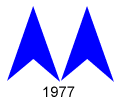
Division Four in 1972. In 1967-68, Torquay switched to wearing predominantly blue and a crest appeared 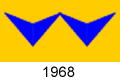 for the first time in the form of a horizontal cypher in 1967 although this was absent for part of the season. This was replaced the following season when all-gold was reinstated with an enigmatic design in the form of two blue chevrons, an abstract representation of flying seagulls. This rather odd design became closely identified with the team and has featured on their shirts ever since, apart from a brief period in the Eighties.
 The next 19 years were spent firmly anchored in
the lower reaches of the Fourth Division.
The next 19 years were spent firmly anchored in
the lower reaches of the Fourth Division. 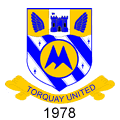 During the Seventies, Torquay wore white shirts trimmed in blue and gold and in 1977-78 the gull-wings were inverted. These were replaced the following season by a traditional crest.
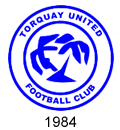
Former Chelsea player Dave Webb, appointed as manager in 1984, introduced an all-blue kit with white stockings and a new logo featuring palm trees. Forced to apply for re-election in 1985 and 1986, United were perhaps fortunate to retain their League place and parted company with Webb and ditched the Chelsea clone kit.
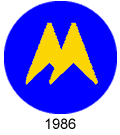
 The crest design introduced after Webb's departure in 1986 reinstated the gull-wings.
 From 1986-87
automatic relegation to the Conference was introduced and the system of re-election dropped. After
a disastrous campaign, Torquay needed at least a point from their final
game at home to Crewe to stand a chance of staying up. Trailing 0-2 with
seven minutes left, the Gulls' captain, Jim McNicholl was bitten by a
police dog who thought he was about to attack his handler as he attempted
to clear the ball. As McNicholl was being treated news came through that
Lincoln City were losing, which meant a draw would keep Torquay in the
League. In the third minute of injury time, with
From 1986-87
automatic relegation to the Conference was introduced and the system of re-election dropped. After
a disastrous campaign, Torquay needed at least a point from their final
game at home to Crewe to stand a chance of staying up. Trailing 0-2 with
seven minutes left, the Gulls' captain, Jim McNicholl was bitten by a
police dog who thought he was about to attack his handler as he attempted
to clear the ball. As McNicholl was being treated news came through that
Lincoln City were losing, which meant a draw would keep Torquay in the
League. In the third minute of injury time, with  all other results confirmed,
Torquay equalised and it was Lincoln City who went down.
all other results confirmed,
Torquay equalised and it was Lincoln City who went down.
The following season brought a marked improvement and the club reached the play-offs. In 1991 they went one better by beating Blackpool at Wembley in a penalty shoot-out to win the play offs and return to Division Three. Success was short lived - they were relegated the following season to the new Barclays Division Three (the old Fourth Division). In 1996 Torquay finished bottom of the League but were reprieved because the ground of Conference champions Stevenage Borough did not meet League standards. During the Nineties the club wore a variety of exotic variations on their gold and blue theme but it was with a relatively plain strip that promotion was again achieved in 2004 to take the club into what would become League One (the old Third Division).
The Gulls could not sustain themselves at this
level and soon returned to League Two (fourth tier). Worse was to follow
and, having finished in last place in 2007, Torquay lost their Football
League place after 80  years.
Two seasons later, the Gulls beat Cambridge United in the Conference play-off final and returned to the Football League but in 2014 they were back in the Conference. The team wore all-yellow as first choice during the first part of the 2014-15 season but, according to the local Torquay Herald Express, faced a fine because this was not their registered  kit. In November, the club's Chief Executive, Andrew Candy, confirmed that the team would wear navy shorts and white socks with their yellow shirts for the rest of the season. The all-yellow outfit was properly registered as first choice the following season.
One year after the club badge was updated came a more thorough redesign. While the  main elements remained, the new version featured more yellow and a darker shade of blue. The placing of the yellow above the blue was no doubt intended to evoke the original idea behind the decision to adopt these colours to evoke the resort's sand and sea.
 For 2018-19, when the team were languishing in the National League South, the club revived their all-gold look but controversially, they replaced the traditional blue trimmings with black ones, causing something of a furore on fan message boards. The crest was once
  again revised in the new colour scheme.
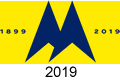
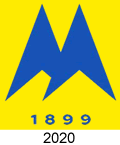
Torquay finished the season as champions and were promoted back into the National League for the 2019-2020 season which happened to coincide with their 120th anniversary. To mark the occasion, blue was restored to their first strip and a very elegant, modernist crest was designed that was well suited to the minimalist strips commissioned from Nike. The date of their formation in an attractive antique font replaced the sponsorship on the front of their shirts.
Sources
- (a) Torquay United FC - Images of Sport (Mike Holgate 1999)
- (b) empics
- (c) Football Cards
- (d) kitclassics
- (e) Torquay United Picture Website
- (f) Swindon Town FC - Images of Sport (Richard Mattick 2000)
- (g) Neil Armstrong
- (h) Ralph Pomeroy
- (i) Steven Badcott
- (j) Pete's Picture Palace
- (k) David King
- (l) Torquay United Official site
- (m) Football League Review
- (n) Alick Milne
- (o) Christopher Worrall
- (p) Keith Ellis
- (q) Chris Connolly
- (r) Greger Lindberg
- (s) David King
- (t) Old Football Shirts
- (u) Michael Gluck
Crests are the property of Torquay United FC.