Scotland
1872 - 1939
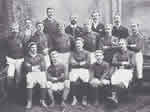 In 1867 Queen's Park FC was formed, the first association football club in Scotland. By playing exhibition matches throughout the country, Queen's Park were responsible for popularising what would become Scotland's national sport. In 1872 the club organised what is now recognised as the first international football match against England. The Scottish Football Association was formed the following year. Although Scotland wore navy blue jerseys in that first game it took some time before these became the regular first choice and a number of other combinations were tried before the First World War.
Sources:
- Glen Isherwood
- England Online
- empics
- Simon Monks
- John Small
- Clive Nicholson
- Chris Worrall
- History of Queen's Park FC 1867-1917 (Richard Robinson 1920)
- Darren Foss
- Keith Ellis

.gif)
 1872-1900
1872
1873-1875
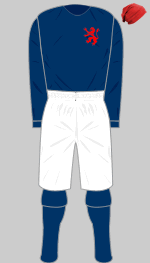
"Dark" stockings recorded
1876
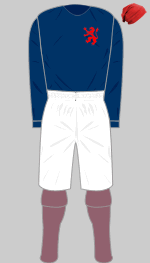
Players wore distinctive socks - see notes
1879

1880
1881
11 March 1882
v England
25 March 1882
v Wales
1883-1889

1890
1891
1892
1893
1894
1895-1896
1897
1898
1899
1899 v Ireland
Designer:
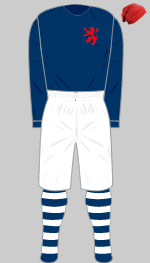
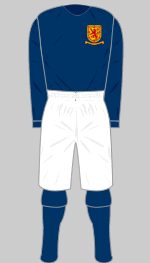
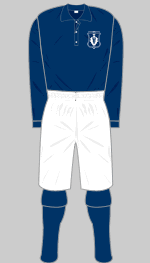
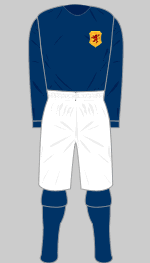
On 30 November 1872 the world's first international association football match was played at Hamilton Crescent in Partick, Glasgow, home of the West of Scotland Cricket Club. The Scottish selectors (Queen's Park's goalkeeper and captain) had hoped to include Lord Kinnaird (The Wanderers) and Henry Renny-Taylour (Royal Engineers) but neither was available so it was effectively the Queen's Park first team that turned out for Scotland while the English team comprised players from nine different teams. The Scottish players wore their navy blue club shirts with the addition of a lion rampant crest, club socks and red cowls. Some time later players wore distinctive stockings and in 1876 the SFA issued a card to spectators so they could identify them. (The heather coloured socks shown above were sported by TC Highet of Queen's Park.) It is unclear when the red cowls were dropped although they are absent in an engraving of the 1879 team.
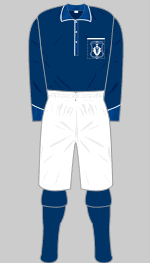
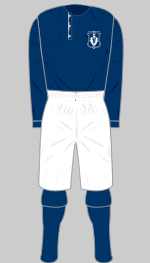
According to the Glasgow Herald (March 3 1873) the lion rampant crest was white in 1873 but the Sheffield Independent (March 8 1875) records the badge as being red. It is unclear what colour the lion was after that at least until 1881. Throughout the rest of the decade the crest was a red lion rampant on a gold shield with the match details embroidered in dark blue around the circumference.
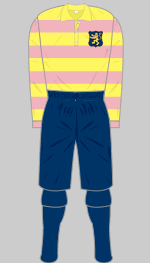
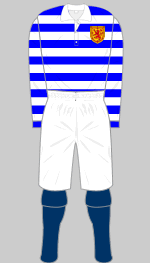
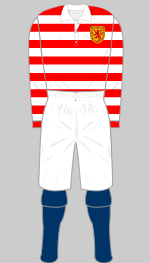
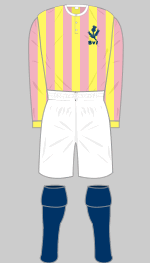
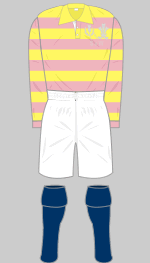
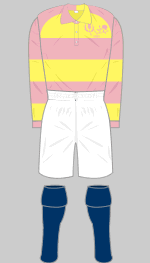
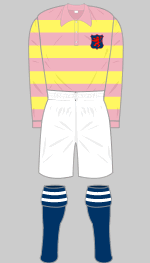
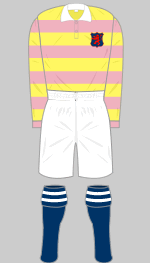
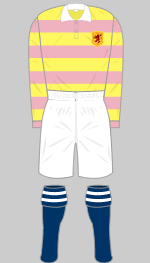
Navy and white would eventually become Scotland's established colours but not before other combinations were tried. In 1881 the team turned out in the primrose yellow and rose pink racing colours of Archibald Primrose, the 5th Earl of Rosebery, an important Scottish Liberal peer and devotee of the turf who became one of the Scottish FA's early patrons. The following year the team played England in March wearing the blue and white hoops of rugby team Edinburgh Academicals with the addition of a gold lion rampant crest. However, they wore red and white jerseys against Wales at Hampden later that month.
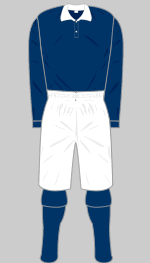
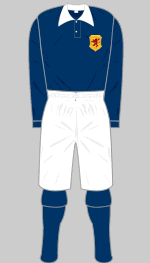
Navy tops were restored in 1883, when the British Home Championship was inaugurated.
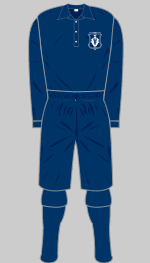
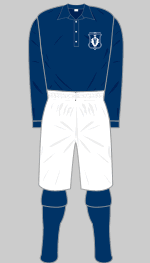
The SFA supplied the team shirts but players provided their own knickers and hose: although white knickers were the norm, some players turned out in black or navy until at least 1892.
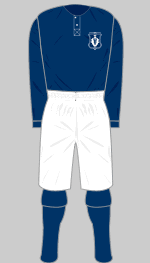
The lion crest was replaced between 1893 (possibly earlier) and 1898 with a thistle, a motif usually associated with Scottish rugby.
In 2002 a shirt in Lord Roseberry's colours was sold at auction by Bonhams. Worn by Nick Smith, it was worn in a match against Ireland in 1899, 1900 or 1901 and may be a change shirt.
 1900-1914
1901
9 Feb v Wales
1901
23 Feb v Ireland
1901
9 March v England
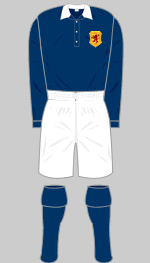
1902-1904
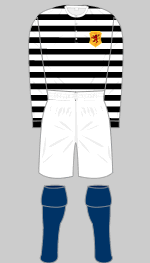
1902 Change
v Ireland 1 March
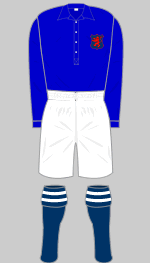
1905
v Wales 6 March
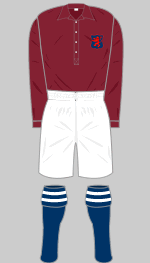
1905
v Ireland 18 March
1905
v England 1 April
1906
1908
1910-1914
1914 Change
v Ireland
Designer:
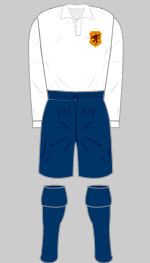
In 1900 Earl Rosebery's distinctive colours were reinstated as first choice and Scottish thistle was worn. Against England in 1901 this was embroidered next to the English rose and it is possible that other national emblems were added in the games against Wales and Ireland. Navy blue and white was reinstated between 1901 and 1904 (change shirts being worn when playing Ireland in Belfast) and then the Scottish team played in yellow and pink until 1909. Rosebery's colours were then retired until after the Second World War. The lion rampant crest worn for most of this period had the initials of the teams involved at the top of the crest and the year printed below the lion.
Although players still provided their own knickers and socks, white knickers were now compulsory.
The Scotland v England match played at Ibrox Park in 1902 was marred by the death of 26 spectators when a section of terracing collapsed. The match was suspended for 20 minutes, with most spectators unaware of the tragedy and was later declared void.
1920-1939
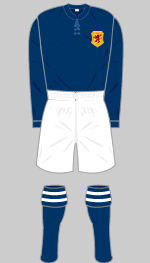
1920-1921
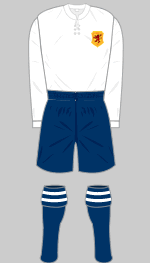
1920-1921 Change
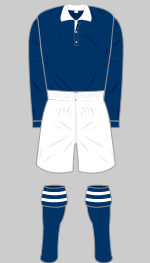
1921
v Wales 12 Feb
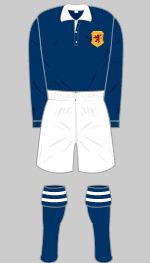
1922-1935
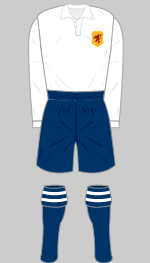
1922-1931 Change
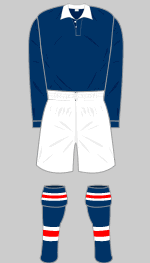
1935
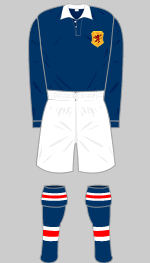
1936
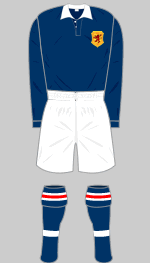
1937-1939
Designer:
In February 1920 international football resumed after the hiatus of the Great War with the resumption of the British Championship. In common with the other British associations, the Scottish FA decided to boycott FIFA, and so missed the World Cup competitions of 1930 and 1934. Scotland played their first matches against non-British teams when they toured Norway, Germany and the Netherlands in May/June 1929. Thereafter they played regular friendly matches against European opposition until the outbreak of the Second World war in 1939.
Once Ireland switched from blue to green shirts in 1931 Scotland did not require change shirts. On the three occasions that they played teams wearing blue (France 1930, 1932 and Italy 1931) the opposition changed.
Home Nations Index Page :
1946-1960 >
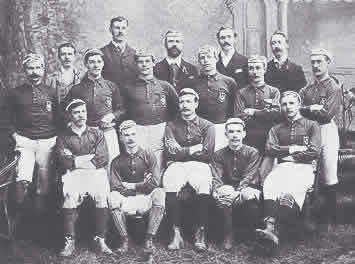 In 1867 Queen's Park FC was formed, the first association football club in Scotland. By playing exhibition matches throughout the country, Queen's Park were responsible for popularising what would become Scotland's national sport. In 1872 the club organised what is now recognised as the first international football match against England. The Scottish Football Association was formed the following year. Although Scotland wore navy blue jerseys in that first game it took some time before these became the regular first choice and a number of other combinations were tried before the First World War.