
York
City
Formed 1922
Elected to Division Three (North) 1930. Relegated to the Conference 2004.
Promoted to League Two 2012
Relegated to the National League 2016
Kit History
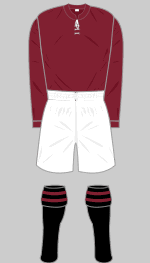
1922-1923 a
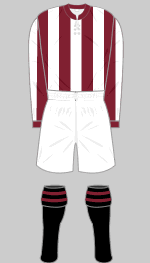
1924-1927 a
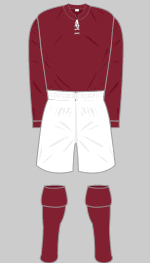
1929-1930 a
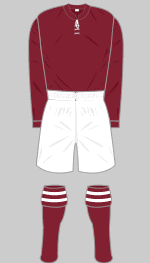
1932-1933 a
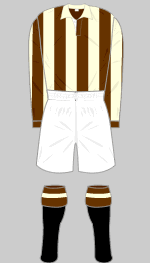
1933-1937 a,e
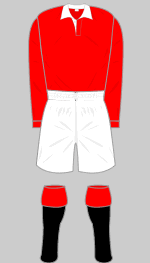
1937-1938 a q

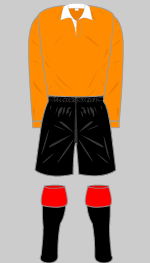
12 Feb 1938 y
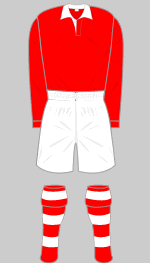
1941-1943 a
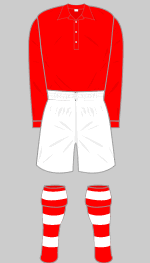
1947-1948 a
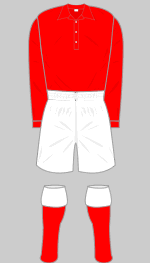
January 1948 a
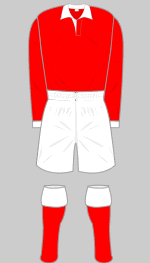
1948-1950 a
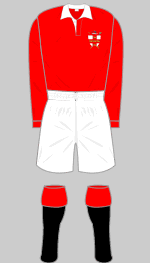
1950-1951 a
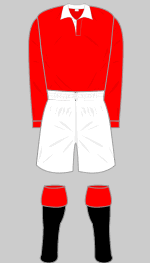
1951-1956 a
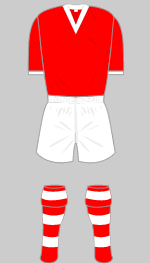
1956-1957 n
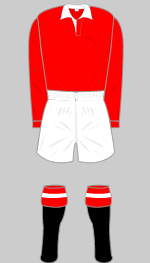
1957-1959 a
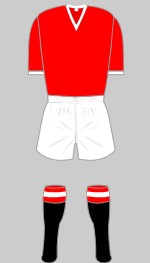
1959-1964 a
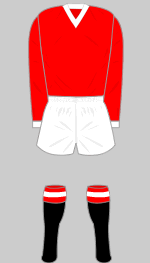
1964-1965 x
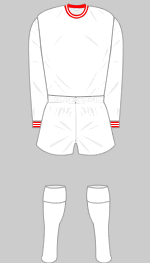
1967-1969 a
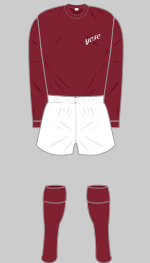
1969-1972 a b
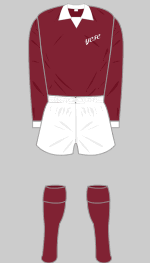
1972-1973 a

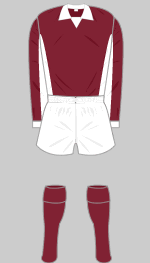
1973-1974 a
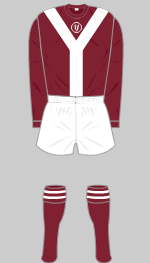
1974-Nov 1975 a b k s
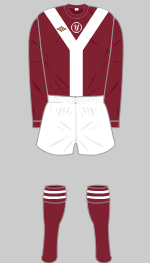
Nov 1975-1976 s
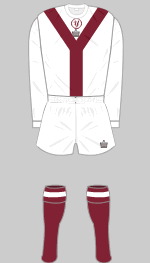
1976-1977 b
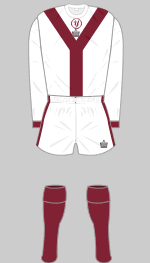
1977-1978 b
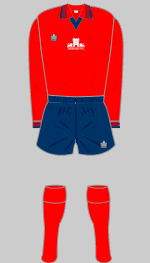
1978-1979 a
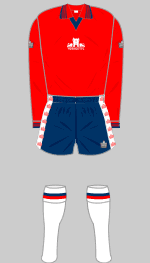
1979-1981 a
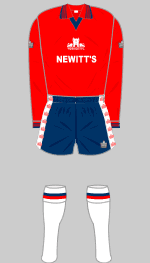
1981-1982 l
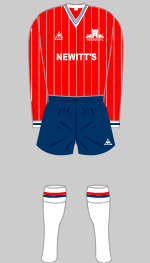
1982-1983 b l
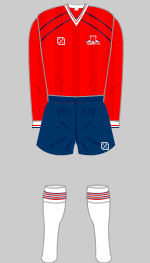
1983-Feb 1984 a s
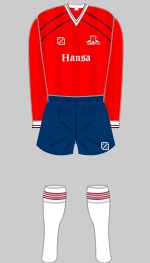
Feb-May 1984 s
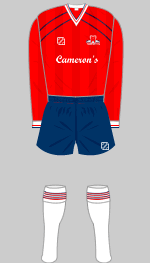
Aug-Dec 1984 a h
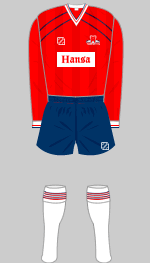
Jan-May 1985 a h
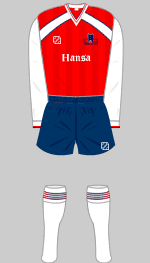
1985-1987 a b
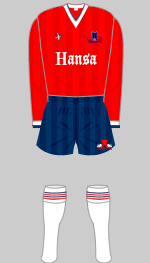
1987-1989 d t v w
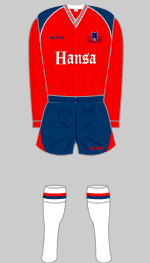
1989-1990 a
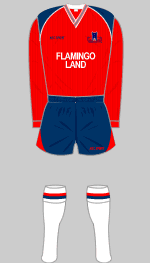
1990-1991 d j
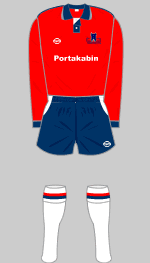
1991-1992 g j p
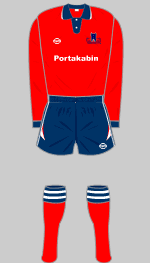
1992-1993 c p
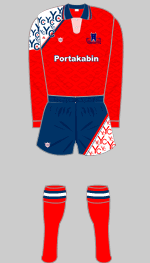
1993-1995 a c j p
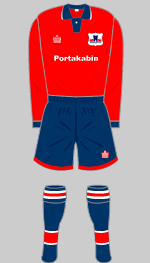
1995-1997 c
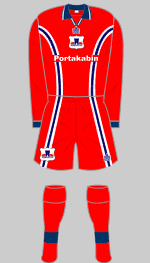
1997-1999 a b c
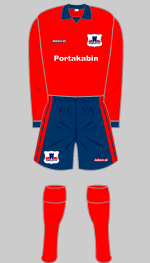
1999-2001 a c
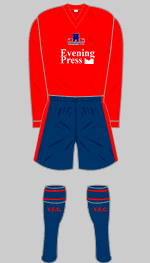
2001-2002 c i j
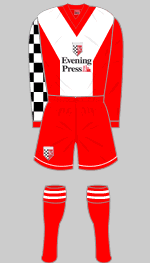
2002-2003 c j r
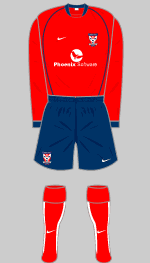
2003-2004 d
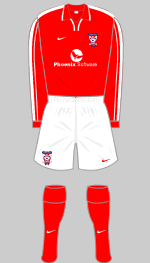
2004-2005 d
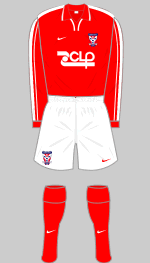
2005-2006 u
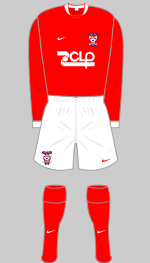
2006-2008 f
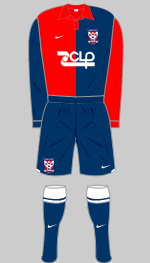
2008-2009 f
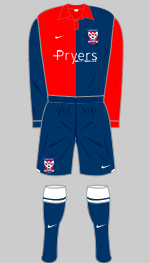
Aug-Dec 2009 f
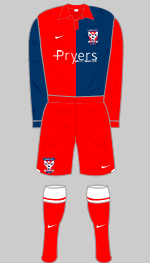
Dec 2009-2010 o
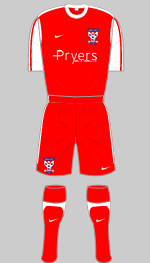
Aug-Oct 2010-'11 f p
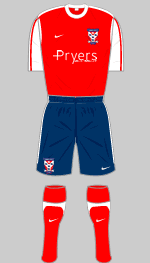
Oct 2010-2011 r
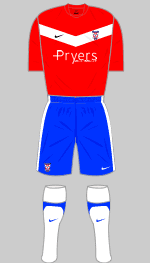
2011-2012 f
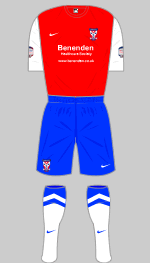
2012-Jan 2013 f
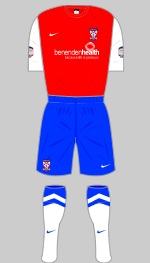
Jan 2013-2014 f r
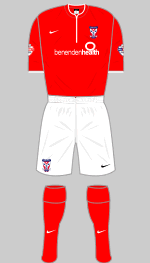
2014-2015 f
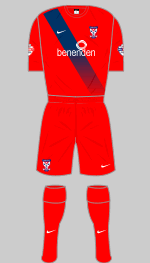
2015-2016 f
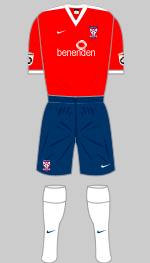
2016-2017 f
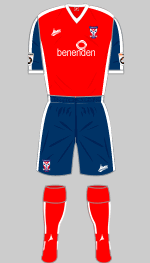
2017-2018 f
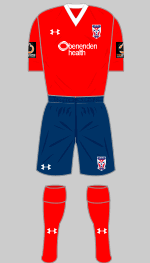
2018-2019 f
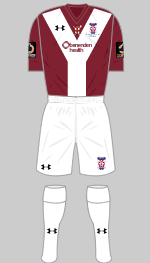
27 April 2019 f
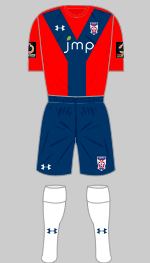
2019-2020 f
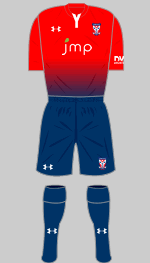
2020-2021 f
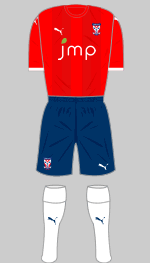
2021-2022 f
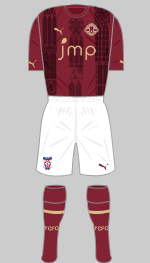
2022-2023 f
Background
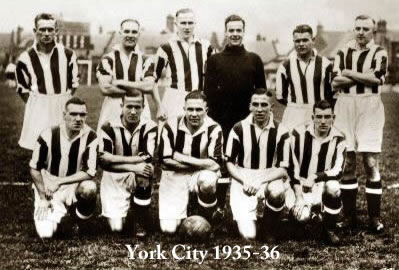 The original York City FC was
formed in 1903 but was wound up during the First World War. The present
club dates from 1922 when members of the original York City formed a limited company
and gained admission to the Midland League. Playing in maroon and white,
City made little headway but in 1929 they replaced Ashington in the League.
It is interesting to note that in the voting, York gained 24 votes having
finished in ninth place while Midland League champions, Mansfield Town,
received only 16 votes.
The original York City FC was
formed in 1903 but was wound up during the First World War. The present
club dates from 1922 when members of the original York City formed a limited company
and gained admission to the Midland League. Playing in maroon and white,
City made little headway but in 1929 they replaced Ashington in the League.
It is interesting to note that in the voting, York gained 24 votes having
finished in ninth place while Midland League champions, Mansfield Town,
received only 16 votes.
York had an undistinguished career although in
the 1930s, they abandoned their maroon jerseys in favour of chocolate
and cream stripes, a reference to the city's association with the confectionary
industry. After five years they changed  to what were described as "distinctive
red shirts." The official explanation was that the striped jerseys
clashed with opponents too often.
to what were described as "distinctive
red shirts." The official explanation was that the striped jerseys
clashed with opponents too often.
In February 1938 York were drawn to play Middlesbrough, then riding high in the first division, in the FA Cup 5th Round. As both their first and second choice kits were the same a coin was tossed to decide who would have first choice of colours. Middlesbrough won and opted to play in their white change strip while York borrowed a set of tangerine shirts. York won the match 1-0 in a howling gale to reach the quarter-finals where they lost to Huddersfield in a replay.
During the 1950s, City's fortunes improved. In
1955, having beaten Blackpool (complete with Matthews and Mortenson) and
Spurs, they reached the FA Cup semi-final where they were defeated by
 mayor by King Richard II.
Promotion finally arrived in 1959 when "The Minstermen" finished third in Division Four. Inspired perhaps by this success, Peter Wragg, who played as an inside forward for York, designed a crest that featured York Minster, the white rose of York and a robin. This appeared on club blazers and was displayed on the team coach but never featured on the players' shirts or club documents.
it took only one
season before they were back in the basement. The 1960s proved a trying
period: re- election in 1968 was followed by promotion and relegation in
successive seasons and then three successive re-elections between 1967
and 1969.
election in 1968 was followed by promotion and relegation in
successive seasons and then three successive re-elections between 1967
and 1969.
The maroon shirts were revived in 1969 (along with a cypher that ran upwards from left to right, the opposite of the usual style) and at the end of the season York were promoted
back to Division Three. This time they managed to hang on, avoiding relegation
on goal average for the next two seasons. Then in 1974, to the surprise
of everyone,  York City won promotion to the Second Division. To mark their
elevation, a bold white "Y" was added to their shirts. Known
inevitably as the "Y-fronts," the club held on for two seasons
before plunging all the way back to the Fourth Division and re-election
in 1978. These shirts were enhanced by a stylised badge in which the "Y" and "C" were cunningly combined.
York City won promotion to the Second Division. To mark their
elevation, a bold white "Y" was added to their shirts. Known
inevitably as the "Y-fronts," the club held on for two seasons
before plunging all the way back to the Fourth Division and re-election
in 1978. These shirts were enhanced by a stylised badge in which the "Y" and "C" were cunningly combined.
 The red shirts returned in 1978, now with navy
shorts and a modern crest featuring the Bootham Bar and two heraldic lions. The structure represented was built in medieval times on the site of one of the four entrances into the original Roman fortress. This originally appeared in white but after 1983 a revised version was used that later was reproduced against a shield.
The red shirts returned in 1978, now with navy
shorts and a modern crest featuring the Bootham Bar and two heraldic lions. The structure represented was built in medieval times on the site of one of the four entrances into the original Roman fortress. This originally appeared in white but after 1983 a revised version was used that later was reproduced against a shield.
 In 1984, York won the Fourth Division championship. Four years
later, City dropped back into the basement but in 1993 they won promotion
once again, this time via the play offs. After an excellent season in
Barclays Division Two (previously the Third Division), York reached the
play-offs and narrowly missed out on
In 1984, York won the Fourth Division championship. Four years
later, City dropped back into the basement but in 1993 they won promotion
once again, this time via the play offs. After an excellent season in
Barclays Division Two (previously the Third Division), York reached the
play-offs and narrowly missed out on  promotion to what was now Barclays
Division One. This proved to be their high point and during the 1990s,
York slipped back down to the lowest division and faced a mounting financial
crisis. In December 2001 York's long-serving chairman, Douglas Craig warned the club might have to resign from the Football League unless a buyer could be found.
promotion to what was now Barclays
Division One. This proved to be their high point and during the 1990s,
York slipped back down to the lowest division and faced a mounting financial
crisis. In December 2001 York's long-serving chairman, Douglas Craig warned the club might have to resign from the Football League unless a buyer could be found.
In March 2002 John Batchelor, owner-driver of the B&Q Touring Car Racing team, took over as chairman. Batchelor introduced a chequered flag motif to the team strip and new crest and changed the club's name to York City Soccer Club in a vain attempt to  appeal to the US market. After a year of broken promises, York went into administration and was taken over by the Supporters Trust who raised
£500,000.
appeal to the US market. After a year of broken promises, York went into administration and was taken over by the Supporters Trust who raised
£500,000.
Prior to the transfer of ownership, the board of directors sold Bootham Crescent to Persimmon Homes leaving the club with only a one-year lease. In order to continue playing in the Football League a minimum 10 year secure tenure was required which was achieved thanks to a guarantee from the City Council of an alternative home should the club have to quit Bootham Crescent. In 2005 York City bought back the freehold on the understanding that they would move into a new stadium at some point in the future and Persimmon Homes would have an option to buy back the ground once the new stadium was ready.
A new crest was designed that reintroduced the five lions and revived the "Y" motif. (The version shown here is the one worn on team shirts and differs slightly to the one used on official documents which has "Football Club" in full on the lower scroll.)
With Bootham Crescent renamed KitKat Crescent (!) following a sponsorship deal with Nestle, the city's largest employer, York's immediate future was secured but they were not able to retain their League status. In 2004, they finished in last place and were relegated to the Nationwide Conference. The club dropped navy from its kits and played in plain red and white for a period.
York returned to the Football League in 2012 via the play-offs but remained there for only four seasons before they finished in last place in League Two and dropped back into what was now the National League. A small compensation was that fans were consulted over the kit for 2016-17, resulting in a more traditional look. Unfortunately results were poor and York dropped into National League North at the end of the season.
 At the end of the 2018-19 season York City prepared to move into their new Community Stadium and commissioned a special one-off strip to mark their final match at Bootham Crescent. The popularity of the Y front design was such that supporters voted to introduce it on all three of their strips for the 2019-20 season.
The team returned to their original maroon and white for the centenary season in 2022-23 with a special crest and graphic images of architectural details from York Minster printed into the shirts.
Sources
- a York City FC - Images of Sport (David Batters 2000)
- b Pete's Picture Palace
- c empics
- d Red and Blue Net - an excellent unofficial website.
- e The Football Encyclopaedia (Associated Sporting Press 1934) - information provided by Arthur Fergus
- f York City Official Site
- g Bjørn-Terje Nilssen
- h jumpers4goalposts
- i "yorkie"
- j David King
- k Alick Milne
- l Shaun Slack
- m Steve Browne
- n Keith Ellis
- o Michael Knaggs
- p Adam Vause
- q Simon Monks
- r Christopher Houghton
- s Paul Bowser
- t Adam Vause
- u David Lewis
- v Josh Malone
- w York City match programme 27 March 1989
- x yorkcitysouth.co.uk
- y City Kits.com
Crests are the property of York City FC.