Workington
Formed
1884: wound up in 1911
Re-formed 1921
Elected to Division Three (North) 1951. Failed re-election 1977.
Kit History
Workington
1884-1911
Club wound up
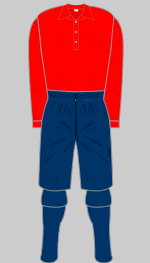
1884-1898 a h k
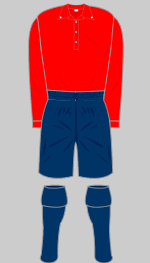
1902-1903 b
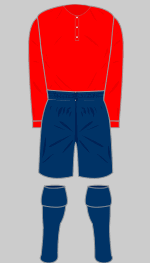
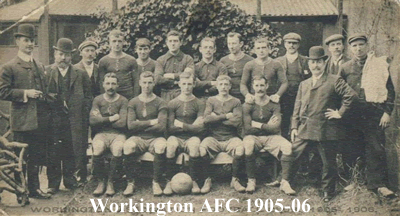
1905-1908 i k
Workington
1921
Re-formed as a new club
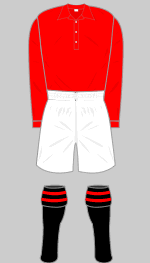
1921-1922 h

1922-1932
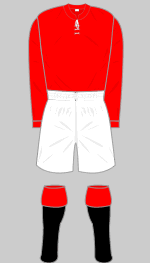
1932-1934 b
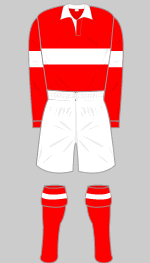
1934-1935 b
1935-1949
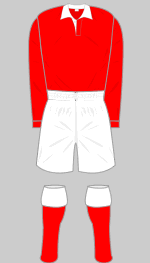
1949-1950 b

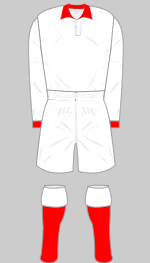
1950-1951 h
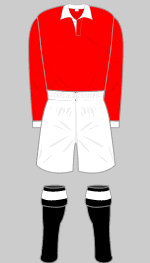
1951-1952 h
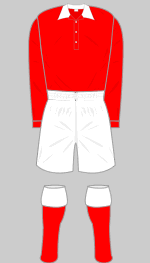
1952-1954 b
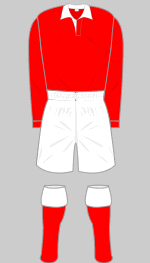
1954-1956 b c
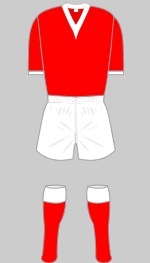
1956-1957 b h
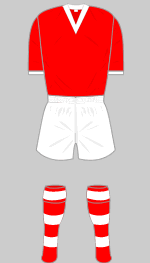
1957-1960 b
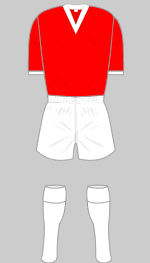
1960-1961 b
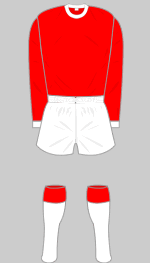
1962-1963 j
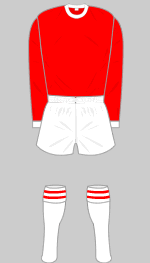
1963-1964 b
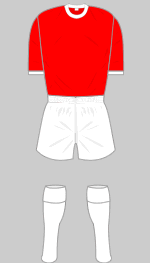
1964 Aug-Nov g
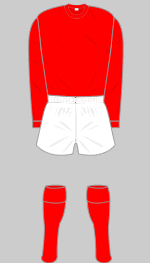
Nov 1964-1965 b
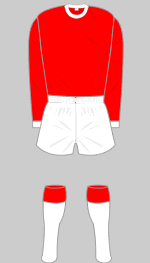
1965-1966 b d
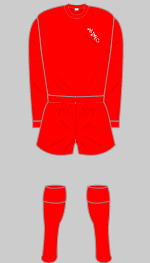
1966-1967 b d h
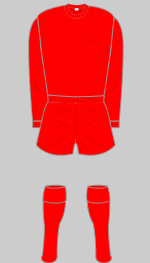
1967-1968 h
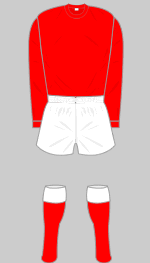
1968-1969 b
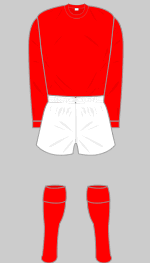
1969-1970 e
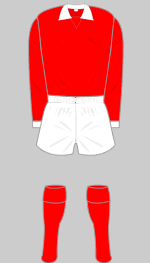
1970-1972 b g
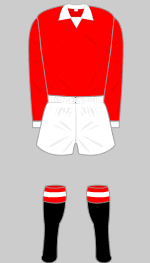
1972-1975 b e
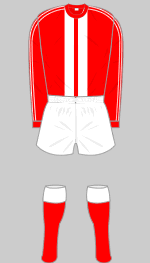
1975-1976 b h
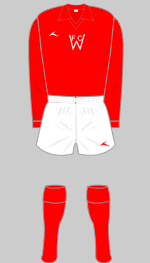
1976-1977 b f
Background
 Situated on the far north-west
coast of Cumbria, Workington is one of the most remote towns to have had
a team play in the Football League. Furthermore, the area is a rugby stronghold
and the Reds faced strong competition from the local rugby league side,
Workington Town. There have in fact been two Workington AFCs: the first
club was formed in 1884 by Sheffield emigres who came to the area to work
in the steel industry. Workington played County Cup and friendly matches until they joined the Association League in 1890. They then spent seven years in the Cumberland Senior League (1894-1901) before joining the Lancashire Combination.
Situated on the far north-west
coast of Cumbria, Workington is one of the most remote towns to have had
a team play in the Football League. Furthermore, the area is a rugby stronghold
and the Reds faced strong competition from the local rugby league side,
Workington Town. There have in fact been two Workington AFCs: the first
club was formed in 1884 by Sheffield emigres who came to the area to work
in the steel industry. Workington played County Cup and friendly matches until they joined the Association League in 1890. They then spent seven years in the Cumberland Senior League (1894-1901) before joining the Lancashire Combination.
High travel costs were a constant problem for the club and the other members were not at all happy about travelling outside Lancashire to play Workingto and Carlisle. As a result the Combination was on the point of expelling both teams when they resiged and joined the North-Eastern League in 1910. This failed to solve the Red's chronic financial problems and they went into voluntary liquidation in 1911.
A team called Workington Central was formed immediately afterwards but went out of business in 1914 while another club, Workington Athletic played at Lonsdale Park, Workington AFC's former ground, between 1914 and 1916 when they too closed down.
In 1921, a new club was formed and elected to the North Eastern League. They had a modestly successful career and in 1951, they made a successful application to join the Football League, replacing New Brighton. Their 16 page brochure made light of their isolated situation ("derby" games against Carlisle and Barrow involved a round trip of 70 and 132 miles by train respectively) stating, "We are not in an area where we would rob any other League clubs of their present supporters."
The Reds were lucky to survive having to apply for re-election in their first two seasons. In 1953-54 it seemed they would wind up in the re-election zone once again and surely lose their League status but the appointment of Bill Shankly as manager proved a turning point. Shankly lifted the team who finished two places above the re-election positions and in the following years they finished comfortably in mid-table.
 When the regional divisions were scrapped, Workington
were placed in the Fourth Division but in 1964 they finished in third
place to win promotion to the Third Division. After only two seasons,
they were relegated back to the Fourth Division and faced re-election
the following year. A fashionable monogramme made an appearance on the all-red strip worn in 1966-67.
When the regional divisions were scrapped, Workington
were placed in the Fourth Division but in 1964 they finished in third
place to win promotion to the Third Division. After only two seasons,
they were relegated back to the Fourth Division and faced re-election
the following year. A fashionable monogramme made an appearance on the all-red strip worn in 1966-67.
The early 1970s brought severe economic decline to the area and as the club's lacklustre performance continued, average attendances dwindled to around 1,100.
 Workington applied for re-election
at the end of four consecutive seasons between 1974 and 1977. After finishing last in 1977
with only four wins, the patience of their fellow League clubs was exhausted
and Workington lost their place to Wimbledon. During this final season of Football League competition, the team wore a stylised monogram in the centre of their shirts.
Workington applied for re-election
at the end of four consecutive seasons between 1974 and 1977. After finishing last in 1977
with only four wins, the patience of their fellow League clubs was exhausted
and Workington lost their place to Wimbledon. During this final season of Football League competition, the team wore a stylised monogram in the centre of their shirts.
Despite everything, Workington survive to this day, rising to the Blue Square Conference (North) where they reached the play-offs in 2006-07 and 2009-10.
Sources
- (a) Unofficial Workington AFC website
- (b) Workington AFC - Images of Sport (Paul Eade 2003)
- (c) Football Focus
- (d) Pete's Picture Palace
- (e) Football League Review
- (f) Alick Milne
- (g) Keith Ellis (HFK Research Associate)
- (h) Alec Graham (Director Workington AFC)
- (i) Sports Pages (Fine Books & Memorabilia)
- (j) seniortigers.co.uk
- (k) Pioneers (John Norman 2021)
Team photograph courtesy of Sports Pages (Fine Books & Memorabilia). Crests are the property of Workington FC.