




Wolverhampton
Wanderers
Formed 1877
Founder member of the Football League 1888
Kit History
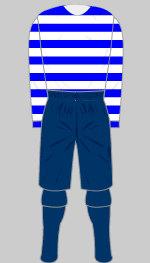
1877 a K
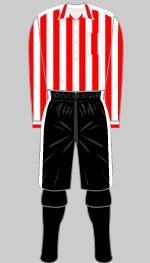
1883-1886 a q K
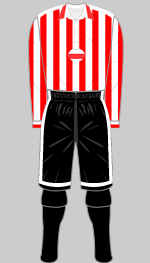
1886-1891 a D K
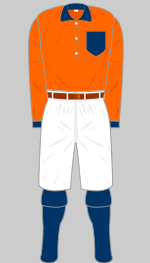
1891-1892 G P
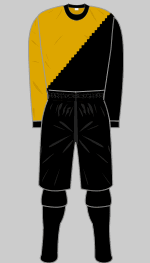
1891-1893 1 a i l q
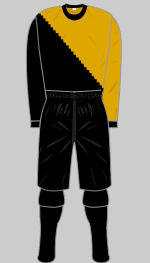
1891-1893 2 q M
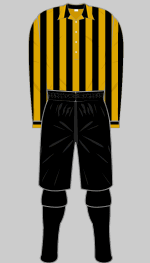
1893-1897 a i q M
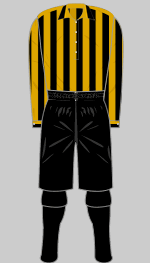
1898-1900 C Q
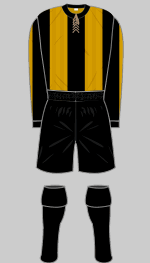
1900-1907 f q z C
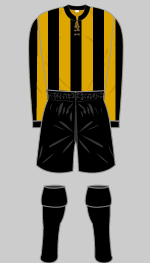
1907-1908 C I

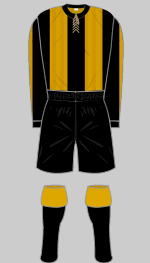
1910-1915 y
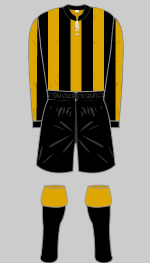
1920-1921 b
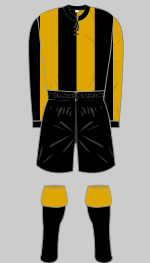
1921-1922 C
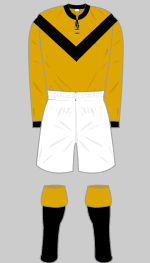
1923-1924 b q I M
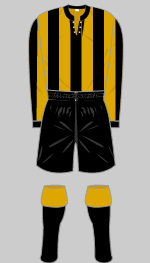
1924-1925 C I
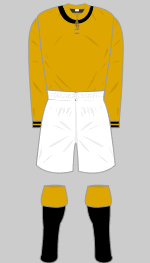
1925-1926 C
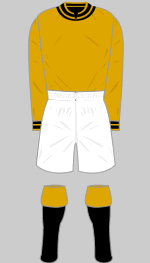
1926-1928 q y C
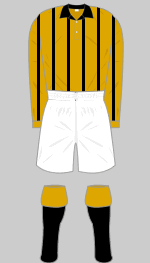
1928-1929 C
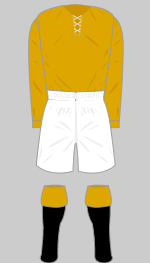
1928-1930? C
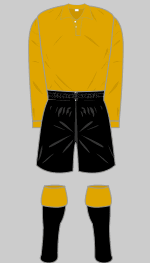
1930-1931 q
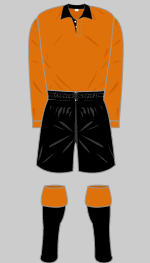
1931-1935 b q M
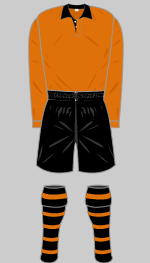
1935-1937 b q C
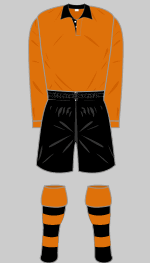
1937-1947 b o
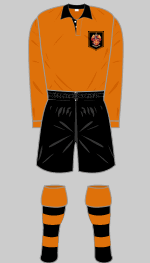
1947-1948 A M
1947-1954 b o
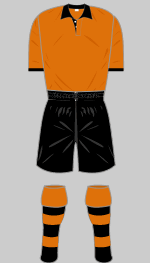
1948-1949 E
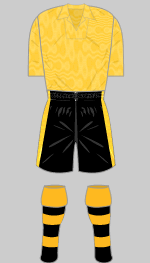
51-56 Special o B M
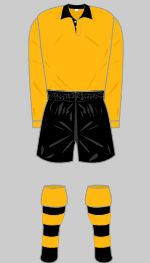
1954-1956 b j
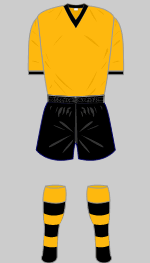
1956-62 a d r M

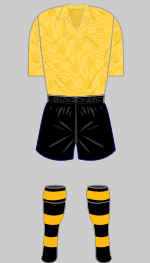
17 Oct 1957 N
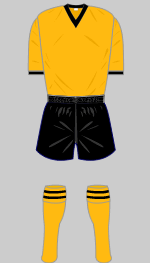
1962-1963 1 D
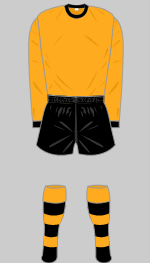
1962-1963 2 f
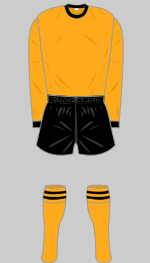
1963-1965 d k
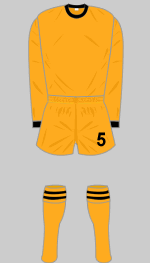
Aug 65-mid 66 d w
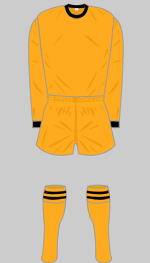
mid 66-1969 w A
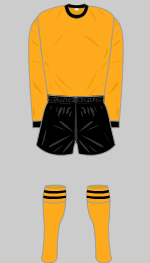
1969-1970 w A C
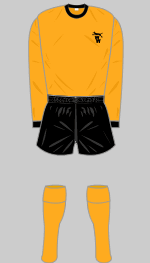
1970-1972 c d A D
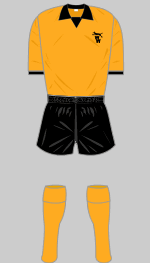
1970-1972 alt E
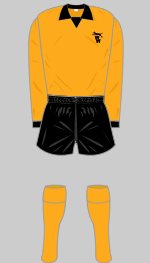
1972-March 1974 c A
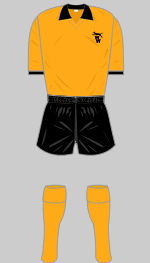
1973-March 74 s A
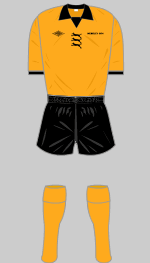
March-May 1974 O
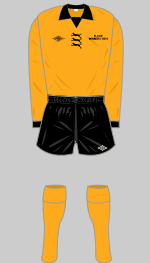
1974-1975 A
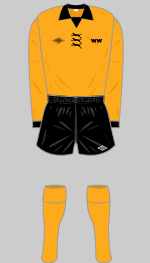
1975-1977 c k p s A
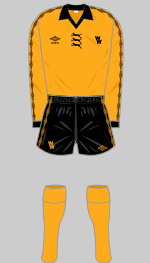
1977-Nov 1979 b c n s
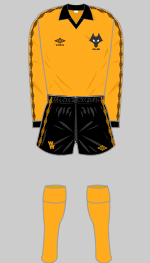
Nov 1979-1982 c n s D
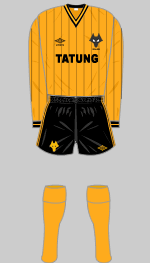
1982-1983 u
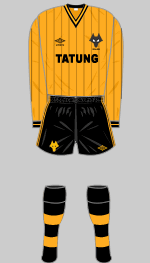
1983-1985 b c n u
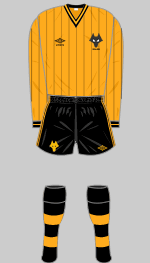
1985-March 1986 D
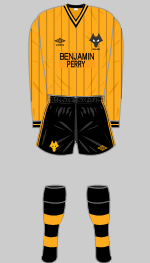
March-May 1986 u J
Aug-Nov 1986 J
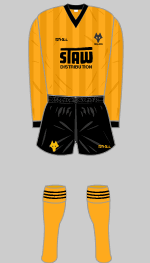
Nov 86-1988 j n u D J
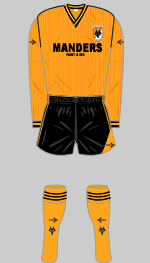
1988-1989 b d x M
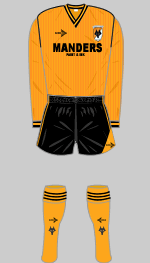
1989-1990 x M
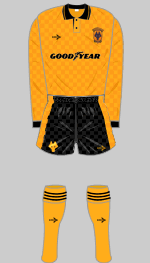
Aug-Sept 1990 c n t M
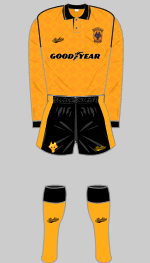
Sept 90-1992 m n t M

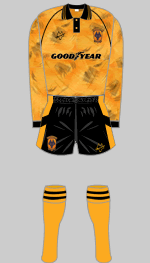
1992-1993 d m n M
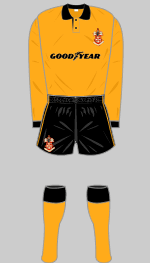
1993-1994 c d M
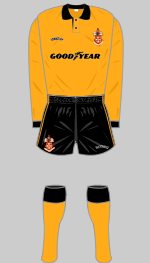
1994-1995 c d M
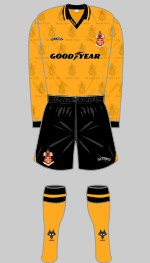
1995-1996 c n H M
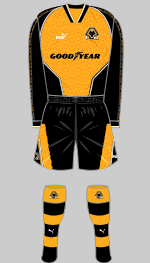
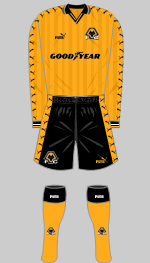
1998-2000 c n M
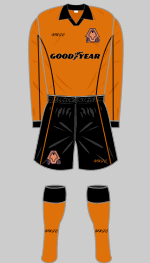
2000-2002 c n F M
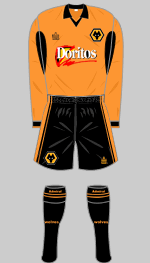
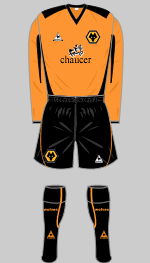
2004-2006 c n
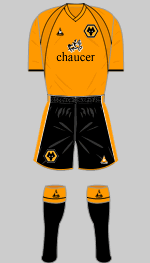
2006-2008 h n M
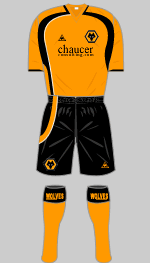
2008-2009 h H
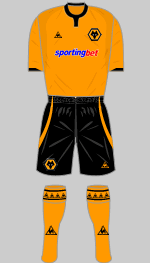
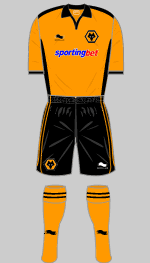
2010-2011 a h
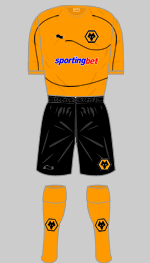
2011-2012 h
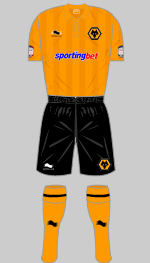
2012-2013 h
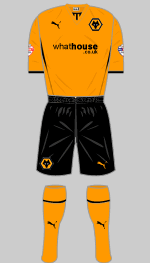
2013-2014 h
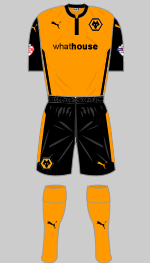
2014-2015 h
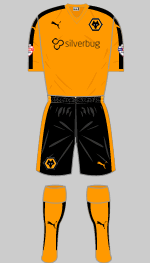
2015-2016 h
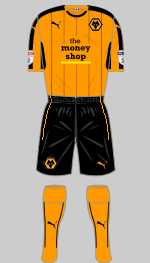
2016-2017 h
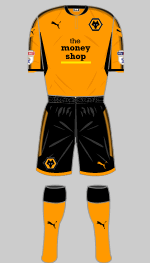
2017-2018 h
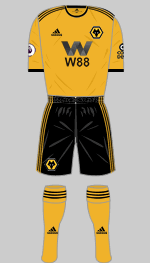
2018-2019 h
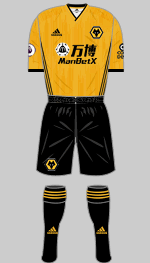
2019-2020 h
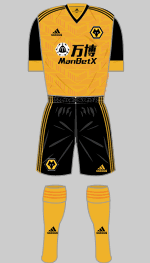
2020-2021 h
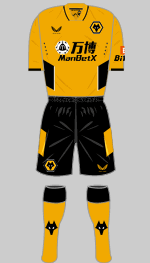
2021-2022 h
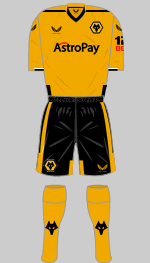
2022-2023 h

2023-2024 * h
Background
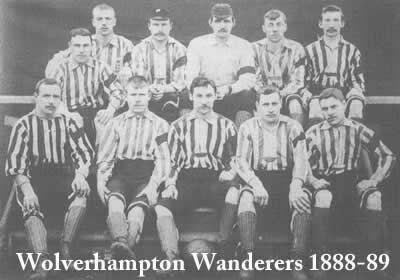 Wolves began as a school side, St Luke's FC in 1877.
Two years later they merged with another local side, Wanderers FC and
became Wolverhampton Wanderers. Initially they played in blue and white jerseys (the school colours).
Wolves began as a school side, St Luke's FC in 1877.
Two years later they merged with another local side, Wanderers FC and
became Wolverhampton Wanderers. Initially they played in blue and white jerseys (the school colours).
When Wolves won the Wrekin Cup in 1883-84 they had adopted new-fangled vertically striped shirts. In the course of his research, Simon "Shakey" Shakeshaft established in January 2017 that these were red and white.
Wolves' shirts faded badly after a few washes and they were often described as "dirty pink" or "faded red" in the press. Various team photographs from the period reveal considerable variation between individual shirts but this was not unusual for the time.
In their opening fixture of the 1890-91 season Wolves travelled to Sunderland unaware that their shirts clashed with the newly elected home team. The start was delayed after the referee sent the visitors back to the dressing rooms to change into the white dress shirts they had worn on the trip north. As a result of this confusion the Football League required member clubs to register distinctive colours the following season and for the first time published these in a handbook.
The Burnley Express reported in July 1891 that Wolves' new colours would be "blue and orange" for the coming season while Sunderland retained their red and white stripes. In "The Wolves: The First Eighty Years" (Percy Young 1959) there is a photograph of the team wearing dark shirts with contrasting collars and pockets with white knickers. When allowance is made for the limitations of orthographic film stock this may be the strip described in the report although this has so far not been confirmed. On the eve of the new season, however, the Preston Herald reported that Wolves had registered "old-gold-and-black shirts, quartered and black knickers." These were in fact woolen jerseys with a unique diagonally halved design that came in both right- and left-handed versions and I beleive the orange and blue jerseys may have been assigned to the reserves or a youth team (the players in Young's photograph do seem very youthful).
The chosen colours appear to have been inspired by the municipal colours of Wolverhampton and represent the town's motto, "Out of Darkness Cometh Light." The photographic emulsions of the period were very sensitive to yellow light and Wolves' tops appear very dark rendering the team practically invisible against a dark background so they posed in their white change shirts for most team photographs.
A formidable cup side, Wolves reached three finals between 1889 and 1896, winning the trophy in 1893. In this match they played in stripes for the first time and while the width of these varied over time, this would be the team's signature strip for the next thirty years.
In 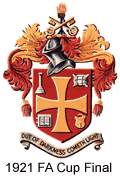 1906, Wolves slipped into the Second Division: two years later
they defied the odds to win the FA Cup for the second time, beating the
hot favourites Newcastle United 3-1 at Crystal Palace.
1906, Wolves slipped into the Second Division: two years later
they defied the odds to win the FA Cup for the second time, beating the
hot favourites Newcastle United 3-1 at Crystal Palace.
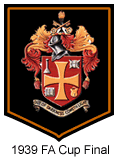
The club reached yet another FA Cup final in 1921 while still in Division Two. This game marked the first time that a crest was worn by a Wolves team, consisting of the Wolverhampton coat of arms. This featured only in the first half as the team changed into clean jerseys at half-time. This crest also featured in the 1939 and 1960 finals and was worn in the League during 1947-48.
Disaster came in 1923 with relegation to Division Three (North) although they stormed back as champions in 1924, losing only three matches. During their brief stay in the lower division, the traditional striped jerseys gave way to old gold with a bold "V".
The strip shown for 1928-29 is something of a puzzle. Although official portraits show players wearing these interesting striped tops, research by Jonathon Russell into the club's programmes of this season indicate that the older plain old gold jerseys were used for most, if not all that season.
 Under the guidance of Major Frank Buckley, Wolves returned
finally to the First Division in 1932. Wearing old gold
shirts that were now a distinctly dark rust shade and decorated with black collars, Wanderers were runners-up in 1938
and 1939 when they also reached the FA Cup final. Starting out as favourites
against little fancied Portsmouth, the players were provided with extract
of monkey gland to boost their performance but crashed 1-4.
Under the guidance of Major Frank Buckley, Wolves returned
finally to the First Division in 1932. Wearing old gold
shirts that were now a distinctly dark rust shade and decorated with black collars, Wanderers were runners-up in 1938
and 1939 when they also reached the FA Cup final. Starting out as favourites
against little fancied Portsmouth, the players were provided with extract
of monkey gland to boost their performance but crashed 1-4.
To mark the centenary of Wolverhampton being incorporated as a borough, the town's coat of arms, which previously only been worn in FA Cup finals, was added to their shirts for the 1947-48 season.
The period after the Second World War was a golden age. After retiring as a player, Stan Cullis took over as manager in 1948, guiding them to an FA Cup win in 1949 and Division One championships in 1954, 1958 and 1959.
The club pioneered midweek floodlit matches against European sides, including Budapest Honved and the Dynamo and Spartak teams from Moscow. For these games, played under primitive floodlights on gloomy winter evenings, Wolves used a special fluorescent kit. Research by Steve Gordos has established that these appeared on at least two occasions on gloomy Molineux afternoons in November and December 1951, two years before floodlights were installed. Programme notes from a match at Fulham In the 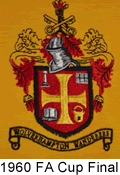 match against Charlton last week, Wolverhampton started something entirely new by appearing in the second half in shirts of yellow, made of material that glows in semi-darkness. These distinctive shirts made what I believe to be their final appeance in October 1957 when Wolves beat Real Madrid under floodlights.
After their 1954 title win, the shade of the shirts became a brighter gold, according to Steve Gordos.
In 1960 Wolves won the Cup once again and almost achieved the double,
missing out on the Division One title by a single point. In 1964, the club parted company with Cullis and slipped briefly into the
Second Division but further Cup 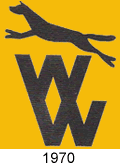 success arrived in the Seventies.
Gold shorts were adopted towards the end of the 1964-65 season in an effort to give the team a more modern appearance. The match programme, Molinews (oh dear) announced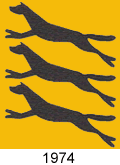 the return of black shorts on 9 August 1969. The following season a stylish new badge was introduced consisting of a wolf leaping over the letters "WW." This evolved into three wolves worn in the centre of the shirt while the lettering remained on the left breast.
Defeat
in the UEFA Cup final. Against Spurs in 1972 was followed by League Cup
success in 1974. After a season in the Second Division, Wolves returned
to the First Division as champions in 1977 and a second League Cup win
 in 1980.
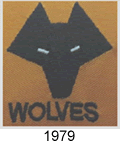
A wolf's head replaced the leaping wolves in 1979. Designed by Ian Jackson this was perhaps the most iconic of the designs that appeared in the decade.
In 1982 the club was bought by the Bhatti brothers. At first
all seemed well as Wolves won promotion to Division one in 1983 but on
and off the pitch the club descended into chaos, plunged straight down
to the Fourth Division and faced extinction. A consortium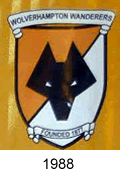 including the
local council, Asda and builders, Gallaghers, rescued the ailing club
and they won the Fourth and Third Division championships in successive
seasons (1987-88 and 1988-89) to return to the Second Division. During this period the wolf's head was placed on a gold/white shield with scrolls.
including the
local council, Asda and builders, Gallaghers, rescued the ailing club
and they won the Fourth and Third Division championships in successive
seasons (1987-88 and 1988-89) to return to the Second Division. During this period the wolf's head was placed on a gold/white shield with scrolls.
In 1990 millionaire fan Sir Jack Hayward bought the club and invested
£20m of his personal fortune in the redevelopment of Molineux, 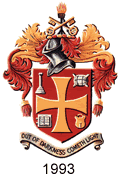 transforming
it into one of the most modern stadiums in the country. Among the innovations of the period was the reintroduction of the Wolverhampton coat of arms to the team's shirts in 1993. This was replaced in 1996 with an elaborate version of the wolf's head: the overall shape was echoed in the design of the shirts worn that season. This version was used for six season before being
transforming
it into one of the most modern stadiums in the country. Among the innovations of the period was the reintroduction of the Wolverhampton coat of arms to the team's shirts in 1993. This was replaced in 1996 with an elaborate version of the wolf's head: the overall shape was echoed in the design of the shirts worn that season. This version was used for six season before being 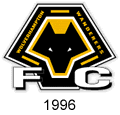 replaced with a much simpler one.
Supporters were taken aback in 2000 when the team turned out wearing dark, rust coloured tops. Older fans recognised that this was the colour worn by the team in the 1930s and early 50s but they failed to find favour and a more familar shade of old gold was restored in 2002. Furthermore the club commissioned a graphic designer, Jonathon Russell, to redesign the club logo. He reworked Ian Jackson's Wolf's head to appear less threatening and placed this inside a hexagonal border.
Hayward continued to pour
money into the club but it was not until 2003 that his ambition was realised
and Wolves returned to the top flight after beating Sheffield United 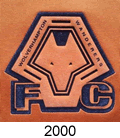 at
the Millennium Stadium in the play-off final. Six months later Hayward resigned and handed
over the chairmanship to his son, Rick. Sadly, Wolves triumphant return
was short-lived and they were relegated after one season.
at
the Millennium Stadium in the play-off final. Six months later Hayward resigned and handed
over the chairmanship to his son, Rick. Sadly, Wolves triumphant return
was short-lived and they were relegated after one season.
In 2006 the club embarked on a complete clear-out, appointing Mick McCarthy to build a new side with the emphasis on youth, ambition 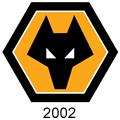 and talent. Twelve senior players departed, halving the club's wage bill. The young squad performed above expectation and reached the play-offs that season. In August 2007 Jack Hayward gifted his controlling shares to business man Steve Morgan who promised to invest £30m in the club to re-establish them in the Premiership. Following their strategy of signing promising young players from the lower divisions, Wolves won the Championship title in 2009 and enjoyed three seasons in the top flight before they were relegated in 2012 and then dropped into League One a season later. They recovered quickly and in 2015 narrowly missed out on promotion back to the Premier League after missing out on the play-offs on goal difference.
Finally, six seasons after losing their place in the top tier, Wolves were promoted back into the Premier League in 2018 after winning the Championship title. They finished seventh, their highest position since 1979-80, earning a place in the Europa League. This was their first European campaign since 1980-81.
There have been many variations in the shade of old gold worn by the team during its long history. In 2021-22 they appointed Castore, a small and relatively new (founded 2015) sportswear manufacturer based in Liverpool as their kit partner and announced that Pantone 130C would be their official colour.
Sources
- (*) Graphic by Daniel Stoker
- (a) Geoff Bell - HFK Research Associate
- (b) Wolverhampton Wanderers FC - Images of Sport (Geoff Alman 2002)
- (c) Sporting Heroes
- (d) empics
- (e) Stoke City FC - Images of Sport (Tony Matthews 1999)
- (f) West Midlands Football (Tony Matthews 2004)
- (g) The Mighty Mighty Whites
- (h) Wolves Official Site
- (i) Association of Football Statisticians - provided by Pete Wyatt
- (j) Simon Davies
- (k) Pete's Picture Palace
- (l) Mark Parker
- (m) David King
- (n) True Colours 2 (John Devlin 2006)
- (o) Steve Gordos former Sports Editor of the Wolverhampton Express
- (p) Alick Milne
- (q) Memories of Molineux (Tony Matthews) provided by Jonathon Russell.
- (r) Simon Monks
- (s) Christopher Worrall
- (t) Steven Benbow
- (u) Mark Young
- (v) My photo library
- (w) David Taylor
- (x) Stuart Davis
- (y) Jonathon Russell
- (z) British Film Institute (Youtube)
- (A) Pete Szyman
- (B) Graham Warner
- (C) Keith Ellis (HFK Research Associate)
- (D) Michael Capewell
- (E) Tony Sealey
- (F) Steve Moran
- (G) Burnley Express 11 July 1981 researched by Kjell Hanssen
- (H) Matthew Jackson
- (I) David Dungar
- (J) Dave Hegan
- (K) Simon "Shakey" Shakeshaft
- (L) Preston Herald (16 September 1891) submitted by Brian Webb.
- (M) They Wore the Shirt (Steve Plant 2016)
- (N) Express & Star (16 Feb 2016)
- (O) Nik Yeomans
- (P) The Wolves: The First Eighty Years" (Percy Young 1959)
- (Q) Wolves Shirt Museum
Crests are the property of Wolverhampton Wanderers FC.