


Kit History
Wimbledon Old Centrals
1889
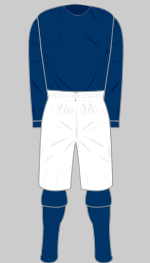
1889-1890 n
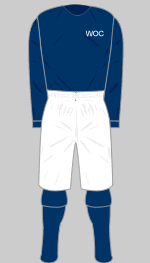
1890-1892 n

1892-1893 x
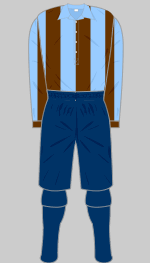
1893-1896 n
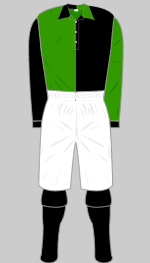
1896-1900 n
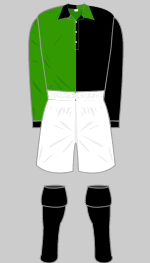
1900-1905 n p
Wimbledon
1905-1910
Club wound up
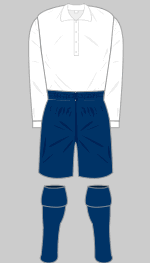
1905-1907 n
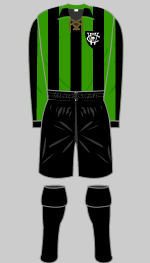
1907-1910 n
Wimbledon Borough
1911-12
Club wound up
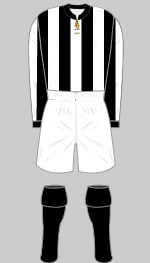
1911-1912 n
Wimbledon
1912
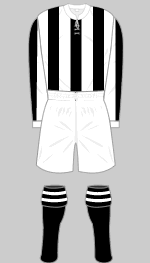
1912-1919 n
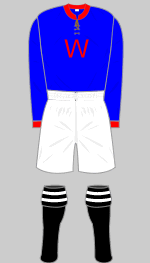
1919-1920 n
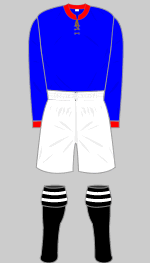
1920-1921 n
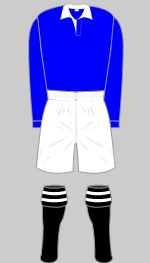
1921-1923 n
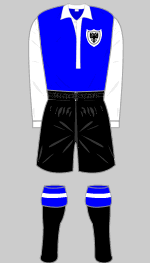
1923-1931 n r
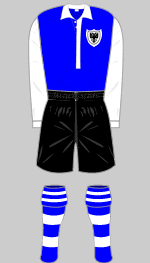
1935-1936 n
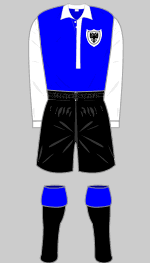
1946-1947 n
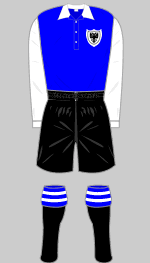
1947-1948 r
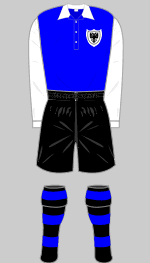
1948-1949 n
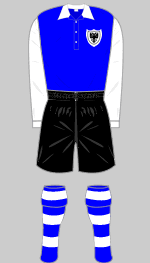
1951-1956 n t
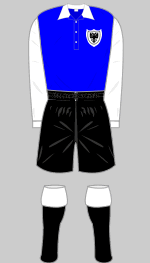
1956-1957 t
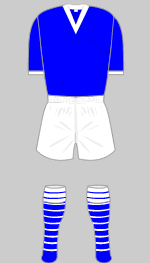
1957-1960 f n
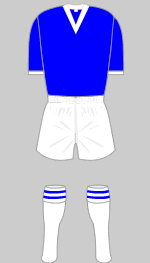
1960-1962 k n p
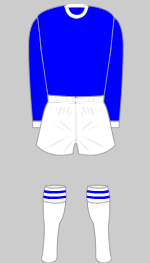
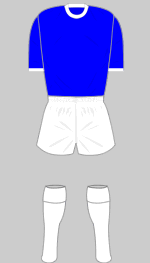
Am Cup Final 63

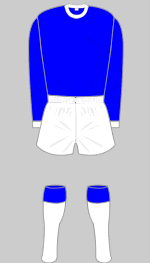
1964-1966 p q
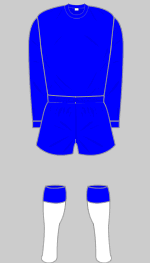
1966-1967 q
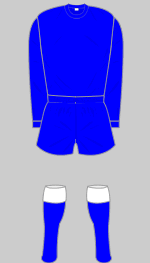
1967-1970 p q t
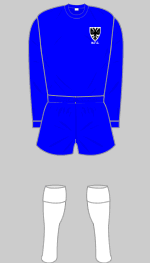
1970-Aug 72 h p q
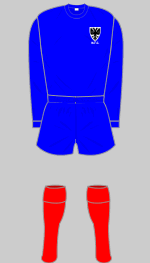
Sept 72-April 74 p q
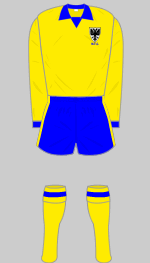
Sept 73-May 1974 p
Aug-Dec 1974 p
Nov-Dec 1974 p
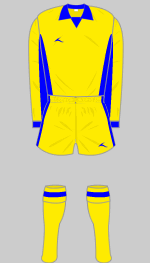
Jan-Feb 1975 p
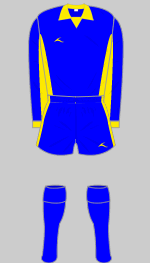
Feb-April 1975 p w
Aug-Sept 1975 p u
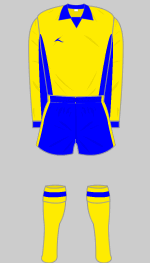
Sept '75-Nov '76 p
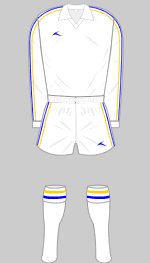
Dec '76-1977 p u
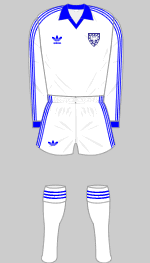
1977-1978 b h k l
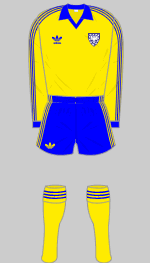
1978-1980 k l
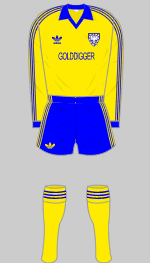
Sept-Oct 1980 l
Nov 80-1981 p
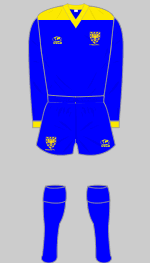
1981-1982 c k
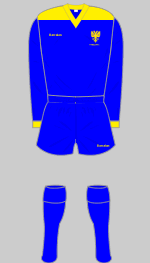
1982-1983 p
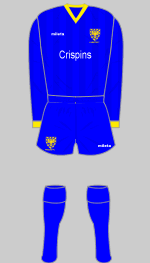
1983-1984 k o v
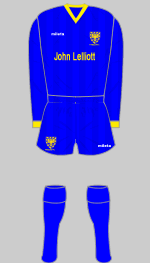
1984-1985 b g v
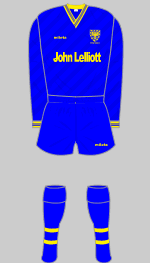
1985-1986 p
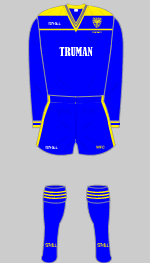
1986-1987 m
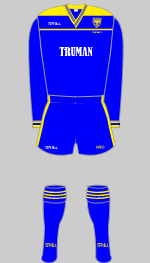
1987-1988 d b i
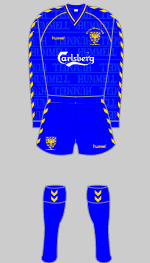
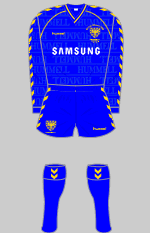
1989-1990 d
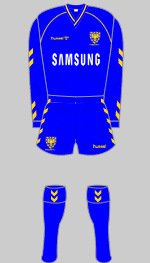
1990-1991 1 i r
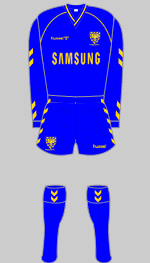
1990-1991 2 i r
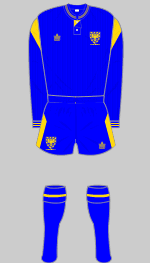
1991-1993 d i
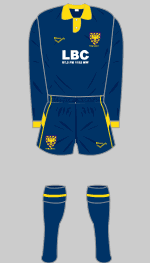
1993-1994 d i
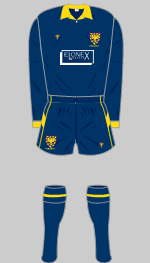
1994-1995 b d
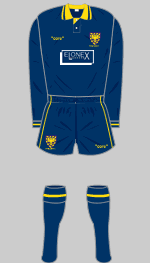
1995-1996 d
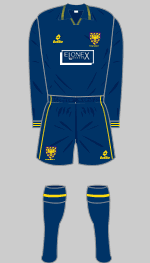
1996-1997 d
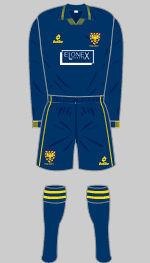
1997-1999 d i
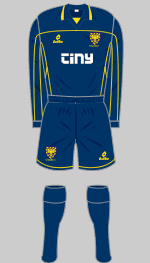
1999-2000 i
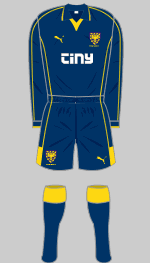
2000-2001 b i
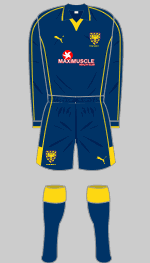
2001-2002 b
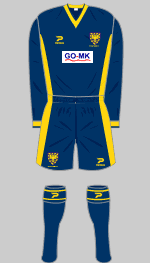
2002-2004 b
Background
 The extraordinary rise and
fall of Wimbledon has few parallels in the history of football. It also turns out to be rather more complicated than previously assumed.
The extraordinary rise and
fall of Wimbledon has few parallels in the history of football. It also turns out to be rather more complicated than previously assumed.
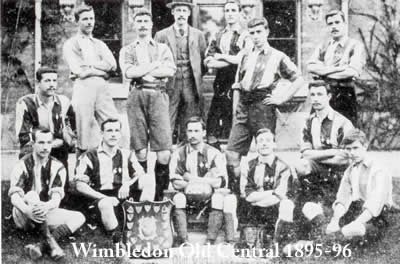
Formed in 1889 as Wimbledon Old Centrals, the original Dons played on Wimbledon Common in navy jerseys to which their initials were added in 1890.
They dropped "Old Centrals" from their name in 1905 and in 1908 the club moved to a ground on Burlington Road where the pitch was so waterlogged that half their fixtures had to be postponed or moved. Appeals to the council for help relocating fell on deaf ears and in September 1910 the club suspended its activities.
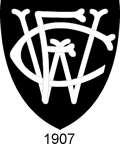 Bert Dale has found photographic evidence that a monogram crest was worn on the team's striped shirts.
A new club, based on Coppermill Lane quickly emerged with the backing of the original Wimbledon chairman and several former players. The new team was made up of council workers and adopted the title Wimbledon Borough FC in July 1911. The only evidence we have of their colours is a fragment of a photograph that suggests their shirts were black and white. The club adopted the borough coat of arms as its official crest but it is not known if these were ever worn on their shirts. A lack of support from the council led to Borough also being disbanded after one season. Immediately afterwards Wimbledon FC were formed (it is unclear if there was a connection with the defunct club). The new team played in "black and white" at Plough Lane, their home for the next 75 years.
After a hiatus during the First World War, the club joined the hastily formed United Senior League in January 1919 before moving to the Athenian League for the 1919-20 season.
In 1920 the club adopted blue tops (known, as of September 2016, to be trimmed with red) and we have a team photograph taken in training showing a large "W" on the shirts. This seems to have attracted the disapproval of the FA and was later dropped. At the end of the season the committee took a gamble by applying to join the Isthmian League who were soon to vote on a proposal to expand. The news leaked out but happily for Wimbledon, the expansion went through: had the vote failed they would likely have been 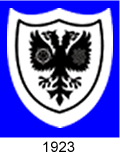 without a competition the following season.
The crest adopted in 1923 was based on the coat of arms of the Borough of Wimbledon, featuring a double headed eagle. This is a reference to a legend that Julius Caesar once made camp on Wimbledon Common. This crest was dropped sometime in the late-1950s.
 Wimbledon became one of the leading amateur clubs
in the country, winning the Isthmian League eight times. After winning
the prestigious FA Amateur Cup in 1963, the club turned semi-professional
and joined the Southern League.
Wimbledon became one of the leading amateur clubs
in the country, winning the Isthmian League eight times. After winning
the prestigious FA Amateur Cup in 1963, the club turned semi-professional
and joined the Southern League.
The double headed eagle briefly reappeared between 1970 and 1974.
During the 1973-74 season the team wore a yellow and blue strip in several games although their all-blue outfit seems to have been firrst choice. In 1974-75 the team enjoyed an epic run in the FA Cup wearing yellow and blue. When they were drawn against Burnley (then in the First Division) Ron Hales, the owner of a local sports shop, donated a set of Bukta strips in yellow with the latest blue trim. The Dons won the game and adopted the new outfit as their lucky strip but it was deemed too pale to be worn in the next round against Leeds United (due to be televised in black and white) so Hales donated a second set in reverse colours. After holding Leeds to a replay, this blue strip was worn for the rest of the season.
The yellow shirts were reinstated for 1975-76 (with yellow shorts at first then blue ones). A white outfit was worn against Leatherhead in an FA Cup Second Round match in December 1976 and by February 1977, this was being worn regularly in the Southern League, including in a win against Telford that clinched the Dons' third successive Southern League title.
 At the Football League AGM in June 1977, with three successive Southern League titles under their belt the Dons were elected to the Football League at the expense of Workington. For their inaugural season the team wore a new all-white strip by Adidas and a new version of their traditional crest was introduced.
After a modest
first season, the club were promoted and relegated four times in succession.
In 1983 they began a remarkable run that took them all the way to the
First Division in 1986. The upstart club, dubbed the "Crazy Gang,"
defied critics by finishing in sixth position in  1987 and then, against
all the odds, beat Liverpool to win the FA Cup in 1988. Their tactics
of playing long balls to their fast strikers combined with the uncompromisingly
physical defence of Vinnie Jones and John "Fash the Bash" Fashanu
won few friends but confounded many more purist sides.
1987 and then, against
all the odds, beat Liverpool to win the FA Cup in 1988. Their tactics
of playing long balls to their fast strikers combined with the uncompromisingly
physical defence of Vinnie Jones and John "Fash the Bash" Fashanu
won few friends but confounded many more purist sides.
Within days of their FA Cup triumph, the club announced plans to leave their cramped Plough Lane ground to move into a new stadium in their native borough of Merton. These plans came to nothing: with Plough Lane unsuitable for redevelopment, the club sold it off and moved into Selhurst Park with Crystal Palace in 1991. Remarkably, despite limited resources and modest attendances, the Dons continued to thrive, finishing in the top nine between 1994 and 1997, when they also reached the semi-finals of both the League and FA Cups. A move to Dublin was floated but was dropped when the FA and UEFA pointed out that the club could not continue to play in the Premier League if they were based in the Republic of Ireland. This marked the beginning of the breakdown of the relationship between the club and its local fan base.
In 1999, the club's colourful owner Sam Hammam sold Wimbledon to a Norwegian consortium who installed Egil Olsen as manager. The new owners were looking for a return on their investment and were not prepared to pump money in merely for prestige. On the last day of the 1999-2000 season, Wimbledon finally succumbed to relegation. Despite fears that the club would go into free-fall, they narrowly missed out on a play-off place in the next two seasons.
Meanwhile, however, the search for a permanent
home resulted in a decision to move the club to Milton Keynes. The majority
of Dons fans, alienated by the attitude of the club's owners, formed their
own club, AFC Wimbledon in 2002. While the reviled "Franchise FC"
club played out its final games at Selhurst Park in front of fewer than
3,000 spectators, the fans' club was regularly attracting larger gates
despite playing at  the base of the pyramid.
In August 2002 the Royal College of Arms wrote to the club to raise objections to their use of the double-headed eagle crest. In the view of the college, the device had been granted to the London Borough of Merton and its use by the football club was unlawful. A new club crest was commissioned and in April 2003 this received the endorsement of the remaining season ticket holders. The club's website announced the new design "as part of a new identity (that) takes the Club's identity forward as it embarks on a new and exciting future in Milton Keynes." The following season, however, the 2002-03 strips were retained complete with the old crest, which also re-appeared on the official website.
In September 2003, Wimbledon moved into the National Hockey Stadium in Milton Keynes, despite having gone into administration, owing over £20m. Six months later a local consortium led by Peter Winkleman bought the club and saved it from liquidation. Stranded at the bottom of Nationwide Division One, the decision did not save the Dons from relegation. The following year, Winkleman announced that the club was to be renamed Milton Keynes Dons and adopt a new badge and colours. All ties with the old club were effectively severed.
While Milton Keynes Dons struggled, AFC Wimbledon continued to thrive in south-west London and in 2005 fans mounted a legal claim to become the true inheritors of Wimbledon FC's history. This action was settled in August 2006, when it was agreed that the "physical patrimony" (lawyer-speak for ephemera such as photographs, programmes etc) would be passed to the London Borough of Merton while MK Dons gave up all claims to the honours won by Wimbledon FC.
Sources
- (a) Club Colours (Bob Bickerton)
- (b) empics
- (c) Classic Kits
- (d) Sporting Heroes
- (e) MK Dons Official Website
- (f) Football Focus
- (g) Bjørn-Terje Nilssen
- (h) Pete's Picture Palace
- (i) David King
- (j) Barry Weekley
- (k) Ralph Pomeroy
- (l) Alick Milne
- (m) Ed Thomson
- (n) History of Wimbledon FC - brilliant historical site: additional input from Bert@AFCWimbledon and Ray Armfield
- (o) Riccardo Attanasio jumpers4goalposts
- (p) Tony Sealey
- (q) Steven Leadon
- (r) Keith Ellis (HFK Research Associate)
- (s) Margate FC History submitted by Richard Ralph
- (t) Steve Leadon
- (u) Simon Knifton
- (v) Anthony Borrett
- (w) Steve Porter
- (x) The Wimbledon Gazette (August 1993) submitted by Tony Sealey
2003 crest background researched by Joshua Malpass.