

Watford
Formed 1881
Founder member of Division Three 1920
Kit History
Watford Rovers
1881
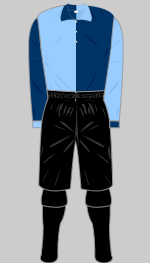
1883-1889 h r x E
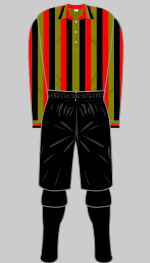
1889-1890 h r x
West Herts Cricket & Football Club & Ground
1890
Formed when Watford Rovers were absorbed into West Herts Club & Ground
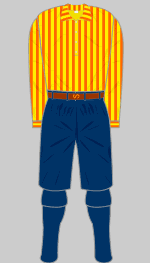
1890-1893 s E
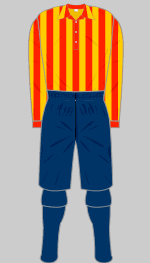
1893-1897 h q r s
Watford St Mary's
1894
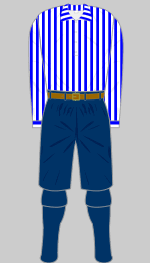
1894-1898 z
Watford
1898
Formed by the amalgamation of West Herts and Watford St Mary's
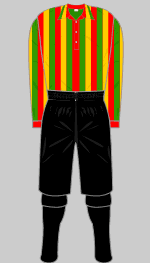
1898-1901 q r s
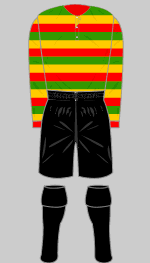
1901-1909 h q s z
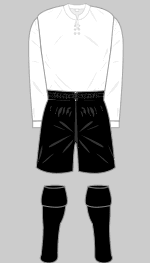
1909-1910 s
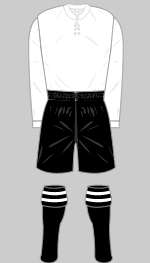
1910-1914 h s
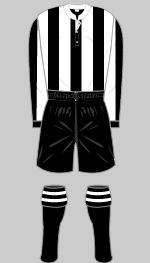
1914-1919 h
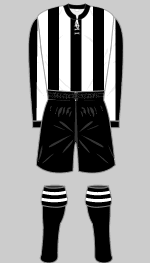
1919-1921 s A
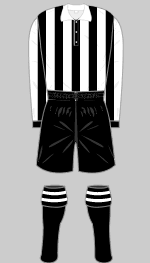
1921-1922 w
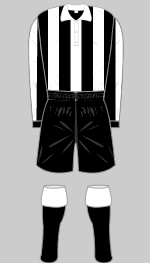
1922-1924 s
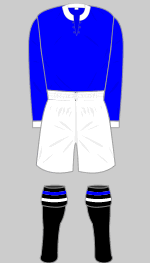
1927-1928 g s B C D
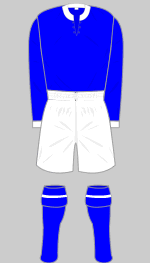
1928-1929 D
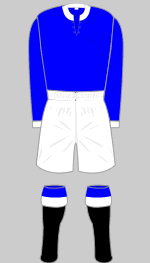
1935-1936 B D
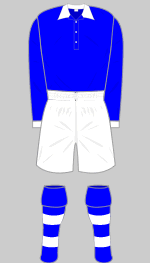
1936-1939 b D
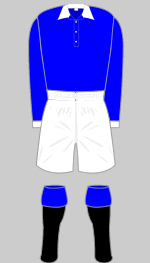
1946-1947 v D
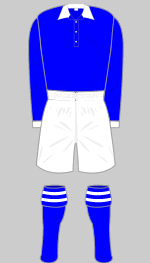
1947-1948 w v D
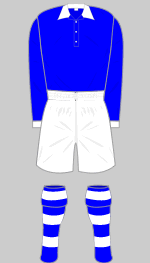
Aug-cSept 1948 v D
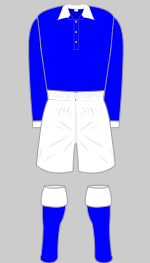
cOct 48-1952 t w v D
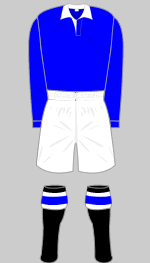
1952-1955 b p v D
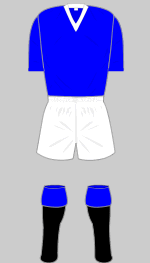
Aug 1955 v
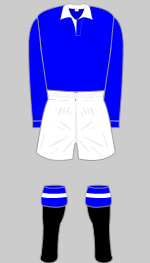
Sept 55-1956 v
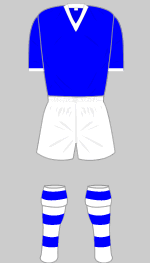
1956-1957 v
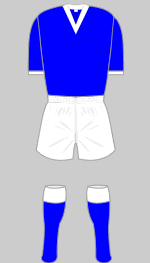
1957-March 59 p v
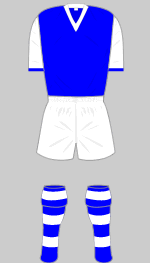
April-May 1959 v
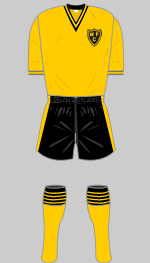
1959-1961 c v

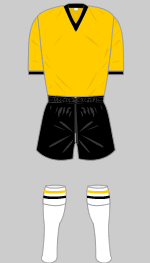
Oct 61-1962 v
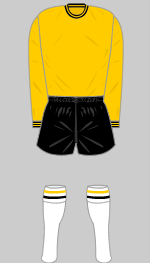
4 April 1962 v
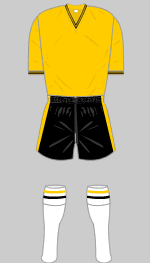
Aug-Sept 1962 v
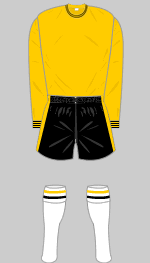
Sept 62-March 63 v
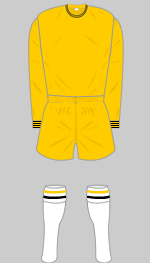
April-May 1963 y
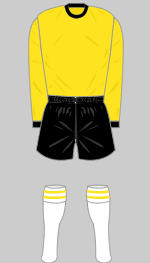
1963-1964 v
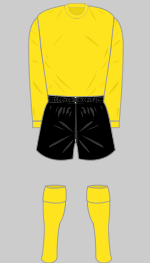
1964-1965 v
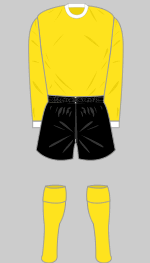
Oct 64-1965 a v
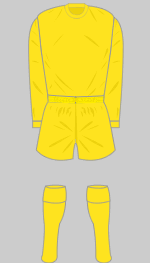
August 1965 v
Sept 65-April 68 v
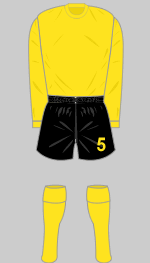
April-May 68 v
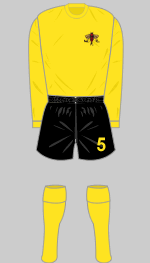
1968-1969 v
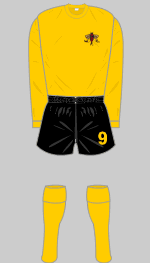
1969-Oct 1971 b d j v
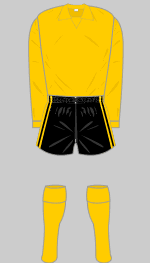
Nov 1971-1972 o
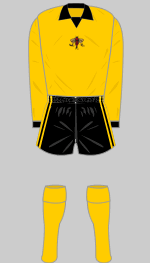
1972-1973 j o
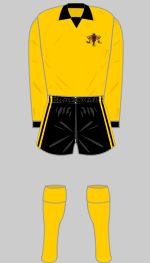
1973-Feb 1974 v
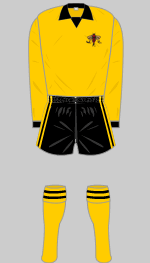
March-May 1974 v
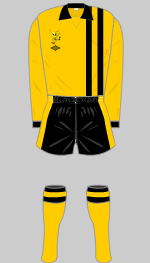
1974-1976 e j n u v
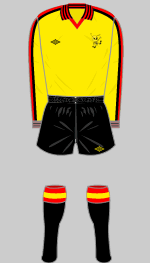
1976-1978 e j n v
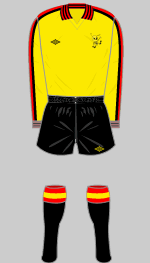
1977-1978 v
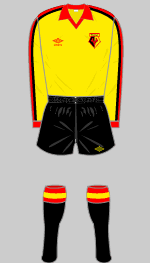
1978-1979 v
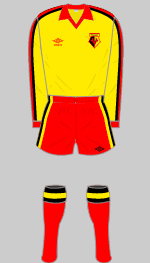
1979-1982 c e j
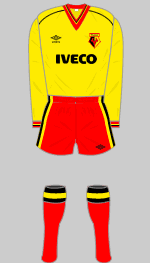
1982-1983 c k l
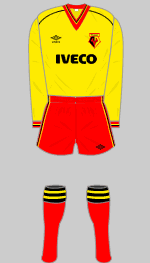
1983-1985 c e k l v
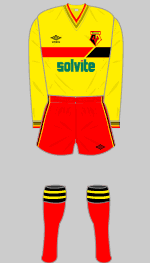
1985-1988 c e k l
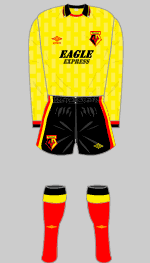
1988-1989 k m
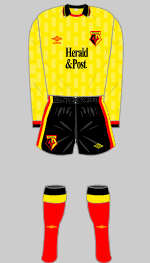
1989-1991 c i k m
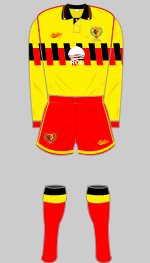
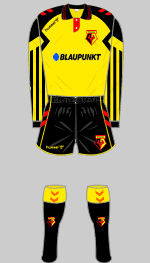
1993-1995 c k l
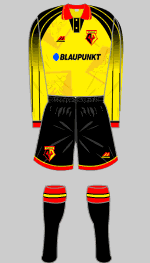
1995-1996 c k l
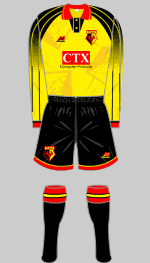
1996-1997 c k l
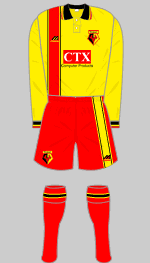
1997-1998 c k l
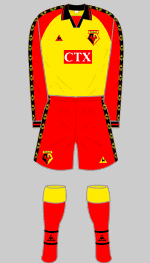
1998-1999 c k
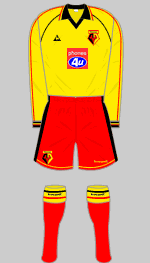
1999-2001 c k l
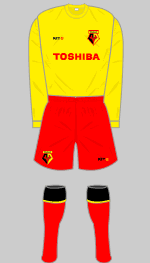
2001-2002 c
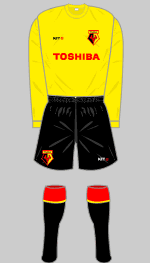
2002-2003 c
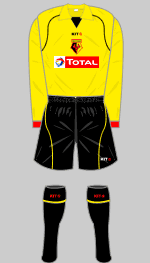
2003-2005 c k
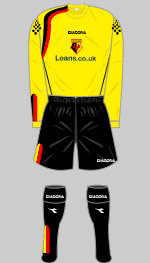
2005-2006 f k
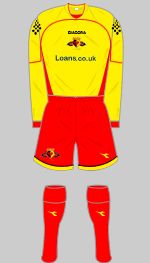
2006-2007 f k
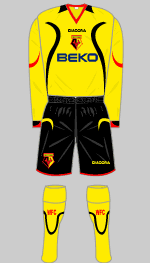
2007-2008 f v
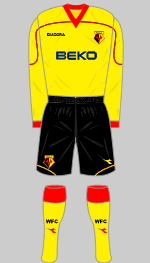
2008-2009 f
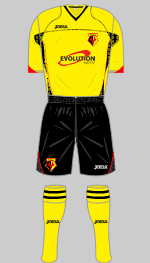
2009-2010 f
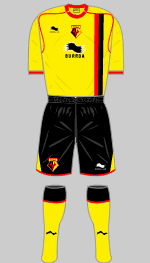
2010-2011 f
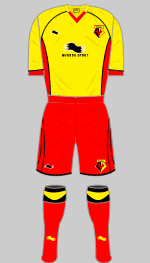
2011-2012 f
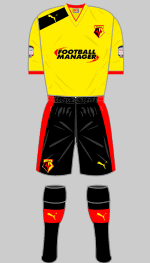
2012-2013 f
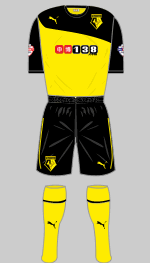
2013-2014 f
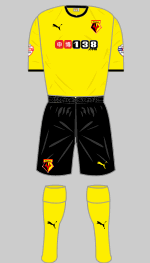
2014-2015 f
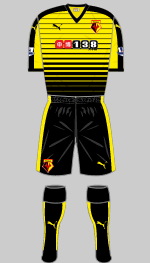
2015-2016 f
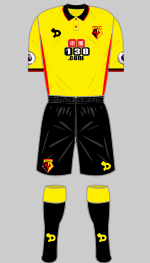
2016-2017 f
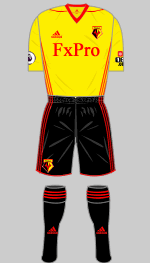
2017-2018 f
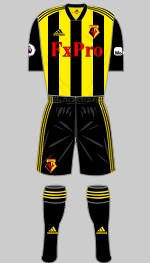
2018-2019 f
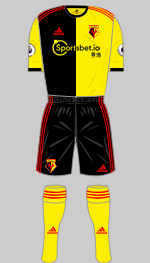
2019-2020 f

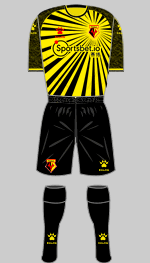
2020-2021 f
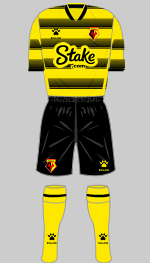
2021-2022 f
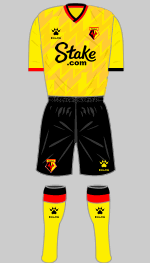
2022-2023 f
Background
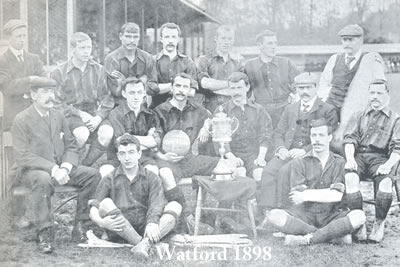 The club takes the year of its formation as 1881 when Watford
Rovers was formed. in 1890 the club was absorbed into the West Herts Club & Ground to form a football section alongside the other sports supported by the club, which included cricket, tennis and lacrosse.
The club takes the year of its formation as 1881 when Watford
Rovers was formed. in 1890 the club was absorbed into the West Herts Club & Ground to form a football section alongside the other sports supported by the club, which included cricket, tennis and lacrosse.
In 1896, the club joined the Southern League Second Division, turning professional the following year. For a period the town boasted two professional clubs but it quickly became clear that this was not sustainable and in 1898 it was mooted that West Herts and Watford St Mary’s FC merge. It was decided that both teams should complete their fixtures and in May 1898 the FA Council approved the merger and a new name, Watford FC.
The first mention of the club's colours dates from 1888, when their colours were described as blue. Over the next few seasons, press reports researched by Trefor Jones, describe various combinations of olive, scarlet and later orange and yellow or amber and scarlet. More recently (October 2018) Brian Webb discovered a press cutting from September 1889 that describes a match against Caledonians in which the Rovers players wore a variety of shirts including "the discarded light and dark blue." It goes on to say that "the new shirt, when it does appear, is to be in black and two colours, oiley olive and fiery scarlet." It is likely that knickers in various colours were worn at this time.
When the team kicked off as Watford FC in 1898 it was in attractive yellow, red and green vertical stripes. Around the turn of the century, the stripes changed to hoops.
In 1900 Watford won the Southern League Second Division title and in 1915 they won the Southern League championship itself. The hoops had been dropped in 1909 in favour of far more prosaic white shirts and black knickers and in 1914 black and white striped shirts were adopted.
Along with the rest of the Southern league First Division, Watford became
founder members of the new Third Division of the Football League in 1920. They made little
impression and in 1927, facing serious financial  difficulties, a new start was attempted: the club announced that the unpopular "semi-mourning" black and white strip was dropped in favour of blue and white.
Their old nickname of "The Brewers," which had never really caught on, was dropped and the team became "The Blues."
difficulties, a new start was attempted: the club announced that the unpopular "semi-mourning" black and white strip was dropped in favour of blue and white.
Their old nickname of "The Brewers," which had never really caught on, was dropped and the team became "The Blues."
The first evidence of a crest comes from 1927 when a simple shield with lettering appeared on Watford's plain white change shirts: it does not seem to have been worn on the first choice jerseys.
It has long been thought that Watford wore turquoise rather than conventional blue at this time. Graham Brack recalls reading an account by a former player who made his debut in 1936 and who mentioned that this unique colour was adopted in an attempt to avoid the expense of having to buy a set of change shirts (it wouldn't). Firm evidence has, however, proved elusive: the Northampton Chronicle & Echo (27 June 1927) notes a change of colour from black and white to turquoise with white collars but this is not from a match report. The colour is also mentioned in the 1934 Football Encyclopedia but this source has been found to be unreliable. Several items of memorabilia such as lapel badges feature turquoise tops and the colour was also given in some match programmes where Watford were the visiting team. In April 2021, Geoff Allen and Neil Dunham submitted definitive evidence to HFK based on hundreds of match reports and over 150 official Watford match programmes from the period that consistently describe the team's colours as royal blue and white. It would appear that the turquoise and white strip is one of those football myths that arise from a single, erroneous source that is repeated in other documents by lazy writers until it becomes accepted as fact.
 In the seasons preceding the Second World War Watford's performances
improved markedly and they finished in fourth place for four consecutive
seasons.
In the seasons preceding the Second World War Watford's performances
improved markedly and they finished in fourth place for four consecutive
seasons.
After the war, Watford continued to struggle and had to apply
for re-election in 1951.  The club crest of the period (which did not appear on team shirts) included a hart (male deer), the symbol of Hertfordshire. This motif would be revived much later on.
For the first few matches of the 1955-56 season the first team borrowed a set of Continental jerseys from the junior team before reverting to their heavier ong sleeved shirts when colder weather set in.
In 1959 Watford adopted gold and black along with a revival of the old crest from 1927: the effect
was more or less immediate. In 1960 they won promotion to the Third Division
where they stayed for nine seasons before winning promotion to Division
Two for the first time in 1969. A year later they reached 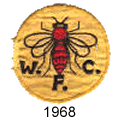 the FA Cup semi-final
where they were defeated by Chelsea.
the FA Cup semi-final
where they were defeated by Chelsea.
In late October 1961 gold shirts with plain black necks were adopted. The older tops. with the WFC crest and black/gold V necks continued to be used and both styes often appeared in the same match. Long sleeved shirts were worn just once in April 1962 before being passed on the reserves.
The "WFC" badge was dropped in 1962 and for much of the decade the team played in yellow rather than gold shirts with no adornments apart from various trims at collar and cuff, very much the fashion of the 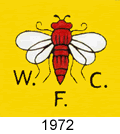 period. In 1968, however, in keeping with the new nickname adopted by their supporters' club, a red hornet was embroidered onto the shirts. This seems to have been dropped midway through the 1971-72 season but appeared again, with slightly different lettering, the season after.
A cartoon version 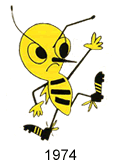 known as "Harry the Hornet" was adopted in 1974 but fripperies like this are rarely popular with hard-core supporters and Harry did not last long. Relegations in 1972 and 1975 took Watford back to Division Four.
In 1976
Watford made yet another change in their colours, this time 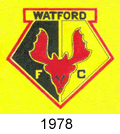 to yellow,
red and black. A new crest was introduced in 1978 that featured a hart (although it is frequently but incorrectly identified as the head of a moose). This striking image would serve the club for well over 30 years although there have been subtle design changes along the way.
to yellow,
red and black. A new crest was introduced in 1978 that featured a hart (although it is frequently but incorrectly identified as the head of a moose). This striking image would serve the club for well over 30 years although there have been subtle design changes along the way.
The arrival of pop star Elton John
as chairman in 1977 marked the  beginning of a remarkable climb to the
top. Graham Taylor was appointed manager and in 1978, “The Hornets”
stormed to the Fourth Division title. The following season they reached
the semi-finals of the League Cup and won promotion to Division Two.
beginning of a remarkable climb to the
top. Graham Taylor was appointed manager and in 1978, “The Hornets”
stormed to the Fourth Division title. The following season they reached
the semi-finals of the League Cup and won promotion to Division Two.
In 1982 Watford’s dream was realised with promotion to Division
One.  Against all expectation, they finished in second place behind Liverpool
the following season to secure a place in the UEFA Cup. In 1984 they reached
the FA Cup final where they lost 0-2 to Everton.
Against all expectation, they finished in second place behind Liverpool
the following season to secure a place in the UEFA Cup. In 1984 they reached
the FA Cup final where they lost 0-2 to Everton.
In 1987 Taylor resigned and was replaced by Dave Bassett. Watford were
relegated in 1988 and, having narrowly missed promotion in their  first
season, the club struggled. In 1996, Graham Taylor returned as general
manager but he could not prevent relegation to Nationwide
Division Two (formerly the Third Division).
first
season, the club struggled. In 1996, Graham Taylor returned as general
manager but he could not prevent relegation to Nationwide
Division Two (formerly the Third Division).
In 1998 they won the championship and a year later, they beat Bolton
Wanderers in the play-off final to earn a place in the Premier  League. This
time they could not hold on to their status and were relegated the following
season, seven points adrift at the foot of the table.
League. This
time they could not hold on to their status and were relegated the following
season, seven points adrift at the foot of the table.
Watford made semi final appearances in the FA Cup (2003) and League Cup
(2005) while in the second flight before they unexpectedly beat
Leeds United in the play-off final to make another brief return to the Premiership.
To mark the occasion, which coincided with their 125th anniversary, the
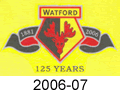 club adopted a kit featuring red shorts not unlike the one worn in the
First Division during the 1980s and a suitably modified crest.
club adopted a kit featuring red shorts not unlike the one worn in the
First Division during the 1980s and a suitably modified crest.
In June 2012 ownership was transferred from Laurence Bassini to the Pozzo family who had previously owned the Italian club, Udinese and three seasons later they won promotion back to the Premier League having finished as runners-up in the Championship.
For the 2018-19 season, striped shirts were introduced, a startling break with tradition. That season the team reached the FA Cup final for only the second time in their history but came up against Manchester City at their peak and on the way to a domestic treble. Their 6-0 defeat equalled the record set in the 1903 final. The following August tradition was also abandoned and a halved shirt was worn during what proved to be a relegation season. Rather than return to their familiar style, an outlandish design from the Spanish sportswear manufacturer Kelme was introduced for their first season back in the Championship. They finished as runners-up and returned to the Premier League at the first time of asking but went straight down again.
Sources
- (a) Club Colours (Bob Bickerton 1998)
- (b) Swindon Town FC - Images of Sport (Richard Mattick 2000)
- (c) empics
- (d) Football Focus
- (e) Classic Kits
- (f) Watford Official Website
- (g) The Football Encyclopaedia (Associated Sporting Press 1934)- information provided by Arthur Fergus
- (h) Trefor Jones - the club's official historian
- (i) Greg Hattingh
- (j) Pete's Picture Palace
- (k) True Colours 2 (John Devlin 2006)
- (l) David King
- (m) Pat Heywood
- (n) Steve Atkinson
- (o) Alick Milne
- (q) Watford Junction
- (r) Wayne Godfrey
- (s) Sarah Priestley, Heritage Officer, Watford Museum
- (t) Simon Monks
- (u) Christopher Worrall
- (v) Geoff Allen
- (w) Keith Ellis (HFK Research Associate)
- (x) Watford Observer (28 September 1889) submitted by Brian Webb.
- (y) Mick Rollitt
- (z) Brian Webb
- (A) Football & the First World War
- (B) eBay
- (C) Northampton Chronicle & Echo (27 June 1927) submitted by Greger Lindberg
- (D) Geoff Allen & Neil Dunham
- (E) Charles Alcock's Football Annuals 1869-1891 researched by Robin Horton
Crests are the property of Watford FC. Crest artwork provided by Geoff Allen.