

Tranmere
Rovers
Formed 1884
Founder member of Division Three (North) 1921. Relegated to the National League 2015.
Promoted to League Two 2018.
Kit History
Belmont
1884
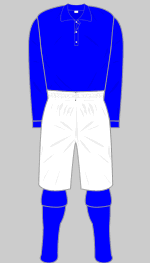
1884-1885 a l

Tranmere Rovers
1885
Formerly Belmont
1885-1889 a l
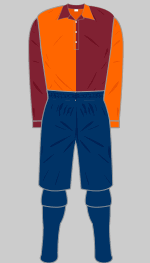
1889-1904 b m

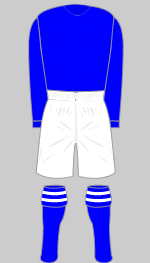
1904-1908 b
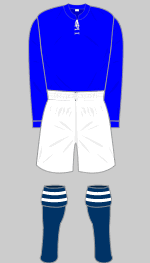
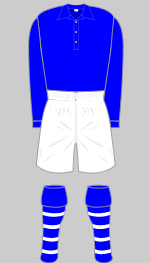
1937-1939 b k
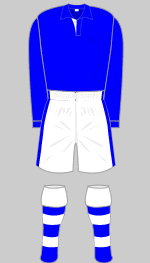
1947-1948 b
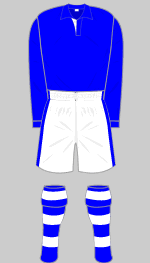
1948-1955 b d
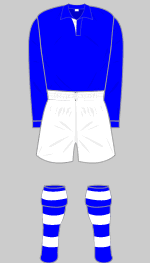
1955-1956 b
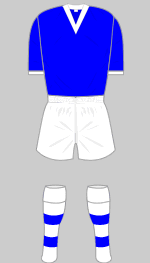
1957-1962 b e
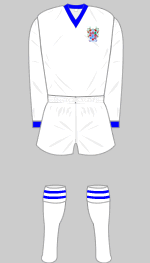
1962-1964 b n
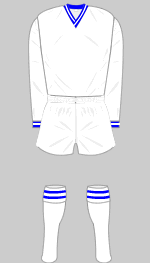
1964-1965 b
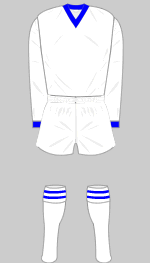
1965-1966 b
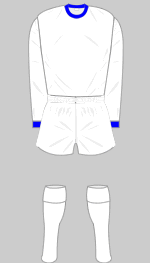
1966-1967 b
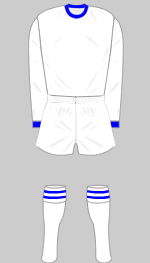
1967-1968 b
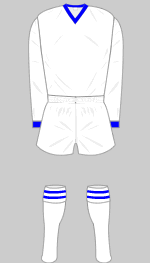
1968-1970 k p
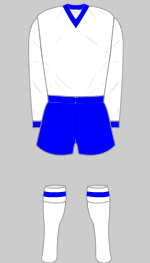
1970-1971 g
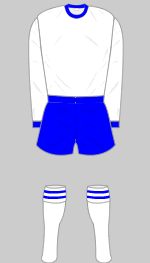
1971-1972 b
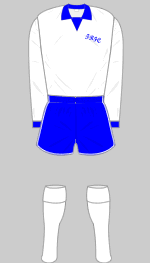
1972-1973 b g

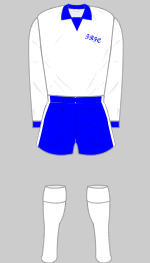
1973-1975 h
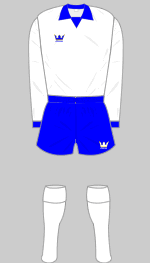
1975-1976 b h
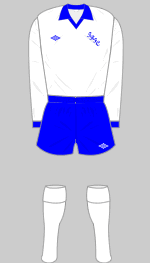
1976-1977 h
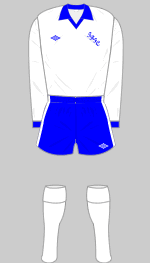
1977-1979 b h
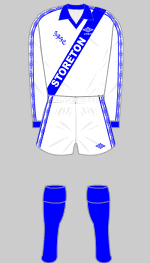
1979-1980 b
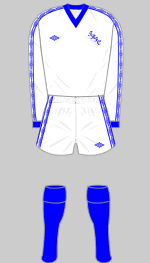
1980-1981 i
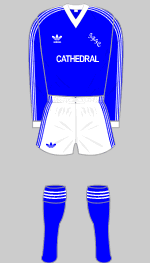
1981-1982 b i
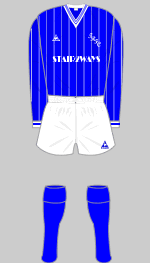
1982-1983 b i
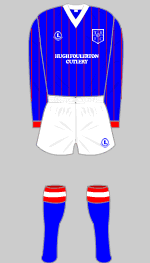
1983-1985 b h j
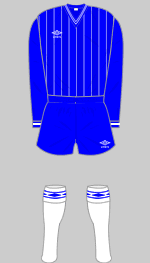
1985-1986 b
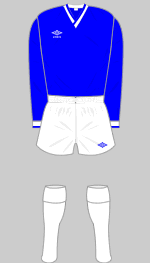
1986-1987 b e
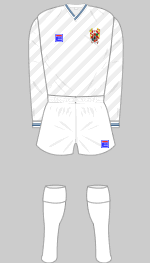
1987-1988 b i
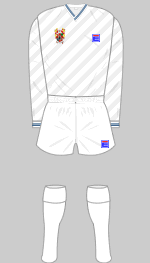
1988-1989 b i
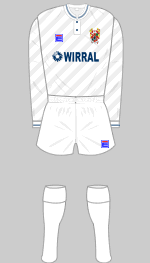
1989-1991 b i
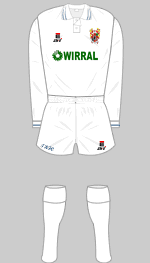
1991-1993 b i
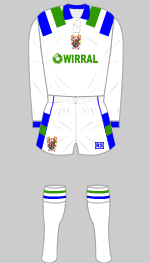
1993-1995 b i
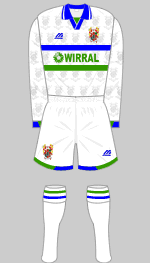
1995-1997 c i
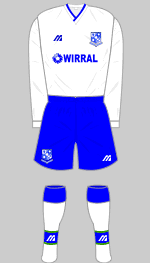
1997-1999 c
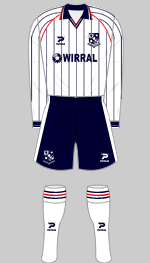
1999-2000 c i
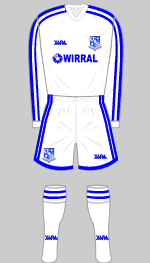
2000-2002 c i
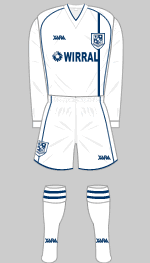
2002-2004 c i
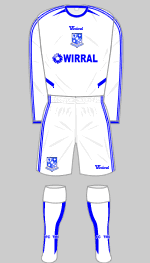
2004-2005 a
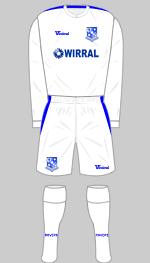
2005-2007 a o
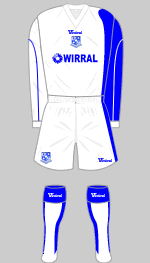
2007-2009 a i
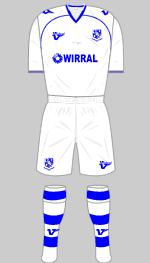
2009-2010 a
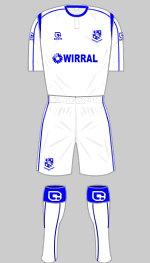
2010-2011 a
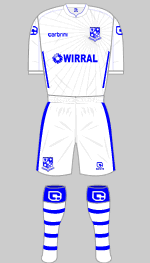
2011-2012 a
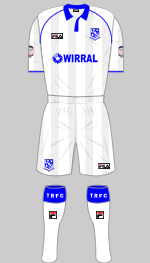
2012-2013 a
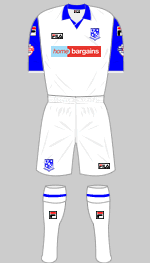
2013-2014 a
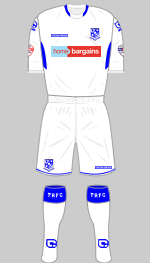
2014-2015 a
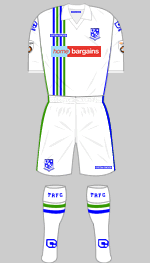
2015-2016 a
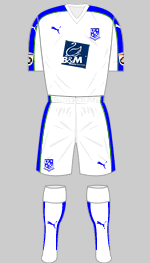
2016-2017 a
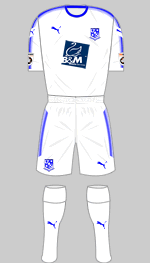
2017-2018 a
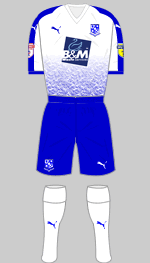
2018-2019 a
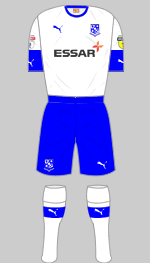
2019-2020 a
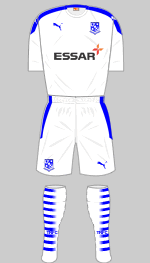
2020-2021 a
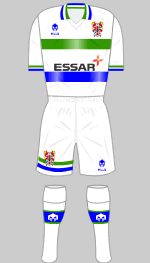
2021-2022 a
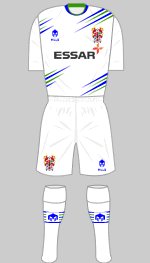
2022-2023 a
Background
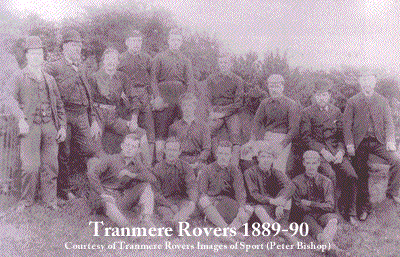 Originally this Birkenhead club was formed as
Belmont FC following the amalgamation of Lyndhurst Wanderers FC and Belmont
Cricket Club, adopting the blue and white colours of Lyndhurst. Within a year they changed their name to Tranmere Rovers
FC.
Originally this Birkenhead club was formed as
Belmont FC following the amalgamation of Lyndhurst Wanderers FC and Belmont
Cricket Club, adopting the blue and white colours of Lyndhurst. Within a year they changed their name to Tranmere Rovers
FC.
In 1887 the club moved into a ground at Ravenshaws Field, which was later renamed Prenton Park. In 1889 Rovers adopted spectacular orange and maroon shirts but these were abandoned in 1904 in favour of the earlier blue and white kit. In 1912 they moved to a new ground at the junction of Temple Road, Prenton Road West and Woodchurch Lane and retained the name Prenton Park: this remains their home to the present. After competing in the Liverpool & District League and then the Lancashire Combination, Rovers stepped up to the Central League in 1919. Their timing proved providential because the following season, four central league clubs were invited to join the new Division Three (North), Rovers among them.
In 1924 a young Dixie Dean, one day short of his
17th birthday, debuted for the club, scoring 27 goals in 30 games before
being transferred across the Mersey to Everton, where he set a goal-scoring
record likely to stand for all time. Rovers remained no more than an average
side but did spend one season (1938-39) in Division Two. During the 1950s
the club was in the doldrums although by finishing in 11th place in 1958,
they  did achieve a place in Division Three when the regional divisions
were scrapped. A mere three years later they were relegated to Division
Four.
did achieve a place in Division Three when the regional divisions
were scrapped. A mere three years later they were relegated to Division
Four.
The club had managed without any kind of official crest for almost 75 years but in 1958 it was decided to make some sort of effort to establish a visual identity and a rudimentary badge was introduced. This appeared on the track suit tops of players and officials but not on team shirts.
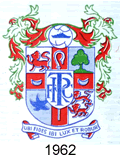 In August 1962 manager Dave Russell introduced an all-white kit that set Rovers apart from
their illustrious Mersey neighbours, Everton. This was adorned with a brand new crest designed by Liverpool Echo cartoonist, Harry Handford, based on the Birkenhead coat of arms with a few additional touches including a warship emblazoned against a football to signify the area's shipbuilding heritage and the club's initials at the centre. The crest was dropped in 1964 probably to save money.
In August 1962 manager Dave Russell introduced an all-white kit that set Rovers apart from
their illustrious Mersey neighbours, Everton. This was adorned with a brand new crest designed by Liverpool Echo cartoonist, Harry Handford, based on the Birkenhead coat of arms with a few additional touches including a warship emblazoned against a football to signify the area's shipbuilding heritage and the club's initials at the centre. The crest was dropped in 1964 probably to save money.
In 1972 Rovers adopted a cypher, a popular motif at the time and this appeared for the  next 11 years.
After struggling for eight seasons, Rovers were relegated back to the Fourth Division in 1975 but sprang straight back in 1976. Three years later Tranmere were again relegated to Division Four and faced oblivion due to mounting debts. The club was saved by the generosity of fans and a £200,000 loan from Wirral Metropolitan Council. The partnership proved an enduring one and 30 years later, Wirral MBC's logo still appeared on players' shirts.
 In 1980 Rovers reverted to their traditional blue
shirts but performances were bleak and in 1981 they were forced to apply
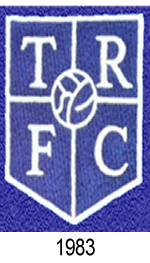
for re-election. A rather unimaginative crest was worn between 1983 and 1985 but as financial problems loomed, the team turned out in
In 1980 Rovers reverted to their traditional blue
shirts but performances were bleak and in 1981 they were forced to apply
for re-election. A rather unimaginative crest was worn between 1983 and 1985 but as financial problems loomed, the team turned out in 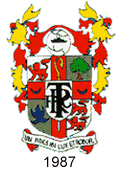 unadorned generic strips from the Umbro catalogue.
In 1987 another financial crisis loomed and the club went into administration but was saved from catastrophe when local entrepreneur Peter Johnson bought the club. The all-white strip was restored and the old coat of arms crest was reintroduced.
Rovers won promotion to Division Three in 1989 and then, in 1991 they beat Bolton Wanderers in the play-off final to secure promotion to Division Two. That summer ex-Liverpool goal scoring hero John Aldridge was signed from Real Sociedad for £250,000. Over the next eight years Aldridge scored 170 goals for the club who reached the play-offs three seasons in succession (1993-1995).
 In March 1995 a reconstructed Prenton Park was
opened, underlining the board's confidence in the long term future of
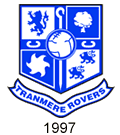
the Wirral club. The new look was completed with the introduction of a new and simpler crest in 1997.
In March 1995 a reconstructed Prenton Park was
opened, underlining the board's confidence in the long term future of
the Wirral club. The new look was completed with the introduction of a new and simpler crest in 1997.
Aldridge took on the role of manager in 1999 and led the team to the Worthington (League) Cup final in 2000 where they lost 1-2 to Leicester City. Aldridge resigned after Rovers were relegated to Nationwide Division Two (previously Division Three) in 2001.
Tranmere Rovers have always existed in the shadow
of their mighty neighbours Liverpool and Everton. The success of the 1990s
during which the club repeatedly came within a whisker of achieving 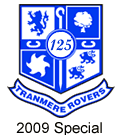 Premier
League status is a testament to the club's supporters and board.
Premier
League status is a testament to the club's supporters and board.
Although league success has eluded Rovers, they earned a considerable reputation as cup fighters in the new millennium, reaching the FA Cup quarter finals three times between 2001 and 2004 as well as the League Cup final in 2000.
To mark their 125th anniversary in 2009-10, a subtle alteration was made to the crest (for that season only).
In February 2013 Tranmere were briefly top of League One but they faded and missed out on the play-offs. Their form continued to decline and successive relegations meant they lost their place in the Football League in 2015 after 94 years. The strip adopted for their first season in the National League  (previously the Conference) reintroduced the green trim associated with their successful teams of the mid 1990s.
In an epic play-off final in May 2018, Tranmere beat Boreham Wood 2-1 with a goal in the 81st minute despite having a player sent off in the opening minute of the game. They then took the unusual step of introducing a secondary crest, which consisted of the monogram found in the centre of the elaborate 1987 crest. This appeared on the change 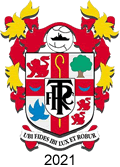 and third strips in 2018-19 as well as on flags and signs around Prenton Park. The season ended with the Rovers winning a second promotion via the play-offs but they dropped back into League Two in 2020.
During the summer of 2020 the club launched a competition, inviting supporters to design the new team strip. A shortlist of four designs were then submitted to a fans vote. The winning design, by Benjamin Longthorne, was modeled on the popular Mizuno outfit from 1995-97, reintroducing green to the design and including a full colour crest. The finished article was produced by an Indonesian sportswear company and proved an instant hit. As a result, management set up another competition for the following season.
Sources
- (a) Official Tranmere Rovers Website
- (b) Tranmere Rovers FC (Images of Sport - Peter Bishop)
- (c) empics
- (d) York City FC - Images of Sport (David Batters)
- (e) Pete's Picture Palace
- (f) David King
- (g) Football League Review
- (h) Alick Milne
- (i) Tranmere Hatman
- (j) Chris Worrall
- (k) Keith Ellis
- (l) Conor Ritchie
- (m) Gilbert Upton
- (n) 1958 and 1983 crest images courtesy of Planet Prentonia, the history of Tranmere's badges.
- (o) Rhos Lawrence
- (p) Tony Sealey
Crests are the property of Tranmere Rovers FC.