



Swansea
City
Formed 1912
Founder member of Division Three 1920
Kit History
Swansea Town
1912
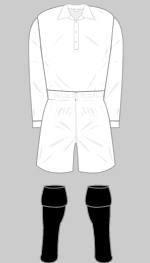
1912-1914 a
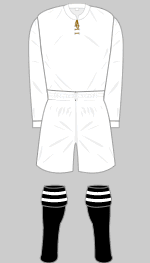
1914-1921 q
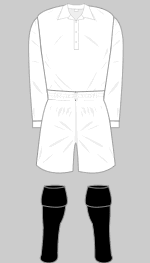
1921-1922 q
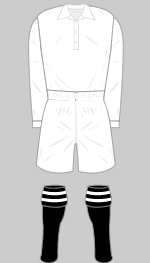
1922-1925 q
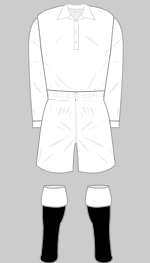
1925-1933 a q w
1933-1934 w
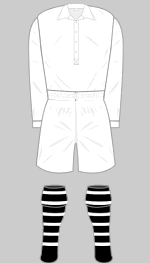
1934-1935 w x
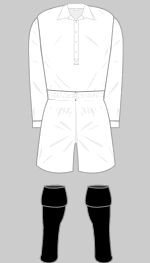
1935-1936 w x
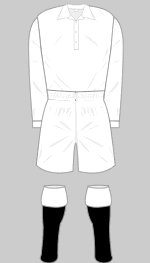
1936-1937 f
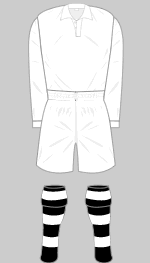
1938-1942 q

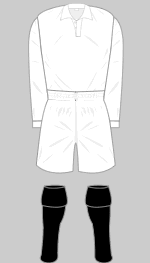
1945 q
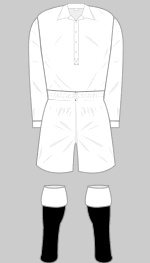
1946-1949 c r q
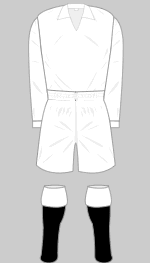
Aug-Sept 1950 q
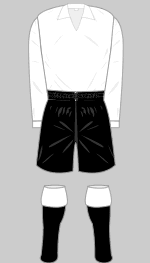
Oct 50-1951 q
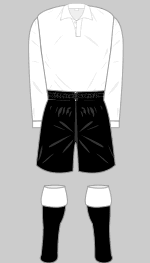
1951-1953 q
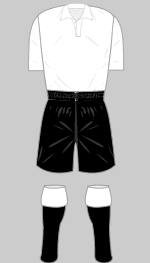
1953-1954 q
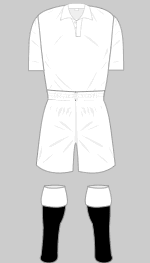
1954-1955 q
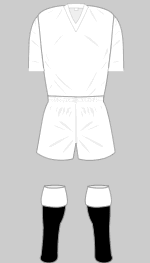
1955-Feb 56 q
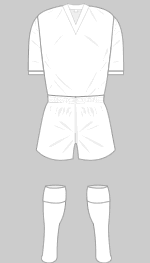
March-May 56 o r q
Aug-Dec 56 q z
Jan 57-1959 q
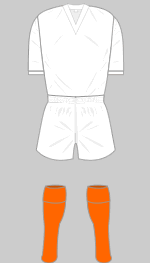
1959-1960 g r q
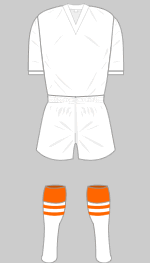
1960-1961 r
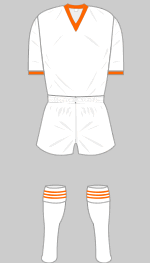
1961-1962 t y
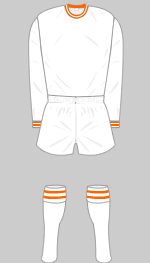
1962-1963 h j o s
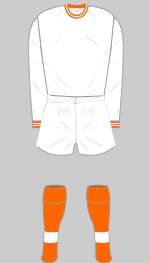
1963-1964 a
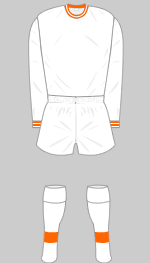
1964-1965 s
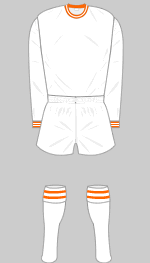
1965-1966
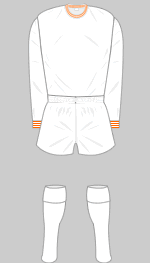
1966-1967 c
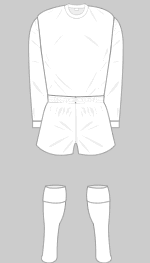
1967-1968 o r

1968-1969
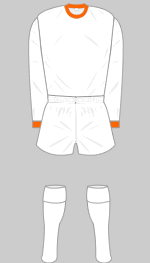
1969-1970 r
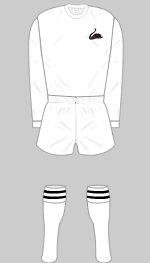
1970-1971 d j r
Swansea City
1971
1971-1972 d j r
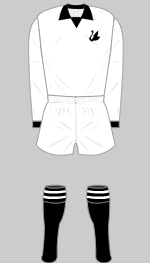
1972-1973 m
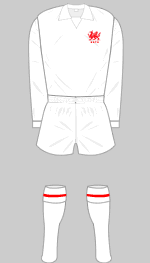
1973-1976 d m u
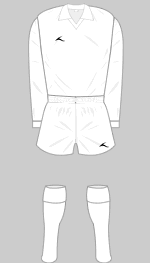
1976-1977 n
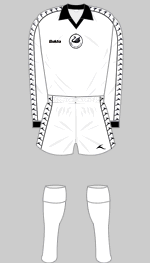
1977-1978 n
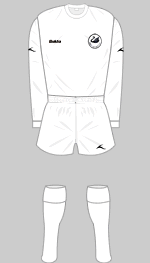
1978-1979 m n
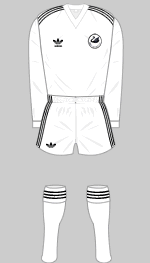
1979-1981 a j
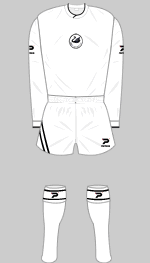
1981-1984 c j
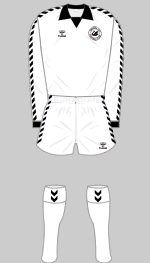
1984-1985 q
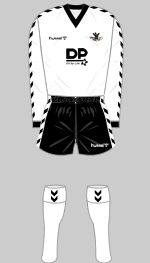
1985-1986 d p
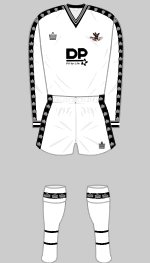
1986-Aug 1987 d
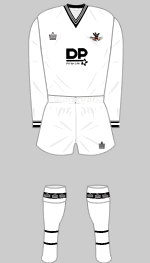
Sept 87-April 1988 m
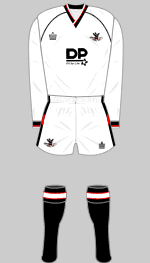
April 1988-1989 h k m
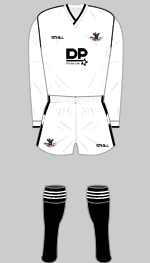
1989-1991 h k
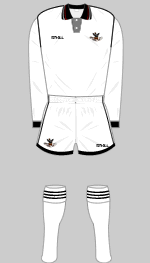
1991-1992 k
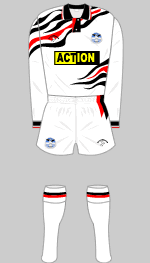
1992-1993 i
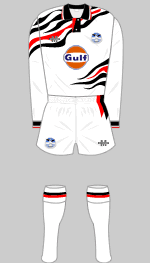
1993-1994 c
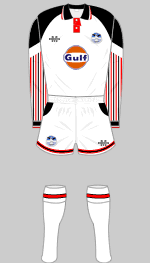
1994-1995 c k
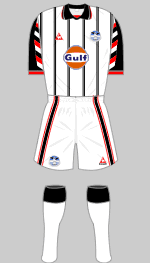
1995-1996 c k
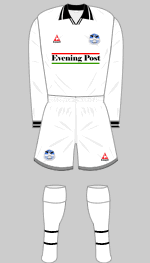
1996-1997 d
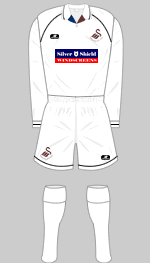
1998-1999 c k
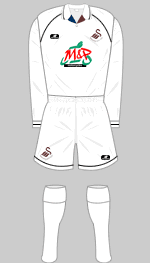
1999-2000 c
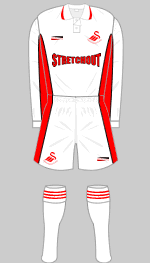
2000-2001 c k
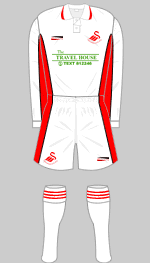
2001-2002 c k
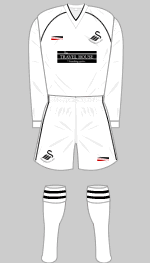
2002-2003 e k
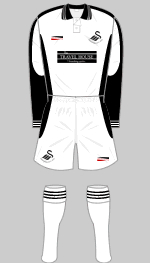
2003-2004 c
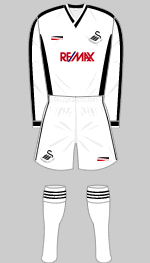
2004-2005 e k
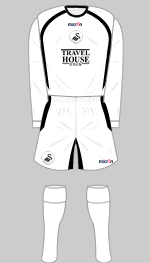
2005-2006 e
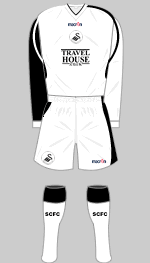
2006-2007 e
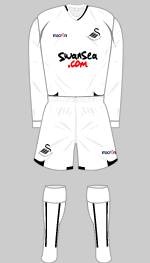
2007-2008 e l
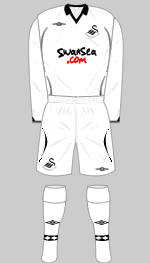
2008-2009 e
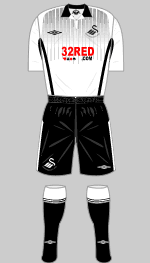
2009-2010 e
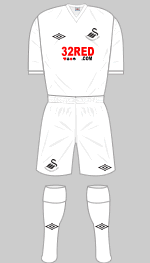
2010-2011 e
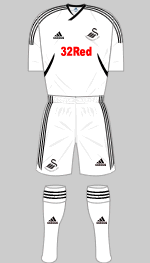
2011-2012 e
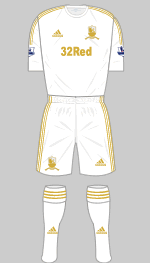
2012-2013 e
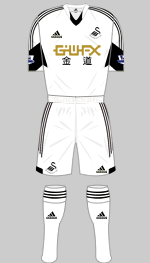
2013-2014 e

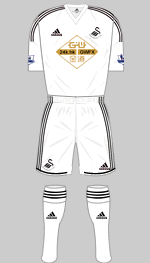
2014-2015 e
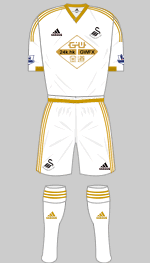
2015-2016 e
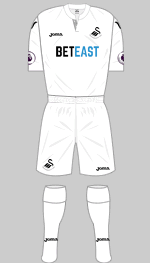
2016-2017 e
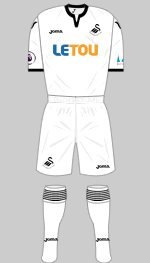
2017-2018 e
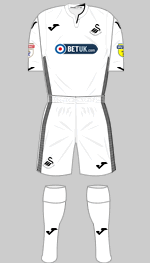
2018-2019 e
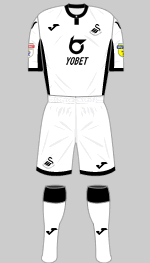
2019-2020 e
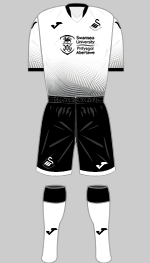
2020-2021 e
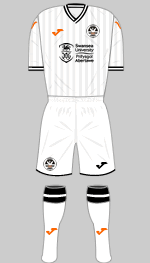
2021-2022 e
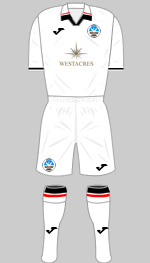
2022-2023 e

Background
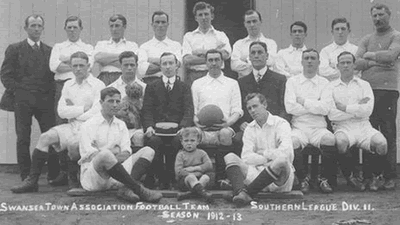 Long before Swansea Town came into being, children had played football
on a piece of waste ground on which vetch - a cabbage-like plant used
for cow feed - grew wild. Vetch Field, as it became known, was leased
by the Swansea Gas Light Company to the Swansea League who laid out clinker
pitches. In 1912, Swansea Town were formed as a professional club and
took up residence. This was an ambitious venture given the dominance of
rugby union in the area. The new football club adopted the same all white
strip as Swansea RUFC and apart from a few seasons when black shorts were
introduced, they have worn all-white for most of their career. The club
was known as Swansea Town but they changed their name when Swansea was
granted City status in 1970.
Long before Swansea Town came into being, children had played football
on a piece of waste ground on which vetch - a cabbage-like plant used
for cow feed - grew wild. Vetch Field, as it became known, was leased
by the Swansea Gas Light Company to the Swansea League who laid out clinker
pitches. In 1912, Swansea Town were formed as a professional club and
took up residence. This was an ambitious venture given the dominance of
rugby union in the area. The new football club adopted the same all white
strip as Swansea RUFC and apart from a few seasons when black shorts were
introduced, they have worn all-white for most of their career. The club
was known as Swansea Town but they changed their name when Swansea was
granted City status in 1970.
People born in the town (and by extension the fans of the football club) are known as "Swansea Jacks." According to the SwansOnline.net web site, there are two possible origins for this nickname. The first is a reference to the high reputation of local seamen ("Jack Tars") in the early nineteenth century. There was also a famous black retriever called Swansea Jack who rescued no fewer than 27 people from drowning in the River Tawe and Swansea Docks during the 1930s.
 The Swans were admitted to the Second Division of the Southern League
and there they remained until they won promotion immediately before the
First World War. As a result, they became founder members of Division
Three when the Southern League Division was incorporated in 1920. They
were a strong side in those days, winning promotion to the Second Division
in 1925 as champions of Division Three (South). The following season they
finished fifth in Division Two and reached the semi-finals of the FA Cup.
During the 1930s the club's fortunes declined but they staved off relegation
until the season immediately after the Second World War. They did not
stay down for long, winning the Third Division (South) championship and
promotion in 1949. They stayed in the Second Division for another sixteen
seasons, reaching the FA Cup semi-final once again in 1964. The Swans
also enjoyed the first of many European campaigns in 1961 by virtue of
winning the Welsh FA Cup, a competition they have won ten times to date.
The Swans were admitted to the Second Division of the Southern League
and there they remained until they won promotion immediately before the
First World War. As a result, they became founder members of Division
Three when the Southern League Division was incorporated in 1920. They
were a strong side in those days, winning promotion to the Second Division
in 1925 as champions of Division Three (South). The following season they
finished fifth in Division Two and reached the semi-finals of the FA Cup.
During the 1930s the club's fortunes declined but they staved off relegation
until the season immediately after the Second World War. They did not
stay down for long, winning the Third Division (South) championship and
promotion in 1949. They stayed in the Second Division for another sixteen
seasons, reaching the FA Cup semi-final once again in 1964. The Swans
also enjoyed the first of many European campaigns in 1961 by virtue of
winning the Welsh FA Cup, a competition they have won ten times to date.
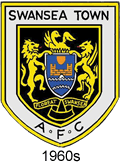
 In the early Sixties the club adopted the town coat of arms as its official crest. This appeared on programmes and stationary but not on the team shirts. (This badge did in fact appear on the 2019-20 third strip to celebrate the fiftieth anniversaryof Swansea
  being awarded city status.)
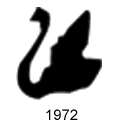
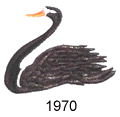
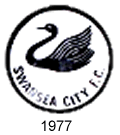
In 1965 Swansea slipped into Division Three and then Division Four in 1967. Hopes were rekindled in 1970 when promotion was achieved. The following season the title "City" replaced "Town" and a black swan was embroidered onto the traditional white shirts. The shape of the swan changed somewhat in 1972 and then, in 1973, perhaps in a bid to gain wider support across Wales, the swan was briefly replaced by a Welsh dragon.
 The Swans were now back in the basement and in 1975 they faced the humiliation
of
The Swans were now back in the basement and in 1975 they faced the humiliation
of 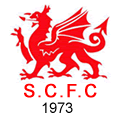 having to apply for re-election. There followed a remarkable revival
under player-manager John Toshack, with successive promotions in 1978
and 1979 taking the club back into Division Two. In 1981, Swansea were
promoted to the First Division finishing in a remarkable sixth place in
1982. The circular crest associated with that brief period of success in the First Division was adopted in 1975.
having to apply for re-election. There followed a remarkable revival
under player-manager John Toshack, with successive promotions in 1978
and 1979 taking the club back into Division Two. In 1981, Swansea were
promoted to the First Division finishing in a remarkable sixth place in
1982. The circular crest associated with that brief period of success in the First Division was adopted in 1975.
The decline that followed was even more dramatic. Relegated in 1983 and
1984, Swansea City was formally wound up on 20 December 1985. Fortunately
a group of directors put 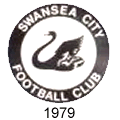 together a rescue package and permission was
 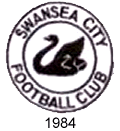 granted for the club to continue its fixtures. For 12 months the future
of the club hung in the balance and, unable to sign or loan new players,
Swansea were relegated to Division Four in 1986. However, the High Court
finally approved the new board's rescue plan and Swansea City survived.
Not only that, they won promotion to Division Three in 1988 and five years
later reached the play-offs.
granted for the club to continue its fixtures. For 12 months the future
of the club hung in the balance and, unable to sign or loan new players,
Swansea were relegated to Division Four in 1986. However, the High Court
finally approved the new board's rescue plan and Swansea City survived.
Not only that, they won promotion to Division Three in 1988 and five years
later reached the play-offs.
The crest adopted in 1985 featured a castle, from the city coat of arms, as well as the familiar swan, now with outstretched wings. Two variations appeared 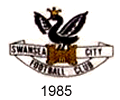 in the Nineties before being replaced, in 1998, with an elegant, abstract
 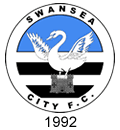 design that proved far more enduring than any of its predecessors.
In 1996, Swansea were relegated to what was now Nationwide Division Three
(the old Fourth Division). Promoted as champions in 2000, the Swans lasted
only one season at the higher level. During the 2001-02 season the club
changed hands several times and was again on the verge of bankruptcy,
narrowly avoiding relegation to the Conference in 2003. By 2005, however,
there was a new air of optimism at the club as t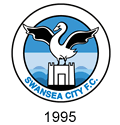 hey prepared to leave
the Vetch Field after more than 90 years to move into the new purpose-built
Liberty Stadium.
hey prepared to leave
the Vetch Field after more than 90 years to move into the new purpose-built
Liberty Stadium.
 In 2008 Swansea ran away with the League One title and with it promotion to the Championship.
After the team played in black shorts during 2009-10, the clubs supporters voted overwhelmingly for a return to traditional all-white the following season. Wearing a pristine Umbro strip, Swansea won through to the play-offs and beat Reading in the final to become the first Welsh side to play in the Premier League. Not bad for a club that had changed  hands for just £1 a decade earlier.
To mark their centenary, a commemorative crest was introduced for the 2012-13 season  as well as a home strip trimmed in metallic gold. Their 100th season proved a memorable one: Swansea won the League Cup, their first major trophy, and finished in a comfortable ninth place in the Premier League. After seven seasons in the top flight Swansea were relegated in May 2018.
For the 40th anniversary of their first ever promotion to the top tier in 1981, the club  introduced a new crest for the 2021-22 season. Confusingly this was based on a design that was introduced more than a decade later, in 1992. This was altered the following season with the introduction of a light blue background that had featured on the original.
Sources
- (a) Swansea City 1912-1982 (David Farmer)
- (b) Club Colours (Bob Bickerton)
- (c) empics
- (d) Vetch Field Voices (Keith Haynes and Phil Sumbler 2000)
- (e) Swansea City Official Website
- (f) York City FC - Images of Sport (David Batters)
- (g) Football Focus
- (h) Welsh Football Data Archive
- (i) Wayne Davies/Andy Mollett
- (j) Pete's Picture Palace
- (k) David King
- (l) Football Shirt Culture
- (m) Kevin Watts
- (n) Alick Milne
- (o) Keith Ellis (HFK Research Associate)
- (p) Sean Kinsella
- (q) 100 Years of Swansea City
- (r) ebay
- (s) Peoples Collection Wales
- (t) Wales Online
- (u) Ray Williams
- (v) Gordon Hulmes
- (w) Tony Sealey
- (x) Nik Yeomans
- (y) Peter Stevenson
- (z) Selwyn Rowley
Crests are the property of Swansea City AFC.