




Stoke
City
Formed
1868. Wound up in 1908
Re-formed in 1908.
Founder member of the Football League 1888. Failed re-election 1890.
Elected back into the Football League 1891. Resigned 1908.
Elected to Division Two 1915.
Kit History
Stoke Ramblers
1868
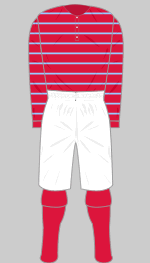
1868-1870 E B
Stoke
1870-1908
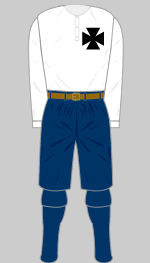
1871-1872 F
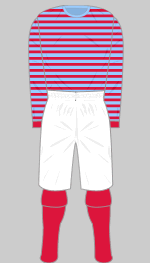
1873-1874 (1) b B
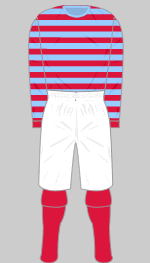
1873-1874 (2) b B
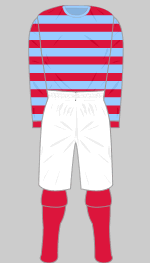
1873-1874 (3) b B
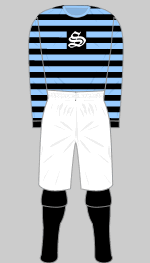
1874-1885 b B
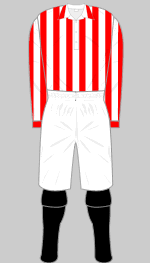
1885-1887 i B
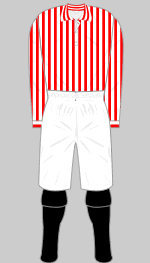
1887-1888 i
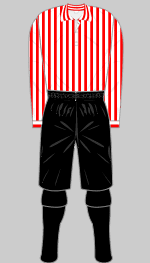
1890-1891 b
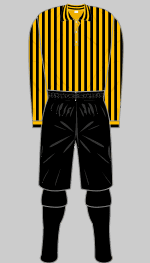
1891-1892 i
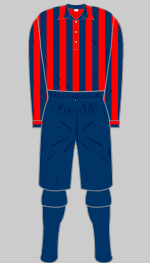
1892-1893 i
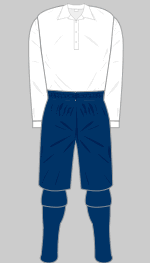
1893-1894 i
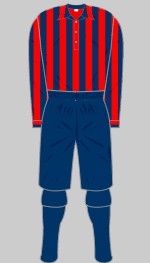
1894-1897 b i
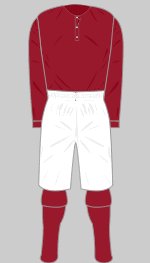
1897-1898 i
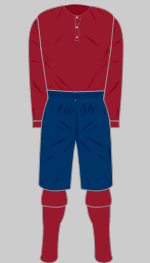
1898-1900 i A
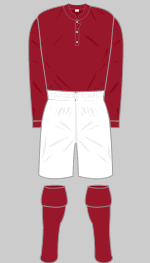
1901-1903 b i
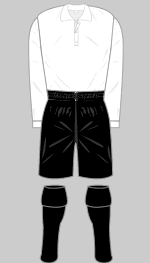
1903-1904 i
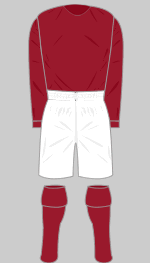
1904-1908 b i v
Re-formed as Stoke FC in 1908 after the old club was wound up.
First teams played in both the Southern League and Birmingham & District League.
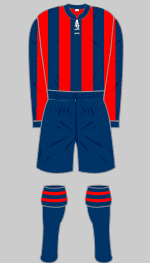
1908-1915
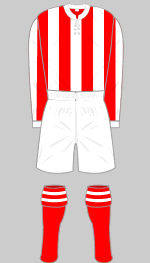
1908-1915 b i v
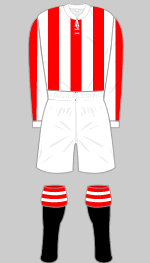
1918-1919 v
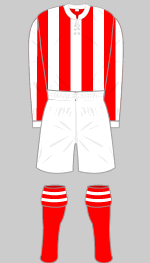
1919-1920 v
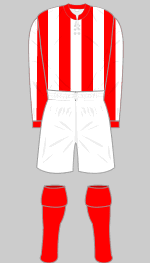
1921-1922 b
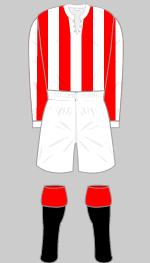
1922-1923 v
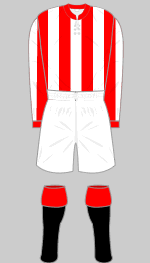
1924-1925 b
Stoke City
1925
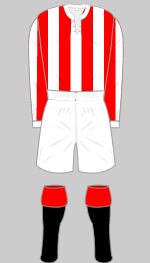
1926-1927 v
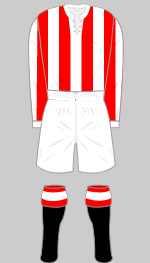
1929-1930 v
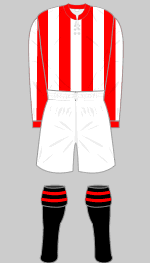
1930-1932 i
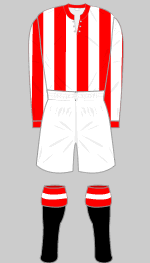
1932-1937 b v
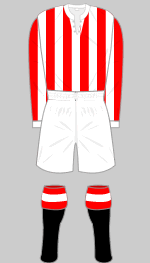
1937-1938 b v
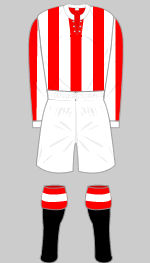
1938-1945 i v
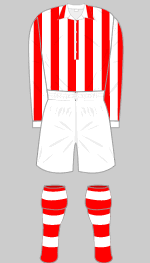
1945-1946 b
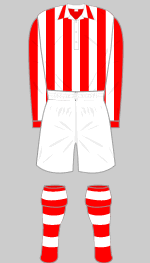
1946-1949 k i r
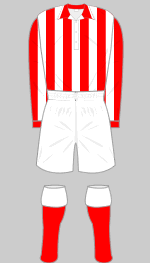
1949-1950 v
1950-1952 b v
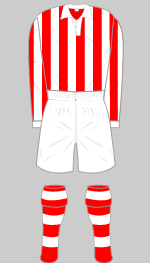
1952-1953 v
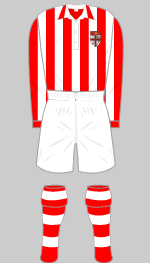
1953-1954 k

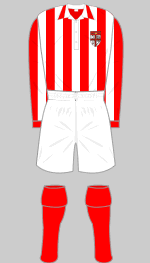
1954-1957 c d r v
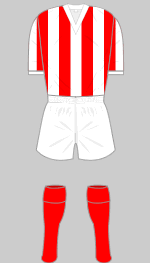
1957-1958 v
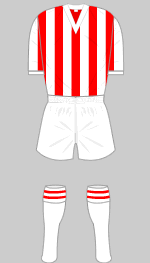
1958-1959 v
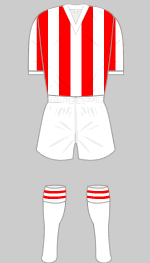
1959-1960 k v
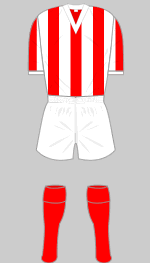
1960-1961 m
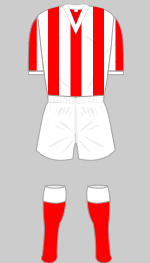
1961-1963 e
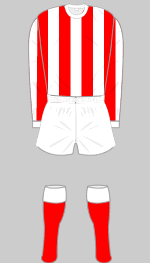
1961-1963 v
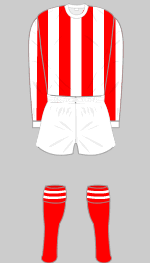
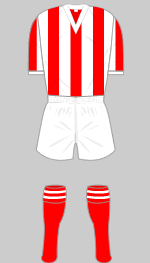
1964-1965 m v
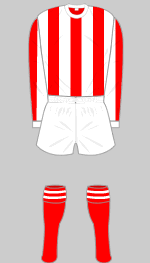
1965-1968 v
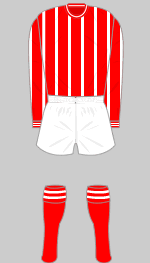
Spring 65-66 g x y
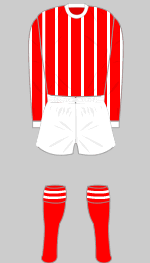
Aug 66 & May 67 x
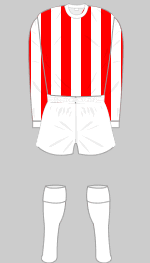
Aug-Dec 68 b d g n o
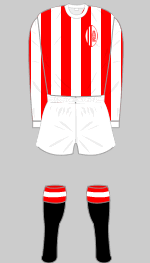
Dec 68-March 69 x z
March 69-72 b d g n o
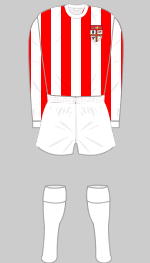
72 Lge Cup Final C
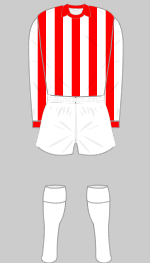
1972-1973 b o x
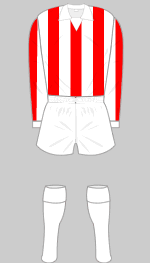
1973-1974 1 e o x
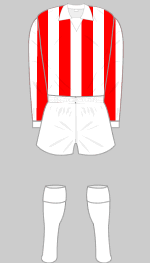
1973-1974 2 D
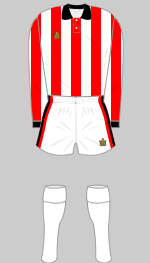
1974-1975 1 u
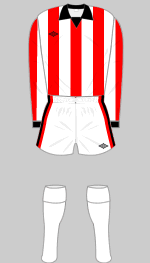
Nov 74-May 75 2 d o x
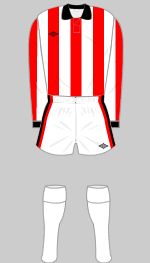
1975-1976 u
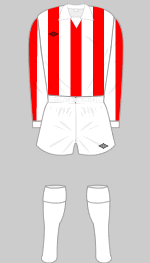
1976-Feb 1977 o
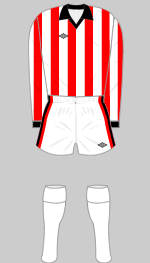
Feb-May 1977 u
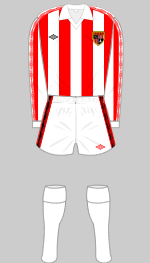
1977-1981 b d l
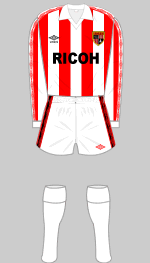
1981-1982 b l p
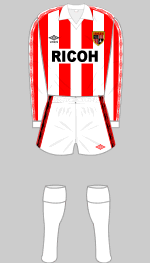
1982-1983 b l p
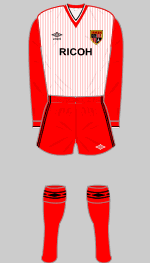
1983-1985 b e p
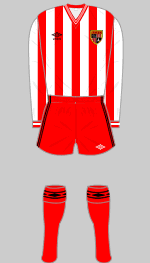
1985-1986 h
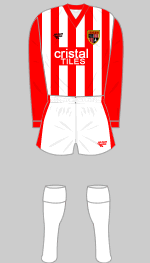
1986-1987 b d w
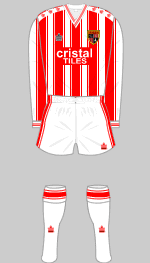
1987-1989 h l p
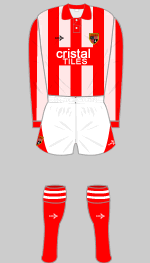
1989-1990 b p w
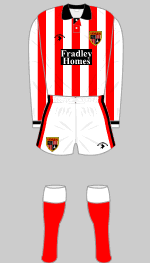
1990-1991 h p
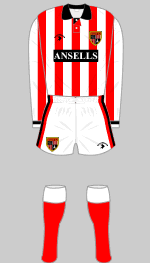
1991-1992 b p
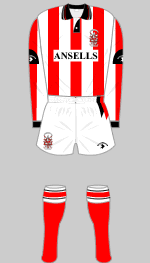
1992-1993 b e j p
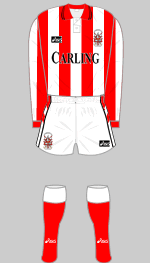
1993-1994 e j p w
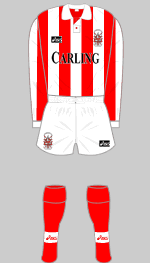
1994-1995 b e p
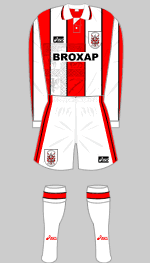
1995-1996 b e j
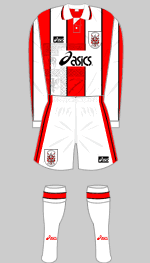
1996-1997 b e j
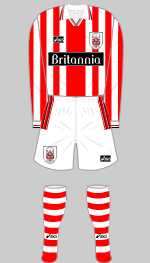
1997-1999 b e j
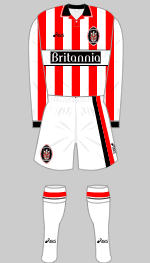
1999-2001 e l p
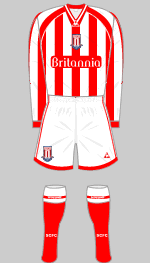
2001-2003 e
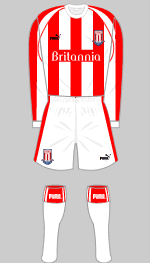
2003-2004 e l
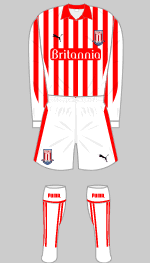
2004-2005 e j

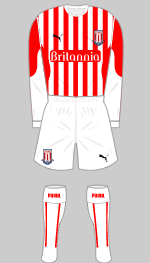
2005-2006 a e l s t
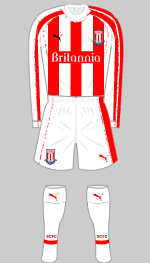
2006-2007 a
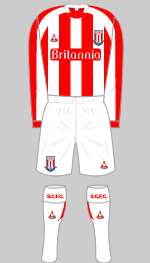
2007-2008 a
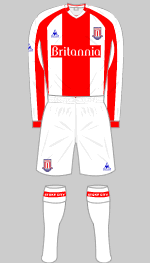
2008-2009 a
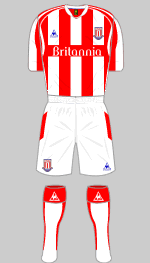
2009-2010 a
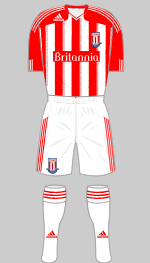
2010-2011 a
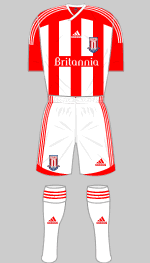
2011-2012 a
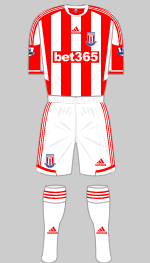
2012-2013 a
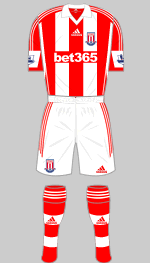
2013-2014 a
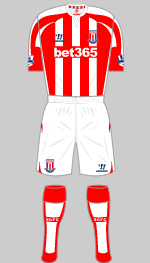
2014-2015 a
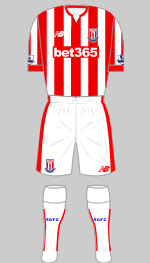
2015-2016 a
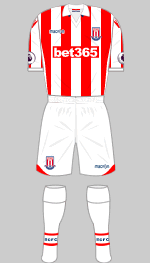
2016-2017 a
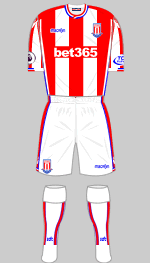
2017-2018 a
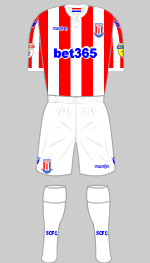
2018-2019 a
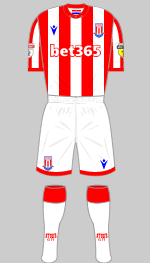
2019-2020 a
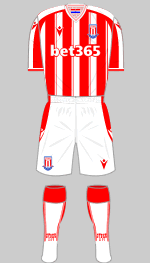
2020-2021 a
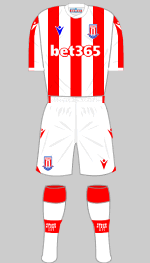
2021-2022 a
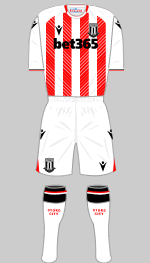
2022-2023 a
Background
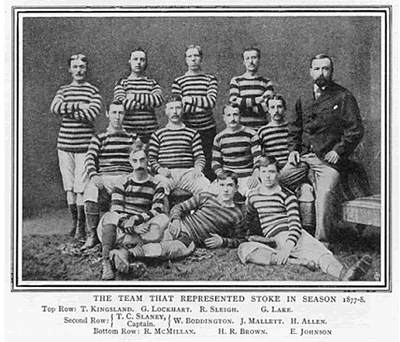
The official history of the club holds that it was formed in 1863 by former pupils of Charterhouse School working as apprentices at the North Staffordshire Railway Works. There is, however, no evidence of any official matches taking place.
A report in The Field magazine (September 1868) states that "a new Association Football club had been formed in Stoke-on-Trent by a former Charterhouse School pupil, Henry Almond." There is no official record record of the colours that the new club, named Stoke Ramblers, wore but there is a distinct possibility that Almond brought a set of Charterhouse's crimson and blue jerseys with him for the team to play in.
According to new research by Jonathon Russell (September 2019), a report in The Birmingham Post on a match in December 1868 stated that, "The Ramblers is a new club, only started this season," casting further doubt on the official history.
Their first match was a fifteen-a-side game against EW May's XV which ended as a 1-1 draw (Almond scored for the Ramblers). This appears to be the only match Almond played in: according to The Sportsman he had, "from unavoidable circumstances left the district." Russell has established that he would go on to work as a civil engineer on the railways of Costa Rica and Venezula.
Thereafter the record becomes ambiguous. The name of Stoke Football Club is first mentioned in the Liverpool Daily Post in 1869 in an item about one Mr Clague who had appeared in the Ramblers team in December the previous year. In October 1870 the Staffordshire Sentinel reported that, "Stoke Football Club which has had two successful seasons playing under the title of The Ramblers held a preliminary meeting for the purpose of deciding what should be done in the ensuing winter." However, the Ramblers' name continues to crop up until December 1871 after which it disappears. (Research by Jonathon Russell.)
There are several possible explanations for this confusion. Perhaps the journalists just got muddled over the club's name. Another possibility is that there were two separate clubs that shared some members, a common situation at a time of lax registration rules. A third possibility is that after Stoke FC came into being in 1870 the Ramblers continued as their second XI, also not unusual.
The club rule book from 1871-72 stated that the team jerseys would be white with a black Maltese cross. In CW Alcock's Football Annual for 1873 their colours are gven as crimson and blue. The next entry is from the 1879 annual which gives their colours as blue and black. Players provided their own kit at this  time and their tops often did not match, which explains the variations in the width of the hoops. In the 1882-83 season some players applied a stylised letter "S" to their jerseys which I now believe may have been the badge of the Staffordshire FA, sewn onto the club shirts of players chosen to represent their county.
Stoke merged with Stoke Victoria Cricket Club in 1878 and the combined club played at the Athletic Club ground which soon became known as the Victoria Ground where they played until 1997.
Stoke entered the FA Cup for the first time in 1883 and turned professional two years later. When the Football League was formed in 1888, Stoke were one of the 12 founder members.
Stoke finished bottom in both of their first two seasons, winning only seven matches throughout and lost their place to Sunderland in 1890 without a vote being taken. After finishing as champions of the Football Alliance in 1891, Stoke were voted back into the Football League following the decision to add two more clubs for the 1891-92 season. New regulations required that clubs now register their colours with the League and no two clubs could wear the same kit so Stoke wore black and gold in league games, retaining their red and white stripes for other competitions. Again they had to seek re-election at the end of the season but they held on to their place. Between 1895 and 1898 they had to contest test matches to avoid relegation to the new Second Division. They remained in the First Division (wearing claret shirts) until 1907 when a growing financial crisis came to a head following relegation to Division Two and gates plummeted. In 1908, having finished in mid-table, Stoke went into liquidation and resigned from the League. Ironically this galvanised local businessmen, the clergy (the Victoria Ground was owned by the Church of England) and supporters to form a new limited company and purchase the old club's assets. The new club applied to rejoin the League but were, perhaps not suprisingly, rejected in favour of Tottenham Hotspur.
Stoke now fielded first teams in both the Birmingham & District League and the Southern League. In the Birmingham League the team played in red and white shirts while the team that played in the Southern league continued to turn out in blue and red. In 1915, having finished as champions of the Southern League Second Division, Stoke were elected back into the Football League for the third time but, with all professional football suspended for the duration of the Great War, it was not until 1919 that they played their first fixture. In 1922, Stoke were promoted to Division One only to be relegated the following season. In 1926, now known as Stoke City, the club dropped into Division Three (North) but bounced back as champions in 1927. In 1933 Stoke won the Second Division championship to return to the First Division, with a 17-year-old Stanley Matthews playing 15 matches in his first season.
As Matthews grew in reputation, so did attendances,
which went from an average of 11,500 to 23,000 and in 1934, the directors
announced that the club was in the black for the first time. By the end
of the decade, with Matthews at its heart, Stoke has a strong side that
was widely expected to win honours but the Second World War intervened.
The side that reassembled for the 1946-47 season comprised most of the
pre-war squad, albeit six years older. They came within one win of clinching
the championship but lost their final 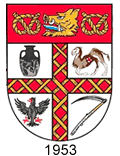 match at Sheffield United. Even
worse, Matthews left in May to join Blackpool.
match at Sheffield United. Even
worse, Matthews left in May to join Blackpool.
The club crest, which was based on the coat of arms of the city of Stoke, appeared on the team's shirts for the first time in 1953. The various elements are taken from the individual arms of the towns that were brought together in 1910 to form the county borough of Stoke-on-Trent: Burslem, Longton, Tunstall, Fenton and Stoke. This crest was dropped after four seasons.
In 1953, City dropped into Division Two: crowds
dwindled and the club seemed to be going nowhere. In 1961, however, manager
Tony Waddington pulled off a coup by persuading Matthews, now 46, to rejoin
the club. Overnight, attendances trebled with 35,974 fans paying to watch
his homecoming, paying off his £3,000 transfer fee into the bargain
and in 1963, with Matthews 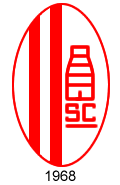 weaving his magic on the right wing, Stoke
won the Second Division championship in their centenary season. In 1965,
now a knight, Stanley Matthews played his last game for Stoke at the remarkable
age of 50.
weaving his magic on the right wing, Stoke
won the Second Division championship in their centenary season. In 1965,
now a knight, Stanley Matthews played his last game for Stoke at the remarkable
age of 50.
In May 1966 Stoke adopted a candy-striped shirt that was worn in the warmer months at the end of the season before it was dropped.
For several months in the 1968-69 season a novel "kiln badge" was adopted. This was 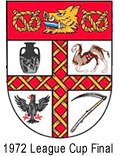 designed by David Herd who had joined Stoke from Manchester United the previous summer.
England goalkeeper, Gordon Banks, signed from Leicester City for £52,000, became the mainstay of Stoke's side in the early 1970s and in 1972 they won their first major honour, beating Chelsea 2-1 to capture the League Cup. For this match only the 1953 crest was worn on the team shirts.
For the next few seasons, Stoke challenged for the championship (finishing fifth in 1974 and 1975) and enjoyed two European campaigns but in 1977 they were relegated.
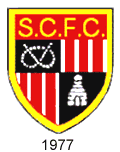 A new and simpler club crest was introduced in 1977: a Stafford knot and pottery kiln represented local tradition while red and white stripes were added.
 In 1979 Stoke were
back in the First Division but it was a struggle to retain their place:
after a radical change of kit in 1983, they were relegated in 1985 to
Division Two and then in 1990 they dropped into Division Three.
In 1979 Stoke were
back in the First Division but it was a struggle to retain their place:
after a radical change of kit in 1983, they were relegated in 1985 to
Division Two and then in 1990 they dropped into Division Three.
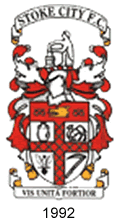
A turning point was reached in 1991-92 when Lou Macari was appointed manager. The team won the Football League trophy and, the following season were promoted as Division Two (now the third tier) champions. During Macari's tenure, the full Stoke coat-of-arms was adopted as the club's crest, with their name added to a scroll at the top.
 Stoke reached the play-offs in 1996 and the following year moved into the brand new Britannia Stadium, officially opened by Sir Stanley Matthews on 30 August 1997. Relegated again in 1998, Stoke were taken over by an Icelandic Consortium during the 1998-99 season.
Under their new ownership Stoke adopted a modernist crest in 2001 and came
 through the play-offs to return to Nationwide Division One at the end of the season. Seven years later, in 2008 they were promoted to the Premier League after a gap of 23 years and in 2011 reached the FA Cup final for the first time in their long history, losing 0-1 to Manchester City.
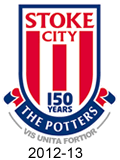
A special crest was commissioned for the 2012-13 season, which marked the club's 150th anniversary, with their Latin motto (United Strength is Stronger) underneath.
Sources
- (a) Stoke City Official Website
- (b) Stoke City FC - Images of Sport (Tony Matthews 1999)
- (c) Bury FC - Images of Sport (Peter Cullen 1998)
- (d) Football Focus
- (e) empics
- (f) Ipswich Town FC - Images of Sport (Tony Garnett 2000)
- (g) Football Cards
- (h) The Oatcake Website - part of the Rivals network, this site has an interesting section on kits worn since the 1970s.
- (i) Pete Wyatt - HFK Research Associate
- (j) David King
- (k) Conn Barrett
- (l) True Colours 2 (John Devlin 2006)
- (m) Greger Lindberg
- (n) Football League Review provided by Simon Monks
- (o) Alick Milne
- (p) True Colours 2 (John Devln 2006)
- (q) "A History of British Football" (Percy M Young) provided by Peter Ferrette.
- (r) Simon Monks
- (s) Nick Brayford
- (t) Mike Pinkstone
- (u) Chris Worrall
- (v) Keith Ellis (HFK Research Associate)
- (w) Daniel Martin
- (x) Anthony Sealey
- (y) William Kay
- (z) Keith MacKenzie-Ingle
- (A) Daily Telegraph (March 20 1899) submitted by Kingsley (Wrexham FC)
- (B) Charles Alcock's Football Annuals 1869-1891 researched by Robin Horton
- (C) Andy Sharp
- (D) YouTube
- (E) Jonathon Russell
- (F) Stoke on Trent FC 1871-72 extract from rule book submitted by Sam Boodell
Crests are the property of Stoke City FC. Team photograph courtesy of Stoke City FC. Details of the 1968 kiln badge researched by Keith MacKenzie-Ingle (November 2015).