

Stirling
Albion
Formed 1945
Elected to Division “C” 1946
Kit History
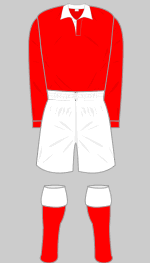
1945-1946 a
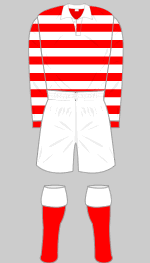
1946-1947 a
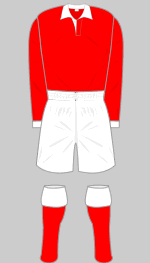
1947-1948 a
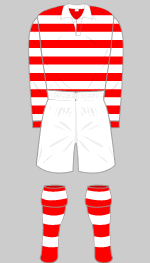
1948-1949 a
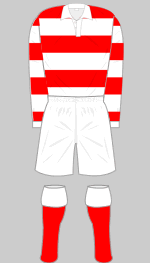
1949-1950 p
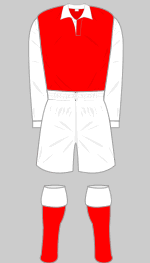
1950-1953 a
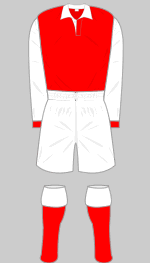
1953-1954 a
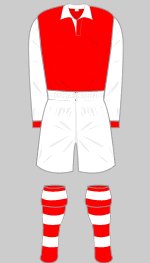
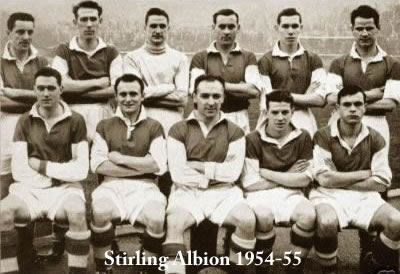
1954-1955 a
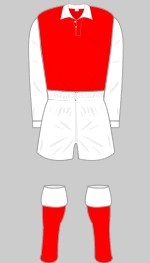
1955-1956 a b
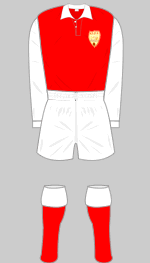
1956-1957 p q
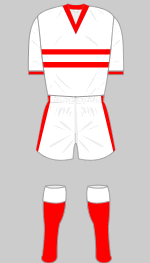
1957-1959 a p
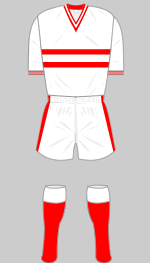
1959-1961 a
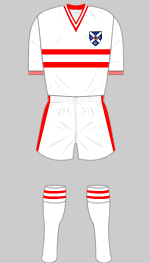
1961-1964 a
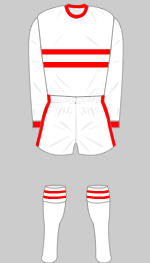
1964-1965 a
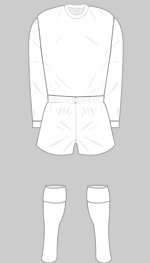
1965-1966 a
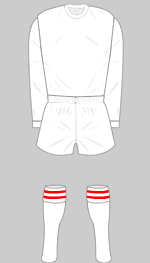
1966-1967 a p
1967-1968 p
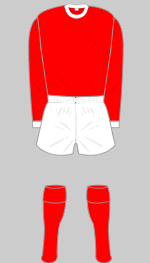
1968-1970 a
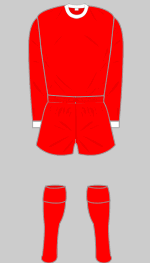
1971-1973 a
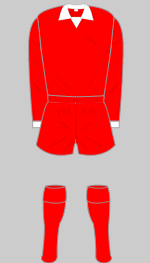
1974-1977 a c
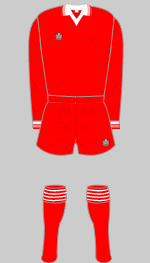
1977-1980 a b
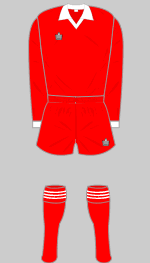
1980-1981 b l

1981-1984 g i l
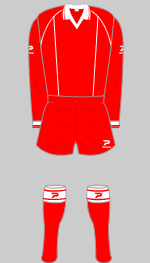
1984-1985 l
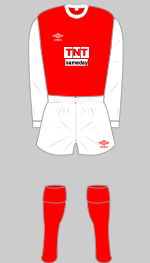
1985-1986 b l
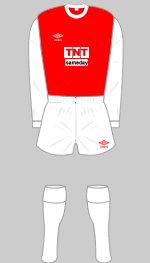
1986-1987 b l
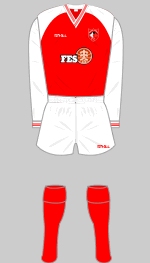
1987-1991 d l
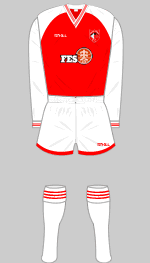
1991-1993 e l
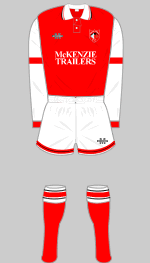
1993-1995 d k

Aug 1995 p
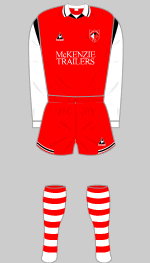
Sept 95-1996 d l n p
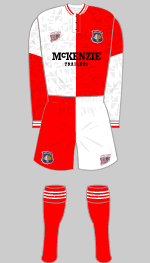
1996-1998 d k l o
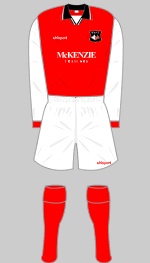
1998-1999 k l
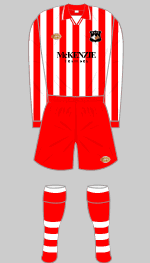
1999-2000 k l
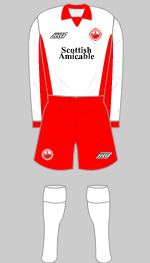
2000-2001 d
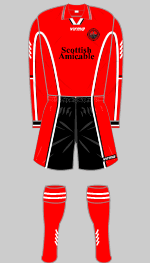
2001-2002 d
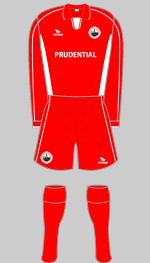
2002-2004 d
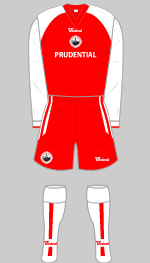
2004-2005 d
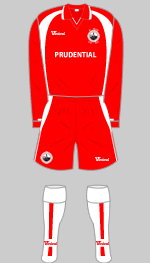
2005-2006 d
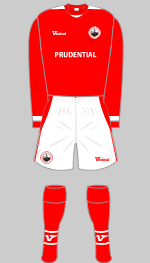
2006-2007 d m
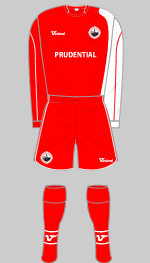
2007-2008 f
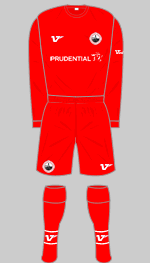
2008-2009 h
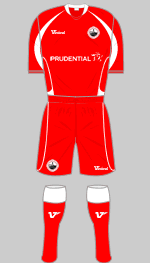
2009-2010 j
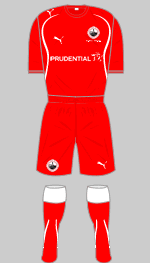
2010-2011 j
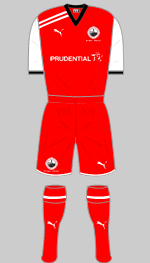
2011-2012 j
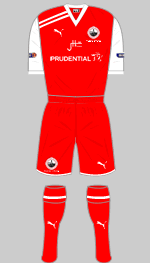
2012-2013 j
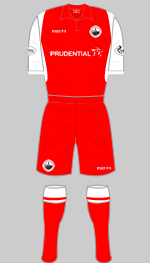
2013-2014 j
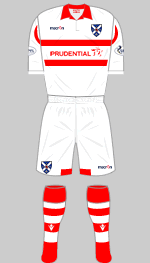
2014-2015 j
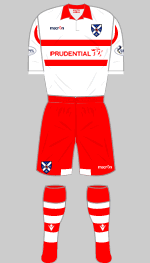
2015-2016 j
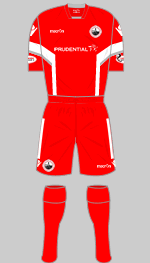
2016-2017 j
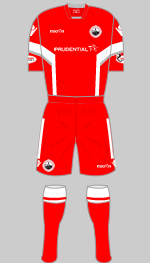
2017-2018 j
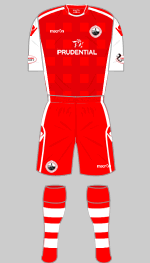
2018-2021 j
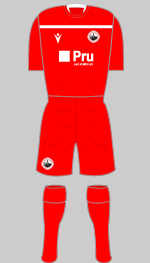
2021-2022 j
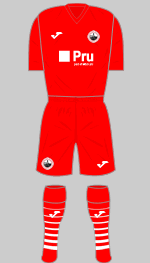
2022-2023 j
Background
 Prior to World War Two,
the town of Stirling was represented in the Scottish League by King’s
Park FC, which had been closed down for the duration. In June 1940, their ground was damaged by the only German bomb to
fall on the town.
Prior to World War Two,
the town of Stirling was represented in the Scottish League by King’s
Park FC, which had been closed down for the duration. In June 1940, their ground was damaged by the only German bomb to
fall on the town.
In the spring of 1945 discussions were held with a view to restarting the club. A local coal magnate and chairman of King's Park, Thomas Fergusson, purchased some land on the Annfield estate and built a new stadium there. Rather than move the old club in, Fergusson formed Stirling Albion to play in the brand new Annfield stadium and take King's Park's place in the Scottish League when this was reinstated in 1946. The new team was allotted a place in the new third level Division C, which was made up mostly of reserve sides. These machinations attracted considerable criticism at the time: by forming a new club, Fergusson was able to retain a place in the Scottish League while avoiding liability for the old club's debts, subverting the rules on liquidation. King's Park continued to exist on paper until 1953 when they finally received compensation for the war damage to their ground, which went towards settling the club's debts.
Albion won their divisional championship and
were promoted to Division “B” (second tier) in 1947. From
then 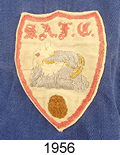 until the 1960s, their exploits gave rise to the phrase “going
up and down like Stirling Albion” and they became known as “The
Yo-Yos.”
until the 1960s, their exploits gave rise to the phrase “going
up and down like Stirling Albion” and they became known as “The
Yo-Yos.”
A crest appeared on the team's shirts in 1956-57, a crudely embroidered affair with a wolf resting on a rock as the centrepiece. This refers to a local legend dating back to the ninth century when a Danish warband, intent on plundering Stirling, disturbed a sleeping wolf-pack. Their howling alerted the locals who were able to beat off the attackers. From then on, wolves, which were persecuted elsewhere, were regarded as the protectors of the town.
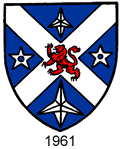 The coat of arms of the city of Stirling, known as the saltire and lion rampant badge was worn between 1961 and 1964 on the distinctive white shirts with red hoops of the period.
In the late 1960s, Albion languished in the Second
Division until reconstruction in 1975 placed them in the new Division
Two, now the third tier. In 1977 they won promotion but their career
in the second tier came to an end in 1981 when, with the club on the
brink of bankruptcy, they 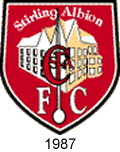 failed to score a single goal in eight months
and were relegated back to the Second Division.
failed to score a single goal in eight months
and were relegated back to the Second Division.
In 1966 a new club crest appeared on the blazers worn by the team on a tour of Japan: this was later used on official documents and a decade later a metal version was hung above the bar in the Members' Club at Annfield. The building that forms the centrepiece is Annfield House, the club's offices and changing rooms. A nice touch is the addition of a yo-yo. This badge was eventually added to the team shirts in 1987.
To raise funds, Albion (now known as “The Binos”) sold their Annfield ground and leased it back from the district council, who acquired a prime city centre site, ripe for redevelopment at a knock-down price. In 1986, having demolished the main stand for reasons of safety, the council decided to install an artificial pitch in order to enable greater use of the stadium and generate more revenue. In September 1987 a large crowd turned out to watch the first game in Scotland to be played on artificial turf. SFA rules allowed clubs in cup competitions to refuse to play on plastic pitches so for the next five years, all of Stirling Albion’s cup ties were played away from home.
In April 1991, Albion ended ten years in the
lowest league with the Second Division championship. They also quit
Annfield and moved into the new Forthbank Stadium overlooking the River
Forth and in 1996 they won promotion to Division One (second level).
After one respectable mid-table finish, they went into serious 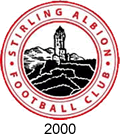 decline
and by 2002 they finished second-bottom in the Third Division (fourth
and lowest tier).
decline
and by 2002 they finished second-bottom in the Third Division (fourth
and lowest tier).
In 2000 management commissioned a new crest that would better reflect local tradition and a local company, Bruce Design, submitted several ideas. The board chose a circular design with the Wallace Monument in front of the Ochil Hills as the centre piece.
In 2007, the Binos gained promotion via the play-offs to Scottish Division One (second tier) but dropped straight back down again in 2008.
After a lengthy fundraising campaign, the club was finally bought by the Stirling Albion Supporters' Association in August 2010 and established as a community interest company. To mark this transition, the words "Real Football for Real Supporters" were printed below the club crest for the 2010-11 season.
2014-15 marked the 70th anniversary of the club's formation and to celebrate the iconic design from 1957 was revived along with the original saltire and lion rampant crest. Unhappily, the team were relegated to League Two at the end of the season.
Sources
- (a) Alick Milne
- (b) Ralph Pomeroy
- (c) London Hearts
- (d) SNS Pix
- (e) Raith Rovers FC 1991/92 - 1995/96 Images of Sport (Tony Finister 2002)
- (f) Partick Thistle FC Match Gallery
- (g) The Guardian 8 December 2007
- (h) Alan McAndrew
- (i) Pete's Picture Palace
- (j) Stirling Albion Official Website
- (k) Graham Hamilton
- (l) Donald Gellatly (HFK Research Associate)
- (m) Craig Borland
- (n) Keith Ellis (HFK Research Associate)
- (o) Alasdair Thorburn
- (p) Ian McConnel
- (q) Martin Johnson
Crests are the property of Stirling Albion FC. Background on crest history from Stirling Albion Mad.