
St
Johnstone
Formed 1885
Elected to Scottish Division Two 1912. Membership suspended 1915.
Founder member of the re-formed Scottish Division Two 1921.
Kit History
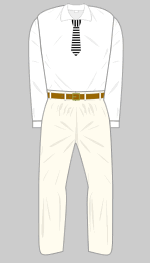
1885-1886 u
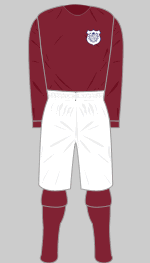
1886-1887 a c o
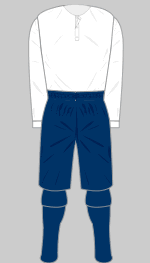
1887-1888 a
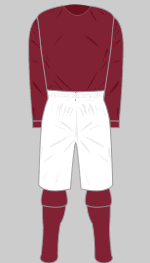
1888-1890 a v
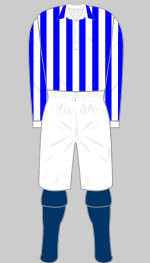
1890-1894 a
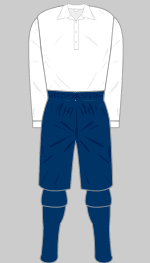
1894-1897 a c o
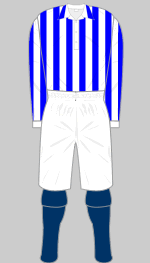
circa 1897 a
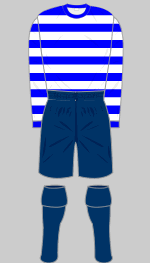
circa 1905 a
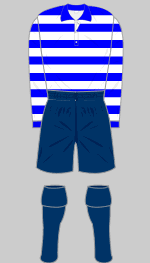
1907-1908 a
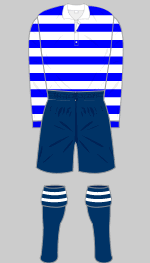
1910-1914 a c d m o
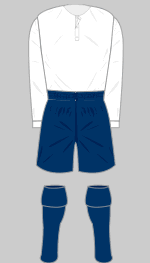
1918-1919 a c
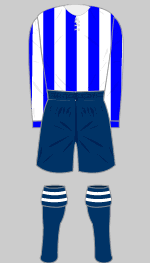
1919-Nov1920 a
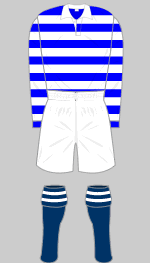
Dec1920-1922 a c
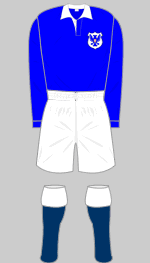
1922-1925 a c u
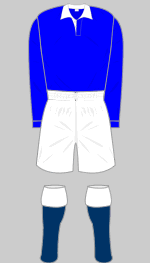
1925-1931 a
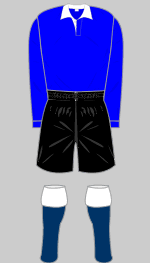
1927-1929 away a
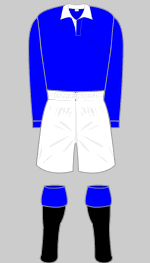
1931-1933 a c
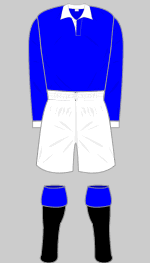
1933-1938 a c e
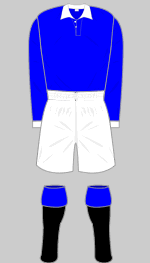
1938-1946 a c
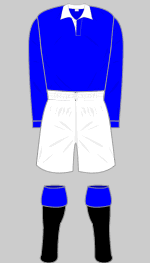
Aug-Dec1948 a
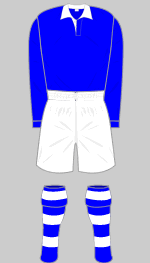
Jan1949-1952 a c
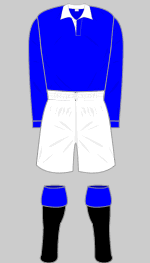
1952-1954 a
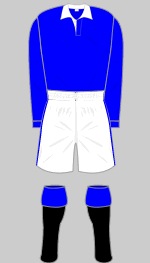
1954-1955 a c n
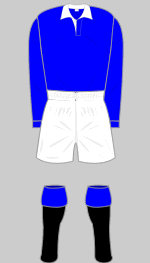
1955-Aug1956 a c
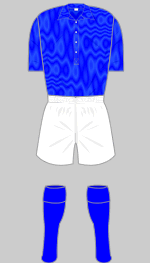
1956-1957 s

1956-1958 a n
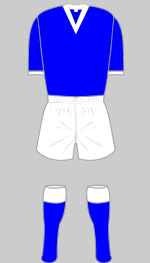
1958-1960 a
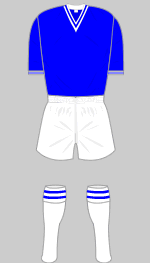
1960-1962 a c
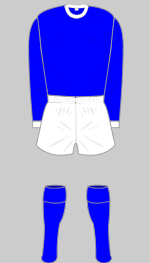
1962-1963 l
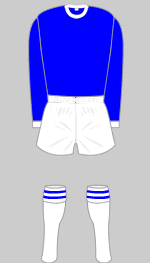
1963-1967 a c e p
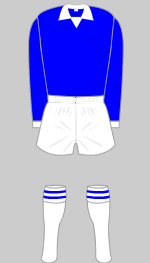
1967-1969 t

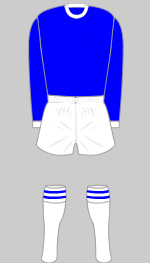
Aug-Oct 1969 q n
Nov 69-1970 a

1970-Feb 71 l n

March-May 71 a n
Aug-Sept 71 n
Oct 71-1972 n
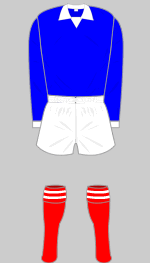
1974-Nov 75 a c i
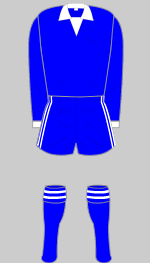
Nov 75-1976 n
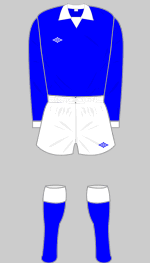
1976-1977 m
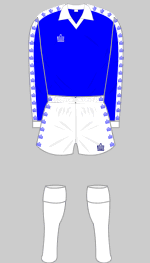
1977-1979 j n
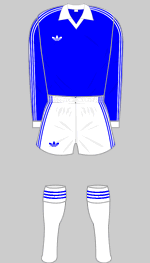
1979-1980 a r
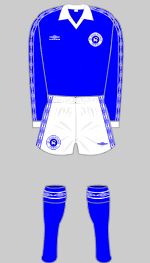
1980-1982 c j
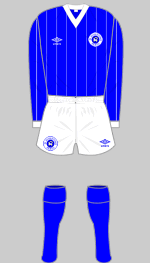
1982-1986 c g n
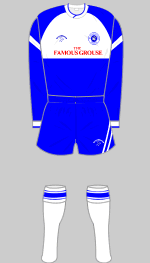
1986-1989 b c
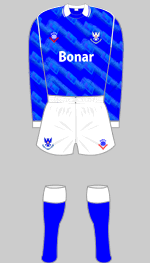
1989-1991 b n
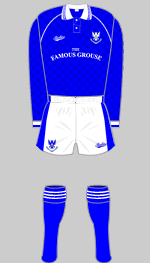
1991-1993 b n
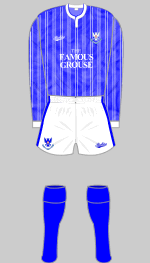
1993-1994 b c n
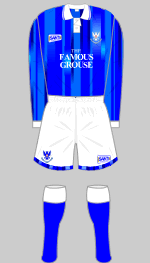
1994-1996 b c
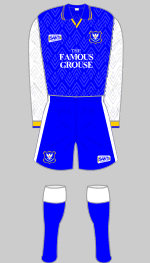
1996-1997 b c
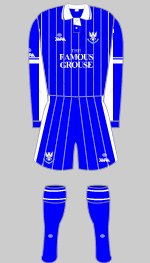
1997-1998 1 b c n

1997-1998 2 n

1998-Oct 1999 b c n
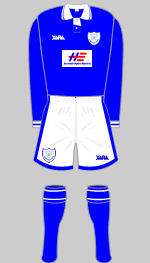
Oct 1999-2000 n
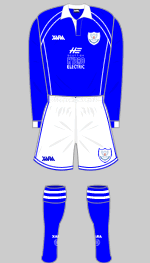
2000-2002 f n
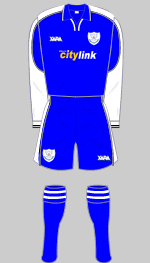
2002-2003 f
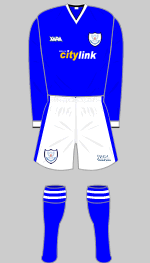
2003-2004 f
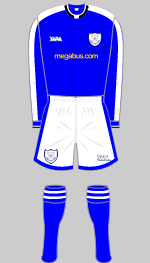
2004-2005 f
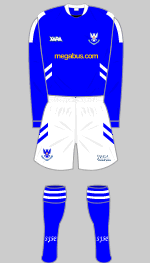
2005-2006 f
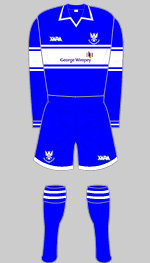
2006-2007 f
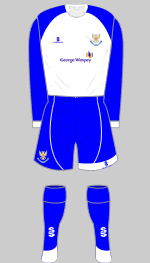
2007-2008 h
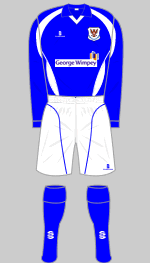
2008-2009 h
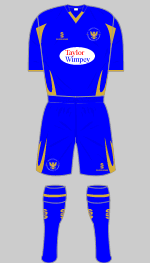
2009-2010 h n
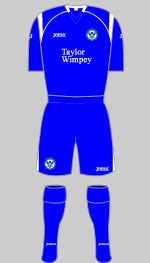
2010-2011 h n
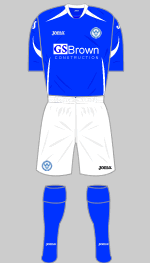
2011-2012 h n
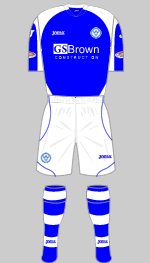
2012-2013 h
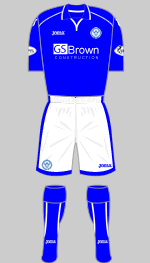
2013-2014 h
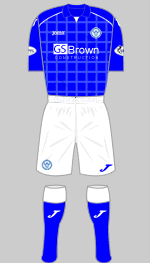
2014-2015 h
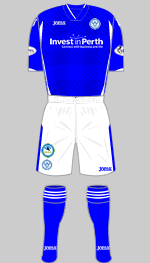
2015-2016 h
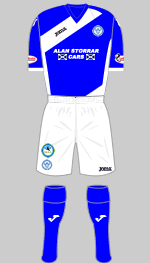
2016-2017 h
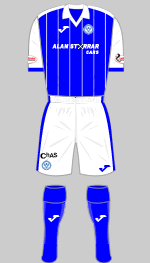
2017-2018 h
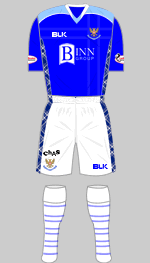
2018-2019 h
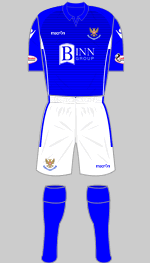
2019-2020 h
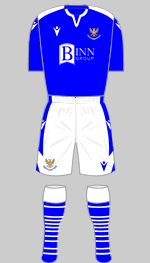
2020-2021 h
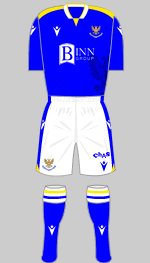
2021-2022 h
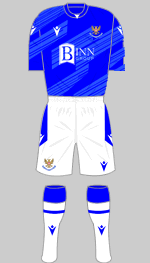
2022-2023 h
Background
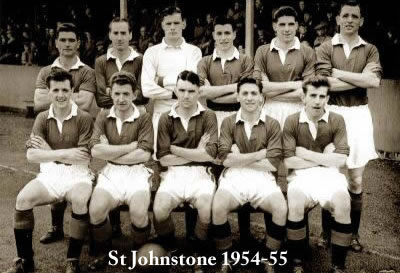 The genteel county town of Perth is a far cry
from the grim industrial communities of central Scotland where association
football first took hold. Nevertheless, in February 1885 members of a local cricket
club decided to play football during the winter months and formed St Johnstone FC, derived from Perth’s
colloquial name of “St John’s Toun”. Their first colours were white and it is likely that knickers and stockings were a variety of colours. The following
year registered their colours with the Scottish FA as maroon and white. A piece of land
was leased and became known as the Recreation Ground, the club’s
base until 1924 when they built Muirton Park, their home for the next
65 years.
The genteel county town of Perth is a far cry
from the grim industrial communities of central Scotland where association
football first took hold. Nevertheless, in February 1885 members of a local cricket
club decided to play football during the winter months and formed St Johnstone FC, derived from Perth’s
colloquial name of “St John’s Toun”. Their first colours were white and it is likely that knickers and stockings were a variety of colours. The following
year registered their colours with the Scottish FA as maroon and white. A piece of land
was leased and became known as the Recreation Ground, the club’s
base until 1924 when they built Muirton Park, their home for the next
65 years.
In 1891, the Saints joined the Northern League where they remained for three seasons. Over the next 20 years they had spells in the old Central League and Central Combination as well until 1912 when they were elected to Scottish Division Two when that division was expanded. In 1915 the Second Division was suspended and two regional competitions were set up. St Johnstone, however, suspended operations until 1919 when they joined the Eastern League. The following season St Johnstone joined the rebel Central League, a competition whose rules allowed members to pay higher wages than those available in the Scottish Football League. A number of top players defected to the rebel clubs who proved so successful that in 1921, it was incorporated into the SFL as the new Second Division.
 In 1924, St Johnstone were promoted to the First
Division where they played until the outbreak of war in 1939, (apart
from a spell back in the Second Division 1930-32) generally finishing
respectably in the top half of the table. The Perth coat of arms was worn during the promotion winning 1923-24 season.
In 1924, St Johnstone were promoted to the First
Division where they played until the outbreak of war in 1939, (apart
from a spell back in the Second Division 1930-32) generally finishing
respectably in the top half of the table. The Perth coat of arms was worn during the promotion winning 1923-24 season.
When the Scottish Football League was restarted in 1946 it was decided to restructure rather than simply take up where things were in 1939. St Johnstone, despite having finished eighth in Division One, were placed in the new Division “B.”
In 1956-57 irridescent rayon shirts were sometimes worn, possibly for floodlit away games. At the time St Johnstone had no floodlights and mid winter home games were brought forward to 2.15pm. Even so these did not always finish in daylight. Lights were installed in 1962 but were deemed sutable only for training and it was not until 1964 that proper floodlights were erected.
In 1960 the Saints finally won promotion as champions of Division Two, their first senior honour. They lasted only two seasons but in 1963 they bounced back, once again as champions. For the next 12 years they managed to hold on to their place in the top flight. Their best spell was, arguably, under Willie Ormond when the team reached the Scottish League Cup Final for the first time in its history in 1969 followed by a third place in the Scottish Football League thereby securing a place in European competition for the first time. Ormond’s men performed with distinction, overcoming quality opposition from West Germany and Hungary before succumbing to Yugoslavian opposition.
 The formation of the Premier Division in 1975 proved their undoing. Out of their depth in the more competitive environment the Saints were relegated
in 1976 having won only three games, 21 points adrift.
The formation of the Premier Division in 1975 proved their undoing. Out of their depth in the more competitive environment the Saints were relegated
in 1976 having won only three games, 21 points adrift.
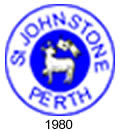
In 1980 team wore a circular crest with a lamb and flag as its centrepiece.
In 1983 the Saints won the First Division title
(now the second tier) but the next two seasons brought them close to
bankruptcy and they plunged down the league to find themselves in Division
Two (third tier) in 1985. With attendances slumped to fewer than 1,000
and Muirton Park crumbling, the board invited local business man Geoff
Brown to step in as chairman. A share issue raised £150,000, sufficient
to secure the club for the immediate future and in 1986 Brown bought
Muirton Park for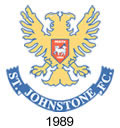 retail development. Thanks to the donation of land
from local farmer, Bruce McDiarmid, a brand new 10,000 all-seated stadium
was built in August 1989 and named McDiarmid Park.
retail development. Thanks to the donation of land
from local farmer, Bruce McDiarmid, a brand new 10,000 all-seated stadium
was built in August 1989 and named McDiarmid Park.
From the beginning of the 1989-90 season, a new club crest was introduced. the lamb and flag remained at the centre but was now mounted against a two-headed eagle, which comes from the coat of arms of the Perth & Kinross District Council's coat of arms. At various times this was stitched directly onto the shirt or mounted on a shield.
By 1990, St Johnstone were back in the Scottish
First Division (second tier) and in 1997 they stormed to the divisional
championship, 20 points clear. They more than held their own in the
Premier Division/Premier League, reaching the semi-final of the Scottish
 Cup, the final of the League Cup and finishing in third place
in 1999. As a result they qualified for the UEFA Cup for the second time.
Although the club
Cup, the final of the League Cup and finishing in third place
in 1999. As a result they qualified for the UEFA Cup for the second time.
Although the club  were relegated in 2002, they remained a strong
contender for a return to the top flight and in May 2009, this ambition was achieved just in time for their 125th anniversary.
were relegated in 2002, they remained a strong
contender for a return to the top flight and in May 2009, this ambition was achieved just in time for their 125th anniversary.
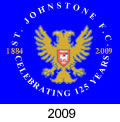
For the 2009-2010 season a special, commemorative crest was introduced and the following season a revised version of the traditional badge was introduced.
Between 2012 and 2017 The Saints qualified for the Europa League five times although  they failed to reach the group stage and in May 2014 they beat Tayside rivals Dundee United 2-0 at Celtic Park to win the Scottish Cup for the first time in their history.
The circular badge was replaced in 2018 with an updated version of the 1989 crest.
During the 2020-21 season Celtic and Rangers were eliminated before the semi-finals leaving the way open for the smaller clubs to get their hands on a trophy. In February, St Johnstone beat Livingston 1-0 behind closed doors to claim their first ever League Cup. Three months later they were back at Hampden where they beat Hibs in the Scottish Cup final. This was St Johnstone's first cup-double and the first time that a club from outside the Old Firm had won the two major Scottish cups since Aberdeen in 1989-90.
The Saints finished eleventh in 2021-22 but beat Inverness Caledonian Thistle over two legs in the play-off final to remain in the Premiership.
Sources
- (a) Alick Milne (HFK Research Associate)
- (b) Blue Heaven Fanzine
- (c) St Johnstone FC - Images of Sport (Alastair Blair 2003)
- (d) Ayr United FC - Images of Sport (Duncan Carmichael 2002)
- (e) London Hearts
- (f) SNS Pix
- (g) Ralph Pomeroy
- (h) St Johnstone Official Website
- (i) Willie Kay
- (j) Barry Ferguson
- (k) Paul Smith
- (l) Keith Ellis (HFK Research Associate)
- (m) John Small
- (n) Ian McConnel
- (o) Manifest Destiny: The Official History Of St. Johnstone FC 1885-2015 submitted by Ross Cunningham
- (p) Steelmen Online
- (q) Pinterest
- (r) William Kay
- (s) It's a Team Game (Steve Finan 2019) submitted by Nathan Bartlett
- (t) scran.ac.uk submitted by John Small
- (u) Alastair Blair (Club Historian)
- (v) Scottish Football Association Annuals
Crests are the property of St Johnstone FC.