Greenock
Morton
Formed 1874
Founder member of Scottish Division Two 1893
Kit History
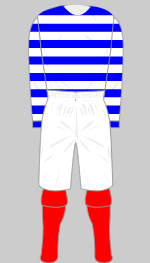
1874-1884 a l
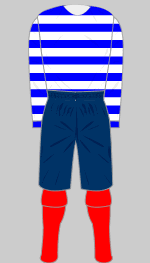
1884-1886 l
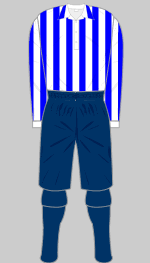
1886-1889 l w

1889-1891 w
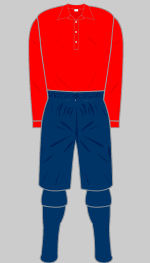
1892-1896 k l
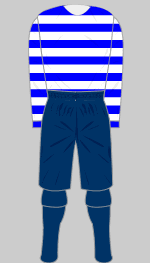
1896-circa1905 l
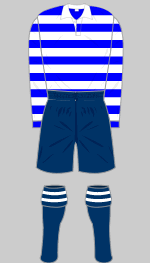
circa1905-1920? l t
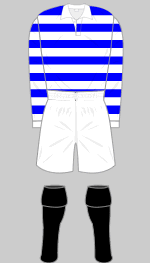
1920-1921 v
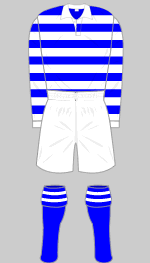
1921-1922 r
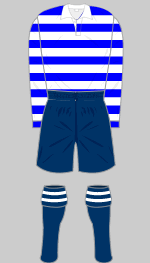
1922-1927 l r t
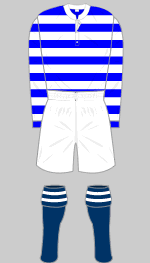
1927-1933 l
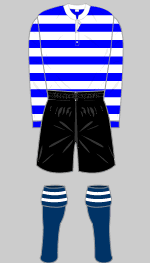
1927-1929 away l
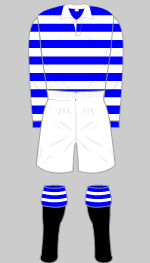
1935-1937 l t
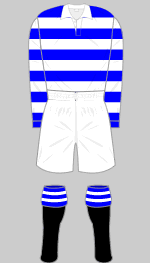
1937-1938 l
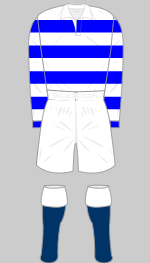
1945-1947 l t
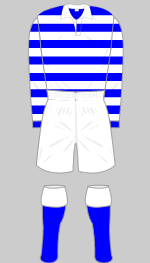
1947-1948 c l t
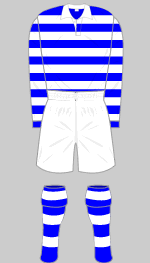
1948-1949 l u
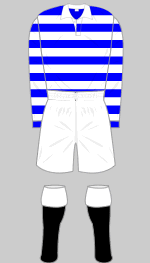
1950-1951 u
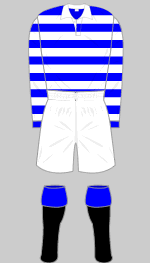
1951-1955 l t
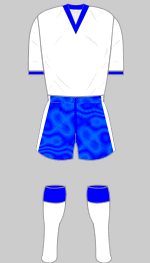
1958-1959 l t
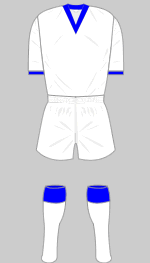
1961-1962 l
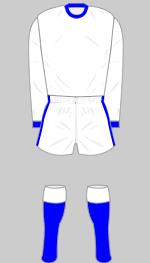
1962-1963 l u
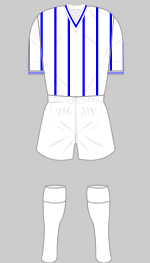
1963-1964 r t
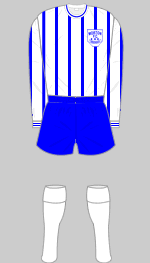
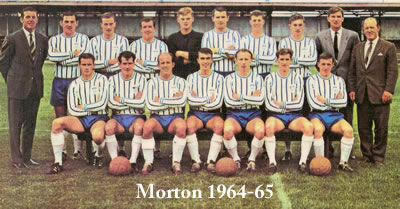
1964-1965 b2 k t
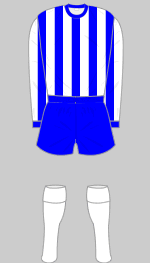
1965-Feb 1966 u
10 March 1966 i t u
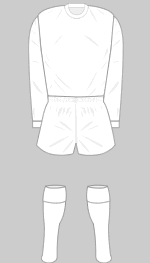
7 April 1966 u
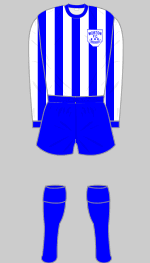
1966-1967 t
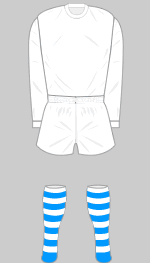
1967-1968 l t u
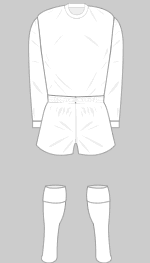
1967-1968 alt u
Aug 1968 u
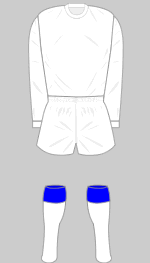
1968-1969 u
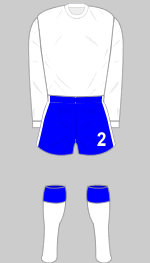
Nov 68 & Apr 69 b3 l u
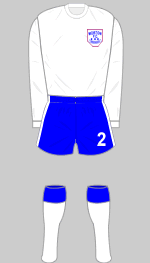
1969-1970 u
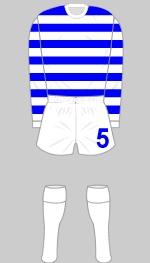
1970-1972 c i u

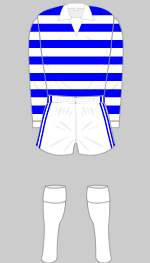
1972-March 74 l u
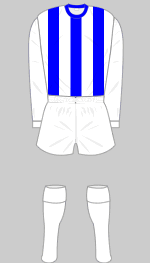
Apr 74-1975 l t u
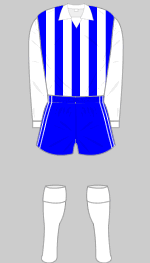
1975-1976 l t
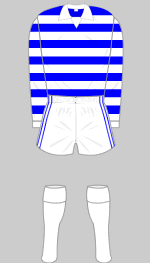
1976-1977 1 t
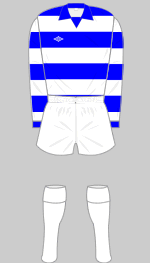
1976-1977 2 o
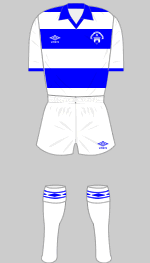
1977-1978 i l o u
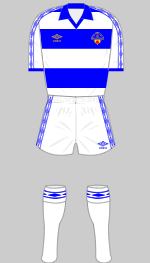
1978-1981 e i
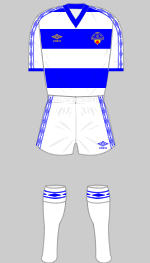
1981-1984 f i j t
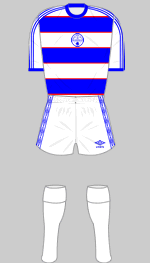
1983-1984 o
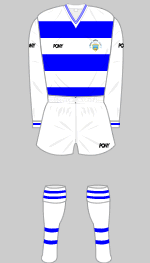
1984-1985 1 j o t
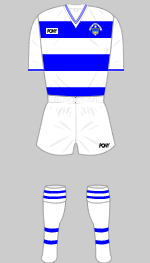
1984-1985 2 o
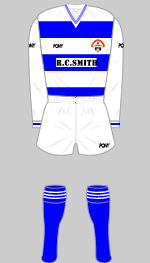
1985-1986 o
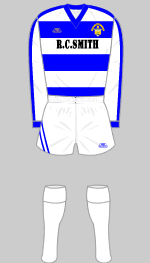
1986-1987 g m o
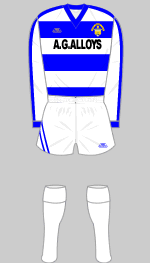
1987-1988 i o
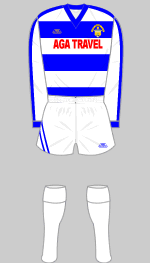
1988-1989 i m o
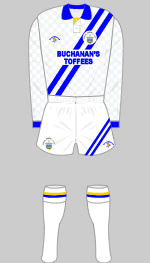
1989-1991 g i n o
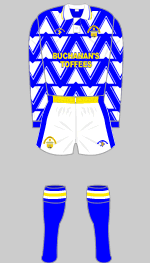
1991-1993 g i o s u
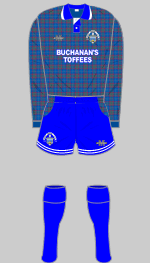
1993-1995 g i o
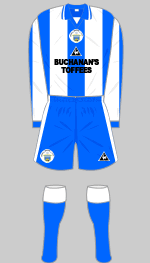
1995-1996 g o s t
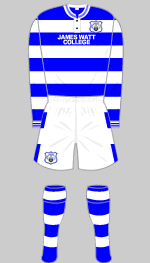
1996-1997 g i o
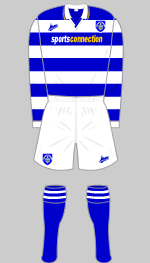
1997-2001 g i o q u
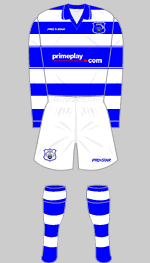
2001-2002 i
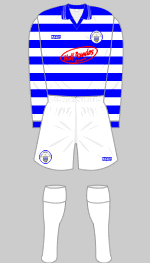
Aug-Oct 2002 i
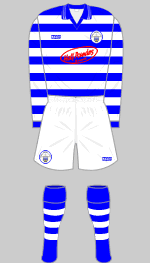
Nov2002-2003 g i o
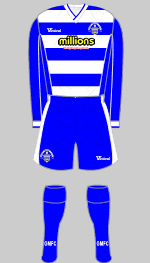
2003-2006 g i o s
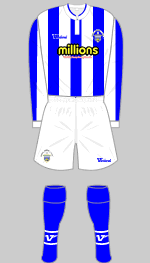
2006-2007 g h i
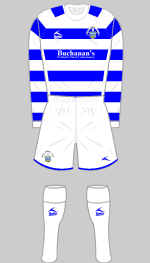
2007-2008 h i
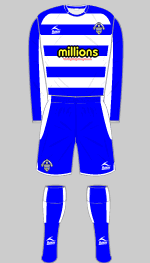
2008-2009 p
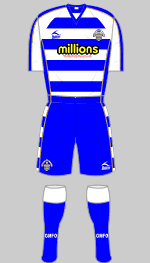
2009-2010 h
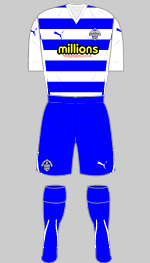
2010-2011 h
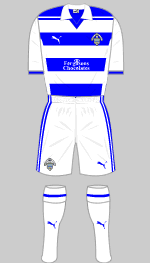
2011-2012 h
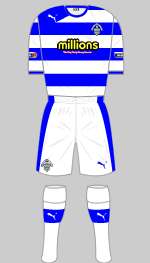
2012-2013 h
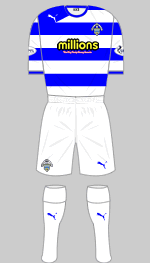
2013-2014 h
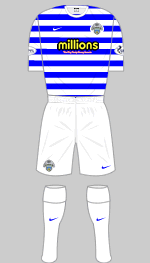
2014-2016 h
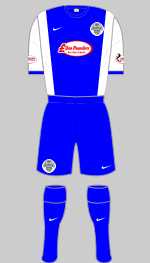
2016-2017 1 h
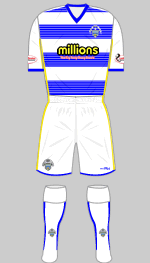
2016-2018 2 h
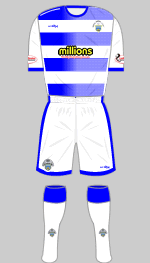
2018-2020 h
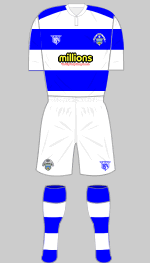
2020-2021 h
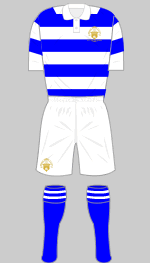
2021-2022 h
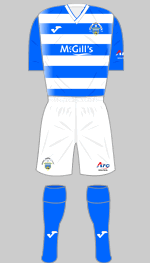
2022-2023 h
Background
 The industrial town of Greenock lies on the
southern bank of the Firth of Clyde, sandwiched between Port Glasgow and
the prosperous middle class community of Gourock to the west. While the shipyards
that made the area famous have now closed, Greenock retains its maritime traditions with a ferry
port and an international container terminal.
The industrial town of Greenock lies on the
southern bank of the Firth of Clyde, sandwiched between Port Glasgow and
the prosperous middle class community of Gourock to the west. While the shipyards
that made the area famous have now closed, Greenock retains its maritime traditions with a ferry
port and an international container terminal.
It is believed the club took its name from Morton Terrace, where most of the founders lived although there is an alternative theory that they were named after James Morton, a local builder and provost of Greenock who became the club's first patron. According to their original constitution the team would wear "two inch royal blue and white stripes" (ie hoops) and would conduct all business in accordance with temperance principles. Abstaining from alcohol is not an idea that has stood the test of time but the original colours have: despite flirtations with other designs (including four seasons in the late nineteenth century when they played in red), Morton are associated with hooped blue and white shirts.
There is some ambiguity over the club's formal title. They are registered with the Scottish FA as Greenock Morton but have generally been known simply as Morton. In 1994 they applied to become "Greenock Morton" according to an article on Wikipedia but in 1998 they appear to have applied to the Scottish Football League to change their official title back to "Morton." On their web site they are "Greenock Morton." Locally they are generally known as "The Ton" or, rather more fancifully, "The Pride of the Clyde."
The club became founder members of the Scottish Second Division in 1893 and reached the semi-final of the Scottish FA Cup in 1896-97 where they were thrashed 1-7 by Rangers at Cappielow. In 1900 they finished as runners-up behind Partick Thistle and were elected to the First Division. In 1905 they finished in last place but were spared having to apply for re-election (this was before automatic promotion and relegation) by the decision to add two clubs to the Scottish First Division. The Ton enjoyed their best performances in the First Division between 1914 and 1919 when they finished in fourth place (three times), third place (twice) and as runners up (in 1917).
In 1922 Morton reached the Scottish FA Cup final where, against expectations, they beat Rangers by a single goal. The victorious team immediately took the train to Hartlepool to play a pre-arranged friendly and it was not until the following Wednesday that 10,000 supporters could turn out at Cappielow Park to welcome their heroes home. The following season this successful side broke up after a dispute over wages and in 1927 Morton were relegated to Scottish Division Two, returning to the top flight as runners-up after two seasons. In 1930 a stone throwing incident during a match with Cowdenbeath led to Cappielow being closed for two matches, evidence that hooliganism is not a modern phenomenon. The club was relegated again in 1933, gained promotion in 1937 but went straight back down again the following season.
When the Scottish League restarted in 1946, Morton were placed in the new Division A (despite having been in the second Division when competition was suspended in 1939). In April 1948 they once again met Rangers in the Scottish FA Cup final but this time they lost in the replay after the first match was drawn 1-1. An astonishing 265,000 spectators watched the two games and it is said that the entire population of Greenock took the train to Hampden on both match days. The following season they were relegated, bounced back immediately as Division B champions only to drop back down again in 1952.
Morton's third cup final appearance was in 1963
(they were still in the Second Division at the time) when they met Rangers
again in the final of the Scottish League Cup, the
Glasgow club winning 5-0 in front of 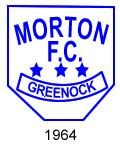 103,000 spectators.
The following season Morton wore a crest on their shirts for the first time. This was used until 1978 but did not appear every season.
Promotion and
relegation came in quick succession although between 1967 and 1975 they
played in the top flight, even qualifying for the Inter-Cities Fairs
Cup (forerunner of the UEFA Cup) in 1967 only to be eliminated by Chelsea
3-9 on aggregate  in the first round. They were placed in the new Division
One (now the second level) following the formation of the Premier Division
in 1975 winning the championship in 1978.
in the first round. They were placed in the new Division
One (now the second level) following the formation of the Premier Division
in 1975 winning the championship in 1978.
A new club crest was commissioned in 1977, which featured a sailing ship, a motif taken from the town's coat of arms and symbolising the shipbuilding and maritime heritage of Greenock. This badge has been only slightly modified over the years, appearing at various times embroidered directly on to the shirts, against a shield or roundel and in different colour combinations.
 For the next five seasons
Morton struggled to hold on to their place in the Premier Division before
being relegated in 1983. After a brief return to the top level (1987-88),
Morton dropped briefly into the Second Division (1994-95). During this period the club
For the next five seasons
Morton struggled to hold on to their place in the Premier Division before
being relegated in 1983. After a brief return to the top level (1987-88),
Morton dropped briefly into the Second Division (1994-95). During this period the club  abandoned tradition with some extravagant strips including a magnificent tartan shirt, which was revived for the replica sales market in 2006.
In 2001 Morton suffered a severe financial crisis and were forced into administration. The club narrowly avoided being
wound up but successive relegations in 2001 and 2002 took the Ton down
to the Third Division (the fourth and lowest tier). Recovery followed once the club's finances stabilised: Morton won the Third Division title at the first
attempt and they returned to the First Division  (second tier) in 2007. They were relegated again in 2014 but bounced straight back, winning the Scottish League One title at the first time of asking.
Supporters were incensed when the club dropped their traditional hoops in favour of Nike's Park Derby design for the 2016-17 season. To add insult to injury, stockists Smith's of Greenock implied that the team would be competing in League One rather than the Championship. The club postponed the planned launch and promised to talk to fans to 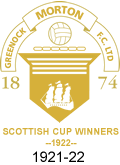 find a solution. A poll was hastily organised and fans were invited to vote for one of four options, all of them hooped shirts. The management appeared to learn their lesson and involved fans in the design process and in choosing the most popular strip after this incident.
When it came time to celebrate the centenary of Morton's Scottish Cup Win in 2021-22, the designers applied the lessons learned to produce an outstanding design without sponsorship or branding. If one were to quibble, it could be pointed out that the broad hoops were a modern innovation (as of 1976) and the team had worn narrower, 2" hoops in the final.
Sources
- (a) Morton Rivals
- (b1) (b2) (b3) (b4) London Hearts
- (c) Ayr United FC - Images of Sport (Duncan Carmichael 2002)
- (d) Aberdeen FC - Images of Sport 1903-1973 (Paul Lunney 2000)
- (e) Relichtiesplus
- (f) Airdrieonians FC - Images of Sport (Brian Bollen 2002)
- (g) Pie&Bovril
- (h) Greenock Morton Official Site
- (i) SNS Pix
- (j) e-bay
- (k) Douglas S Smith
- (l) Alick Milne (HFK Research Associate)
- (m) Ralph Pomeroy
- (n) jumpers4goalposts.com
- (o) Dave Watson
- (p) Football Shirt Culture
- (q) Donald Gellatly
- (r) Keith Ellis (HFK Research Associate)
- (s) Stuart Brown
- (t) Greenock Morton FC 1874-1999 - Images of Sport (Jim Jeffrey 1999)
- (u) John Small
- (u) Ian McConnel
- (v) Football & the First World War
- (w) Scottish Football Association Annuals
Crests are the property of Greenock Morton FC.