
Dundee
United
Formed 1909 as Dundee Hibernian.
Reconstituted as Dundee City 1923.
Elected to Scottish Division Two 1910. Transferred to the Eastern League 1915.
SFL membership reinstated 1919 and 1920 but resigned on both occasions without competing.
Founder member of the reconstituted Scottish Division Two 1921. Dropped out in 1922.
Elected back into Scottish Division Two 1923.
Kit History
Dundee Hibernian
1909
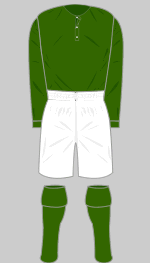
1909-1910 r s B
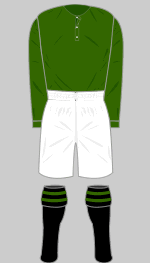
1910-1913 r B
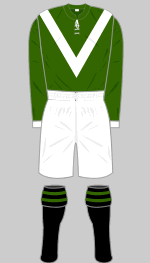
1913-1915 f r s B D
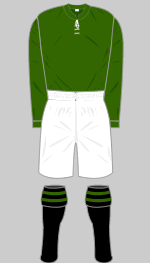
1919-1922 f r s B
Dundee City
1923
Became Dundee United October 1923
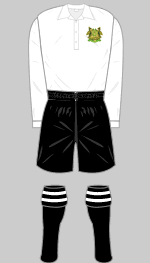
Aug-Oct1923 a f r s B
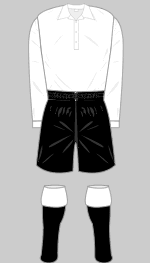
Nov 1923-1925 B
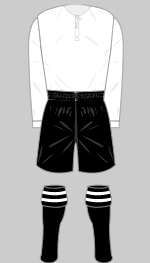
1925-1927 r s B
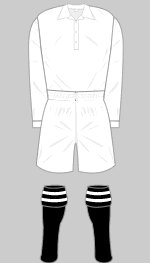
Aug-Oct'27 Home r
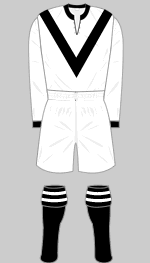
Nov'27-28 Home r B
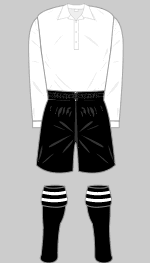
1927-1928 Away r
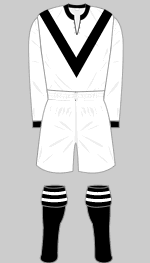
1928-1929 Home r
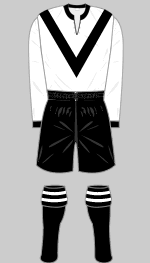
1929-1930 f r B
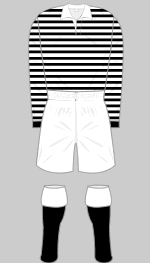
1930-Oct 1932 r B
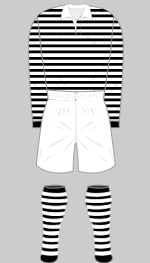
Oct 1932-1934 r B
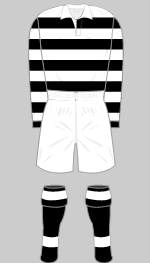
1934-1936 r B
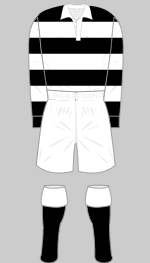
1936-1937 B
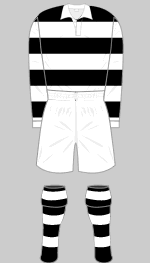
1937-1940 a f r B
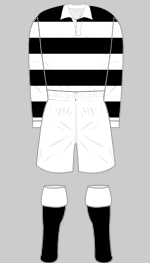
1945-1948 r
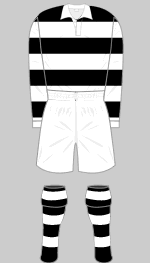
1948-Dec1949 r
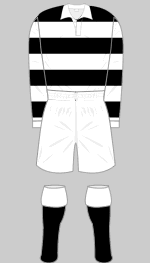
Jan 50-1955 r t
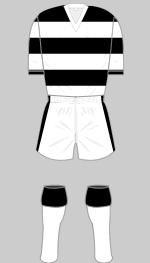
1955-1957 r
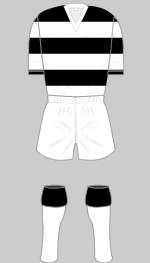
1957-1958 B E
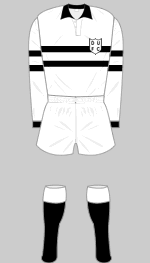
1958-1959 f B D
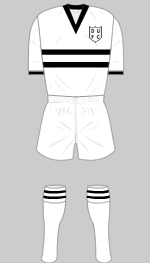
1959-1960 A
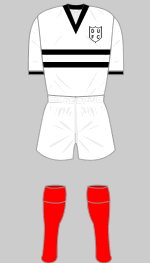
1960-1961 r
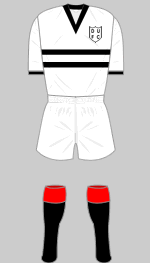
1961-1962 r
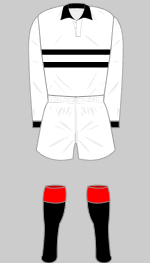
Jan 1962 E
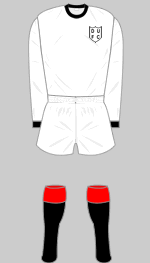
Aug 1962 E

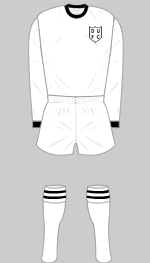
Sept 62-1964 r E
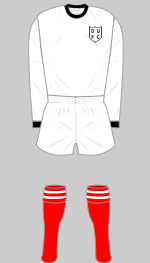
1964-1965 D
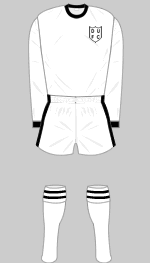
1965-1966 r
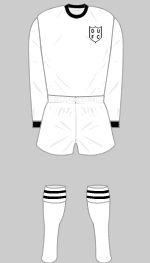
1966-1969 c d r
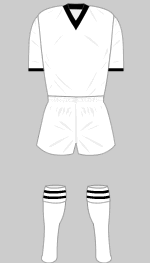
1967-1968 Warm E
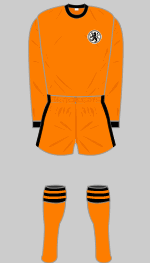
1969-1971 a r
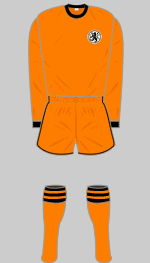
1971-1972 a
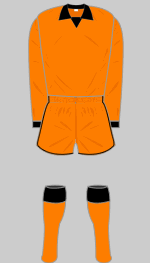
1972-1973 1 B E
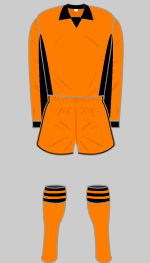
1972-1973 2 E
1972-1973 3 E
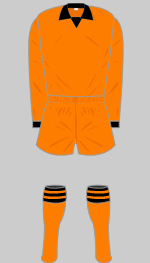
1973-1974 1 E
1973-1974 2 a r E
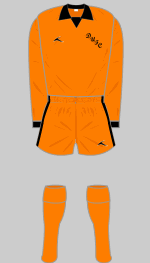
Aug-Nov 1974 a r y E
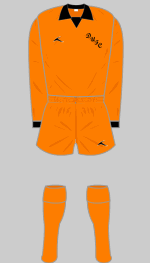
Nov 74-1977 E
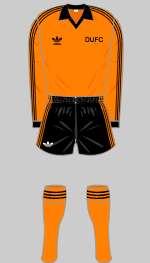
1977-1979 c f w
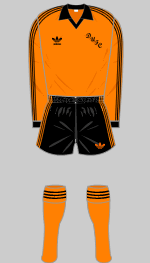
1979-1983 w
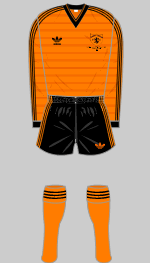
1983-1985 m E
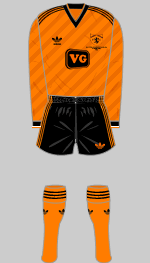
1985-1987 p x E
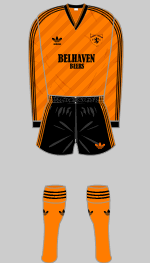
1987-1988 m p
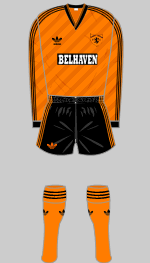
1988-1989 m p w E
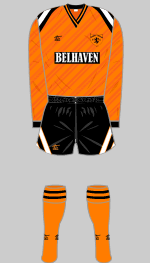
1989-1990 p z E
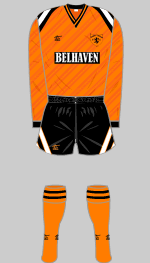
1990-1991 E
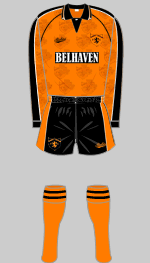
1991-March 1992 z
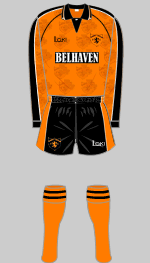
April '92-1993 k n p q z
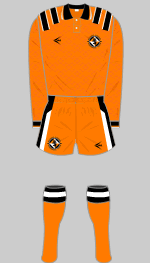
1993-1994 f g p z E
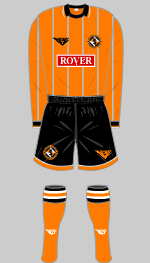
1994-1996 m p z
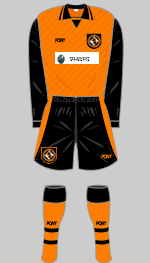
1996-1997 p z E
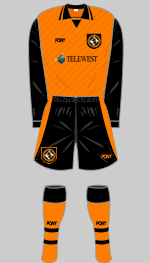
1997-1998 o z E
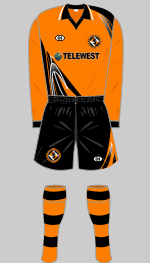
1998-1999 f p E
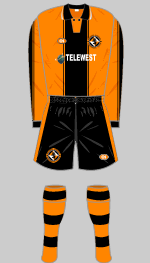
1999-2000 o p
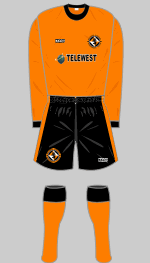
2000-2001 n z
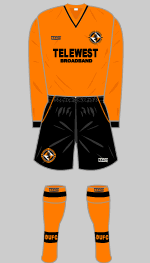
2001-2002 b m C E
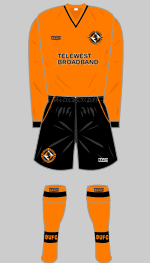
2002-2003 j m C
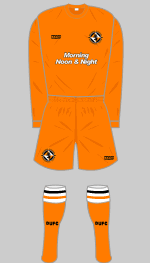
2003-2004 i
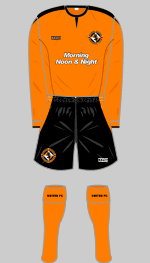
2004-2006 f i
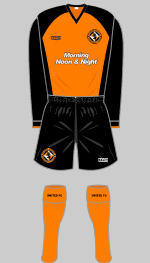
2005-2006 alt z
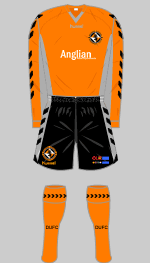
2006-2007 f u z E
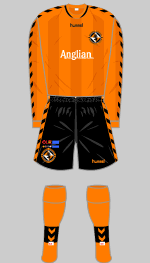
2007-2008 f v z E
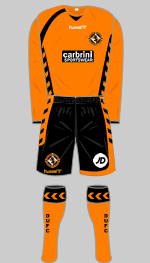
2008-2009 f v
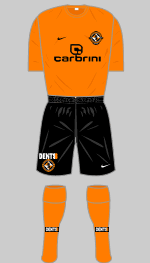
2009-2010 f E
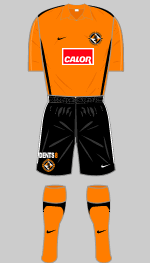
2010-2011 f
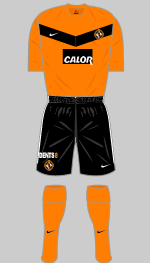
Aug-Sept 2011 f
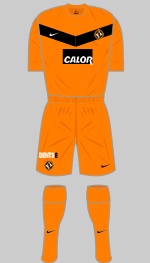
17 Sept 2011-12 z
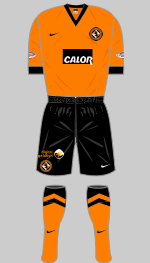
2012-2013 f
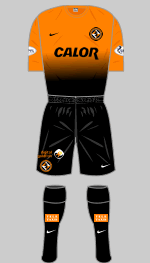
2013-2014 f
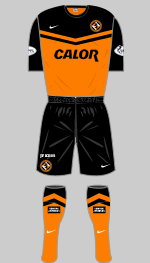
2014-2015 f
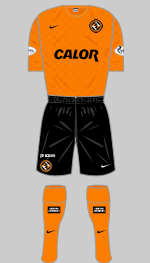
2015-2016 f
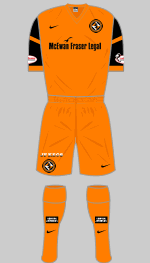
2016-2017 f
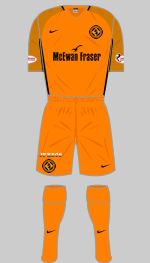
2017-2018 f
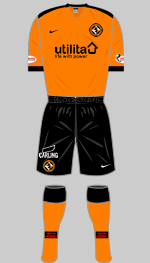
2018-2019 f
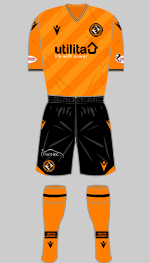
2019-2020 f
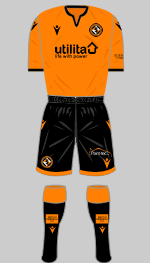
2020-2021 f
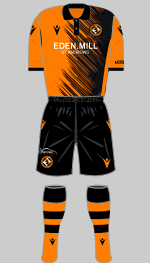
2021-2022 f
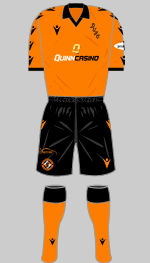
2022-2023 f
Background
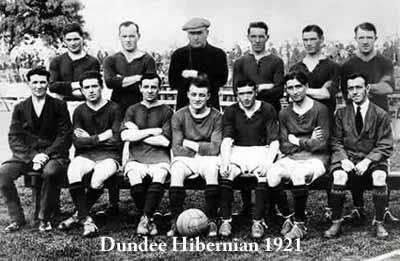 During the late 1870s and 1880s Irish communities throughout Scotland,
inspired by the examples of Hibernian (Edinburgh) and later Celtic (Glasgow),
formed their own teams. In Dundee two such clubs were formed in 1879: Dundee Hibernian wore green and black stripes and lasted only four seasons, closing down in 1883. Dundee Harp (who wore plain green shirts) were more durable but in April 1894 they were suspended by the Scottish FA for non-payment of match guarantees and shortly afterwards they closed down too. In September 1894 a new Dundee Hibernians club was formed but they lasted only two seasons before going the way of their predecessors in 1896.
During the late 1870s and 1880s Irish communities throughout Scotland,
inspired by the examples of Hibernian (Edinburgh) and later Celtic (Glasgow),
formed their own teams. In Dundee two such clubs were formed in 1879: Dundee Hibernian wore green and black stripes and lasted only four seasons, closing down in 1883. Dundee Harp (who wore plain green shirts) were more durable but in April 1894 they were suspended by the Scottish FA for non-payment of match guarantees and shortly afterwards they closed down too. In September 1894 a new Dundee Hibernians club was formed but they lasted only two seasons before going the way of their predecessors in 1896.
In August 1909 the third Dundee Hibernian club was formed with the express purpose of gaining admittance to the Scottish Football League. Although they represented the city's Irish/Catholic population, the club adopted a non-sectarian approach to the recruitment of players and backroom staff. They moved into Clepington Park, former home of Dundee Wanderers and renamed it Tannadice. After a single season in the Northern League Dundee Hibs were elected to fill the vacancy in the Scottish Second Division created by the amalgamation of Ayr and Ayr Parkhouse. They competed at this level without distinction until 1915 when the Second Division was suspended. The member clubs then formed regional competitions and Hibs joined the Eastern League.
The first derby against their near neighbours and arch-rivals Dundee FC was played in 1915, the Dens Park club (who played in the First Division) running out 4-0 winners.
Events immediately after the war are confused. At the AGM held on April 3 1919 the league management committee put forward a proposal that the Scottish League should continue with 22 rather than 18 clubs in a single division. Aberdeen, Dundee and Raith Rovers were to be readmitted automatically, leaving one vacancy. Dundee Hibs applied but were unsuccessful and subsequently resigned their membership of the SFL in protest at the refusal of the league's decision not to reinstate the Second Division (creating a cozy closed shop for the top clubs.)
Dundee Hibernian rejoined the Eastern League, which they won in 1920. In June 1920 the club successfully re-applied for Scottish League but once again the member clubs refused to allow the Second Division to restart and Hibs joined the rebel Central League instead.
The new competition proved highly successful, not least because members offered higher wages than those permitted in the Scottish League, resulting in a number of players defecting. In 1921 the First Division clubs agreed to reinstate the Second Division by incorporating the Central League and introducing automatic promotion and relegation for the first time. A condition of the arrangement was that the two bottom clubs would drop out at the end of the season in order to even up the numbers.
 Unfortunately, Dundee Hibernian finished the season in one of these positions and lost
their place. The following season they played in the Scottish Alliance
where they performed poorly and the club went bust at the end of the season. A consortium
of local businessman stepped in with a plan to broaden the club's appeal
by abandoning its Irish roots. The reformed club was named Dundee City
and the green jerseys were discarded in favour of white and black. A
campaign was launched to secure election back into the Second Division,
which proved successful but following objections from Dundee FC, the
club’s name was changed to Dundee United in October 1923. While
this matter was in dispute, the club continued to be known as Dundee
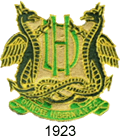
Hibernian and their new club crest featured the letters "DH"
supported by a pair of celtic dragons taken from the city's coat of arms.
Unfortunately, Dundee Hibernian finished the season in one of these positions and lost
their place. The following season they played in the Scottish Alliance
where they performed poorly and the club went bust at the end of the season. A consortium
of local businessman stepped in with a plan to broaden the club's appeal
by abandoning its Irish roots. The reformed club was named Dundee City
and the green jerseys were discarded in favour of white and black. A
campaign was launched to secure election back into the Second Division,
which proved successful but following objections from Dundee FC, the
club’s name was changed to Dundee United in October 1923. While
this matter was in dispute, the club continued to be known as Dundee
Hibernian and their new club crest featured the letters "DH"
supported by a pair of celtic dragons taken from the city's coat of arms.
 In 1925 and 1929 the reformed club won the Second Division championship
and they were promoted as runners-up in 1931 but their career in the
First Division proved brief on each occasion.
In 1925 and 1929 the reformed club won the Second Division championship
and they were promoted as runners-up in 1931 but their career in the
First Division proved brief on each occasion.
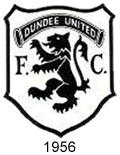
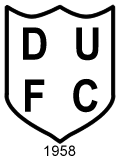 The first appearance of the classic lion rampant crest was on the match programmes from the 1956-57 season. This did not, however, appear on the team shirts and instead a much more prosaic badge with "DUFC" sewn on in plain, non-serif font was worn from 1958.
In 1959-60, United won promotion after twenty-seven undistinguished seasons in the Second Division but this time they consolidated. During this period they wore predominantly all-white kits.
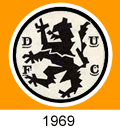 In the 1967 United were invited to in the United States as Dallas Tornadoes in the short-lived United Soccer Association during the close season, wearing "Columbia
blue and burnt orange." In 1969 the wife of the manager persuaded the board to adopt these colours for domestic competition to achieve a more modern image. As blue was worn by their rivals Dundee FC, black was substituted
instead and a snazzy new version of the lion rampant badge appeared on the players' bright orange shirts for the first time.
In the 1967 United were invited to in the United States as Dallas Tornadoes in the short-lived United Soccer Association during the close season, wearing "Columbia
blue and burnt orange." In 1969 the wife of the manager persuaded the board to adopt these colours for domestic competition to achieve a more modern image. As blue was worn by their rivals Dundee FC, black was substituted
instead and a snazzy new version of the lion rampant badge appeared on the players' bright orange shirts for the first time.
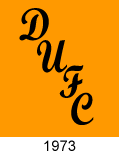 The arrival of Jim McLean as manager in 1971 and the introduction
of a strong youth policy marked their transition from an average First
Division side to one that would challenge the dominance of the Old Firm. Instead of a badge, the club's initials were sewn onto their shirts in various styles in the early Seventies.
The arrival of Jim McLean as manager in 1971 and the introduction
of a strong youth policy marked their transition from an average First
Division side to one that would challenge the dominance of the Old Firm. Instead of a badge, the club's initials were sewn onto their shirts in various styles in the early Seventies.
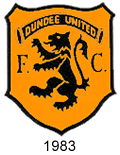 In 1979-80, United won the Scottish League Cup, retaining it the following
season. In 1983 they won the Premier Division title and were hailed,
along with Aberdeen as the “New Firm.” The following season
United reached the semi-finals of the European Cup and in 1987 they
were beaten finalists in the UEFA Cup. The classic crest was reintroduced in this period with several variations, such as the shape (or absence) of the supporting shield.
In 1979-80, United won the Scottish League Cup, retaining it the following
season. In 1983 they won the Premier Division title and were hailed,
along with Aberdeen as the “New Firm.” The following season
United reached the semi-finals of the European Cup and in 1987 they
were beaten finalists in the UEFA Cup. The classic crest was reintroduced in this period with several variations, such as the shape (or absence) of the supporting shield.
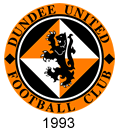 McLean retired in 1993 after a remarkable 22 years in charge and his
place was taken by Ivan Golac who won the Scottish Cup in his first
season in charge, the first time the Tannadice club had won the competition and their seventh final since 1974. A very smart circular version of the club crest was introduced in 1993 that incorporated their old and new colours.
McLean retired in 1993 after a remarkable 22 years in charge and his
place was taken by Ivan Golac who won the Scottish Cup in his first
season in charge, the first time the Tannadice club had won the competition and their seventh final since 1974. A very smart circular version of the club crest was introduced in 1993 that incorporated their old and new colours.
In 1995 United
were relegated to the First Division, but bounced back the following
 season after a dramatic extra-time win in the play-off against Partick
Thistle. The following season they finished third in the Premiership.
season after a dramatic extra-time win in the play-off against Partick
Thistle. The following season they finished third in the Premiership.
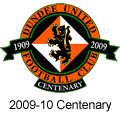
Since that success, United struggled to maintain their status in the top flight but some of their previous glory returned with a second Scottish Cup win in 2010, which happily marked their centenary. A special crest was worn in that season that included a little green as a reminder of United's origins.
United struggled in 2016-17 and defeat at Dens Park in the Dundee derby on 2 May consigned them to the Scottish Championship. The team led the division from the opening weekend of the 2019-20 season and when fixtures were suspended in March they were 14 points clear. In May they were declared champions and were  promoted back to the Premiership.
The 2022-23 season marked the 40th anniversay of Dundee United winning the Scottish Premier Division title so naturally a special kit as commissioned, based on the original worn in 1982-83 but with Macron's hero logos replacing the Adidas stripes on the shirt. The club crest was given an update but this only appeared on the shorts that season. The "DUFC" cypher worn 40 years earlier was woven into the shirts instead.
You are welcome to Contact Me with corrections and additions.
Sources
- (a) London Hearts
- (b) Dundee Rivals
- (c) Riccardo Bertani
- (d) Relichtieplus
- (e) Dundee FC - Images of Sport (Paul Lunney 2001)
- (f) Dundee United Official Website
- (g) Airdrieonians FC - Images of Sport (Brian Bollen 2002)
- (h) Show Racism the Red Card
- (i) Colours of Football
- (j) The Scotsman
- (k) ic Liverpool.co.uk
- (l) Pete's Picture Palace
- (m) oldfootballshirts.com
- (n) e-bay
- (o) Classic Kits
- (p) SNSpix
- (q) Tommy Guthrie
- (r) Alick Milne
- (s) John Cockburn-Turner
- (t) St Johnstone FC - Images of Sport (Alastair Blair 2003)
- (u) Brian Baxter
- (v) Football Shirt Culture
- (w) Aidan Hegarty
- (x) Duncan Castles
- (y) Willie Kay
- (z) Sultanate of Tannadice
- (A) John Small
- (B) The Dundee United Official Centenary History by Peter Rundo & Mike Watson (Birlinn 2009)
- (C) seanftd
- (D) Keith Ellis
- (E) Ian McConnel
Crests are the property of Dundee United FC.