Clyde
Formed 1877
Elected to the Scottish League 1891
Kit History
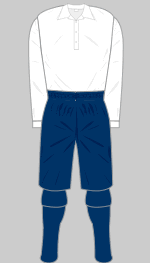
1877-1886 b c n v
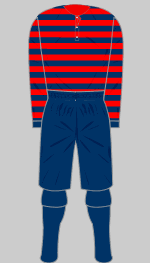
1886-1898 c n v
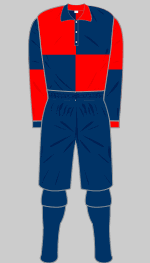
1898-1903 n v
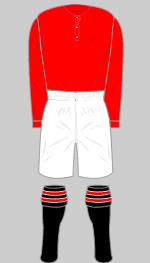
1903-1913 b n
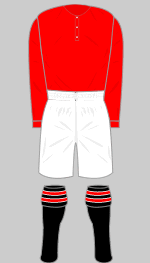
1913-1915 n
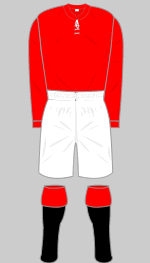
1915-1920 n
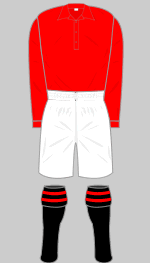
1920-1921 u
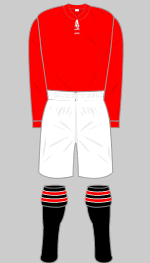
1921-1923 n
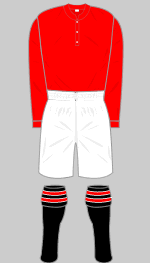
1923-1924 n
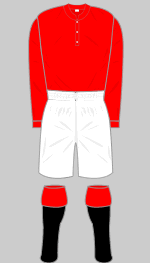
1924-1925 n
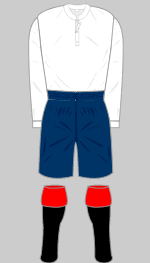
1925-1927 n
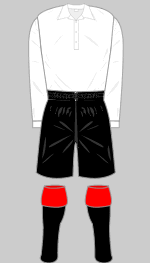
1929-1934 b n
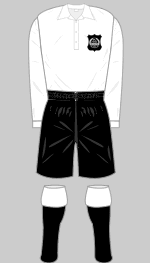
1934-circa 1935 b
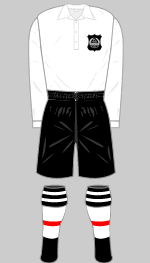
1935-1937 d f n
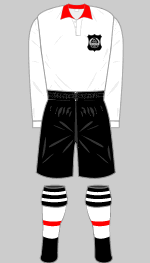
1937-1938 b n
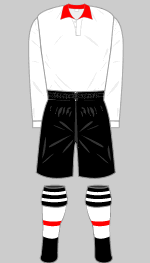
1938-1940 n
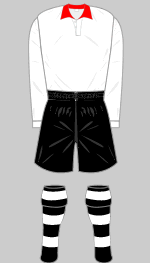
1945-1946 n
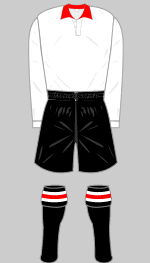
Aug-Sept 1946 t
Oct 1946 t
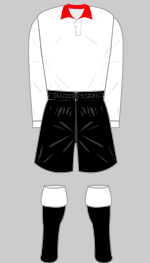
Nov 1946-1947 n
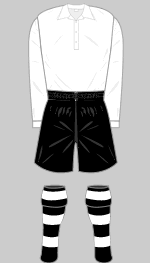
1948 p
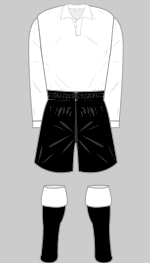
1948-Dec 1949 n
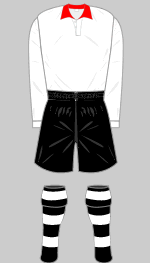
Jan-May 1950 n
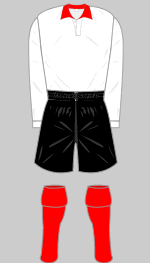
1950-1953 t
1953-1954 t
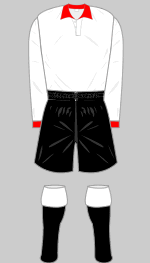
1954-1955 t
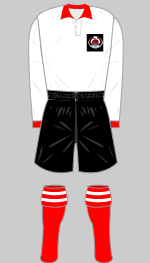
1955 Special b n t
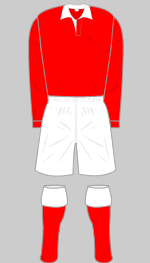
1955-1956 1 n

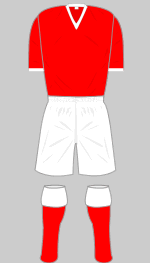
1955-1956 2 t
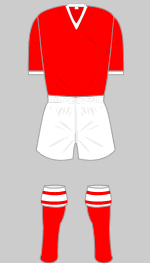
1956-1957 n p t
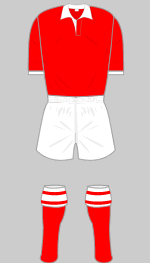
1957-1960 r t
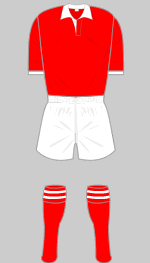
1960-1962 n r
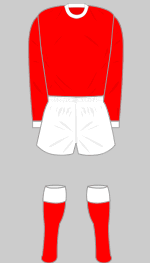
1962-1963 t
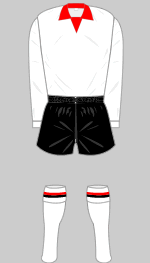
1963-1968 d n t
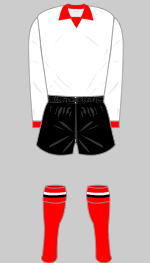
1966-1968 alt n
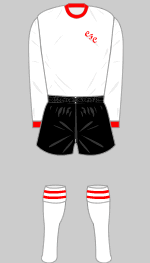
1968-1969 j n t

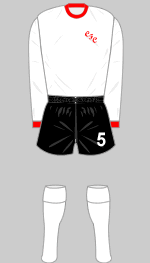
1969-1970 t
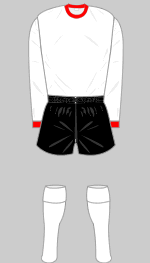
1970-1973 b d j
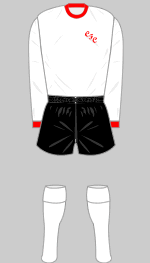
1973-1974 t
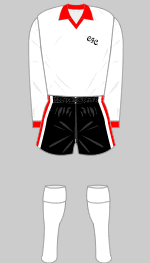
Aug-Dec 1975 j
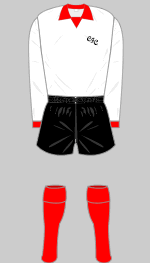
Jan 76-1977 h t
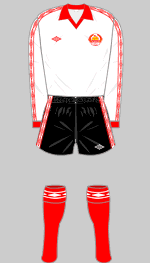
1977-1978 i j
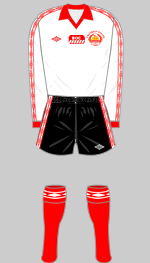
1978-1979 c
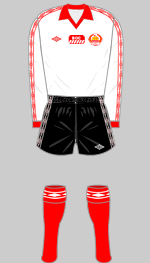
1979-1981 j q t
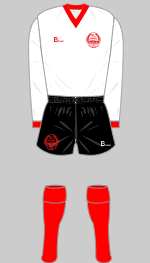
1981-1983 j q
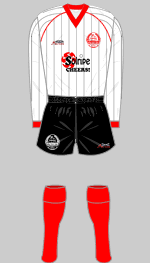
1982-1984 j o
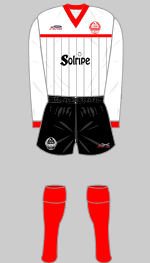
1984-1986 b j m o
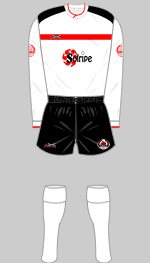
1986-1987 o
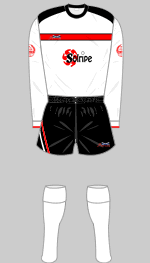
1987-1988 m o
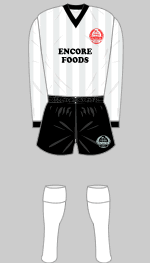
1988-1989 j o t
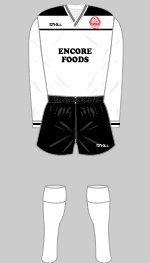
1989-1990 j o
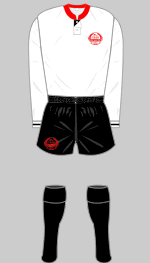
1990-1991 q
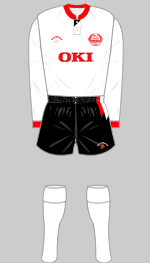
1991-1992 j
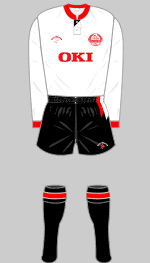
1992-1993 j
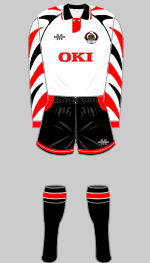
1993-1994 j o
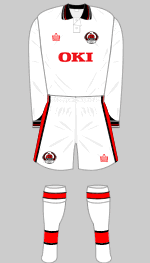
1995-1996 j o
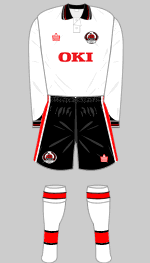
1996-1998 j o
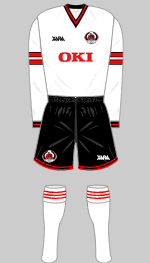
1999-2001 h j o t
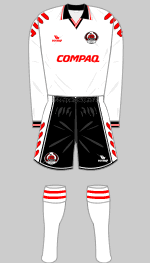
2001-2002 e h o
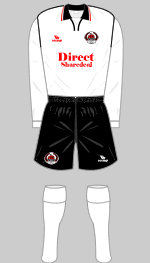
2002-2003 j o
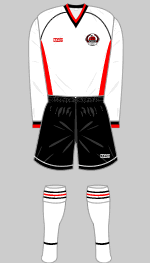
2003-2004 g o
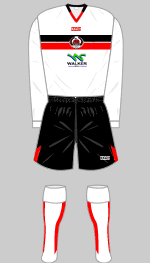
2004-2005 g o
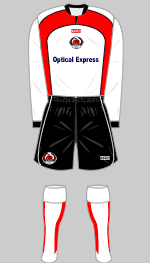
2005-2006 b o
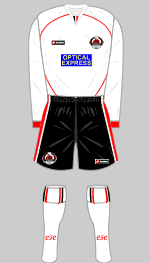
2006-2007 f
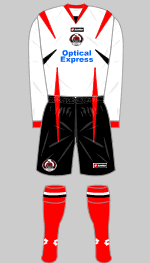
2007-2008 b o
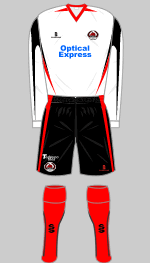
2008-2009 b t
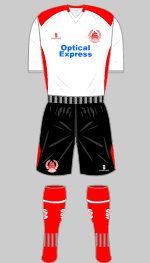
2009-2010 b
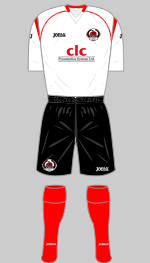
2010-2011 b t
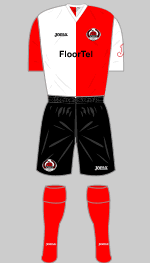
2011-2012 b
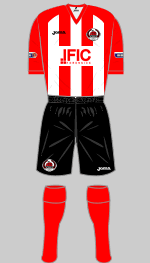
2012-2013 b
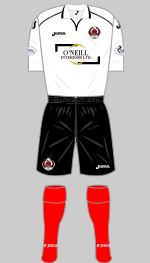
2013-2015 b
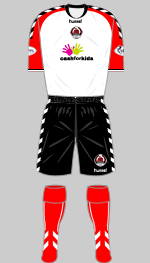
2015-2016 b
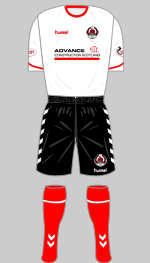
2016-2018 b
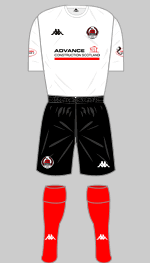
2018-2019 b
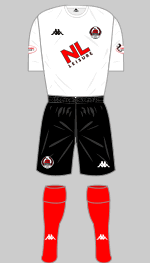
2019-2020 b
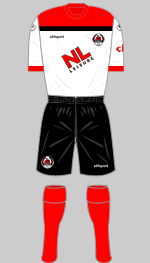
2020-2021 b
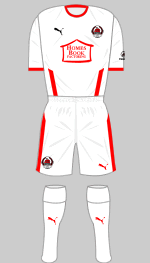
2021-2022 b
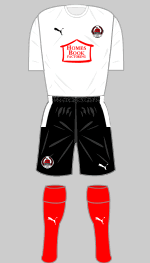
2022-2023 b
Background
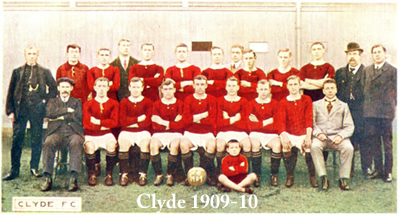 Although there was a club known as Clyde FC
formed in 1872, they existed for only a single season. The present club
was formed in 1877 and originally played in white jerseys and (dark) blue knickers. Known as
the "Bully Wee" they are one of Glasgow's oldest clubs. (Their
nickname means "good little (club)" - bully as in "bully
for you".) Originally they played at Barrowfield Park, adjacent
to the River Clyde (from which they took their name) in the Bridgeton
(pronounced "Brig-ton") area of the city close to Parkhead, where Celtic would become established a decade later.
Although there was a club known as Clyde FC
formed in 1872, they existed for only a single season. The present club
was formed in 1877 and originally played in white jerseys and (dark) blue knickers. Known as
the "Bully Wee" they are one of Glasgow's oldest clubs. (Their
nickname means "good little (club)" - bully as in "bully
for you".) Originally they played at Barrowfield Park, adjacent
to the River Clyde (from which they took their name) in the Bridgeton
(pronounced "Brig-ton") area of the city close to Parkhead, where Celtic would become established a decade later.
Between 1886 and 1898 Clyde's colours were registered with the SFA as "red and black (horizontal) stripes with (dark) blue knickers". (Parentheses added.) In 1899 their entry in the SFA handbook read simply "red and black" but a report in the Edinburgh Evening News (24 September 1898) states that the team's shirts were "red and navy blue (sic) quartered in the old university fashion". My sources tell me it was not unusual at the time for reporters to confuse black and navy especially on murky Glasgow afternoons while I have interpreted the phrase "old university fashion" to mean what we would now call "halves."
Clyde were elected to the Scottish League in 1891 when it was expanded to 12 clubs but in 1893 they finished in last place and went into the new Second Division. They finished third and under the rules of the time they successfully applied for election to Division One (leaving Hibernian and Cowlairs, who had finished ahead of them, to languish in the lower division). In 1896 they moved to the other side of the River Clyde to the Shawfield Stadium, their home for the next 90 years.
The club had to seek re-election on four occasions and in 1900 they were relegated back to the Second Division (automatic promotion and relegation was not adopted until after the First World War). They returned to the top level in 1906 and finished in third place three times before the outbreak of war in 1914. In 1915 they won the Glasgow Cup, a competition they would win again in 1926, 1947, 1952 and 1959. In 1924, they were relegated but returned to Division One after only two seasons.
In 1935, facing financial difficulties, Clyde sold their Shawfield ground to their tenants, the Greyhound Racing Association, a decision that would come back to haunt them 50 years later. In 1939 the Bully Wee won the Scottish Cup, beating Motherwell 4-0 in the final.
Clyde's traditional colours since the late 20s have been red trimmed white shirts and black shorts.
During the 1950s, while unable to compete with
the Old Firm clubs, Clyde laid claim to being Glasgow's third team with
further Scottish Cup wins in 1955 and 1958. For much of this period the team reverted to playing in red shirts and white shorts but in 1963 they went back to white shirts, perhaps because the red and white strip was almost identical to their close rivals, Third Lanark. In 1967 they finished third
in the league but were denied a place in the Inter-City Fairs Cup (forerunner
of the UEFA Cup) because only one club from each city could qualify
(Rangers had finished second). This proved to be the club's high water
mark and decline followed. They spent 1972-73 in the Second Division
and when the Scottish League was restructured in 1975  with the formation
of the Premier Division, Clyde went into the new First Division (tier
two).
with the formation
of the Premier Division, Clyde went into the new First Division (tier
two).
 During the Sixties, the letters "CFC" sometimes appeared on the team shirts. After 1977 (Clyde's centenary season) the club crest, which featured a sailing ship to represent the long tradition of shipbuilding on the River Clyde, was adopted. Although the colours varied slightly over time, the basic design appears to have remained unchanged.
After relegation to Division Two (tier three)
in 1976, Clyde bounced backwards and forwards before establishing themselves
in the First Division during the 1980s. In 1986 they were evicted from
their home at Shawfield Stadium when the owners decided to concentrate
on 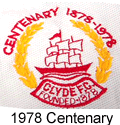 greyhound racing. After years of sharing grounds with Partick Thistle
(their arch rivals - a deeply unpopular arrangement) and later Hamilton
Academical, Clyde moved to Cumbernauld new town in 1994 where they
struggled to attract spectators. At the end of the 1993-94 season the
Scottish League was again restructured and Clyde found themselves in
the new ten-team Second Division (third tier).
greyhound racing. After years of sharing grounds with Partick Thistle
(their arch rivals - a deeply unpopular arrangement) and later Hamilton
Academical, Clyde moved to Cumbernauld new town in 1994 where they
struggled to attract spectators. At the end of the 1993-94 season the
Scottish League was again restructured and Clyde found themselves in
the new ten-team Second Division (third tier).
In 2000 Clyde won promotion back to the First Division and made a serious challenge to joining the elite Premier League, finishing as runners-up in 2003 and 2004. The margin between success and failure in these ten-team divisions, however, is narrow and in 2009 they finished last and were relegated to the third tier where, in 2011 they finished up with the wooden spoon.
In December 2010 the club informed their landlord, North Lanarkshire Council that they intended to quit Broadwood but no alternative base was immediately found. In April 2013 the board called an Extraordinary General Meeting when, by a substantial majority, they were authorised to relocate the club to East Kilbride, which is just 15 minutes drive from its original home in Rutherglen. Negotiations were started with the East Kilbride Community Trust with a view to building a brand new stadium on vacant land in Langlands but their offer to buy the plot was rejected by the owners, South Lanarkshire Council and the plan fell through.
In April 2022 the club announced that they would leave Broadwood and share Hamilton Academical's New Douglas Park from the start of 2022-23 wih a view to relocating to Glasgow in the near future.
Sources
- (a) Clyde MAD
- (b) Official Clyde FC website - this has an excellent history section
- (c) Brian McColl
- (d) London Hearts
- (e) Premiershirts
- (f) e-bay
- (g) Colours of Football
- (h) Classic Kits
- (i) Ross Paterson
- (j) SNSpix
- (k) Mark Parker
- (l) Aberdeen FC - Images of Sport 1903-1973 (Paul Lunney 2000)
- (m) Ralph Pomeroy
- (n) Alick Milne
- (o) Alan Paterson
- (p) My photo library
- (q) Donald Gellatly (HFK Research Associate)
- (r) Keith Ellis
- (s) William Kay
- (t) Ian McConnel
- (u) Football & the First World War
- (v) SFA Annuals 1877-1900 submitted by Bryan MacPherson
Photograph courtesy of Clyde FC Official Website. Crests are the property of Clyde FC.