
Arbroath
Formed 1878
Founder member of the re-formed Scottish League Division Two 1921
Kit History
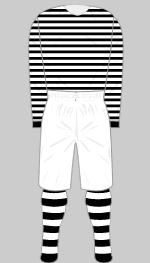
1878-1883 a o
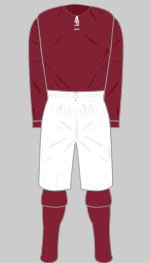
1883-1885 a o
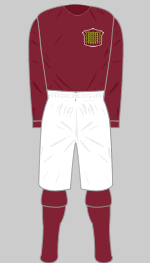
1885-1888 c i o
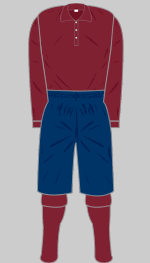
1892-1893 a
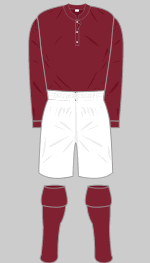
1901-1915 a c i
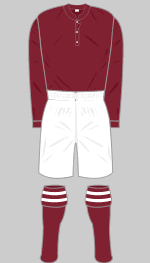
1919-1926 c i
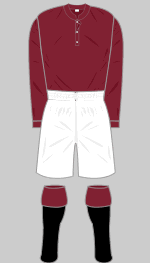
1926-1929 i
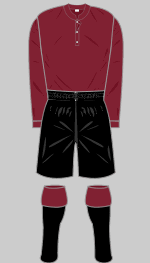
1927-1929 away i
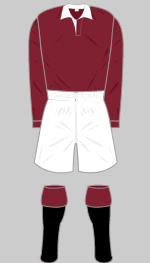
1930-1933 c i
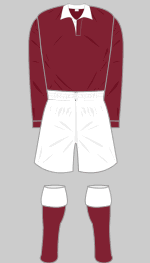
1933-1946 c i
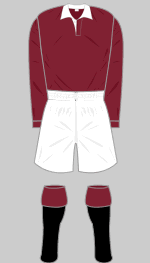
1946-1951 i
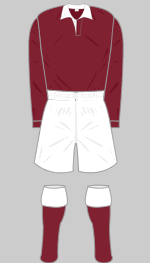
1952-1953 i
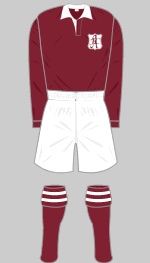
1953-1955 b i
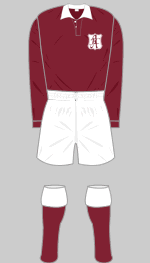
1955-1956 i
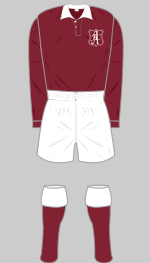
1956-1957 i
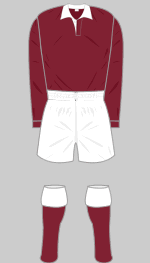
1958-1959 m
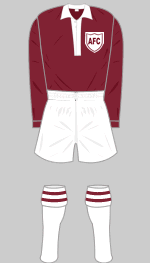
1959-1960 c i n
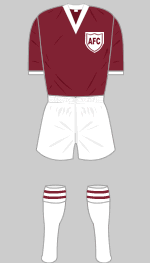
1959-1960 alt m
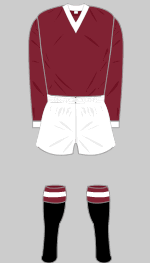
1960-1962 i
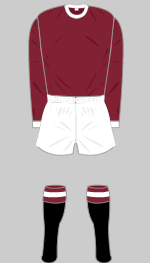
1962-1963 i
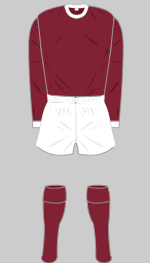
1963-1965 c i
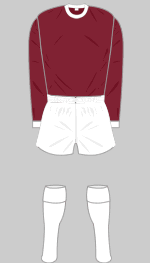
1965-1968 c i
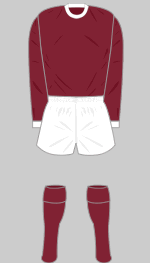
1968-1969 n
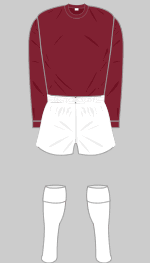
1969-1971 i
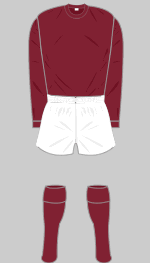
1971-1975 c hi
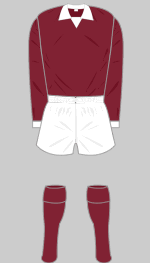
1975-1977 c h i
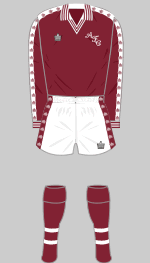
1977-1980 c g h n
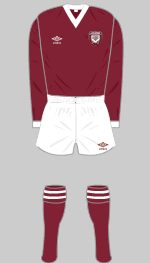
1980-1984 c l
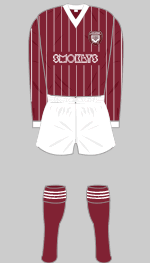
1984-1986 1 c l
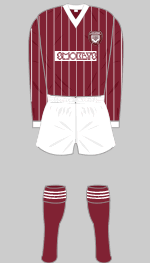
1984-1986 2 c l
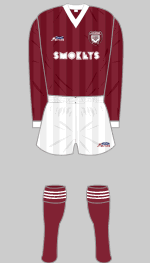
1986-1988 c l
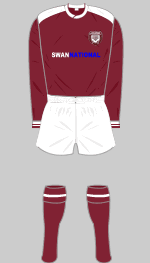
1988-1989 h j
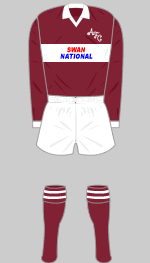
1989-1990 l
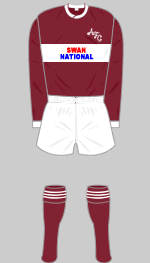
1990-1991 n
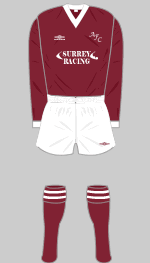
1991-1992 h l
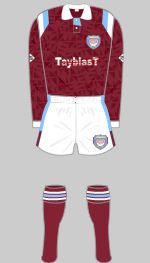
1992-1994 c f h k l n
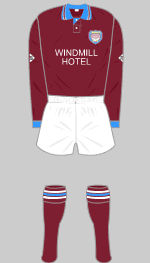
1994-1995 l
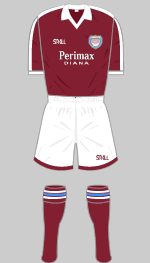
1995-1997 l
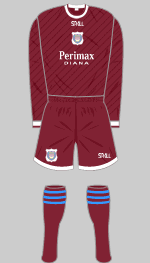
1997-1998 l
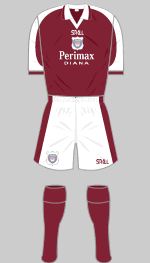
1998-1999 l
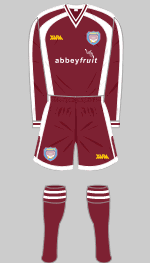
1999-2000 c e h l
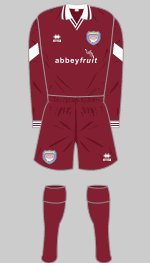
2000-2002 c e h l
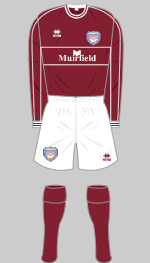
2002-2003 c h
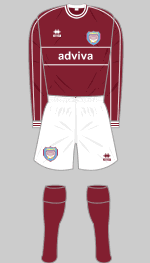
2003-2004 c d h
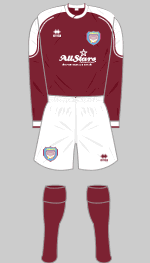
2004-2005 e h
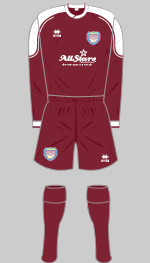
2005-2006 a h
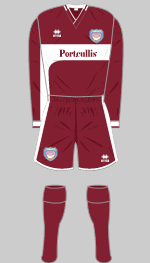
2006-2008 d h i
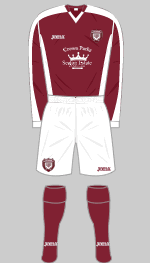
2008-2009 a
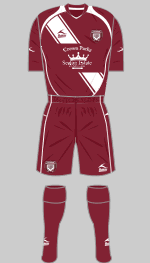
Aug-Oct 2009 a
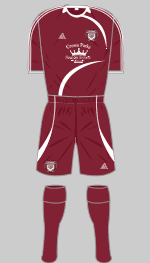
Oct 2009-2010 a
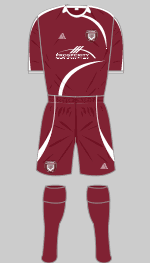
2010-2011 a
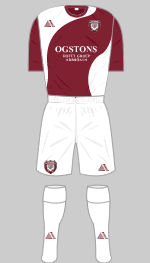
2011-2012 a
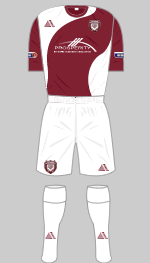
2012-2013 a
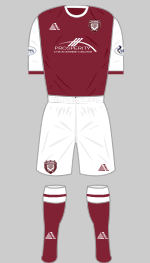
2013-2014 a
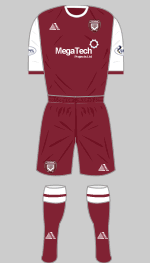
2014-2015 a
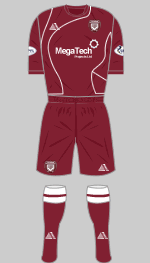
2015-2017 a
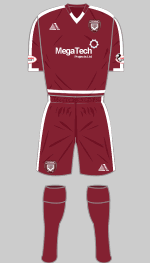
2017-2019 a
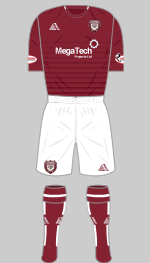
2019-2020 a
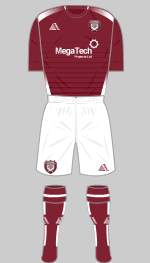
2020-2021 a
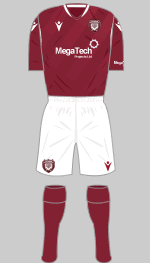
2021-2022 a
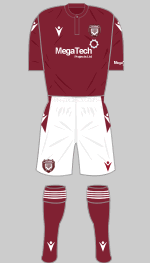
2022-2023 a
Background
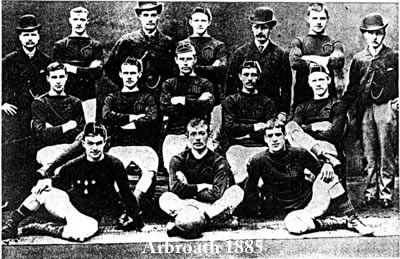 This modest club, which has spent most of its
time in the middle and lower ranks of Scottish senior football, holds
a world record, which is unlikely to ever be bested. In 1885 they beat
Bon Accord by 36-0 in the Scottish Cup, the highest ever score in a
senior football match. Thirteen goals were scored by Jockie Petrie,
also a world record and legend has it that the Arbroath goalkeeper,
who did not have to save a shot all day, spent the game sheltering from
the rain under an umbrella borrowed from a spectator. The unfortunate
Bon Accord team were, in fact, a cricket club who had been invited to
compete by mistake. The score could have been as many as 43 according
to some accounts, but the referee disallowed several
This modest club, which has spent most of its
time in the middle and lower ranks of Scottish senior football, holds
a world record, which is unlikely to ever be bested. In 1885 they beat
Bon Accord by 36-0 in the Scottish Cup, the highest ever score in a
senior football match. Thirteen goals were scored by Jockie Petrie,
also a world record and legend has it that the Arbroath goalkeeper,
who did not have to save a shot all day, spent the game sheltering from
the rain under an umbrella borrowed from a spectator. The unfortunate
Bon Accord team were, in fact, a cricket club who had been invited to
compete by mistake. The score could have been as many as 43 according
to some accounts, but the referee disallowed several 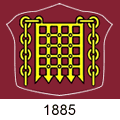 goals, ostensibly
because players were offside. Photographs of the Arbroath team show they wore a portcullis crest sewn onto a large shield: this is taken from the Arbroath coat of arms and represents the entrance to Arbroath Abbey.
goals, ostensibly
because players were offside. Photographs of the Arbroath team show they wore a portcullis crest sewn onto a large shield: this is taken from the Arbroath coat of arms and represents the entrance to Arbroath Abbey.
Arbroath was formed in 1878 at a meeting held in the George Hotel and played their first competitive fixture against the Dundee club, Our Boys FC, whom they beat 2-1 in the Scottish FA Cup. In 1882 the club adopted plain maroon jerseys, apparently inspired by the red sandstone that is prominent in the area. These have remained their colours ever since. The team is known as “The Red Lichties” after the red navigation lights carried by the town's once thriving fishing fleet, "Lichtie" being a local derivative of the Scots word "Licht" (Light). These were hung from the mast as the fleet returned to port to warn the womenfolk of their imminent arrival so they could prepare to gut and smoke the catch.
In 1884 Arbroath defeated mighty Rangers on their home ground in the Scottish Cup but were obliged to replay the fixture after the Glasgow club complained about the width of the pitch. Arbroath lost the replay 1-8. In 1891, Arbroath became founder members of the Northern League, winning the title in 1893. Further success came in the Qualifying Cup, won in 1903. From 1909, the club competed in the Central League. With the outbreak of the Great War, Arbroath closed down for the duration. In 1920 they rejoined the Central League when it was reformed by those disgruntled members of the Scottish Second Division who had resigned their membership. The following season the Central League was incorporated into the Scottish League as the new Division Two. During the club’s first ever match at this level, a 3-1 win over Johnstone, two players were sent off and police were called when a pitch invasion threatened to develop into a riot. The club finished sixteenth out of twenty.
In 1934 Arbroath secured promotion to the Scottish
First Division and they maintained their place in the top flight until
the outbreak of the Second World War. When the League was restarted
in 1945, Arbroath were shocked to find themselves placed in the new
B Division (i.e. Division Two), an injustice that affected several  clubs.
In 1947 the club reached the semi-finals of the Scottish Cup, their
best performance to this day.
clubs.
In 1947 the club reached the semi-finals of the Scottish Cup, their
best performance to this day.
In 1953 the team wore a crest comprising the club's initial intertwined on a shield. The colours were reversed for the 1956-57 season after which it was dropped. A simpler version was worn during the 1959-60 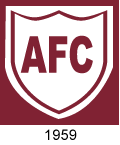 season.
Arbroath languished in the Second Division until
1959 when they were again promoted and the following season they reached
the semi-final stage of the Scottish League Cup. Unable to sustain themselves
at this higher level, they were relegated in last place that same season.
History repeated itself in 1968 and 1969 but promotion in 1970 led to
a period of relative success, with 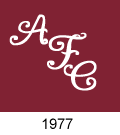 Arbroath holding their own in the
lower reaches of the First Division until the introduction of the Scottish
Premier League in 1975, when they wound up in the new First Division
(now the second tier).
Arbroath holding their own in the
lower reaches of the First Division until the introduction of the Scottish
Premier League in 1975, when they wound up in the new First Division
(now the second tier).
After playing in unadorned maroon jerseys for 17 seasons, Arbroath adopted a stock Admiral strip with logo tapes in 1977. These new kits had an "AFC" applied to the shirts, a device that was revived 12 years later.
A smart new crest was introduced in 1980 that revived the portcullis motif seen in the previous 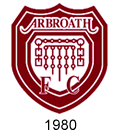 century. A monogram was used between 1989 and 1992.
Relegation to Division Two (third tier) came in 1980 and it would not be until 2001 that they would return to this level. Years of frustration followed, with the team finishing rock bottom in 1985 and 1991.
In 1992 Pro Star introduced light blue as an accent colour and the crest was updated to match. This version was used until 2008, often placed on a larger white or light blue shield, after which the older 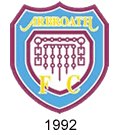 version from 1980 was reintroduced.
With the reorganisation of 1995, Arbroath went into the new Third Division (fourth tier). In 1996 Arbroath were drawn against Bon Accord in the Scottish Cup for the first time since the record breaking encounter of 1885. History did not repeat itself, Arbroath running out comfortable 4-0 winners.
After finishing bottom in 1997, the club won
promotion the following season and in 2001 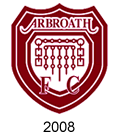 they returned to the First
Division. Decline followed and by 2006 they were back in the lowest
division. In 2008 they finished in fourth place and won promotion through the newly revised play-off system.
they returned to the First
Division. Decline followed and by 2006 they were back in the lowest
division. In 2008 they finished in fourth place and won promotion through the newly revised play-off system.
Due to problems with their supplier, Arbroath switched from Bukta to Pendle in October 2009 after gaining permission to alter their registered strips.
Arbroath came close to losing their place in the SPFL in 2015-16 but a late rally took them to ninth place in League Two, ahead of East Stirlingshire who were beaten in the play-offs by Edinburgh City. The following season was far better: in February they were in second place, 11 points behind Forfar Athletic but they clawed the difference back and went into the final game one point ahead of their rivals. In a dramatic climax to the season, Arbroath managed a 1-1 draw against Stirling Albion but Forfar unexpectedly went down 4-2 at home to Anan Athletic.
In 2018-19 Arbroath led League One from the first day of the season and finished as champions. When the 2019-20 season ended early, they were in a respectable fifth place in the Championship. In 2021-22 they finished in second place but were beaten in the play-offs.
Sources
- (a) Official Arbroath Site - a good website with a comprehensive history section. An example that many wealthier clubs could follow.
- (b) e-bay
- (c) Relichtie Plus another outstanding site with a collection of rare photographs
- (d) Colours of Football
- (e) Classic Kits
- (f) Petes Picture Palace
- (g) Ayr United FC - Images of Sport (Duncan Carmichael 2002)
- (h) SNSpix
- (i) Alick Milne
- (j) Ralph Pomeroy
- (k) jumpers4goalposts.com
- (l) Donald Gellatly (HFK Research Associate)
- (m) Keith Ellis (HFK Research Associate)
- (n) Ian McConnel
- (o) Scottish Football Association Annuals
Crests are the property of Arbroath FC.