Albion
Rovers
Formed 1882
Elected to Scottish Division Two 1903. Transferred to the Western League 1915.
Elected to the Scottish Football League 1919.
Kit History
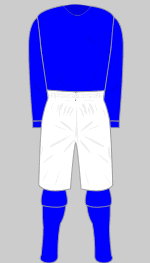
1882-1889 h w
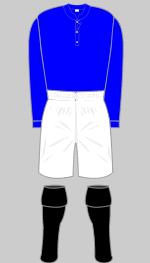
1903-1906 l
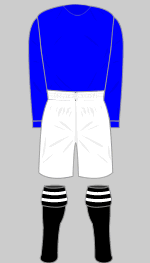
1911-1912 n
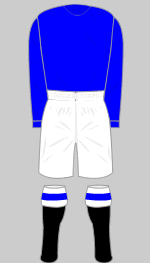
1912-1913 p
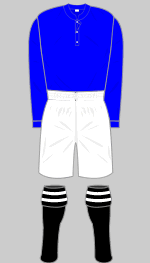
1913-1920 l
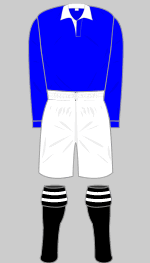
1920-1921 u
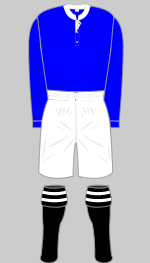
1924-1928 l
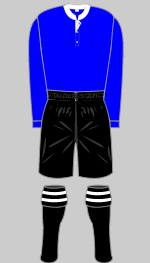
1927-1928 away
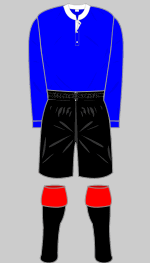
1928-1929 away
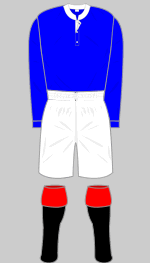
1928-1935 l
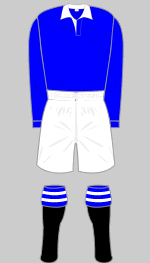
1935-1936 f

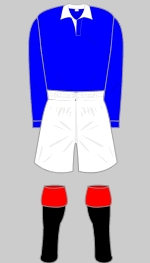
1936-1937 d g
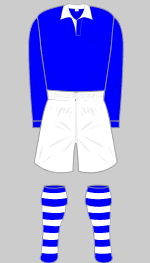
1937-1938 d g l
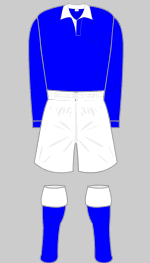
1944-1945 l
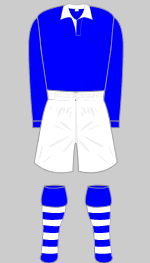
1945-Dec1946 l
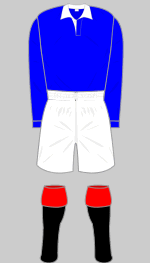
Jan1947-1955 d l
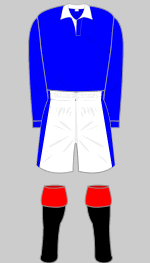
1955-1956 l
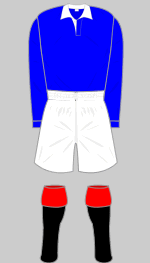
1956-1959 l
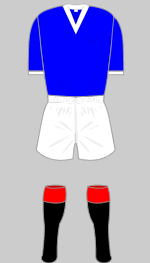
1959-1960 l
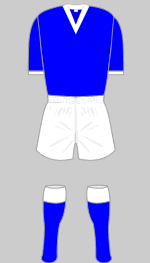
1960-1961 l
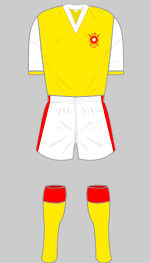
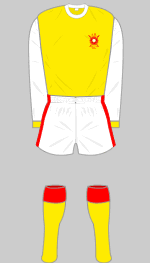
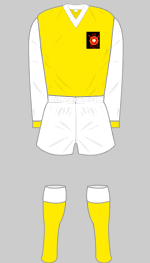
1965-1967 l
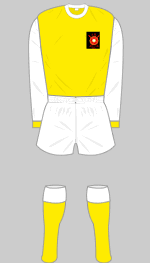
1967-1968 l
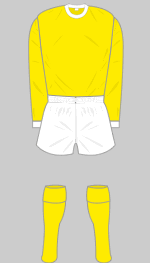
1968-Dec1969 l
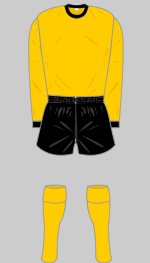
Jan-May 1970 l
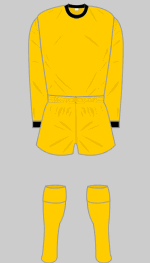
1970-1972 l
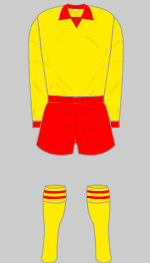
Aug-Dec 1972 l
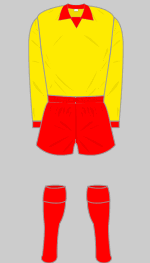
Jan-May 1973 l
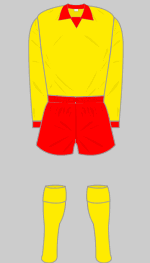
1974-1975 l
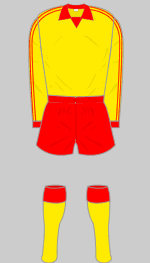
1975-1976 l
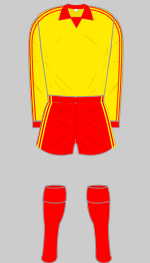
1976-1977 l v
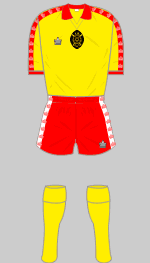
1977-1978 l
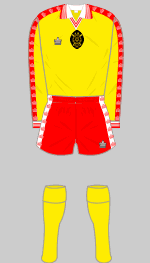
1977-1978 l
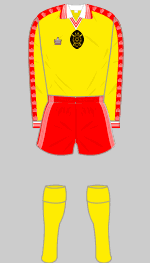
1978-1983 l o
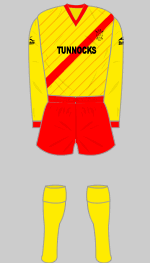
1983-1985 j l t
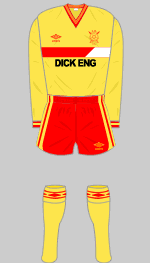
1985-1987 d j k l
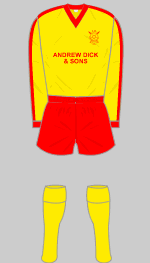
1987-1988 d
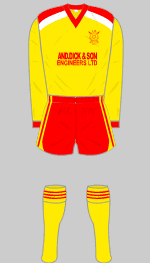
1988-1989 i j o
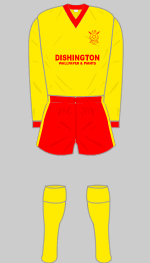
1989-1990 o
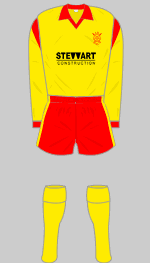
1990-1991 d q
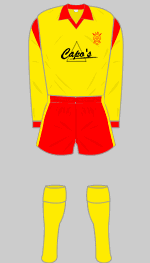
1991-1992 j q
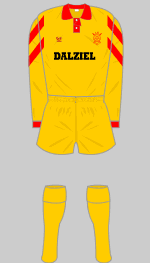
1992-1994 j o q
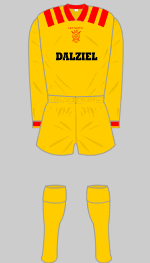
1994-1996 o
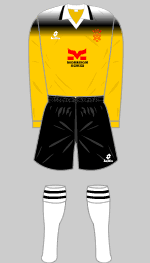
1996-1998 j o q v
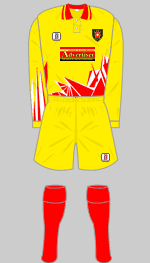
1998-2000 d j o
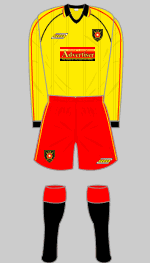
2000-2001 c d o
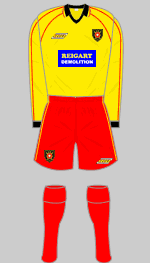
2001-2002 a o
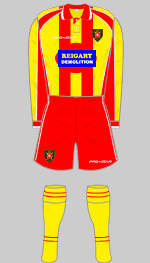
2002-2004 a b j
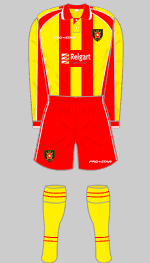
2004-2006 a b j
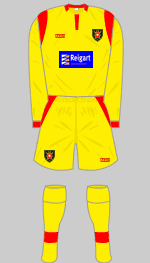
2006-2007 a c
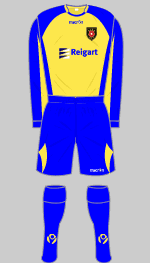
2007-2008 a
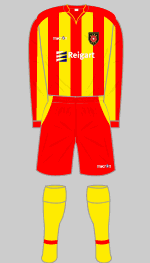
2008-2009 m
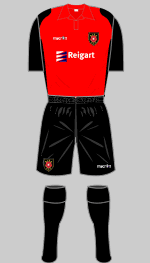
2009-2011 a
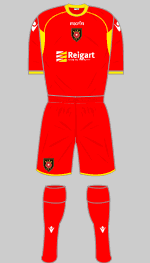
2011-2013 r
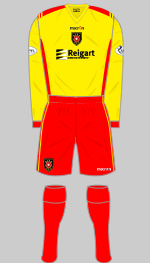
2013-2015 a

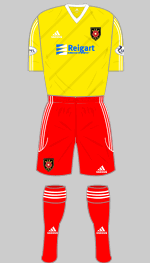
2015-2017 a
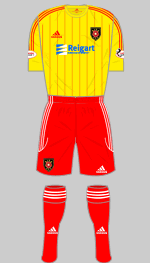
2017-2018 a
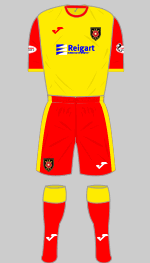
2018-2019 a
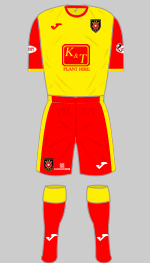
2019-2020 a
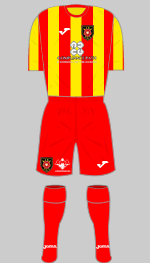
2020-Oct 22 a
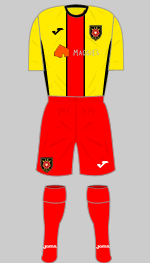
Nov 22-2024 a
Background
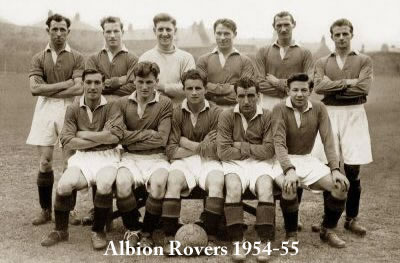 The "Wee Rovers" play in Coatbridge
near Glasgow and like many Scottish sides, they do not bear the name
of their home town. They were formed when two local sides, Albion
FC and Rovers FC decided to merge, incorporating their names
into one (although they are always known to their supporters as "The
Rovers" and never "Albion"). In 1903 the club was admitted
to the Second Division of the Scottish Football League. For a period
they had two grounds but have played at Cliftonhill Stadium since Christmas 1919.
The "Wee Rovers" play in Coatbridge
near Glasgow and like many Scottish sides, they do not bear the name
of their home town. They were formed when two local sides, Albion
FC and Rovers FC decided to merge, incorporating their names
into one (although they are always known to their supporters as "The
Rovers" and never "Albion"). In 1903 the club was admitted
to the Second Division of the Scottish Football League. For a period
they had two grounds but have played at Cliftonhill Stadium since Christmas 1919.
In 1915 the Scottish Second Division was suspended and the member clubs formed regional competitions. Rovers joined the Western League where they continued to play until 1919 when they were elected back into the Scottish League, which at the time consisted of a single division. The club's highest achievement to date came in that 1919-20 season when, having beating Rangers after two semi-final replays, they reached the final of the Scottish Cup. In front of 95,600 spectators Rovers were narrowly beaten 2-3 by Kilmarnock at Hampden Park. They also finished bottom in the league.
The only other successes to have come the club's way were Second Division championships in 1934 and 1989. On the former occasion they spent three seasons in Scottish Division One while in 1989, of course, the Second Division had become the third tier of Scottish League system.
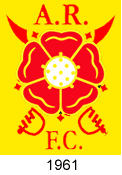 In 1961 the club changed from its traditional
blue and white to the much brighter yellow, white and red that continued until 2007. The change was made at the behest of the chairman, Tam Fagin, in an effort to give the team a more distinctive look. At the time and for many seasons to follow, the main colour was always described as "primrose." A crest was introduced consisting of a rose superimposed on a pair of crossed cutlasses, representing the merger of the two clubs
In 1961 the club changed from its traditional
blue and white to the much brighter yellow, white and red that continued until 2007. The change was made at the behest of the chairman, Tam Fagin, in an effort to give the team a more distinctive look. At the time and for many seasons to follow, the main colour was always described as "primrose." A crest was introduced consisting of a rose superimposed on a pair of crossed cutlasses, representing the merger of the two clubs 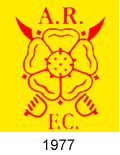 that created the Wee Rovers in 1882. This crest has evolved only slightly since its introduction. For example, the white centre seems to have been dropped around 1977.
The 1983 kit was sponsored by Tunnock's who produced a caramel wafer bar in a gold wrapper with red diagonal stripes, which gives the Wee Rovers the dubious distinction of having worn a kit inspired by a sweetie wrapper.
Since 1998 the club badge has appeared out of a black shield.
Like so many small clubs in Scotland's central
belt, life has been a constant struggle for Rovers. They can never compete
for support with the Old Firm clubs based just 13 miles away in Glasgow
and it was not until 2000 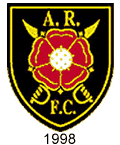 that they appointed a full-time manager and
a squad of full-time professional players (although many of these "professionals"
were unemployed youngsters on a government training scheme). The gamble
almost paid off as the team narrowly missed out on promotion in 2002
and 2003. The cost of maintaining a full-time squad and maintaining their crumbling ground proved too great however and the
number of professionals on the books was steadily reduced.
that they appointed a full-time manager and
a squad of full-time professional players (although many of these "professionals"
were unemployed youngsters on a government training scheme). The gamble
almost paid off as the team narrowly missed out on promotion in 2002
and 2003. The cost of maintaining a full-time squad and maintaining their crumbling ground proved too great however and the
number of professionals on the books was steadily reduced.
The board opened negotiations with Airdrieonians with a view to sharing that club's new stadium once it was built. This proved deeply unpopular and the board were ousted before talks came to fruition. The Airdrie club subsequently went bankrupt so it was perhaps just as well that these machinations came to nothing. Since then club has received a multi-million pound offer from a property developer for Cliftonhill but, having learned from the example of Airdrieonians, the board is seeking an alternative home within Coatbridge before selling up.
For their 125th anniversary in 2007-08, a new kit was introduced that combined their original colour of blue with the yellow adopted in the 60s. Red and yellow were restored in 2008 but the following season, the team played in red and black.
In 2011 the Wee Rovers beat Annan Athletic over two legs in the Second Division play-off final to secure their first promotion since 1989. They hung on to their place in the third tier after a dramatic win on penalties in the relegation play-offs but were relegated the following season (2012-13).
In 2015 the team won the new SPFL League Two championship, their first title since 1989, when they won the old Second Division (third tier). Three seasons later they finished bottom and were relegated back into the fourth tier.
Sources
- (a) Albion Rovers Official Site
- (b) Colours of Football
- (c) Classic Kits
- (d) e-bay
- (e) Toffs
- (f) Relichties
- (g) London Hearts
- (h) Brian McColl
- (i) jumpers4goalposts
- (j) SNSpix
- (k) Ralph Pomeroy
- (l) Alick Milne
- (m) Dumbarton FC Website
- (n) John Small
- (o) Donald Gellatly
- (p) The Dundee United Official Centenary History by Peter Rundo & Mike Watson (Birlinn 2009)
- (q) Old Football Shirts
- (r) Stephen McEwan
- (s) Jim Tuite
- (t) @williamkay62
- (u) Football & the First World War
- (v) Ian McConnel
- (w) Scottish Football Association Annuals
Crests are the property of Albion Rovers FC.