


Rotherham
United
Formed 1925 by the merger of Rotherham County and Rotherham Town.
Elected to Division Three (North) 1925.
Kit History
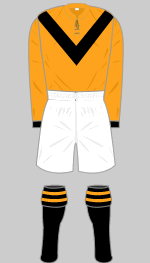
1925-1930 b u v
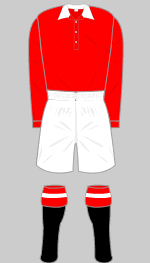
1930-1934 b
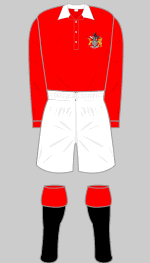
1934-1937 a
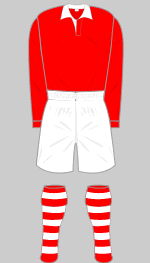
1946-1947 a

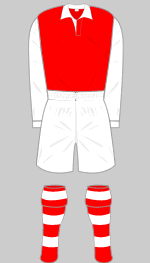
1947-1949 a q
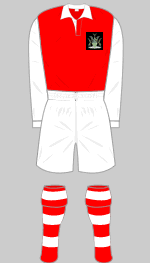
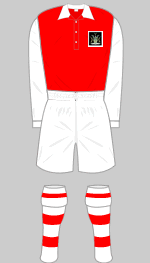
1951-1952 a q w
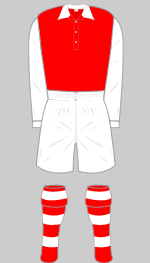
1952-1957 a l
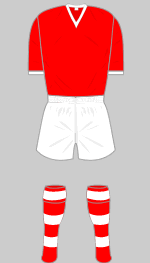
1957-1958 q
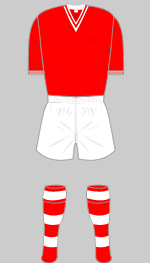
1958-1959 a
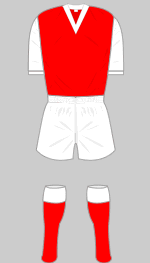
1959-1960 a

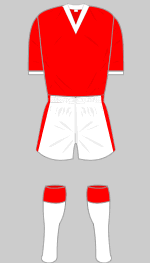
1960-1962 a
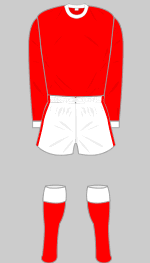
1962-1966 a q
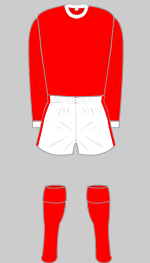
1966-Feb 1968 a
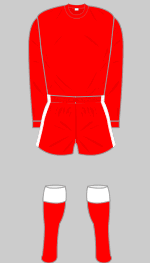
March 1968 o
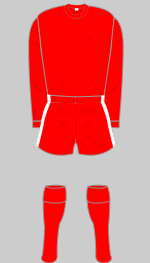
March 68-72 a e g k o
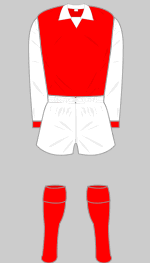
1972-1973 a g k o
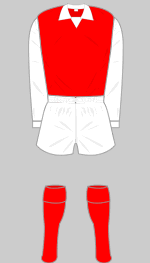
1973-1975 o q
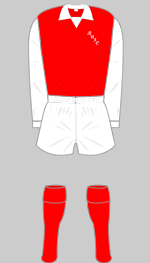
1975-1976 a g k o
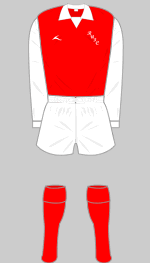
1976-1977 k o
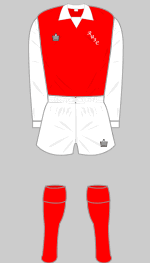
1977-1980 k o
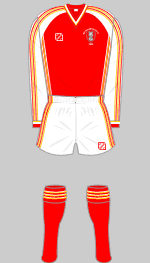
1980-1981 a
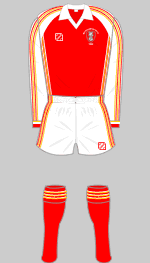
1981-1982 j
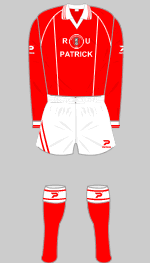
1982-1984 a r
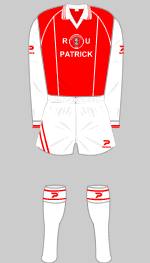
1984-1986 f r
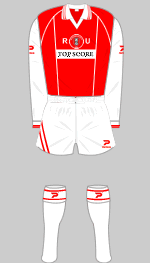
1985-1986 r
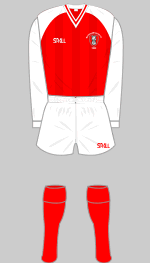
1986-1987 h t
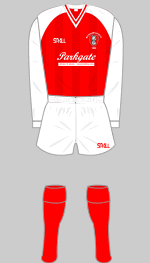
1987-1988 h t
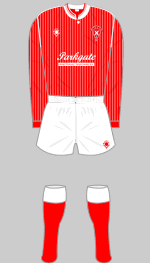
1988-1990 a h q s t
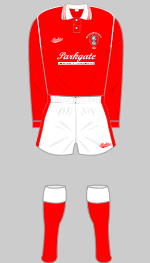
1990-1991 h
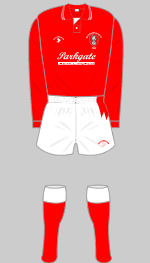
1991-1993 a h i q
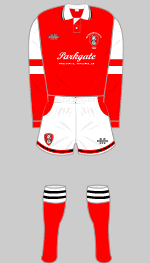
1993-1995 c h r s
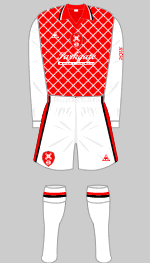
1995-1996 a
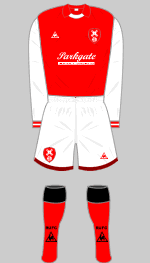
1996-1998 c q
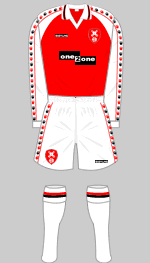
1998-2000 c
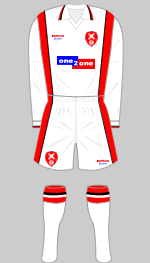
2000-2002 c
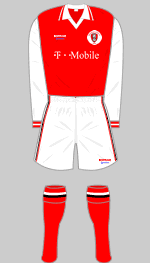
2002-2003 c
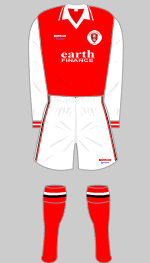
2003-2004 c
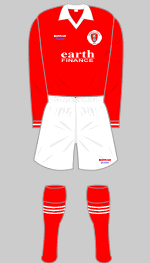
2004-2005 c
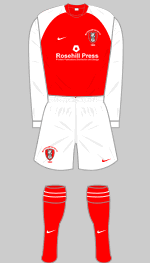
2005-2006 d
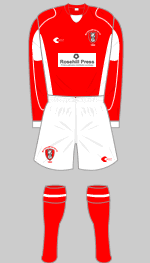
2006-2007 d
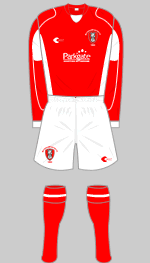
2007-2008 d
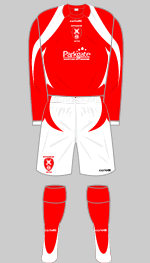
2008-2010 d l
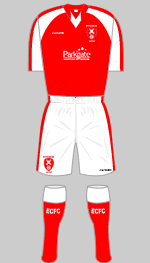
2010-2011 d
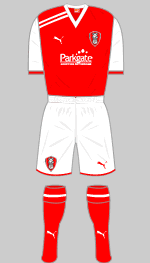
2011-2012 d
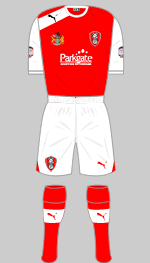
2012-2014 d
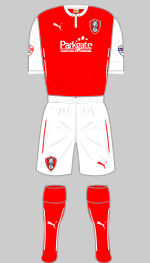
2014-2015 d
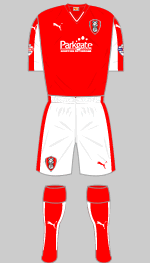
2015-2016 d
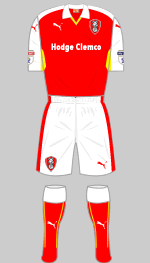
2016-2017 d
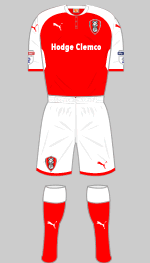
2017-2018 d
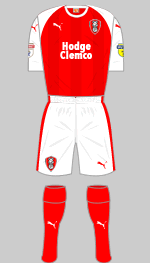
2018-2019 d
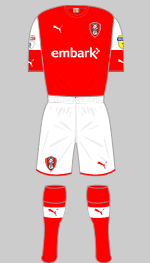
2019-2020 d
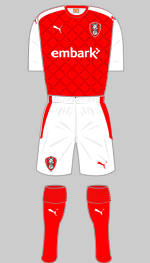
2020-2021 d
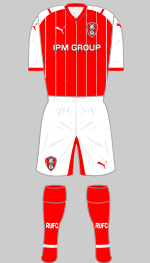
2021-2022 d
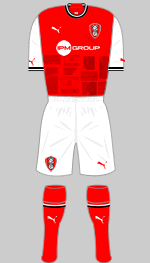
2022-2023 d
Background
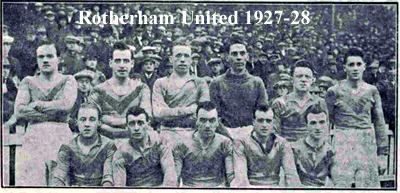 Until the mid-1920s there were two senior professional clubs in Rotherham, The senior side was Rotherham Town who had been elected to Division Two in 1893 but resigned after just three seasons. Rotherham County gradually overtook their rivals and were elected to Division Two after the First World War but struggled to make an impact. In 1925 County finished bottom and faced re-election. The two clubs merged to form Rotherham United and at the Football League AGM the new club was elected to the vacant position.
In a new amber and black strip, United may have begun with optimism but they fared little better than their predecessors. The now familiar red and white were probably adopted in August 1930 as amber and black was worn in practice games until at least the start of the 1929-30 season. There was no improvement in the club's fortunes and in 1931 they again had to apply for re-election. Immediately after the Second World War things looked up. After adopting Arsenal-style white sleeved shirts, United finished as runners-up three time in succession between 1947 and 1949 and then were champions of Division Three (North) in 1951.
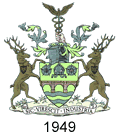 The team added the coat of arms of Rotherham Borough to their shirts in 1949. (A crest had earlier appeared in the Thirties but as this predates the granting of the arms to Rotherham Borough Council it is not possible to verify them.)
 In 1955 they finished
third in Division Two, the closest they have ever come to winning promotion
to the top level. The club held on to its place in Division Two until
1968 and then went into a decline that took them down to Division Four
in 1973. In 1975 they were promoted back to the Third Division and for the following seasons initials in script, typical of the period, were introduced.
In 1955 they finished
third in Division Two, the closest they have ever come to winning promotion
to the top level. The club held on to its place in Division Two until
1968 and then went into a decline that took them down to Division Four
in 1973. In 1975 they were promoted back to the Third Division and for the following seasons initials in script, typical of the period, were introduced.
 A new club crest was introduced in 1980, a season that ended with
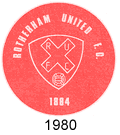
the Third Division championship and a brief return to Division Two. The central motif of the badge was a large "X" representing the sails of a windmill, inspired by the team's nickname (The Millers). The inclusion of a date - 1884 - is a bit of a puzzle as it does not represent the year that United was formed nor the formation of the two clubs that
A new club crest was introduced in 1980, a season that ended with
the Third Division championship and a brief return to Division Two. The central motif of the badge was a large "X" representing the sails of a windmill, inspired by the team's nickname (The Millers). The inclusion of a date - 1884 - is a bit of a puzzle as it does not represent the year that United was formed nor the formation of the two clubs that 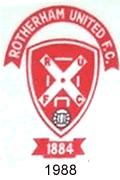 merged in 1925. It appears to be a reference to the year that a team from the town first entered the FA Cup. The team in question was Rotherham FC whose details are found in the Rotherham Town section.
By 1988,
United were again in Division Four but won the Division title at the first
attempt. The club crest was by now slightly more elaborate than the original version. In 1999 the 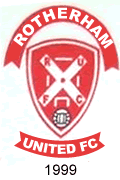 confusing date was removed and the lettering rearranged.
During the 1990s Rotherham were promoted and relegated between the lowest two divisions with some regularity but successive promotions in 2000 and 2001 took them back to what had now become Nationwide Division One.
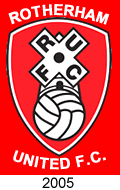 In 2005 a smart new version of the crest was introduced.
Financial problems continued to plague the club and in 2006 they narrowly avoided going into liquidation but lost their League One status as a result of being docked ten points. In March 2008, Rotherham, now playing in League Two (the lowest tier of the Football League) went into financial administration again, a decision that cost them ten points and any chance of reaching the play-offs. A number of bidders came forward but the threat of legal action to prevent the sale by the club's landlords, the Booth family, put at least one Russian billionaire buyer off. Ken Booth, the club's wealthy Honorary President and landlord, wanted to preserve his family's perks, which included access to the club physiotherapist, free tickets, VIP access to games and free tickets to the FA Cup final. As a result, the club's new owner, Tony Stewart, decided to sever connections with the Booth family, quit Millmoor and play their home games at the Don Valley Stadium in Sheffield until new facilities could be built in Rotherham. After the club failed to agree a Company Voluntary Agreement with its creditors, who rejected an offer of 5p in the pound, the Football 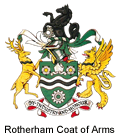 League imposed a 17-point penalty at the beginning of the 2008-09 season and threatened the club with expulsion if they failed to return to Rotherham within four years.
In January 2010 the club announced that their new stadium would be built on the site of  the former Guest and Chrime's Foundry in the town centre. The 12,000 all-seated New York Stadium was due to be completed in July 2012 and is named after the district where it was built. Stories that fire hydrants for the NY Fire Department were once manufactured on the site appear to be apocryphal. Another theory is that the district is named after Thomas de Rotherham (1423-1500) who was Archbishop of York and Lord Chancellor during the reign of Edward IV. Howard Webb, former international referee and lifelong Rotherham supporter, is credited wth suggesting the name. *
To celebrate their return to their home town, the Rotherham coat of arms was added to the shirts for 2012-13 in addition to the usual club badge (now without lettering).
Two promotions in a row took Rotherham into the Championship for the 2014-15 season. In 2017 they finished a distant last and returned to League One but they bounced back immediately via the play-offs and then went straight down again. When the 2019-20 season was ended early the Millers finished in second place based on points-per-game and returned to the Championship but once again they were relegated after just one season. In 2022 they finished in second place to secure their third immediate promotion from League One in five years. The shirts commissioned for the 2022-23 Championship season featured graphic images of the Millers' New York Stadium to ten years since this was opened.
Sources
- (a) Rotherham United FC (Images of Sport: G Somerton & C Robinson)
- (b) Classic Kits
- (c) empics
- (d) Rotherham United Official Website
- (e) Football Focus
- (f) Mark Duffy
- (g) Pete's Picture Palace
- (h) David King
- (i) Gareth Elliott
- (j) Mark Etches
- (k) Alick Milne
- (l) Simon Monks
- (m) Neil Adamson
- (n) My photo library
- (o) Paul Urwin
- (q) Keith Ellis (HFK Research Associate)
- (r) Mark Etches
- (s) oldfootballshirts.com
- (t) Anthony Borrett
- (u) Athletic News (28 September 1925) submitted by Kingsley (Wrexham FC)
- (v) Sheffield Daily Telegraph (16 January 1928) submitted by Richard Essen
- (w) Graham Orr
- (*) John Houghton
Crests are the property of Rotherham United FC. Photograph Sheffield Daily Telegraph (16 January 1928)