


Rochdale
Formed 1907
Founder member of the Division Three (North) 1921
Kit History
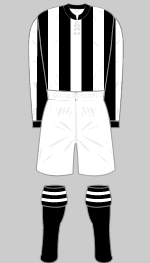
1907 o y
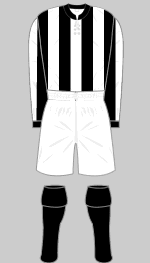
circa 1910 y
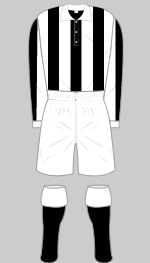
1920-1934 w y
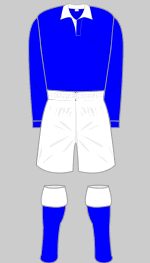
1934-1939 w y

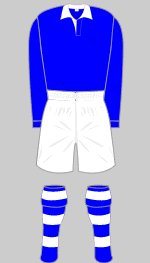
1939-1940 y
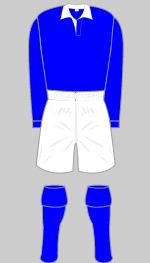
1947-1949 y
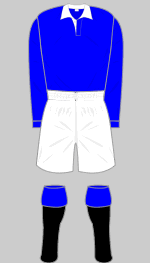
1949-1950 b
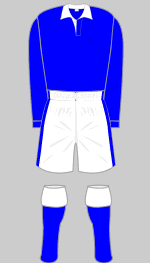
Jan 1950-1952 v y
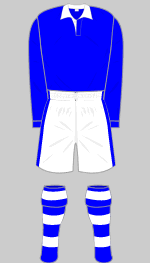
1952-1953 y
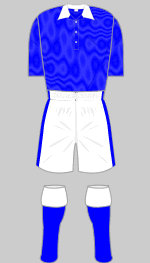
1953-1956 w A
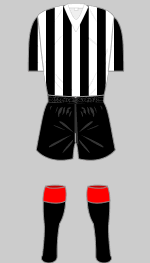
1957-1958 w
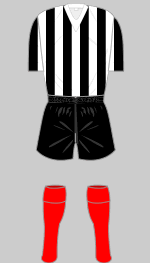
1958-1959 c B
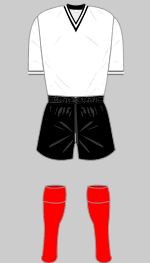
1959-1960 d
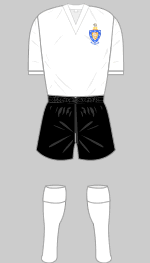
1961-1963 p w

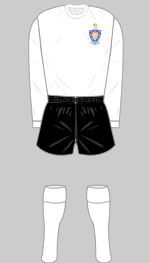
1966-1967 w
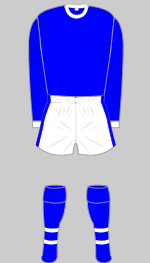
1968-1969 s
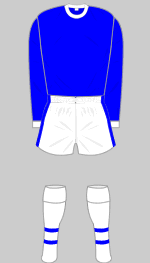
1969-1970 o
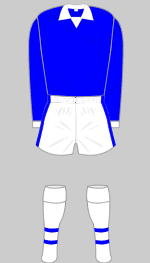
1970-1971 e
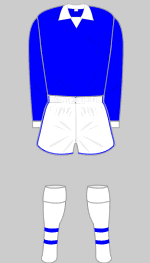
1971-1973 f p t
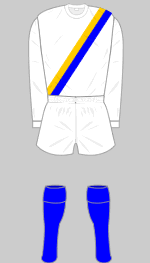
1973-74 d e g u z A
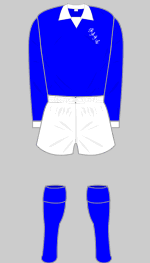
1974-1976 o
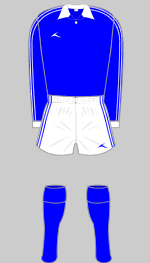
Aug-Oct 1976 o
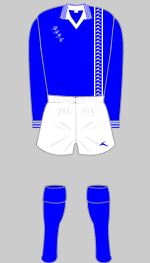
Oct 1976-1977 o C
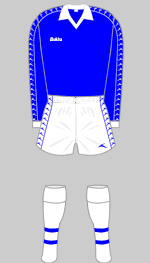
1977-1978 o
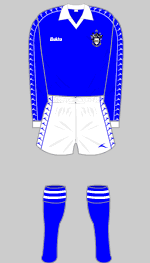
1978-1979 o
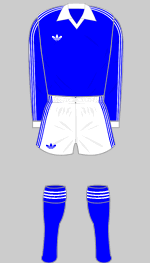
1979-1980 h o u
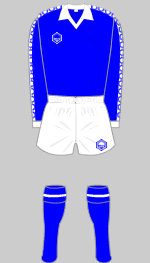
1980-1981 o u x
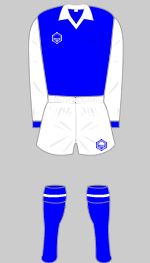
1981-1982 o
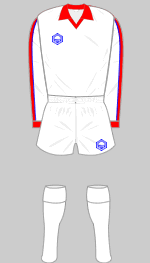
1982-1983 o
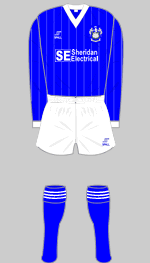
1983-1984 o
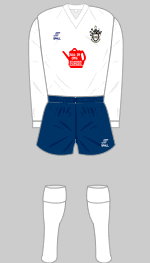
1984-1985 o
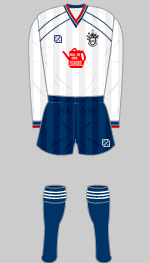
1985-1986 o q
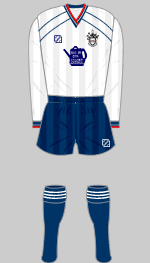
1986-1987 i o q
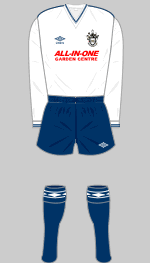
1987-1988 n o q
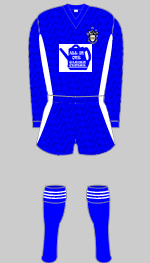
1988-1989 n o q
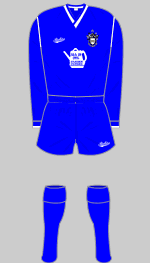
1989-1990 r o
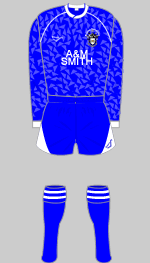
1990-1991 n o q
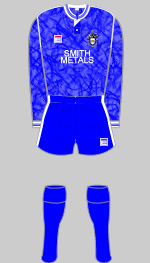
1991-1992 n o
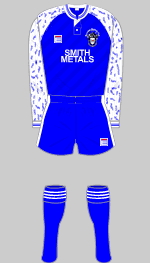
1992-1993 o q
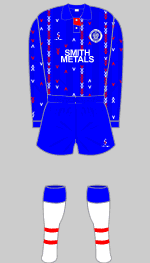
1993-1994 k o
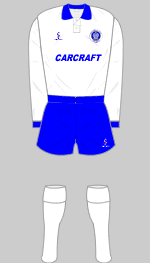
1994-1995 early o
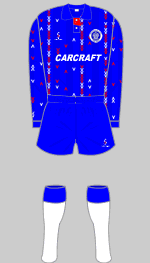
1994-1995 late o
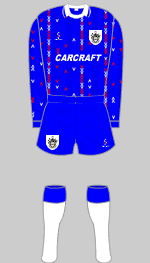
1995-1996 g o q
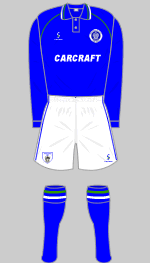
1996-1998 d o
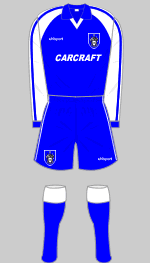
1998-2000 d g o w
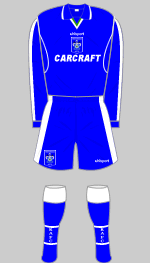
2000-2002 g
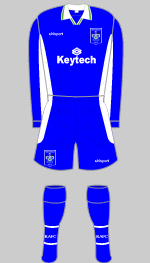
2002-2004 g
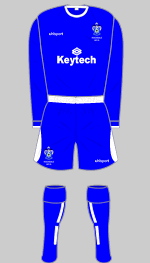
2004-2005 l
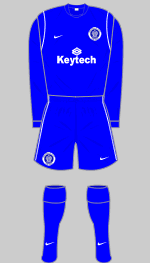
2005-2006 j
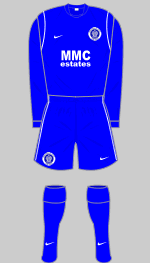
2006-2007 j
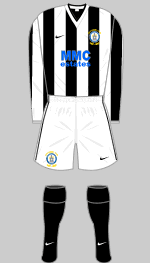
2007-2008 o
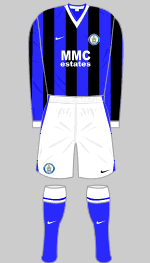
2008-2009 o
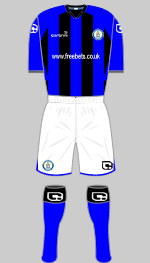
August 2009-2010 o
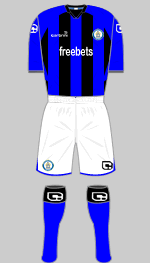
Sept 2009-2010 o
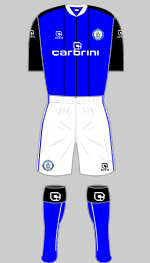
2010-2011 o
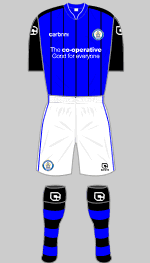
2011-2012 o
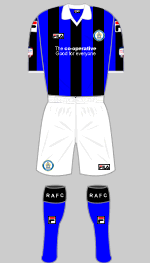
2012-2013 o
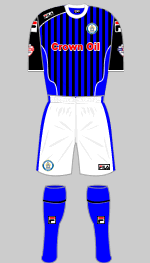
2013-2014 o
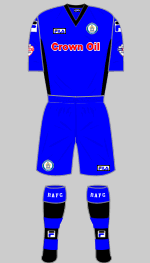
2014-2015 o
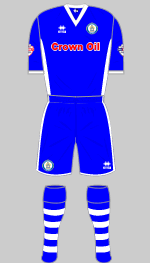
2015-2016 o
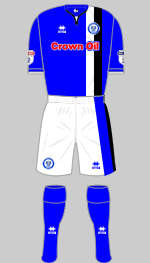
2016-2017 o
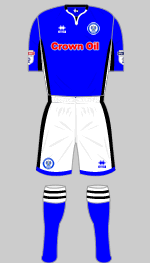
2017-2018 o
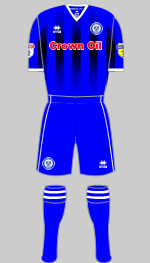
2018-2019 o
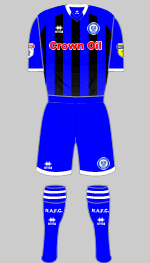
2019-2020 o
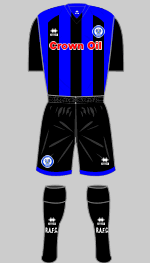
2020-2021 o
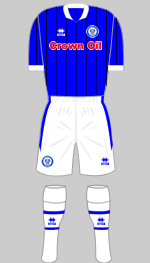
2021-2022 o
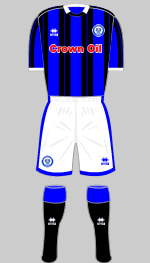
2022-2023 o
Background
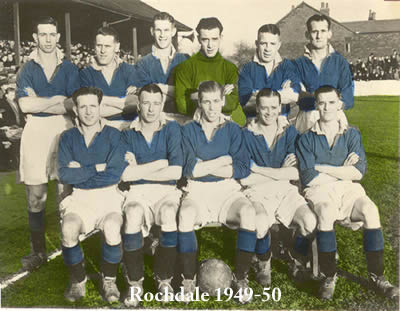 After two previous attempts to establish a professional
club foundered, Rochdale AFC were formed in 1907 and accepted into the
Manchester League. After one season they joined the Lancashire Combination,
a competition that included the reserve sides of several Football League
clubs. After winning the Combination title, Rochdale made their first
application to join the League but received just one vote.
After two previous attempts to establish a professional
club foundered, Rochdale AFC were formed in 1907 and accepted into the
Manchester League. After one season they joined the Lancashire Combination,
a competition that included the reserve sides of several Football League
clubs. After winning the Combination title, Rochdale made their first
application to join the League but received just one vote.
The team wore black and white stripes: our graphics show the typical pattern of 3" stripes but 2" versions also appeared while the central stripe could be black or white. In fact the various styles were worn all at once, a not unusual situation for a club of modest means. From around 1920, 3" stripes became the standard choice although the central stripe still varied.
In 1919, ‘Dale made their second application to join the enlarged Second Division but once again they could not attract enough support. They only had to wait two more seasons, however, before being invited to join the new Northern Section of the Third Division. At the end of their first season, Rochdale had to seek re-election but they then had a run of successful campaigns, narrowly missing out on promotion in 1924 and 1927. During the 1930s the club’s performances fell away and they generally finished near the bottom of the League, having to apply three times for re-election in the years leading up the Second World War.
In 1934, Rochdale adopted a new colour scheme of blue shirts and white shorts. For a few seasons,
Rochdale finished near the top of the table but as the 1950s wore on,
‘Dale were regularly finishing in the lower half of the table. Having
reverted to black and white in 1958, they finished in tenth place, good
enough to ensure that they would play in Division Three the following
season when the regional divisions were scrapped. They  could not cope
with the improved standard and were relegated to Division Four in 1959.
could not cope
with the improved standard and were relegated to Division Four in 1959.
The next decade was spent in Division Four although they did enter the record books in 1962, when they reached the two-legged final of the League Cup, then in its second season and a competition not taken seriously by the top clubs. The crest that appeared on their shirts in the early 1960s was based on the Rochdale coat of arms.
In 1968 the club returned to their blue and white kit and the fans at long last had something to cheer about when the team finished in third place and they won their first, promotion.
 For 1973-74 the team played in white
shirts with a distinctive gold and blue sash
but had a catastrophic season, winning only
two matches and finishing in last place. This outfit was occasionally worn with blue shorts such as in February 1974, when the team
had to play Cambridge United on a Tuesday afternoon because of power shortages
caused by the miners’ strike,
For 1973-74 the team played in white
shirts with a distinctive gold and blue sash
but had a catastrophic season, winning only
two matches and finishing in last place. This outfit was occasionally worn with blue shorts such as in February 1974, when the team
had to play Cambridge United on a Tuesday afternoon because of power shortages
caused by the miners’ strike,  attracting a mere 450 spectators,
the lowest attendance ever recorded in the League.
attracting a mere 450 spectators,
the lowest attendance ever recorded in the League.
For the 1974-75 and part of the 1976-77 seasons the team wore a simple cypher on their shirts but otherwise their shirts were not adorned until the 1978-79 season. Interestingly, the club did not adopt the coat of arms of the new Rochdale Borough Council (formed in 1974 as a result of local government reorganisation), but preferred a slightly modified version of the town's old coat of arms. This was used until 1993.
Re-elected four times between 1978 and 1984 and
with attendances frequently below 1,000, the club thought they had found
their saviour when Tommy Cannon, of comedy double act, Cannon and Ball, stepped
in. (His partner, Bobby Ball was a director of Rochdale Hornets RLFC).  Cannon was a disaster and he resigned in 1988 leaving the club in chaos
and deep in debt. The white shirts adopted under his regime were replaced
with an all-blue kit as the previous board resumed control. They managed
to rescue the club from collapse, helped
Cannon was a disaster and he resigned in 1988 leaving the club in chaos
and deep in debt. The white shirts adopted under his regime were replaced
with an all-blue kit as the previous board resumed control. They managed
to rescue the club from collapse, helped  by the decision of Rochdale Hornets
RLFC to sell their own ground and move into Spotland having bought a 45%
share in the ground, injecting £400,000 into Rochdale's finances.
by the decision of Rochdale Hornets
RLFC to sell their own ground and move into Spotland having bought a 45%
share in the ground, injecting £400,000 into Rochdale's finances.
In 1993 a modernised version of the club crest was introduced. The familiar coat of arms now appeared out of a roundel surrounded by the legend "Rochdale AFC - The Dale". Different versions appeared at the beginning of the new millennium before the circular version was reinstated in 2005.
In 1994 the team again played in white shirts but the previous season's all-blue strip was restored part way through the season.
Rochdale are one of those unfortunate clubs who
seem destined to an existence of constant struggle. Competing not only
with the two big Manchester clubs  but also with the likes of Bury, Oldham
and Wigan Athletic, not to mention the Rugby League playing neighbours, Rochdale’s priority is to survive. In 2002,
Dale reached the play-offs, signaling to their loyal hard core supporters
that there is always the prospect of better days in the future.
but also with the likes of Bury, Oldham
and Wigan Athletic, not to mention the Rugby League playing neighbours, Rochdale’s priority is to survive. In 2002,
Dale reached the play-offs, signaling to their loyal hard core supporters
that there is always the prospect of better days in the future.
 For the club's centenary season, 2007-08, Rochdale
adopted the same black and white that they wore in 1907. The crest was enhanced for this campaign with the legend "Centenary Year - 1907-2007" in gold lettering. The following season the black stripes were combined with blue, creating a hybrid kit that combined both of Dale's traditional colour schemes. This proved very popular with supporters.
For the club's centenary season, 2007-08, Rochdale
adopted the same black and white that they wore in 1907. The crest was enhanced for this campaign with the legend "Centenary Year - 1907-2007" in gold lettering. The following season the black stripes were combined with blue, creating a hybrid kit that combined both of Dale's traditional colour schemes. This proved very popular with supporters.
Relegation in 2012 took the team back down to the fourth tier but they were back in League One following promotion in 2013-14. In 2021, however, they went back to the basement.
Sources
- (a) Club Colours (Bob Bickerton 1998)
- (b) Association of Football Statisticians
- (c) Tranmere Rovers FC - Images of Sport (Peter Bishop)
- (d) Football Focus
- (e) Bob's 70-71 Footballers
- (f) Football Cards
- (g) empics
- (h) York City FC - Images of Sport (David Batters)
- (i) Crewe Alexandra FC (Images of Sport) Harold Finch 2001
- (j) Rochdale Official Website
- (k) Shirts Collection
- (l) Classic Kits
- (m) The Football Encyclopaedia (Associated Sporting Press 1934) Information provided by Arthur Fergus
- (n) Ralph Pomeroy
- (o) Mark Wilbraham - HFK Research Associate
- (p) Pete's Picture Palace
- (q) Dale Kit Museum
- (r) David King
- (s) Greger Lindberg
- (t) Football League Review provided by Simon Monks
- (u) Alick Milne
- (v) Ashington FC Official Site
- (w) Keith Ellis (HFK Research Associate)
- (x) Christopher Worrall
- (y) Steve Phillipps (Rochdale FC historian)
- (z) Chris Connolly
- (A) John Taylor
- (B) seniortigers.org.uk
- (C) Mark Alton
Crests are the property of Rochdale FC