

Reading
Formed 1871
Founder member of Division Three 1920
Kit History
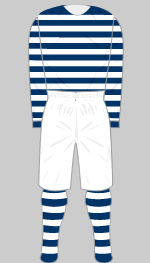
1871-1876 a q w
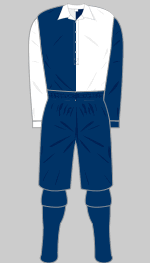
1876-1879 q w
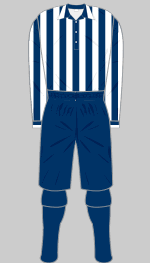
c1879-1893 a q w
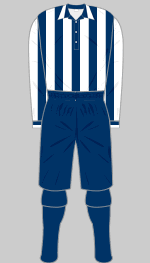
1894-1898 a n
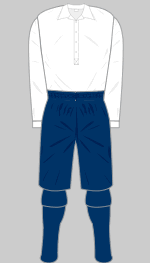
1898-1899 q s
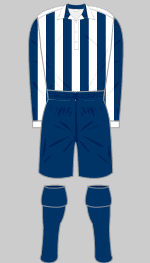
1900-1904 m o
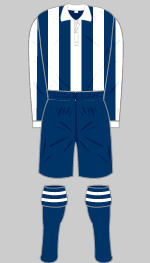
1904-1905 e l m
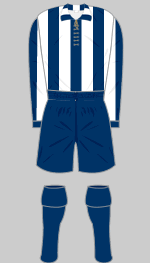
1905-1906 u
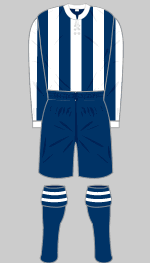
1906-1908 m
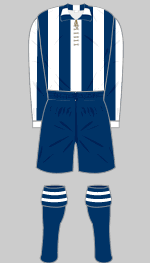
1908-1910 l m
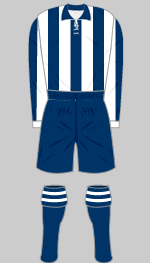
1910-1911 o
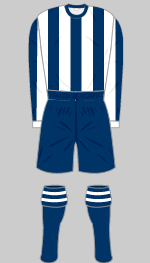
1911-1912 o
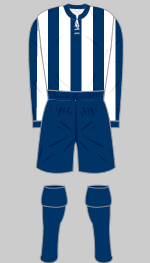
1912-1914 a m
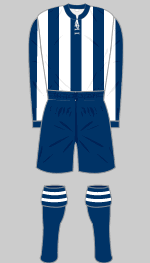
1914-1915 m
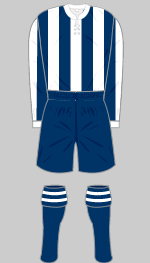
1920-1924 a
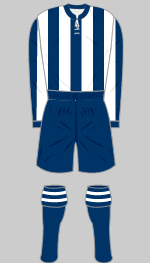
1924-1925 m
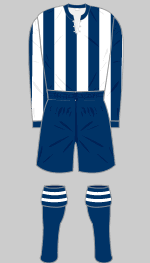
1925-1926 a m
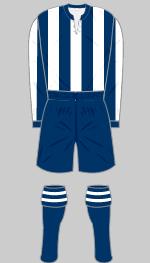
1926-1927 m
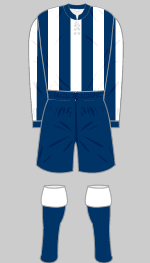
1927-1929 a
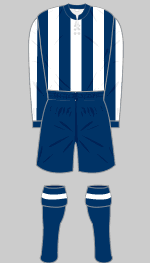
1929-1934 a m
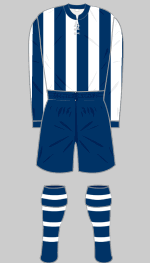
1934-1938 a q
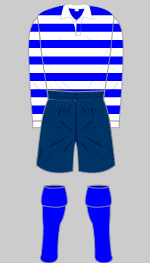
1938-1939 a f
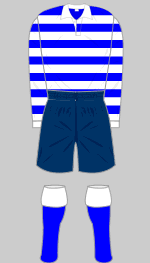
October 1941 f
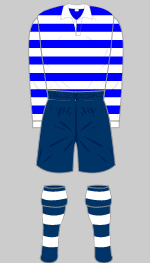
Feb1942-1944 f l
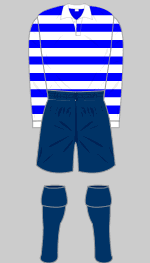
1946-1947 a f
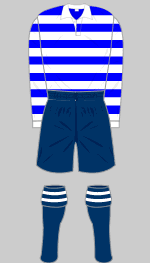
1947-1948 a
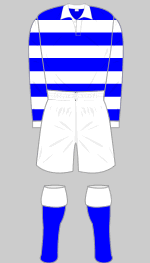
1948-1953 a
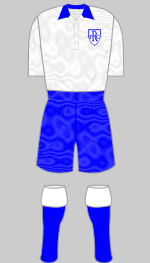
1953-1954 a r
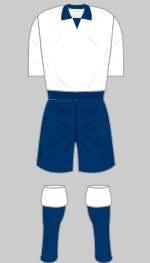
1954-1955 a r
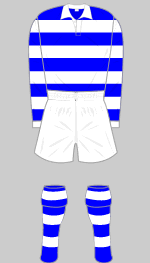
1955-1956 a
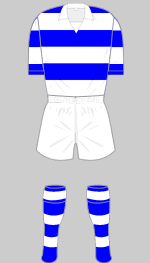
1956-1957 v
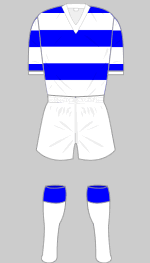
1957-1959 a v
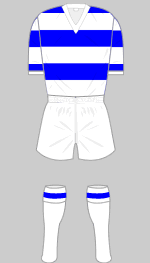
1959-1962 a t
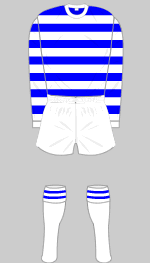
1962-1965 a t

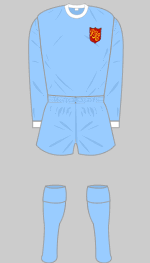
1965-1966 p
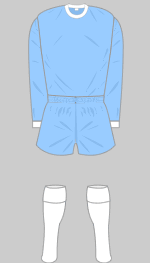
1966-1969 a
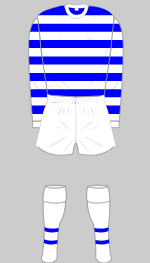
1969-1974 a k
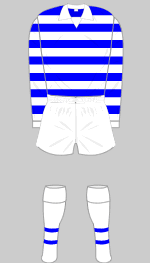
1974-1975 a
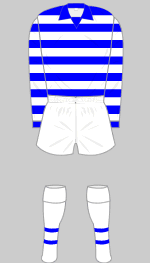
1975-1976 v
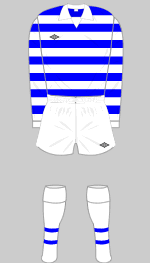
1976-1977 j
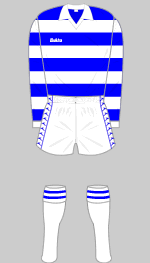
1977-1978 a
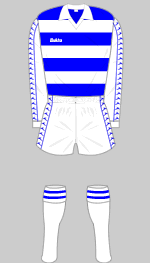
1978-1979 a h j
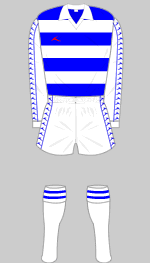
1979-1981 a h j
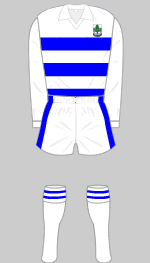
1981-1982 a g h
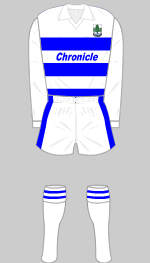
mid 1982-1983 a g h
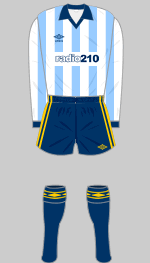
1983-1984 a
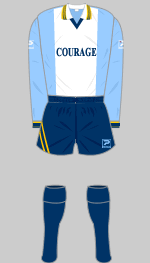
1984-1985 j
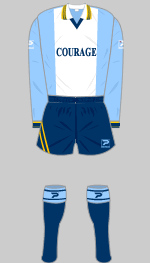
1985-1987 a h
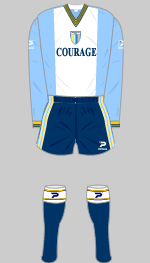
1987-1989 a h
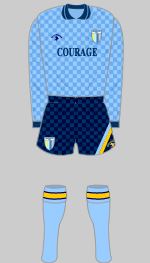
1989-1990 h
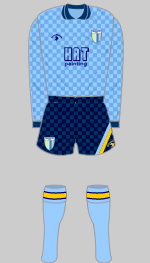
1990-1991 b h
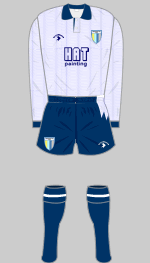
1991-1992 d
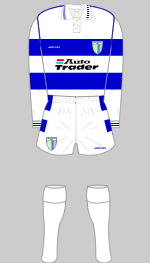
1992-1993 a
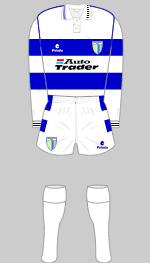
1993-1994 a
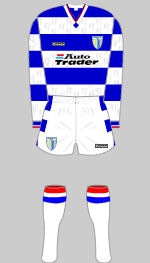
1994-1995 b
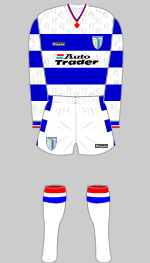
1995-1996 b i
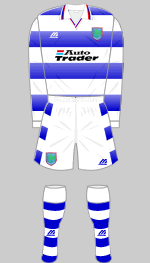
1996-1998 b
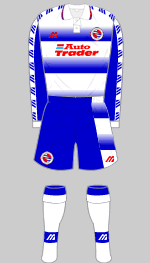
1998-1999 b
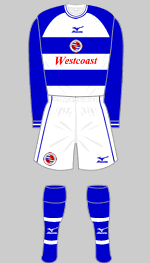
1999-2001 a
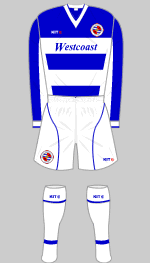
2001-2003 b
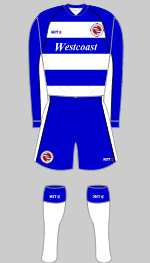
2003-2004 c
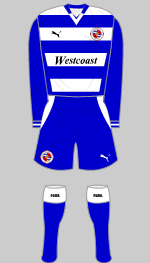
2004-2005 c
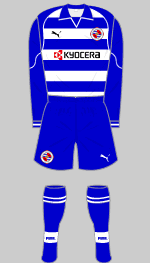
2005-2006 c
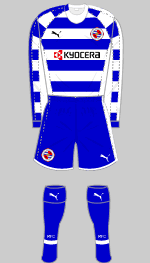
2006-2008 c
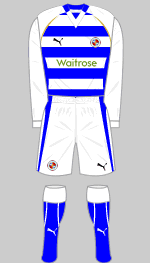
2008-2009 c
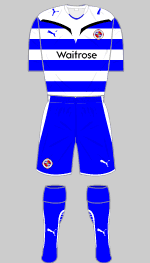
2009-2010 c
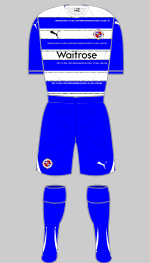
2010-2011 c
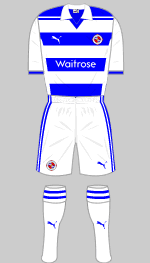
2011-2012 c
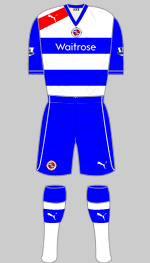
2012-2013 c
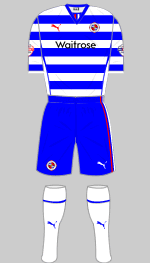
2013-2014 c
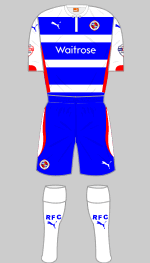
2014-2015 c
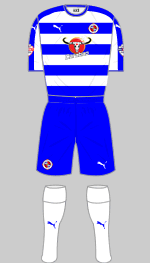
2015-2016 c
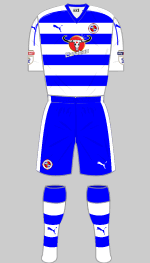
2016-2017 c
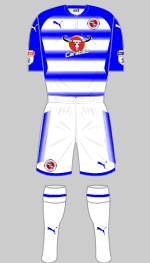
2017-2018 c
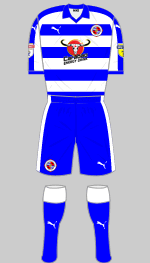
2018-2019 c
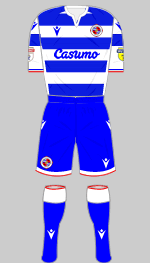
2019-2020 c
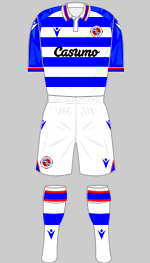
2020-2021 c
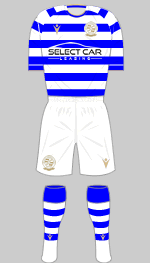
2021-2022 c
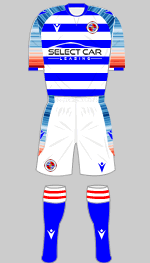
2022-2023 c
Background
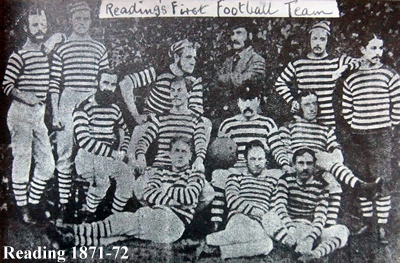 The meeting that led to the formation of Reading
FC was held in the Bridge Street Rooms under the chairmanship of one JE
Sydenham, who became the club's first Honorary Secretary. Their first
colours were navy and white hooped jerseys.
The meeting that led to the formation of Reading
FC was held in the Bridge Street Rooms under the chairmanship of one JE
Sydenham, who became the club's first Honorary Secretary. Their first
colours were navy and white hooped jerseys.
The club competed in the FA Cup from 1878 onwards and became founder members of the Southern League in 1894. A year later Reading FC turned professional.
The team adopted navy and white stripes around 1890 (although plain white shirts were adopted briefly in 1898-99) and in the seasons leading up to the First World War, a mixture of collars was evident and the stripes were centred in both white and navy, giving teams a rather motley appearance, although this was far from unusual at the time.
Reading's career in the Southern League was undistinguished but they did win the Second Division in 1911 and held on to their place until the outbreak of the First World War. As a result, Reading were one of the clubs chosen en bloc to form the new Third Division of the Football League in 1920. In 1926 the team won the Third Division (South) championship and took their place in Division Two. The following season they reached the FA Cup semi-final, losing to Cardiff City who went on to win the competition. Reading's glory was, however, short lived and in 1931 they were relegated.
The old dark blue and white stripes were replaced by royal blue and white hoops immediately before the Second World War, with the broader hoops that were to become associated with the club first appearing in 1948.
 For 27 years Reading would languish in
Division Three (South). When the regional divisions were scrapped in 1958,
Reading were placed in Division Three and remained there until being relegated
to Division Four in 1971. Plain white shirts were adopted for a while in the
1950s, initially in the shiny artificial fabric that enjoyed a brief vogue at the time. Reading's first recorded crest worn appeared on these shirts - simply
For 27 years Reading would languish in
Division Three (South). When the regional divisions were scrapped in 1958,
Reading were placed in Division Three and remained there until being relegated
to Division Four in 1971. Plain white shirts were adopted for a while in the
1950s, initially in the shiny artificial fabric that enjoyed a brief vogue at the time. Reading's first recorded crest worn appeared on these shirts - simply  "RFC" on a shield, worn just for one season.
An all sky-blue strip appeared in 1965, in imitation of Coventry City. The pre-season photograph shows some of the players wearing a new crest but it is unclear if this appeared during the season.
In 1969 manager Jack Mansell ordered a return to
the traditional blue and white hoops but in 1971, the club's centenary
season, the "Royals" were relegated to Division Four. In 1976
they won promotion only to drop  back again the following seasons. In 1979,
Reading won the Fourth Division championship for the first time.
back again the following seasons. In 1979,
Reading won the Fourth Division championship for the first time.
In 1981 a new crest appeared that featured three elm trees, a reference to Reading's Elm Park ground. This was dropped when the Royals adopted a new colour scheme in 1983.
The season of 1982-83 almost saw Reading go out
of business. Relegated back to Division Four and facing a financial crisis,
plans were made to sell off Elm Park and merge the club with
Robert Maxwell's Oxford United to form a new club to be known as Thames
Valley Royals. These threats were warded off and with former player, 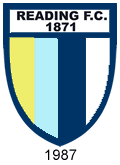 Roger
Smee installed as chairman, a new manager and new colours of sky blue,
dark blue, yellow and white, the Royals won promotion in 1984. Two seasons later,
in 1986, the club won the Third Division title and returned to Division
Two after an absence of 55 years. A new crest, a simple presentation of the colours of the time, was adopted in 1987.
Roger
Smee installed as chairman, a new manager and new colours of sky blue,
dark blue, yellow and white, the Royals won promotion in 1984. Two seasons later,
in 1986, the club won the Third Division title and returned to Division
Two after an absence of 55 years. A new crest, a simple presentation of the colours of the time, was adopted in 1987.
Once again the club's success was short lived and
after two seasons Reading were relegated. In 1990, the club
was bought by John Madejski who injected
a new sense of ambition. The hooped shirts were restored in 1992, partly due to pressure from supporters and in 1994 the "Biscuit Men" (a rather whimsical
reference to one of the town's traditional industries) won promotion
to Nationwide Division One (formerly Division Two) and then a place in
the play-offs in 1995 after finishing in second place. Because of 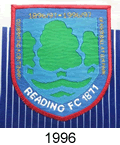 the
reduction in the size of the Premier League, only two promotion places
were available: in any other season Reading would have won automatic promotion
to the top flight.
the
reduction in the size of the Premier League, only two promotion places
were available: in any other season Reading would have won automatic promotion
to the top flight.
Between 1996 and 1998, the old elm crest was revived. The significance was twofold: 1996 marked the centenary of Reading's Elm Park while 1998-99 would be the season that they would move into a new home.
 In 1998 Reading were relegated to Nationwide Division
Two, a misfortune offset by the move into the brand new Madejski Stadium
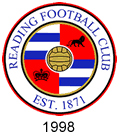
in 1999. This fresh start was marked by the introduction of a brand new club badge that featured the club's iconic blue and white hoops, a crown representing Berkshire's status (Windsor Castle is in the county which is often referred to as "Royal Berkshire") and the Maiwand Lion, a prominent local landmark.
In 1998 Reading were relegated to Nationwide Division
Two, a misfortune offset by the move into the brand new Madejski Stadium
in 1999. This fresh start was marked by the introduction of a brand new club badge that featured the club's iconic blue and white hoops, a crown representing Berkshire's status (Windsor Castle is in the county which is often referred to as "Royal Berkshire") and the Maiwand Lion, a prominent local landmark.
In 2002, the club returned to Nationwide Division One and the
following season once again qualified for the play offs. Steady consolidation
was rewarded when, in 2006, the club ran away with the Coca Cola Championship
title to take their place in the Premiership, the first time Reading had
played in the top level.
 2007-08 season they were relegated on goal difference.
After consolidating in the second tier, Reading were promoted back to the Premier League in 2012 but came straight back down again, the blow being softened by raised parachute payments worth £60m over four years.
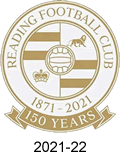
To mark their 150th anniversary the club launched a new strip for 2021-22 that paid tribute to their original strip (see photograph above - the resemblance is fleeting) and the inevitable special crest. In November 2021 Reading had six points deducted after they exceeded losses permitted under Fair Play regulations by £18 million. This would have resulted in them being relegated were it not for the 19-point penalty imposed on Derby County which consigned them to relegation instead.
The new strip introduced for 2022-23 had multi-coloured bands on the raglan sleeves and shorts that were more than decorative. The design was created by Professor Ed Hawkins of Reading University in 2018 and represents average global temperatures each year compared to average temperatures for the period as a whole. Shades of blue represent cooler than average years, red hotter than average.
Sources
- (a) "Heaven on Earth: The Official History of Reading FC 1871-2003"
- (b) empics
- (c) Reading Official Website
- (d) Rob Evans
- (e) Greger Lindberg
- (f) Reading Museum
- (g) David King
- (h) True Colours Vol 2 (John Devlin 2006)
- (i) Andy Burton from Classic Kits
- (j) Alick Milne
- (k) Football League Review
- (l) My photo library
- (m) Reading FC History
- (n) The Lord Price Collection
- (o) Keith Ellis
- (p) Steve Maggs
- (q) The Biscuitmen had a superb collection of team photographs going back to 1871-72
- (r) Chris Lee
- (s) The Berkshire Chronicle 23 July 1898 submitted by Chris Lee.
- (t) Senior Tigers Club
- (u) Richard Essen
- (v) Simon Monks
- (w) Charles Alcock's Football Annuals 1869-1891 researched by Robin Horton
Crests are the property of Reading FC. Team photograph courtesy of The Biscuitmen.