


Queens
Park Rangers
Formed 1882
Founder member of Division Three 1920
Kit History
St Jude's
1882
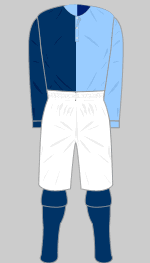
1882-1886 a t
Queens Park Rangers
1886
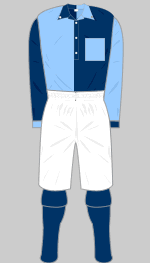
1886-1892 a s t
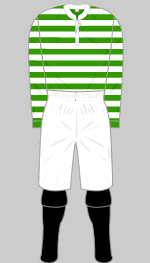
1892-1899 a w
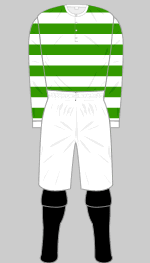
1899-1900 s
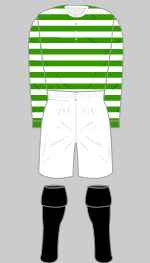
1900-1901 s
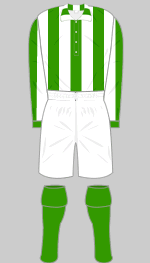
1901-1903 a v
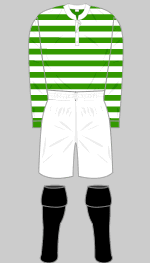
1903-1905 a s

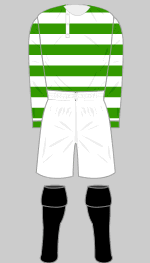
1905-1915 a r s
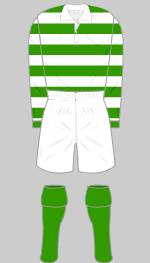
1920-1922 a
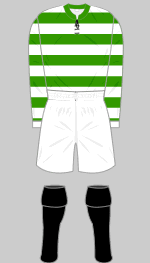
1922-1926 p s v
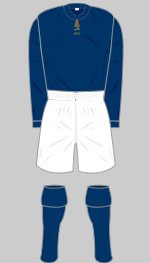
August 1926 B
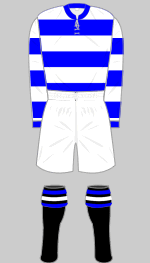
Sept 26-30 a q s v A
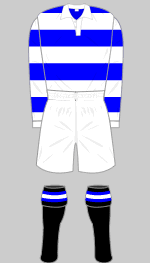
1930-1931 s
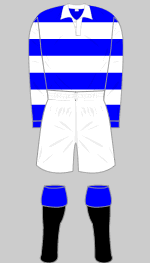
1932-1934 a q v
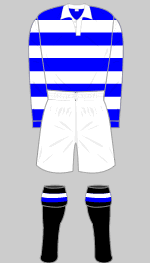
1935-1937 a v
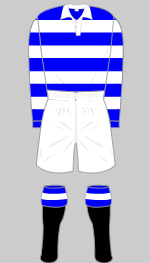
1937-1938 q
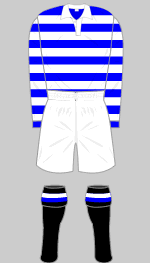
1938-1939 a s
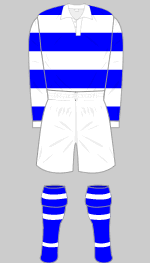
1946-1947 s

1947-1948 a s
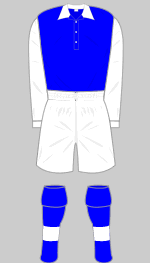
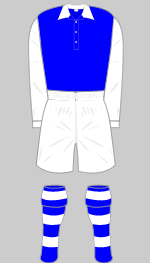
Sept 1948-Feb 49 a g s
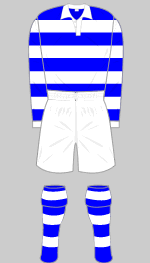
March 1949 q
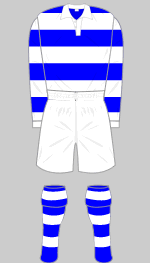
September 1949 a
Nov? 1949-1950 a
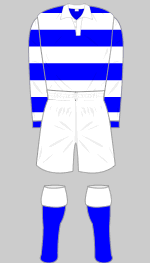
1950-1953 a s
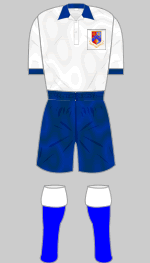
1953-1955 a v
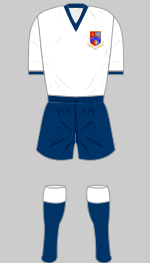
1955-1957 b

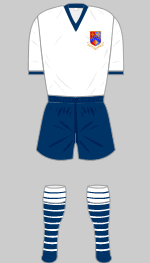
1957-1959 s v
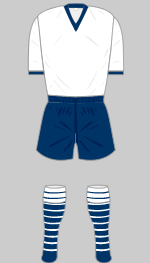
1959-1960 D
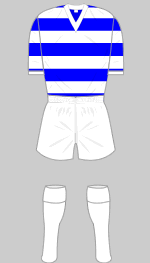
1960-1961 s u
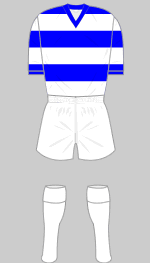
1961-1962 f s u
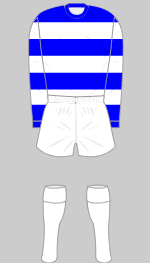
1962-1963 C
1963-1964 s
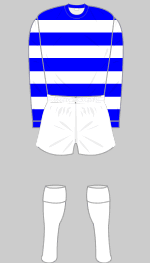
1964-1974 a s y
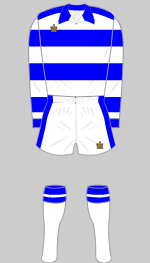
1974-1975 1 c k o u y E
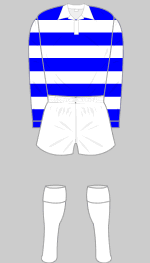
1974-1975 2 y E
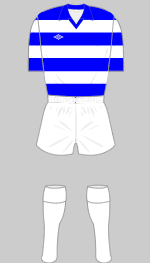
1974-1975 3 y E
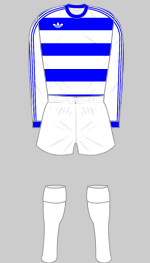
1975-1976 1 u y
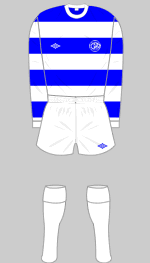
1975-1976 2 c k u y
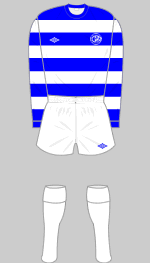
1975-1976 3 c u y

1975-1976 4 E
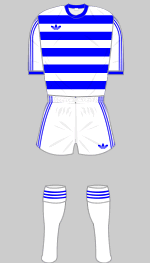
1976-1977 1 k u y
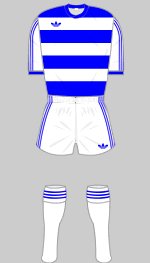
1976-1977 2 u y E
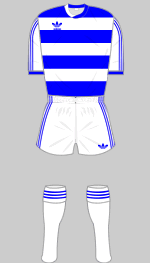
1976-1977 3
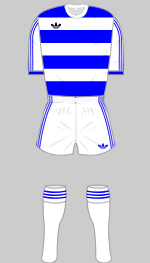
1976-1977 4 y
1976-1977 5 y
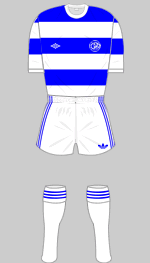
1976-1977 6 E
1976-1977 7 E
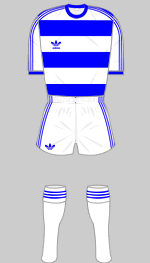
1977-1978 c k u y
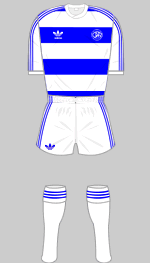
1978-1979 y
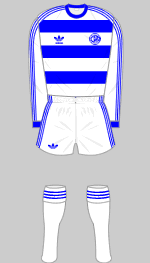
1979-1980 n y
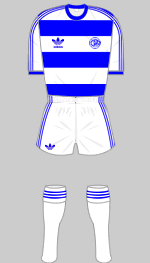
1980-1981 1 v
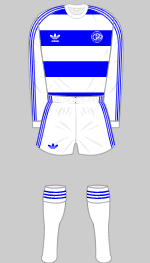
1980-1981 2 v
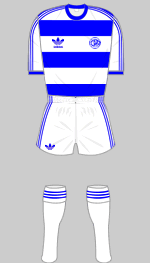
1981-1982 v
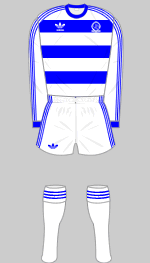
1982-1983 1 a k y
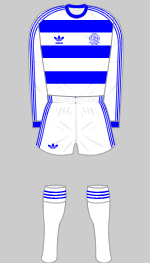
1982-1983 2 y
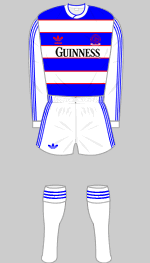
1983-1984 1 y
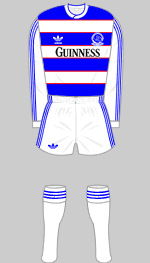
1983 2-1985 a i y
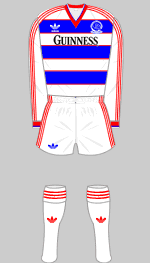
1985-1986 a u y
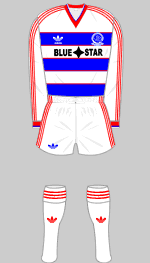
1986-1987 a u y
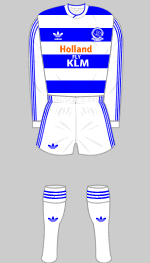
1987-1988 q u y
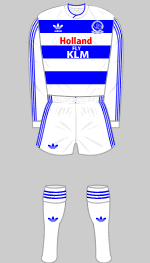
1988-1989 d f u y
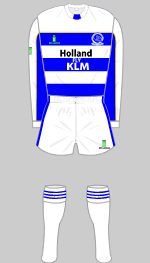
1989-1990 a i u y
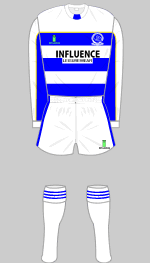
1990-1991 a i m u y
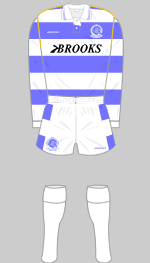
1991-1992 a h i y
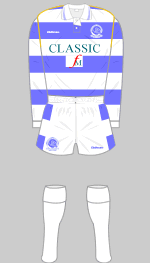
1992-1993 a h i l y
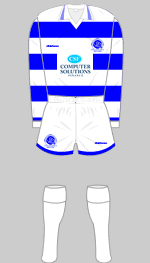
August 1993
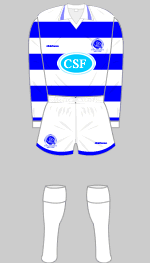
Sept 1993-1994 c
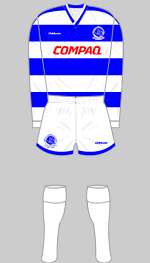
1994-1995 c
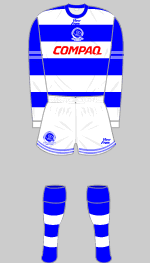
1995-1996 c
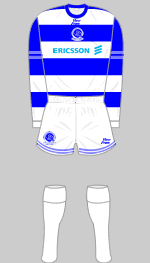
1996-1997 c
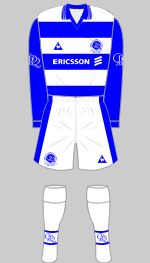
1997-1999 a
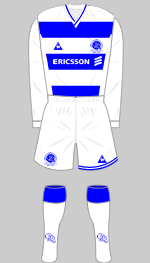
1999-2000 c
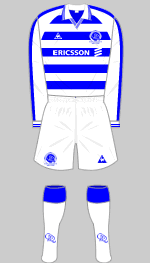
2000-2001 c
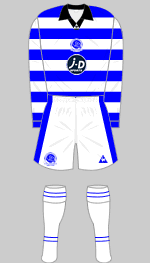
2001-2002 c
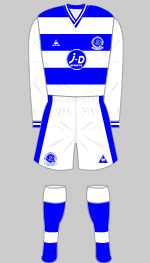
2002-2003 c
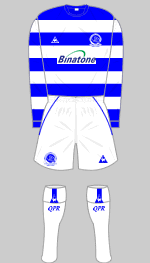
2003-2005 c
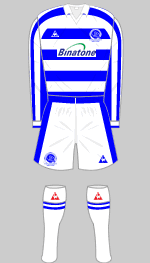
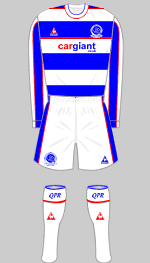
2006-2007 e
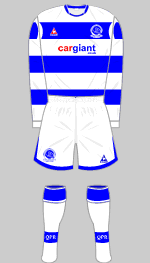
2007-2008 e j
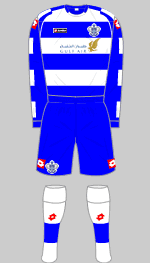
2008-2009 e
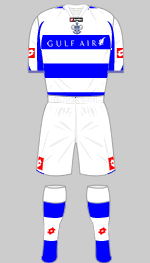
2009-2010 e
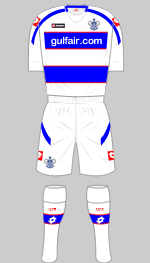
2010-2011 e
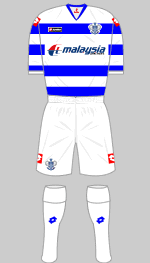
2011-2012 e
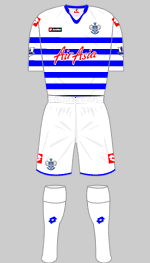
2012-2013 e z
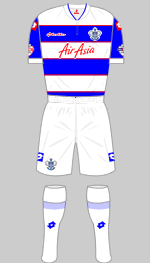
2013-2014 e
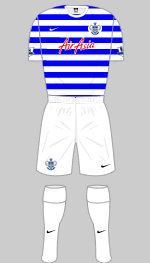
2014-2015 e
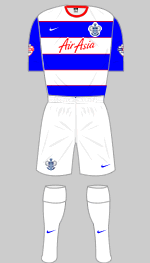
2015-2016 e
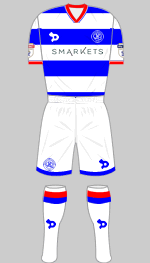
2016-2017 e
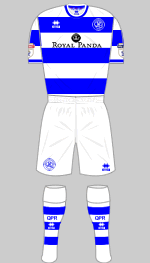
2017-2018 e
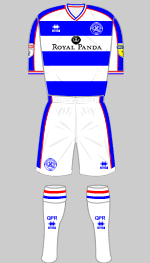
2018-2019 e
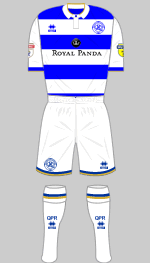
2019-2020 1 e
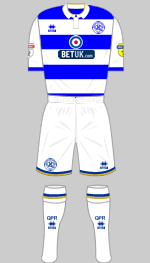
Feb-May 2020 e
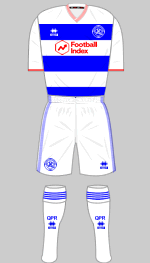
2020-March 21 e
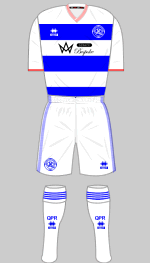
March-May 2021 e
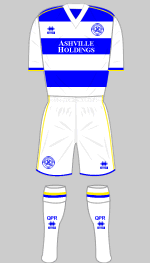
2021-2022 e
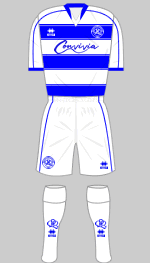
2022-2023 e
Background
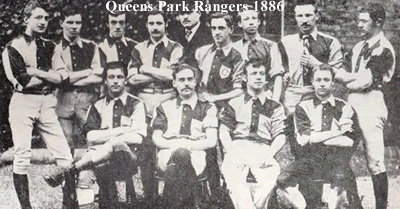 In 1882 a group of former pupils from Droop Street
School formed themselves into a football team named St Jude’s FC after
the Institute where they had their headquarters. In 1886 the club merged
with Christchurch Rangers and adopted the name of Queens Park Rangers (without an apostrophe),
after the Queen’s Park district where most of the members lived. At the time the team played at London Scottish RFC's Brondesbury ground but after this became unplayable in the middle of the 1889-90 season, Rangers were forced to finish the season playing their home matches at their opponents' grounds. After this the club led a nomadic existence for almost 30 years.
In 1882 a group of former pupils from Droop Street
School formed themselves into a football team named St Jude’s FC after
the Institute where they had their headquarters. In 1886 the club merged
with Christchurch Rangers and adopted the name of Queens Park Rangers (without an apostrophe),
after the Queen’s Park district where most of the members lived. At the time the team played at London Scottish RFC's Brondesbury ground but after this became unplayable in the middle of the 1889-90 season, Rangers were forced to finish the season playing their home matches at their opponents' grounds. After this the club led a nomadic existence for almost 30 years.
In 1892 QPR adopted green and white hoops and entered the West London League. In 1894-95 they won the London Cup and entered the FA Cup for the first time. Faced with their top players being poached by other clubs, Rangers decided to turn professional in December 1898 and the following season they were admitted to the Southern League. In 1908 they won the Southern League championship and, in anticipation of being elected to Division Two of the Football League, they resigned. When Tottenham Hotspur were elected instead, Rangers had to go cap in hand to be readmitted. Although they were successful, they had to play all their games in midweek as the fixture list had already been drawn up.
In 1919, having played on no fewer than eleven grounds, Rangers took over the Loftus Road stadium of Shepherds Bush FC and this has remained their home ever since. The following season, Rangers joined the Football League when the old Southern League Division One was incorporated as Division Three. Having finished bottom twice and survived two re-election campaigns (1924 and 1926), a new manager was brought in and the broad blue and white hooped shirts that have become firmly associated with the club were adopted. It seems that these were not ready when the 1926-27 season started so the team turned out in dark blue jerseys for their opening games. The first confirmed outing for the hoops was against Brentford on 11 September but it is possible they were also worn at home against Coventry a week earlier.
In 1931 the club moved to the White City but this proved a financial disaster and a year later they were back at Loftus Road.
Success finally arrived in 1948 when Rangers were promoted as champions of Division Three (South). With rationing still in force, the club appealed to fans to donate coupons to replace their kit and in 1948-49 but has hooped tops were not available at the time, they played in blue shirts with white sleeves instead.
In March 1949 the club obtained a set of sample hooped shirts and these were worn in a match against Bury. The management then decided to consult the supporters and put them on display alongside the current shirt at a reserve game before asking the 7,000 supporters present to vote by cheering for the version they wanted to see the following season. The result was overwhelmingly in favour of the traditional hoops.
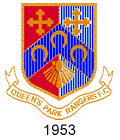 The hoops were therefore restored in
1949-50 but after Rangers were relegated in 1952, they were dropped in
favour of plain white shirts. The club crest, based on the coat of arms of the London Borough of Hammersmith, featured on these shirts but was dropped in 1959.
The hoops were therefore restored in
1949-50 but after Rangers were relegated in 1952, they were dropped in
favour of plain white shirts. The club crest, based on the coat of arms of the London Borough of Hammersmith, featured on these shirts but was dropped in 1959.
After several years of underachievement, the newly appointed manager. Alec Stock was invited to address the AGM of the official Supporters Club prior to the start of the 1960-61 season. After listening to Stock's stirring speech, a supporter, Derek Disson, proposed that the team revert to their traditional broad hoops. The idea was met with universal approval and Stock promised to endorse it with the board.
The 1966-67 season was the club’s most successful season to date. They not only won the Third Division championship, but also the League Cup beating West Bromwich Albion 3-2 after trailing 0-2 at half-time. In 1968 they were promoted to Division One but were relegated at the end of the season. In 1973 they were promoted back to the top flight.
In 1974 Rangers adopted Admiral as their kit supplier, beginning a period of bewildering variations: the contract with Admiral lasted for half the season before unbranded shirts, with white collars replaced them. At the end of the season, the team were wearing Umbro. In the summer of 1975, the team were photographed wearing Adidas shirts, the first time an English team had worn the iconic trefoil logo and three-stripe trim. At the time, Adidas were expanding and had started to produce football strips in addition to their traditional  business of football boots. They had a contractual arrangement with Umbro at the time and it was the English company that supplied the team's strip for the following season, which for the first time, featured the club badge. From October the hoops were noticeably more narrow and the crew neck was in blue.
In 1976 Rangers turned out in Adidas (without a crest): for the first match they wore narrow hoops from Adidas' stock before a more traditional width was delivered in time for their second game. They finished as runners-up in Division One to qualify for Europe for the first time.
I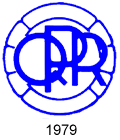 n 1978 the crest appeared once again in white against a blue hoop. The team was relegated at the end of the season.
The 1979 version of the hooped shirts placed the crest and Adidas logo in blue against a white hoop. In 1981 Rangers became the first English club to install an artificial
playing surface. The plastic Loftus Road pitch proved deeply unpopular
with visiting sides and in 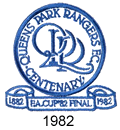 1988 it was replaced with turf.
Having reached the FA Cup final in 1982, QPR introduced a new crest to mark their achievement and their centenary in 1982-83. They went on to win the
Second Division title. There were two versions of their hooped shirts that season with the crest and Adidas logo appearing out of both blue and white hoops: these sometimes 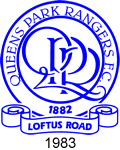 appeared in the same match. A simplified version of the new crest was introduced in 1983. The version shown here has "Loftus Road" embroidered into the scroll but "Div 2 Champions" also appeared. Generally, however, the scroll was left blank, perhaps with the intention of adding any honours the team might win.
In 1996 the club was relegated from what was now the Premier League and
at the end of the season Chris Wright, the club’s chairman and owner
of Chrysalis Records took a controlling interest in the club. After buying
Wasps RUFC and relocating them to Loftus Road, Wright restructured the
two clubs under the banner of Loftus Road plc and floated the new company
on the stock exchange, realising £12m. On the pitch, however, results
were poor and the club was relegated to 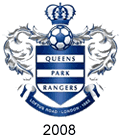 Nationwide Division Two (the old
Third Division) in 2001.
Nationwide Division Two (the old
Third Division) in 2001.
In 2001 the club was forced into administration and were only rescued when a high interest £10m loan was negotiated and, after a period of austerity, the club returned to the Championship (second tier) in 2004. Boardroom scandals in 2005-06 and the tragic deaths of two young players in 2006 and 2007 threatened to overwhelm the club. After Rangers were bought by Formula One tycoons, Bernie Ecclestone and Flavio Briatore in 2007, their finances stabilised and, as a symbol of what they hoped would be a new era, the crest was replaced with an heraldic design that incorporated the club's traditional broad hoops.
In 2011 Rangers won the Championship title to return to the Premier League. In March 2011 Bernie Ecclestone indicated he might be interested in selling his 69% stake in the club for £100m. Ownership passed to Malaysian businessman, Tony Fernandes in August 2011 for a fee rumoured to be in the region of £35m. Controversy over financial arrangements made by previous owners continued to plague the club and legal action from previous investors remain unresolved at the time of writing.
 The team struggled and narrowly avoided relegation in 2012 but the following year they went down to the Championship for one season, returning to the top tier via the play-offs in 2014. They were immediately relegated and faced enormous fines for allegedly breaching the Championship's Financial Fair Play regulations in 2013-14. After a three-year battle, a world record fine of £40 million was confirmed in July 2018.
After a lengthy consultation with supporters, the club launched a new crest in May 2016. This revived the popular circular design and the font from the 1983 version to create an emblem of elegant simplicity.
Sources
- (a) Queen's Park Rangers FC (Images of Sport: Tony Williamson)
- (b) Southend United FC (Images of Sport)
- (c) empics
- (d) Sporting Heroes
- (e) QPR Official Website
- (f) Football Focus
- (g) Barry Thompkins
- (h) John Lewis
- (i) David King
- (j) Football Shirt Culture
- (k) Alick Milne
- (l) Craig Sully
- (m) Simon Ståål
- (n) Simon Wise
- (o) Steven Browne
- (p) Simon Ståål (Pathe News clip)
- (q) Simon Monks
- (r) The Lord Price Collection
- (s) Keith Ellis (HFK Research Associate)
- (t) The Book of Football, a Complete History & Record of the Association and Rugby Clubs 1906 provided by Richard Essen
- (u) Christopher Worrall
- (v) Michael Gluck
- (w) The Football Sun (8 April 1899) found by Richard Essen
- (x) Paul Harris
- (y) History of QPR Kits - the definitive pictorial history since 1973
- (z) Artem Kondrat
- (A) Daily Herald (7 June 1926) submitted by Richard Essen
- (B) The Norwood News (3 September 1926) submitted by Richard Essen
- (C) seniortigers.co.uk
- (D) Official match programme September 14 1959
- (E) Tony Sealey
Crests are the property of Queen's Park Rangers FC. Photo credit: The Football Archive