

Plymouth
Argyle
Formed 1897
Founder member of Division Three 1920
Kit History
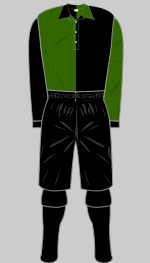
1898-1899 t
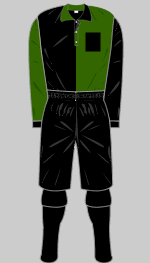
1899-1901 a
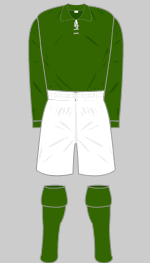
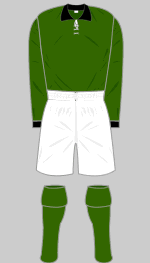
1904-1907 a
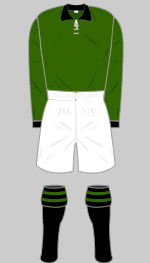
1907-1911 a
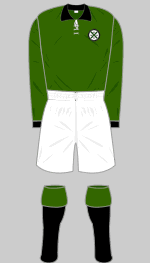
1911-1915 a
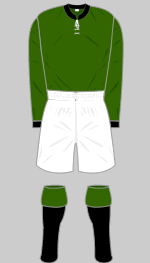
1919-1921 a
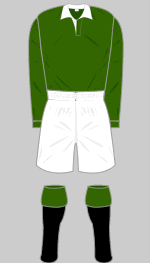
1921-1922 a
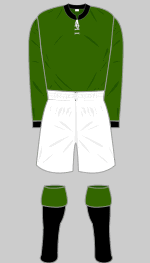
1922-1934 a
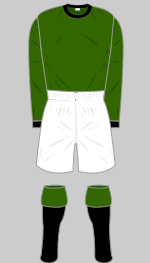
1934-1935 m
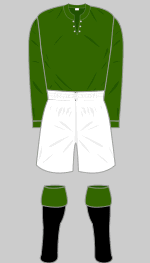
1935-1936 n
1936-1937 a
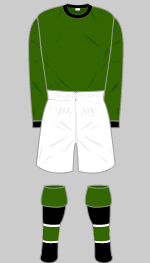
1937-1939 a m
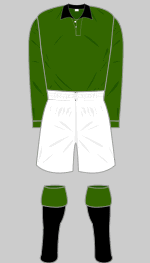
1939-1940 d
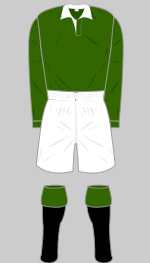
1945-1946 a
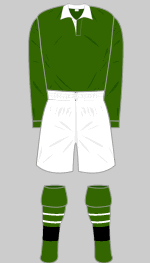
1946-1947 a
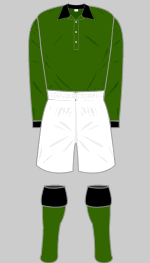
1947-1948 a
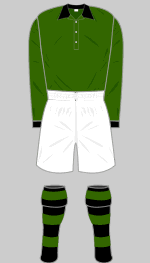
1948-1949 a
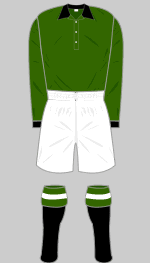
1948-1949 (2)
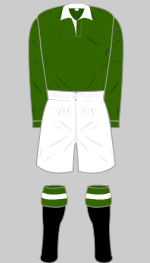
May 1949 w
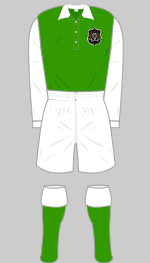
1949-1951 a
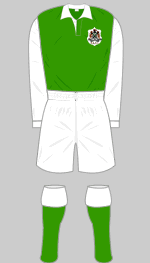
1951-1952 a g
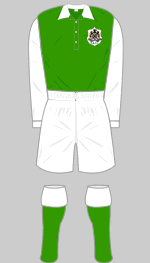
1952-1953 a
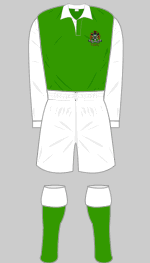
1953-1955 a
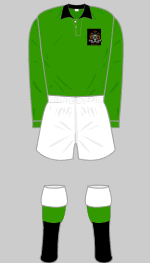
August 1955 b g
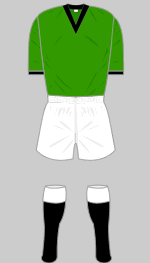
Dec 1955-1956 a g m
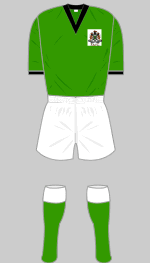
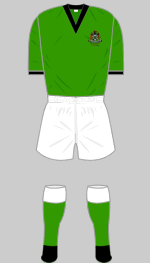
1958-1959 v

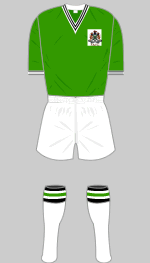
1959-1962 a g
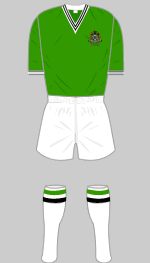
1962-1964 m q
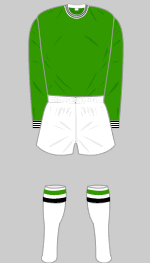
1962-1964 m q
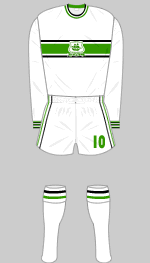
1964-1966 a

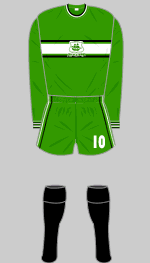
1966-1968 a f
1968-1971 a
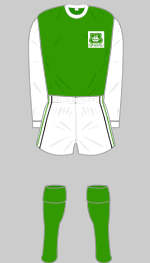
1971-1972 a
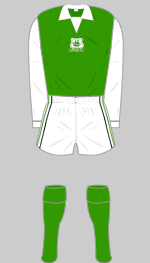
1972-1973 a
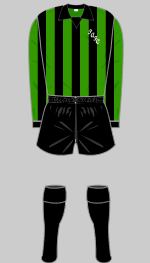
1973-Nov 1974 a s
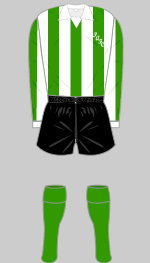
Nov 74 -May 75 1 r s
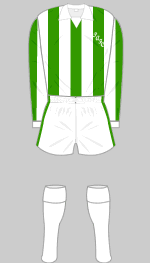
Nov 74 -May 75 2 b s
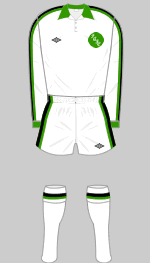
1975-1976 a i
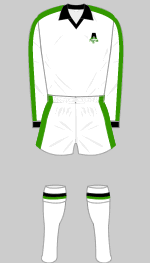
1976-1978 a i
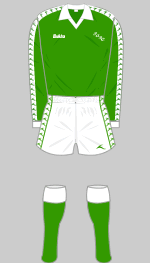
1978-1979 a i p
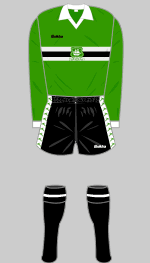
1978-1979 alt a o
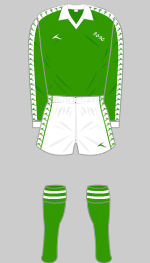
1979-1980 a p
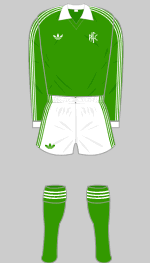
1980-1981 a
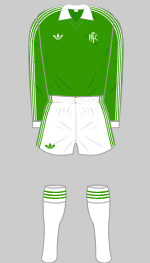
1981-1982 a
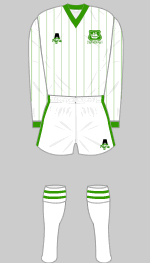
1982-1983 a k
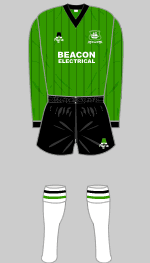
1983-1984 b e k
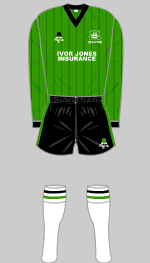
1984-1986 a k
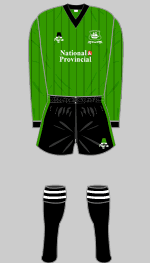
1986-1987 a k
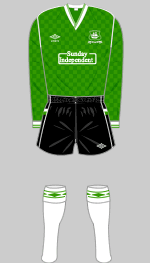
1987-1989 a u
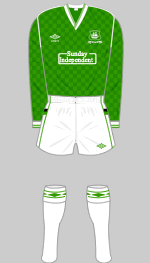
1989-1990 a u
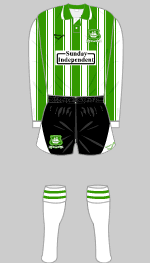
1990-1991 a e h
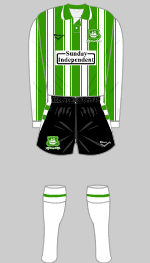
1991-1992 h
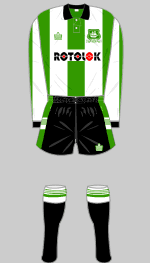
1992-1994 a h
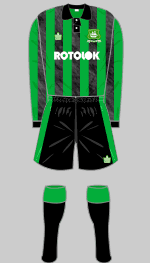
1994-1995 a h
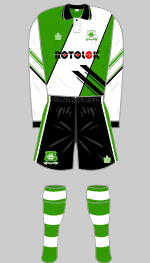
1995-1996 b
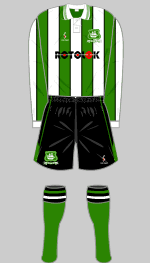
1996-1997 a h
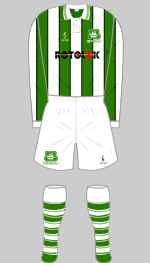
1997-1998 b
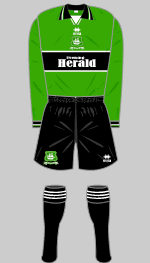
1998-1999 a b
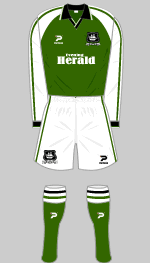
1999-2000 a b j
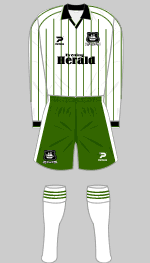
2000-2001 a h l
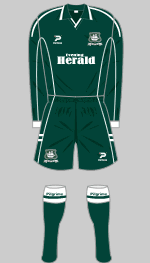
2001-2002 a h
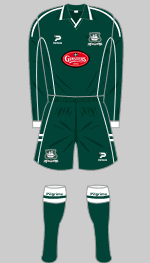
2002-2003 a h
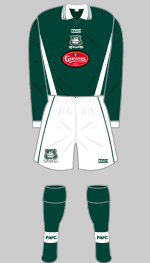
2003-2005 a h
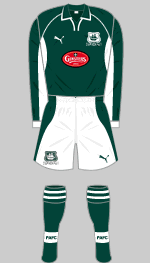
2005-2007 c
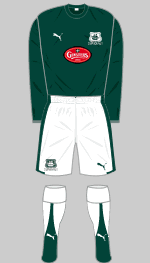
2007-2009 c l
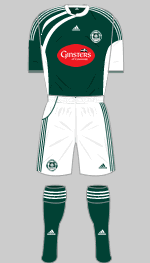
2009-2010 c l
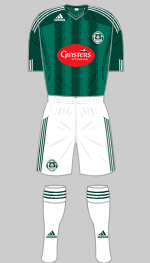
2010-2011 c
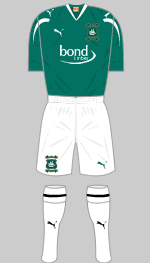
2011-2012 c
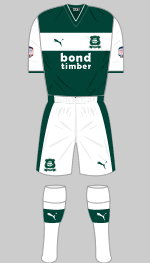
2012-2013 c
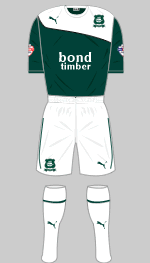
2013-2014 c
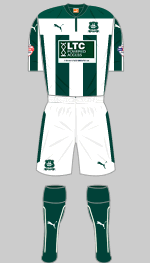
2014-2015 c
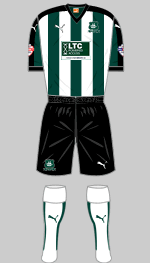
2015-2016 c
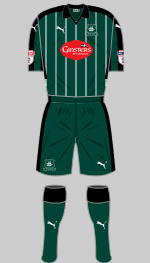
2016-2017 c
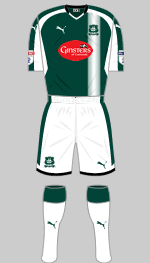
2017-2018 c
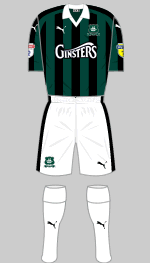
2018-2019 c
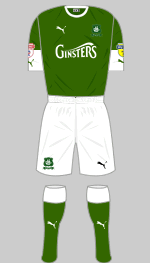
2019-2020 c
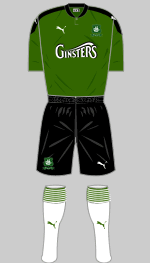
2020-2021 c
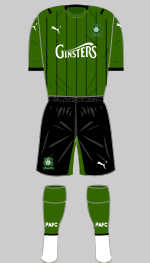
2021-2022 c
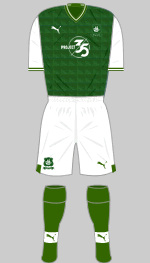
2022-2023 c
Background
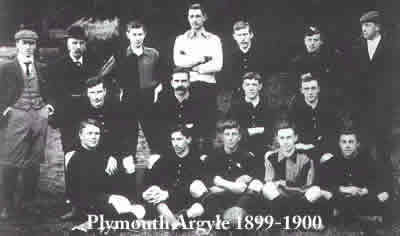 Although the club takes 1886
as the year of its foundation, it is now known that the original Argyle
FC went out of existence in 1894. Formed by F Howard Grose and W Pethybridge,
the team was made up of former public school boys and servicemen at a
meeting in a house in Argyll Terrace. The club's web site suggests a connection
with the Argyll & Sutherland Highlanders who were at that time stationed
in Plymouth and who had impressed Grose by winning the Army Cup but this
version has been questioned. The club's unusual green and black colours
are those of the Borough of Plymouth and not the the tartan worn by the
Scottish regiment, as has been suggested.
Although the club takes 1886
as the year of its foundation, it is now known that the original Argyle
FC went out of existence in 1894. Formed by F Howard Grose and W Pethybridge,
the team was made up of former public school boys and servicemen at a
meeting in a house in Argyll Terrace. The club's web site suggests a connection
with the Argyll & Sutherland Highlanders who were at that time stationed
in Plymouth and who had impressed Grose by winning the Army Cup but this
version has been questioned. The club's unusual green and black colours
are those of the Borough of Plymouth and not the the tartan worn by the
Scottish regiment, as has been suggested.
The modern club was formed in 1897, inheriting
both the name and colours of the original club. With financial backing
from Clarence Newby Spooner, whose family owned a large department store
in the town, Argyle became a football and athletic club, broadening its
membership and purchasing a ground at Marsh Mill. In 1900 the club won
its first honour, the Devon Senior League championship. That same year
Argyle purchased the lease on Home Park, which remains their ground to
this day. Two years later the club turned semi-professional and top League
clubs were invited to play friendlies at Home Park. Such was the interest
generated that when Argyle applied to join the Southern League in May
1903, they were voted straight into the First Division. Despite its isolated
position, lengthy travel and competition from rugby union (a very popular
sport in the West Country), Argyle thrived. They twice finished as runners-up (1908, 1912) before finally winning the Southern League
championship in 1913. The club are known
as "the Pilgrims" because of local connections with the 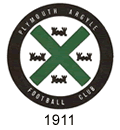 Pilgrim
Fathers who sailed in the Mayflower from Plymouth to New England in 1620.
Pilgrim
Fathers who sailed in the Mayflower from Plymouth to New England in 1620.
In the years leading up to the Great War a crest was worn by the team. This featured four turrets and the cross of St Andrew (to whom the city's mother church is dedicated) from the city coat of arms.
In 1920 Plymouth Argyle along with the rest of
the top Southern League clubs joined the new Third Division of the Football
League. The club finished as runners-up no fewer than six times in succession
between 1922 and 1927 but in those days only the champions of 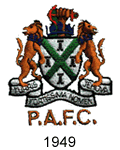 the regional
divisions were promoted. The frustration ended in 1930 when the club were
finally crowned champions of Division Three (South). After a stay of twenty
years in Division Two, the Pilgrims were relegated in 1950 but returned
to the Second Division only two years later.
the regional
divisions were promoted. The frustration ended in 1930 when the club were
finally crowned champions of Division Three (South). After a stay of twenty
years in Division Two, the Pilgrims were relegated in 1950 but returned
to the Second Division only two years later.
From 1949 the city's coat arms were worn with the addition of the club's initials. 1956 brought relegation once again and this time it took three years for the club to regain its Second Division status.
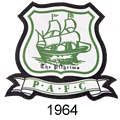 There was little to cheer during the 1960s although
the club did adopt an elegant white strip with green and black bands,
the first of many highly distinctive outfits worn by the club over the
last 40 years. This landmark strip also saw the introduction a modern club crest with "The Mayflower" as the centre piece.
There was little to cheer during the 1960s although
the club did adopt an elegant white strip with green and black bands,
the first of many highly distinctive outfits worn by the club over the
last 40 years. This landmark strip also saw the introduction a modern club crest with "The Mayflower" as the centre piece.
 In 1968, Argyle dropped back into Division Three where
they spent six seasons before winning promotion in 1975 only to suffer
relegation once again in 1977.
In 1968, Argyle dropped back into Division Three where
they spent six seasons before winning promotion in 1975 only to suffer
relegation once again in 1977.
The Mayflower crest was dropped in 1973 in favour of a simple monogram stitched in white onto novel green/black striped tops. This strip was difficult to see under floodlights so the change strip of green/white stripes was adopted in November 1974 with black or white shorts and/or socks depending on what the visitors wore.
 The all white strip worn in 1975-76 had lettering embroidered onto a green disc. Green shirts were reinstated in 1978 (an alternative version with the old crest was worn at least once, at Chesterfield on 19 August) and when Adidas took over in 1980, the lettering was embroidered in an angular style rather than the more traditional script.
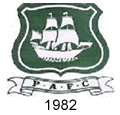 Between 1982 and 1987 the club's kits were supplied by a local firm, appropriately called "Pilgrim" - a number of other teams in the south-west, notably Torquay also wore Pilgrim kits at this time. Pilgrim's outfits saw the welcome reintroduction of the Mayflower crest.
In 1984, while still in the Third Division, Argyle reached the FA Cup semi-final where they were narrowly beaten by Elton John's Watford. Promotion to Division Two followed in 1986 but in 1992 they club was relegated yet again. In 1995 Plymouth dropped into the Nationwide Third Division (the old Fourth Division), the first time the club had ever been in the lowest division.
Although the club won promotion at the first attempt, they were back in the basement in 1998. For the 2000-01 season, the previous season's change strip of white shirts with narrow green stripes was adopted as their first choice.
After winning the Nationwide Third Division championship at a canter in 2002 and then the Nationwide Second Division in 2004, Argyle regained their traditional place in what is now called "The Championship" (the old Second Division.)
 In 2001 the board selected a dark Racing Green shade (Pantone 3308) and the team wore this until the financial crisis of 2011-12. After 45 years, the board decided to update the popular club crest in 2009 although they wisely retained the key motif.
After finishing in the top half of the Championship in 2007, Argyle slipped towards a serious financial crisis. They were relegated in 2009 with a transfer embargo in place due to their failure to pay their tax bill. In 2010-11, Argyle sold off their best players and handed over their share of the Football League's broadcast contract to The Revenue to avoid a winding up order over £760,000 in unpaid tax. By the time this was concluded the club had run up a further £300,000 in unpaid tax and in order to avoid a third winding up order, issued notice of intention to enter administration. This incurred an automatic ten-point penalty that landed them at the bottom of League One, eight points adrift.
In July 2011 Peter Ridsdale, who had joined the club as "football consultant" the previous December before becoming acting chairman in March, announced that he had brokered a deal to sell the club's ground and surrounding land to a Gibraltar-based consortium, Bishop International Ltd. Ridsdale would then pay just £1 to become the sole shareholder of the new company controlling the club. The Argyle Supporters' Trust, unhappy with the involvement of the  Truro City chairman in advising BIL, wrote to the administrator urging him to consider an alternative bid but with just a few weeks before the start of the season, while staff and players had not been paid their salaries in full since March, Ridsdale's plan seemed the only viable option.
Whilst in administration Argyle were unable to negotiate a new kit deal so in July it was announced they would start the 2011-12 season in a standard Puma training strip pending delivery of new kits in September. 2011 also marked the club's 125th anniversary for which a special crest was commissioned but for supporters this was scant compensation for the ruin of their club.
 When funds promised by BIL failed to materialise (and after manager Peter Reid, who had sold his own FA Cup medals to pay the utility bills had been sacked), the administrators belatedly agreed to consider an alternative bid from local hotelier, James Brent who headed up the Akkeron Group. Due to this delay, the temporary strips that were supposed to be replaced in September became permanent when Brent finally took over and Argyle came out of administration in October. Two months later Ridsdale left to sprinkle his magic over Preston.
After the traumas of 2011-12, supporters were pleased to see the traditional crest and dark "Argyle green" restored. the club's fortunes continued to improve and in 2015-16 they reached the play-off final. A year later they finished as runners-up and were promoted.
At the end of 2018-19 the team were relegated to League Two and, perhaps in response, the club decided to abandon dark green in favour of a richer shade of "pine needle green." Fans were assured that this marked a return to tradition. Perhaps this did the trick: Argyle went back up to to League One immediately.
Sources
Photograph courtesy of Greens on Screen
- (a) Semper Viridis Trevor Scallon's site is an invaluable resource with a superlative collection of old photographs. Now merged with Greens on Screen
- (b) empics
- (c) Plymouth Argyle Official Website
- (d) Robert Salmon
- (e) Bjørn-Terje Nilssen
- (f) Paul Withers
- (g) Paul Blank
- (h) David King
- (i) Alick Milne
- (j) Chris Worrall
- (k) Leon Blake
- (l) Jon Rosevear
- (m) Keith Ellis (HFK Research Associate)
- (n) Simon Monks
- (o) John Taylor
- (p) Patrick Francis-Lang
- (q) Steve Rhodes
- (r) YouTube clip retrieved by Paul Clare
- (s) John Creber
- (t) Ian Newell
- (u) Simon Staal
- (v) seniortigers.org.uk
- (w) Tony Sealey
Crests are the property of Plymouth Argyle FC. Photo credit Terry Mechan.