Peterborough United
Formed 1934
Elected to Division Four 1960
Kit History
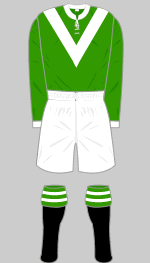
1934-1936 a v
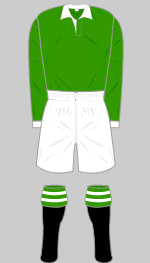
1936-1937 v
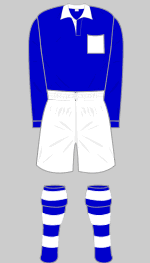
1937-1940 a q v
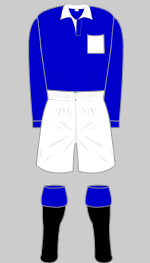
1946-1947 q
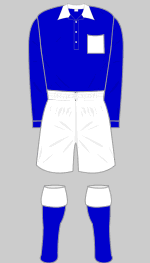
1947-1948 a
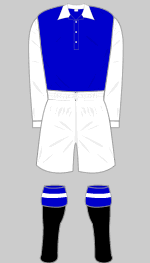
1948-1949 a

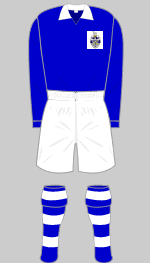
1949-1950 a
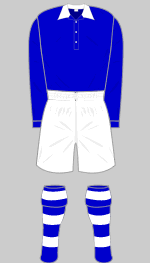
1950-1953 o q
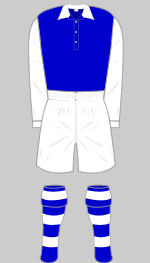
1953-1954 q
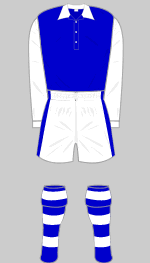
1954-1955 q
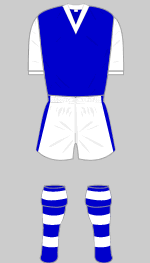
1955-1956 s
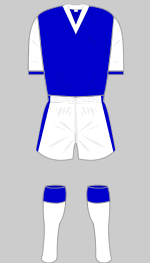
1956-1958 u
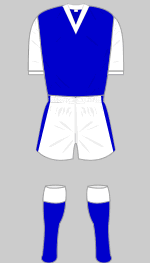
1958-1964 a q w
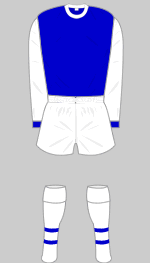
1964-1965 j q

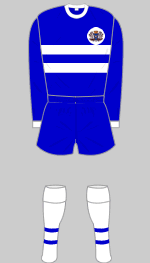
1965-1966 q w
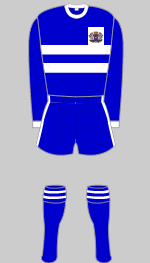
1966-1967 t
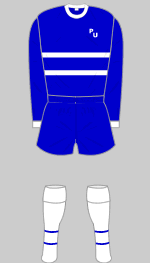
1967-1968 j q
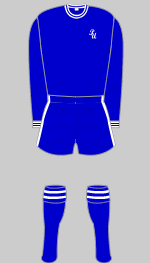
1968-1970 g k
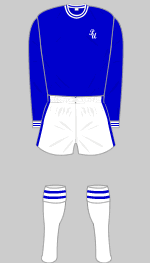
1970-1972 d q r
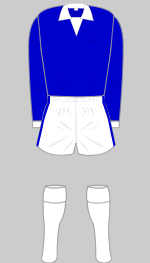
1972-1973 x
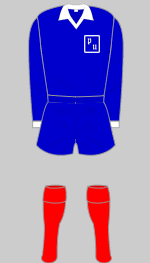
1973-1974 c i r
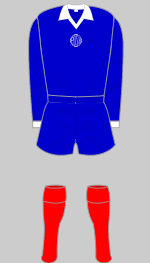
1974-1975 i l
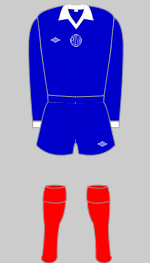
1975-1977 i l
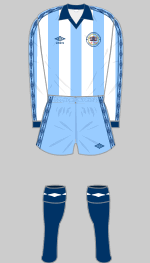
1977-1978 g
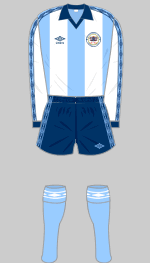
1978-1979 e p
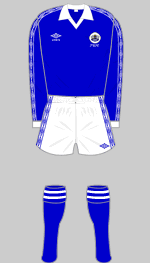
1979-1981 i
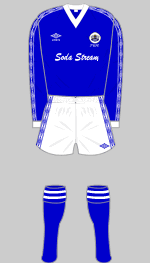
1981-1982
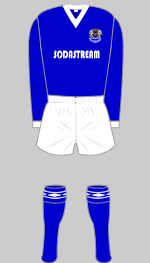
1982-1983 i q
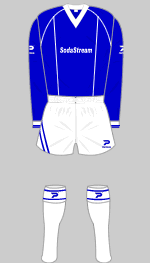
1983-1984 i
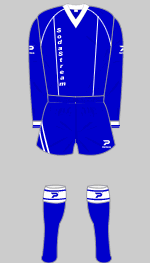
1984-1986 i
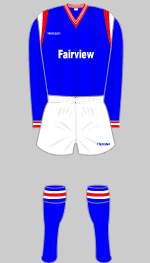
1986-1987 i
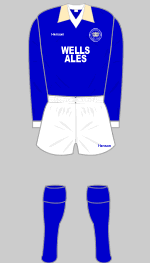
1987-1988 i
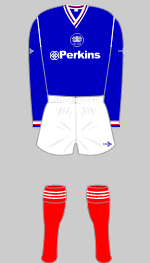
1988-1989 i
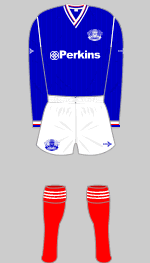
1989-1990 i
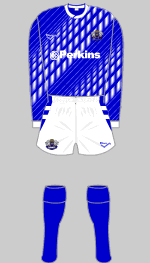
1990-1991 i
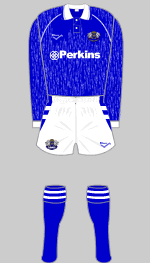
1991-1992 c i
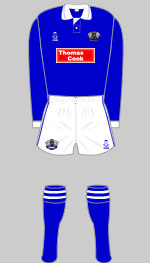
1992-1993 g i
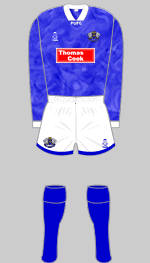
1993-1995 c
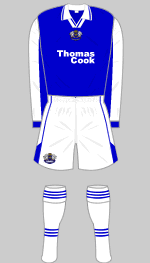
1995-1996 c d
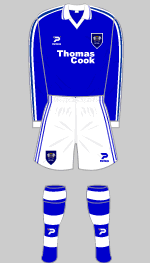
1996-1998 c i
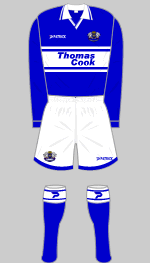
1998-1999 c e q
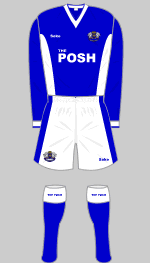
1999-2000 c
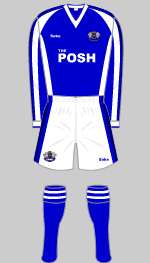
2000-2001 c
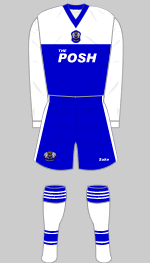
2001-2002 c e q
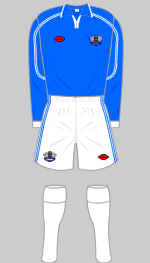
2002-2003 c
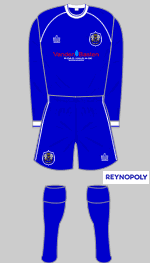
2003-2004 c i
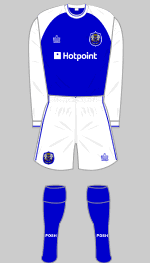
2004-2005 i
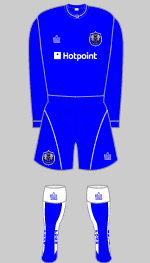
2005-2006 a
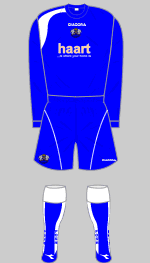
Aug-Dec 2006 a
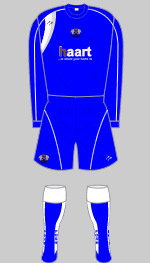
Jan-May 2007 i
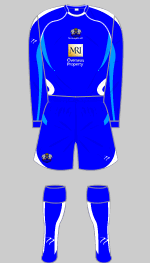
2007-2008 a q
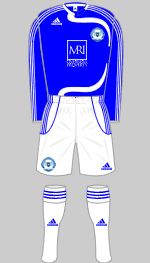
2008-Jan 2010 a
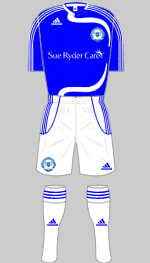
Jan-Apr 2010 a
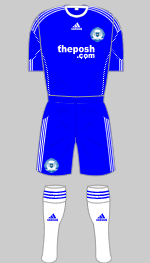
2010-2011 a
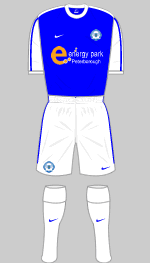
2011-2012 a
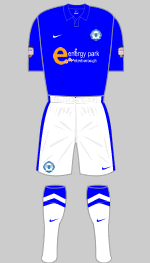
2012-2013 a
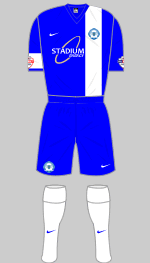
2013-2014 a
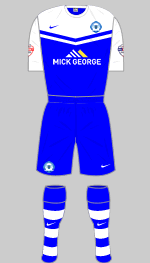
2014-2015 a
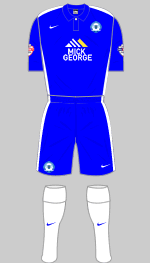
2015-2016 a
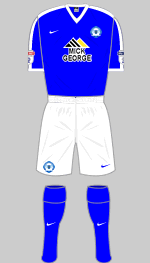
2016-2017 a
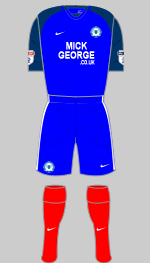
2017-2018 a
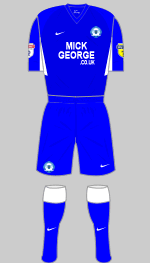
2018-2019 a
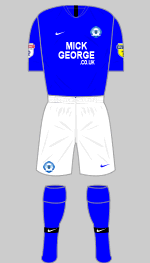
2019-2020 a
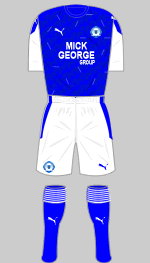
2020-2021 a
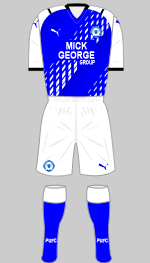
2021-2022 a
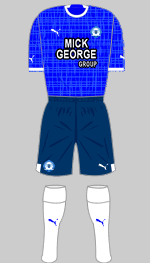
2022-2023 a
Background
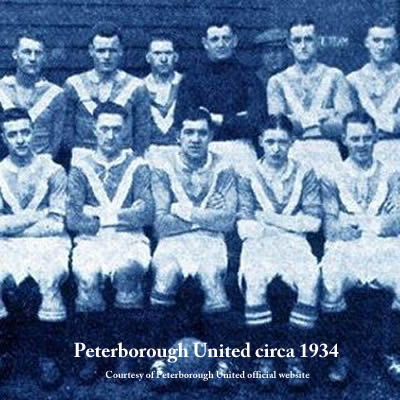 In 1932 the original Peterborough & Fletton United collapsed after being suspended by the FA. On 17th May 1934 Peterborough United was formed as a professional club to fill the void. Councilor Jack Swain, who was acting chairman, told the public meeting that, “Peterborough will ultimately find a place in the Football League.”
Peterborough’s peculiar nickname, “The Posh,” is inherited from the older club. Player manager Pat Tirrel once remarked that he was looking “for posh players for a posh club” to play in the Northamptonshire League and the name stuck. (Another local story suggests the nickname derives from a pub that used to stand next to the ground called "Port Out, Starboard Home.")
The brand new club was welcomed into the Midland League although, to the embarrassment of club officials, they had to 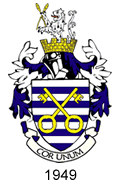 borrow £35 for the security deposit, subscriptions and entry fees. In no time at all, a share issue was made to raise funds, the London Ground was leased from Peterborough City Council and a team of professional players was signed up. Local gentlemen’s outfitters EB Jackson donated the first set of shirts, which happened to be green with a white V.
The team struggled both on the pitch and financially. A change to a blue and white kit bought by the Supporters’ Club for the 1937-38 season did not improve their fortunes and in 1939 they had to seek re-election.
The team wore a crest in the 1949-50 season based on the coat of arms of the Soke of Peterborough.
 After the war, Peterborough’s performances in the Midlands League improved and they began to make an impression in the FA Cup. Over the next 15 years they were to knock
  out eight League clubs. Every year they applied for membership of the Football League without success. Finally, in 1960, the Posh were elected to the Fourth Division at the expense of Gateshead.
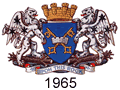
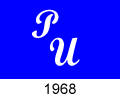
The Posh made an immediate impact, winning the Fourth Division title in their first season 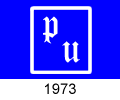 with a record 134 goals, 52 of which were scored by Terry Bly. For the next two seasons Peterborough challenged for promotion again. The coat of arms of the City of Peterborough (granted in 1960) were worn in the 1965-66 season and remained the basis for various versions of the club crest worn to this day. It did not, however, last very long in the first instance and was replaced by various monograms (technically cyphers) based on the club's initials or nickname.
In 1968 disaster struck. Having found the club guilty of various irregularities, the Football League ordered that they be relegated at the end of the season. They won the Division Four championship for a second 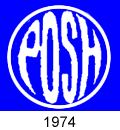 time in 1974 but five years later they were back in the basement.
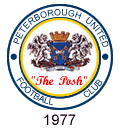 A change of image in 1977 saw the team wearing light blue and white stripes along with a smart new crest that revived the coat of arms first seen in 1965. The striped shirts were dropped after the Posh were relegated to the Fourth Division in 1979 where they spent the next 12 years.
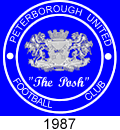
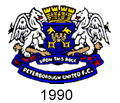
Several variations on the club crest appeared over the following decade although they all retained the basic coat of arms.
Peterborough were finally promoted again in 1991 and the following 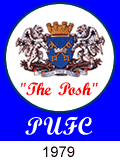 season, having finished in sixth place, they won the play-offs to reach the second tier.
 United were in Division One for only two seasons, finishing in tenth place in 1993, their highest league position to date. By 1997 they were back in the lowest division (now Nationwide Division Three) but in 2000 they won through the play-offs to return to Nationwide Division Two.
In 2005 they were relegated again to the third tier but recovery followed and in May 2009 they clinched promotion back into the second tier only to suffer relegation again the following season.
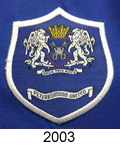 In 2008 Peterborough adopted a new circular crest that takes key elements from the city's coat of arms, including the motto "Upon This Rock" but is sufficiently different to be registered as a trademark.
Honours have been thin on the ground for The Posh but in 2013-14 they added the Football League Trophy to the two Fourth Division Championships they won in 1961 and 1973.
In 2020-21 The Posh won automatic promotion to the Championship after finishing as 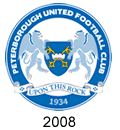 runners-up. To celebrate the club commissioned Puma to produce a replica of their 1990-91 strip, when they also won promotion on their way to the second tier. After a promising start, the Posh spent the 2021-22 season in the drop zone and, despite a late rally, they were relegated back into League One after finishing in 22nd place.
Sources
- (a) Peterborough United Official Website
- (b) Club Colours (Bob Bickerton 1998)
- (c) empics
- (d) Crewe Alexandra FC - Images of Sport (Harold Finch 2001)
- (e) Football Focus
- (f) Luton Town Official Website
- (g) Classic Kits
- (h) Mark Haley
- (i) The Warrick Collection
- (j) Pete's Picture Palace
- (k) David King
- (o) Your Grandad's Football
- (p) Gary Moore
- (q) Nick Warrick - HFK Research Associate
- (r) Keith Ellis
- (s) Willie Kay
- (t) Simon Monks
- (u) Warren Lyons
- (v) Nigel Hewlett
- (w) Senior Tigers Club
- (x) Peter Stevenson
Modern crests are the property of Peterborough United FC.