
Oxford
United
Formed 1893
Elected to Division Four 1962. Relegated to the National Conference 2006.
Promoted to League Two 2010
Kit History
Headington
1893
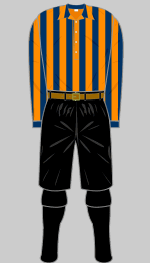
1893 b s
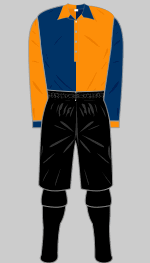
1897-1899 o s

1899-1910
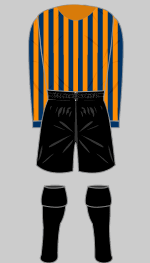
1910 u
Headington United
1911
1911-1913
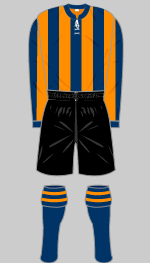
1913-1925 l r
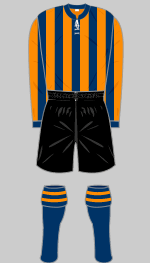
1930-1931 o r
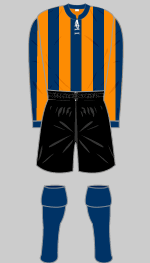
1934-1935 o
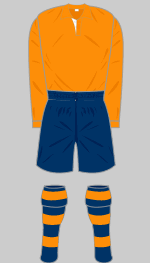
1935-1936 o r
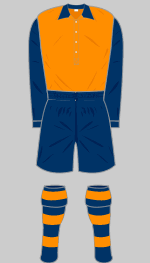
1938-1949 b o
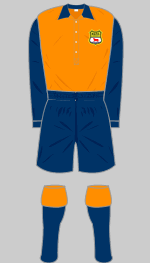
1949-1950 o r
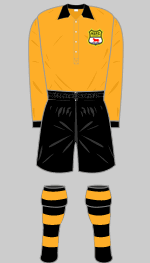
1950-1951 o r
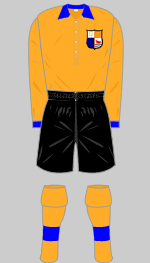
1952-1953 o r
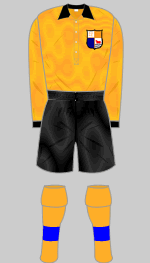
1953-1957 r
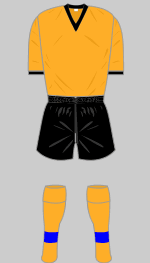
1957-1958 o r
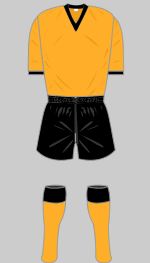
1959-1960 r
Oxford United
1960
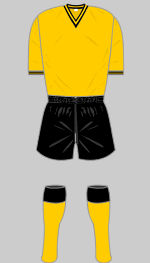
1960-1963 o r
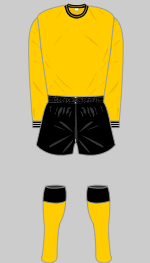
1963-1964 c d o r
1964-1965 r
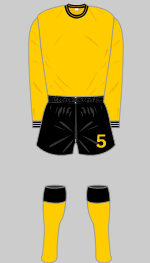
1965-1968 r
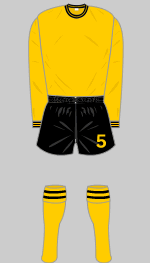
1968-1970 n o r
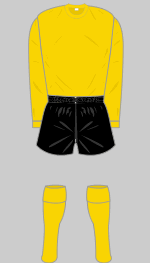
1970-1972 e f o t
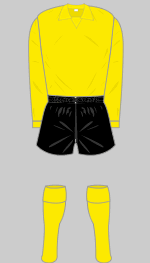
1972-1973 o r t
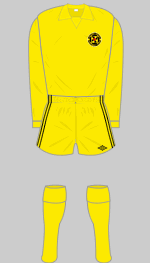
1973-1974 j n o r
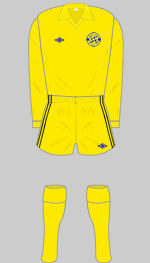
1974-1975 r v
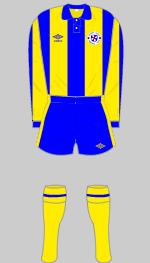
1975-1977 j n o r
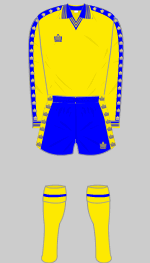
1977-1978 q r
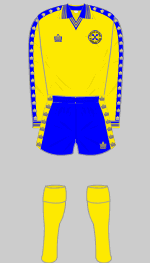
1978-1979 h m o q r
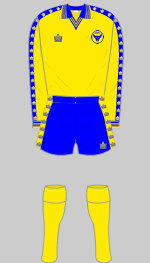
1979-1980 r
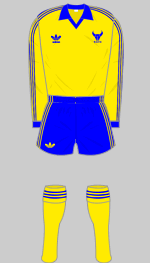
1980-Jan 1982 m r
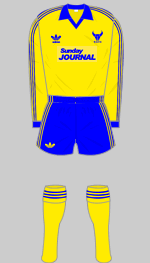
Jan-May 1982 r
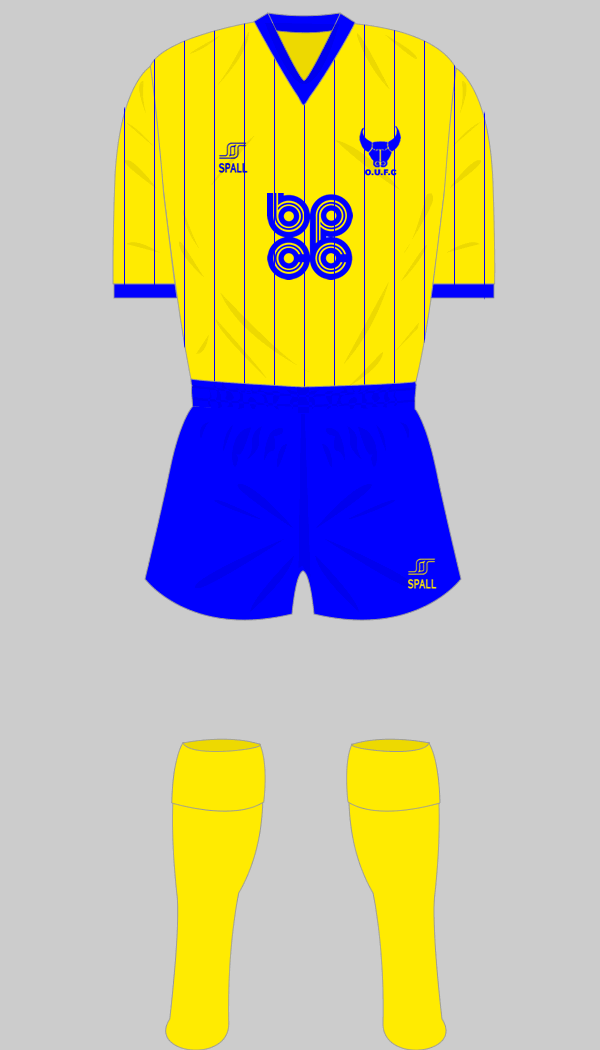
1982-1984 (1) n q r
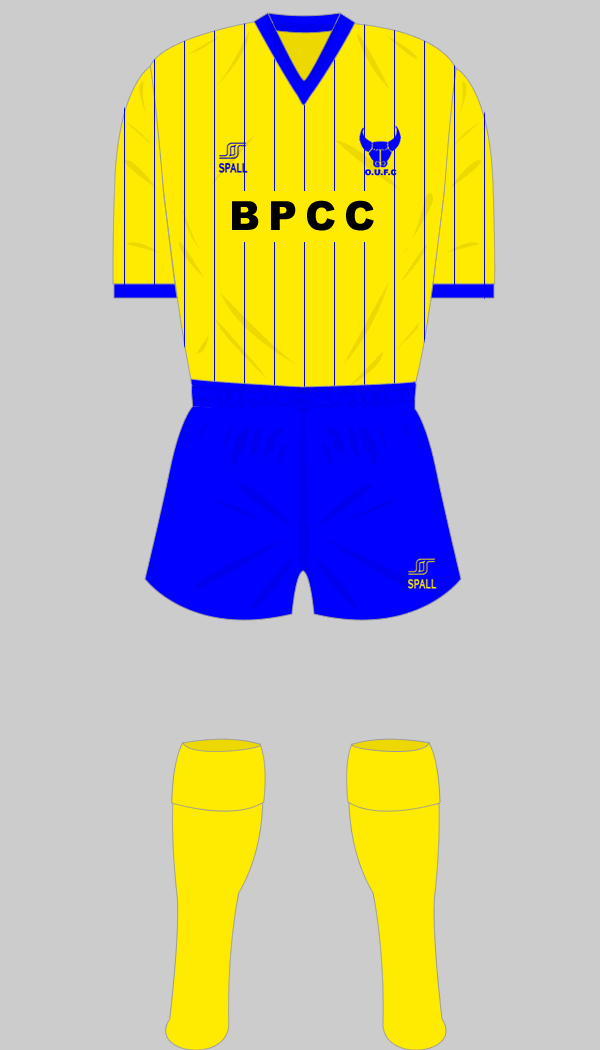
1982-1984 (2) n q r
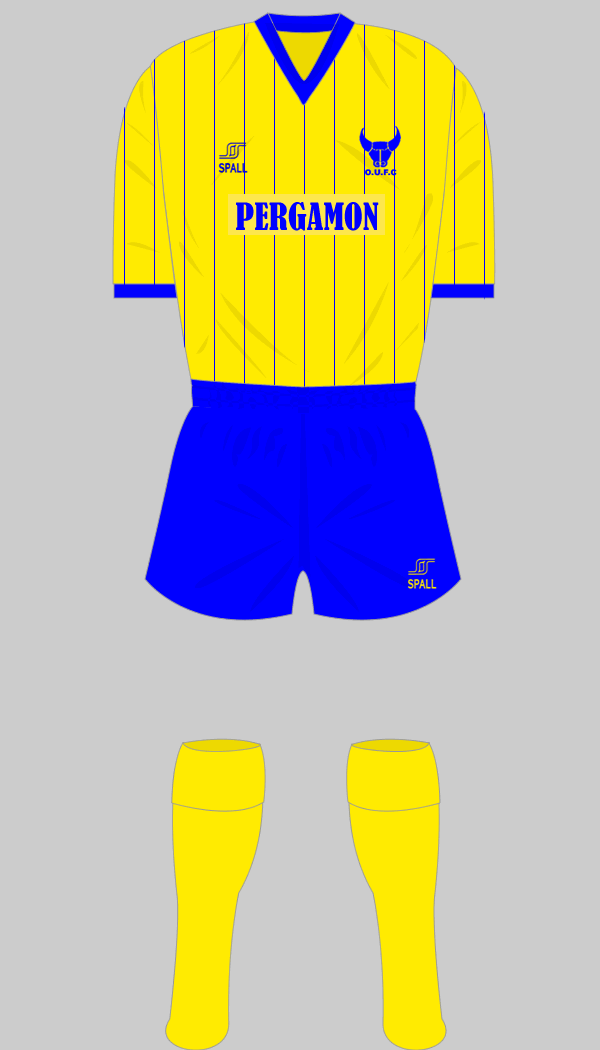
1982-1984 (3) n q r
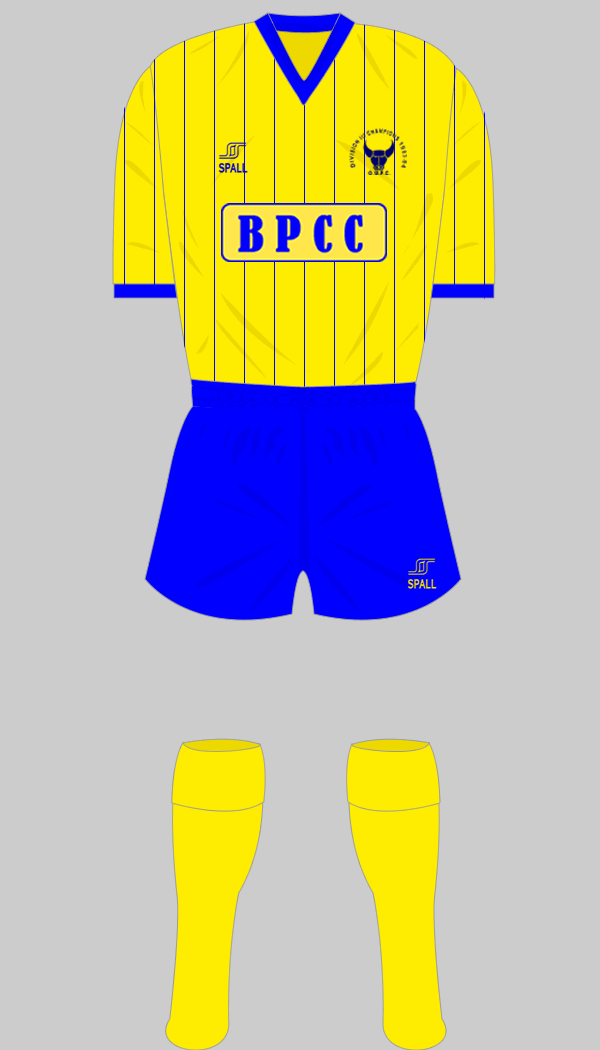
1984-1985 (1) c e r
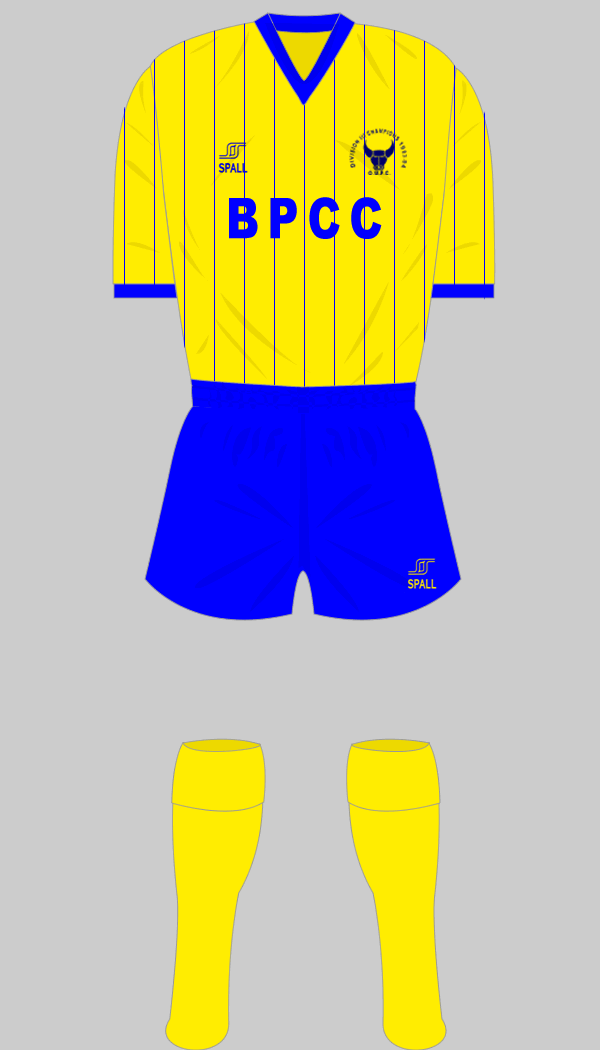
1984-1985 (2) c e r
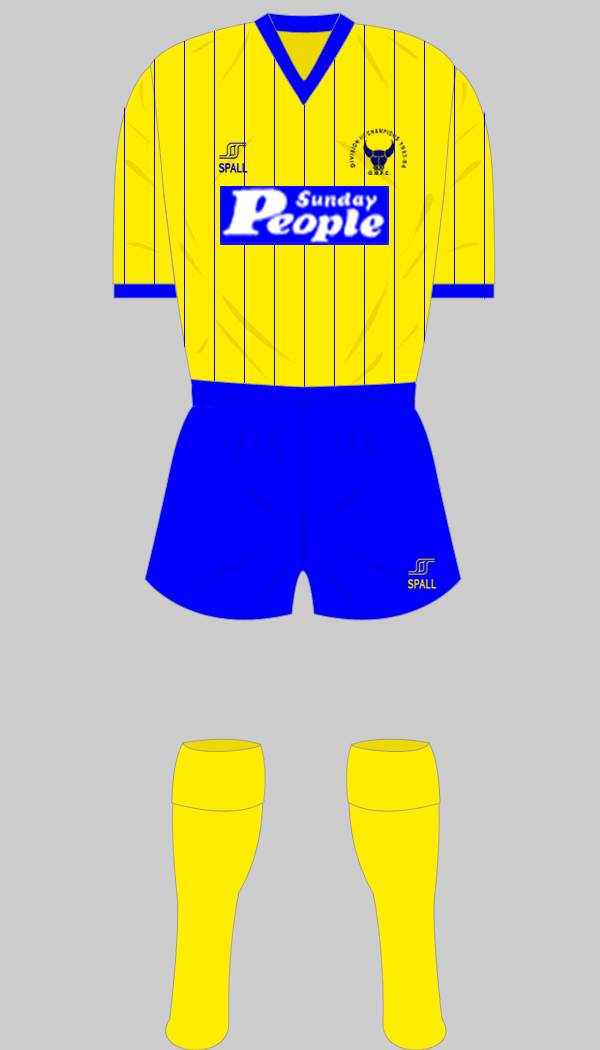
1984-1985 (3) c e r
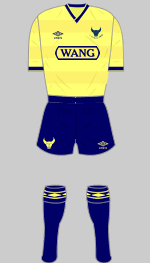
1985-1986 c e r
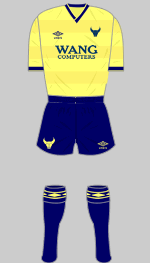
1986-1987 e r
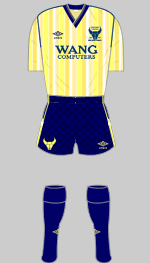
1987-1988 j
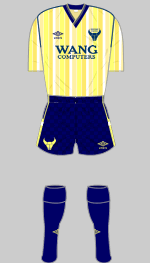
1988-1989 j o r
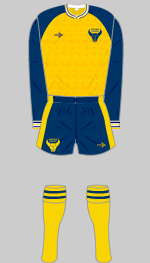
1989-1990 r
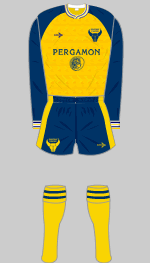
1990-1991 j r
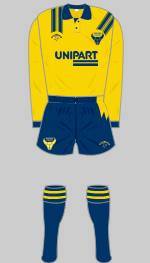
1991-1993 e i o p r
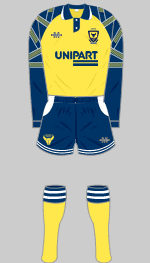
1993-1994 c p r
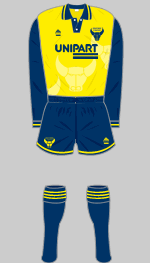
1994-1995 c p r
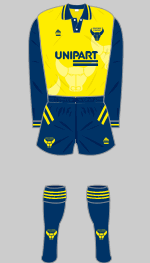
1995-1996 c p r
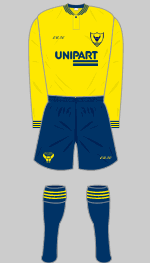
1996-1998 c r
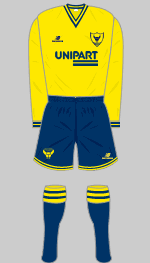
1998-2000 c r
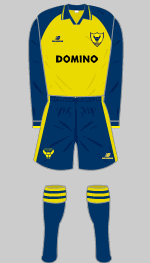
2000-2001 c p r
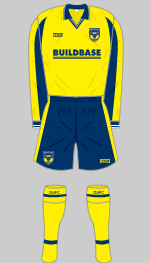
Aug 01-Feb 02 c p r
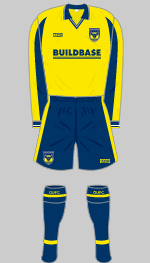
Feb-Oct 2002 r
Oct 02-May 03 r
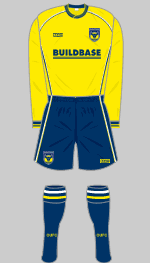
2003-2005 c k p
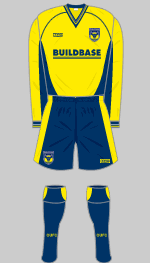
2005-2006 a p
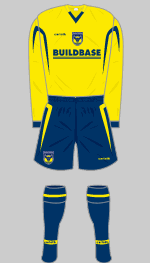
2006-2007 m
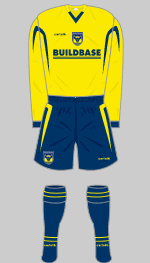
2007-2008 m
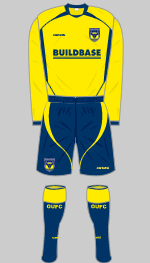
2008-2009 m
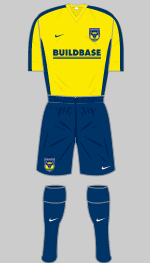
2009-2010 m s
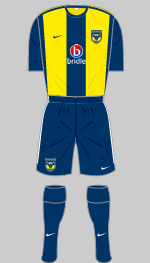
2010-2011 m
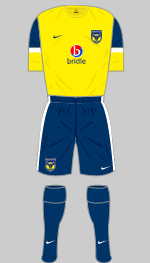
2011-2012 m
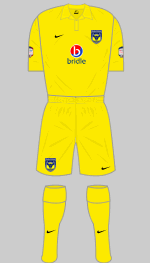
2012-2013 m
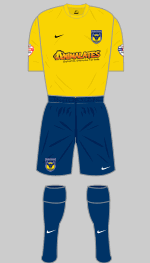
2013-2014 m
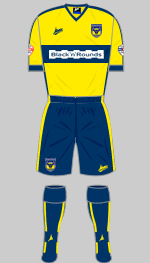
2014-2015 m
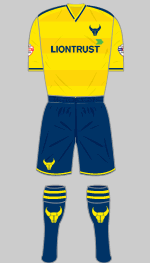
2015-2016 m
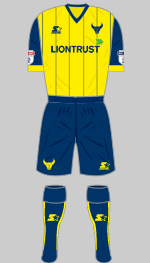
2016-2017 m
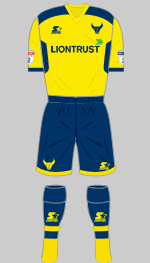
2017-2018 m
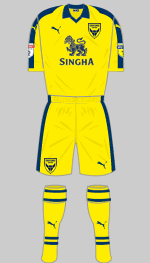
2018-2019 m
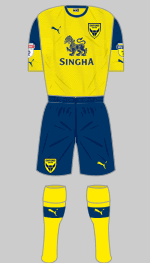
2019-2020 m
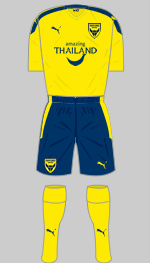
2020-2021 m
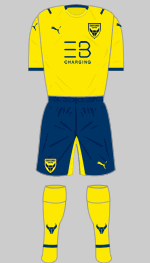
2021-2022 m
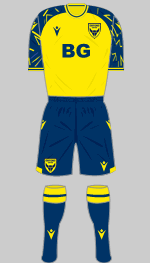
2022-2023 m

Background
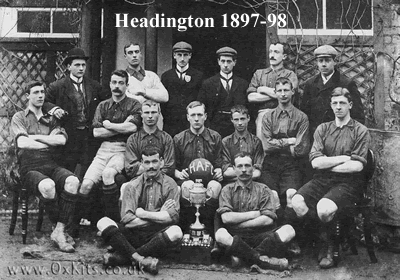 Headington AFC, an amateur village side founded in 1893 by the Rev John Scott-Tucker and John Hitchings, a surgeon, as a way for members of Headington United Cricket Club to stay fit through the winter. They competed in local leagues, wore orange and dark blue and had no permanent home ground. The football club were sometimes referred to as Headington United in the press but it seems likely this was because of the connection with the cricket club. The few team photographs available have "HAFC" painted onto the ball held by the captain rather than "HUFC" up until 1910.
In 1911 the club merged with Headington Quarry and officially became Headington United. Two years later they purchased Wootten's Field on London Road, Oxford but had to move out when this was redeveloped in 1920 as Oxford grew with the expansion of the Cowley car works. They were homeless until 1925 when they purchased The Manor Ground, also on London Road, where they remained until 2001.
In 1921 Headington stepped up to the Oxfordshire Senior League and in 1931 they entered the FA Cup for the first time.
After the Second World War the club adopted a more ambitious attitude.
They joined the Southern League in 1949 and turned professional. A year later they installed floodlights, long before most
Football League clubs, and their kit took on a new appearance with plain shirts in a paler shade of orange, black shorts and mid-blue trim. In 1953, they won the Southern League title.
In 1954 they reached the FA Cup fourth round proper, disposing of Millwall
and  Stockport County before losing to Bolton Wanderers, then in the First
Division. With their sights set firmly on joining the Football League,
Headington invested heavily in ground improvements.
Stockport County before losing to Bolton Wanderers, then in the First
Division. With their sights set firmly on joining the Football League,
Headington invested heavily in ground improvements.
Two crests appeared in this period, both of which featured a visual pun on the word Oxford.
The appointment of former Birmingham City manager, Arthur Turner in 1959
proved to be the key to success. In 1960, in an effort to gain 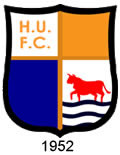 wider recognition,
Headington became Oxford United and went on to win two more Southern League
championships wearing new colours of gold and black. A competition was organised to create a new crest for the renamed club, which was won by a Mr SEV Clarke, whose design included a partially concealed letter "H" as a reminder of their original name. This crest did
wider recognition,
Headington became Oxford United and went on to win two more Southern League
championships wearing new colours of gold and black. A competition was organised to create a new crest for the renamed club, which was won by a Mr SEV Clarke, whose design included a partially concealed letter "H" as a reminder of their original name. This crest did 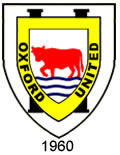 not appear on the team shirts.
In March 1962, Accrington Stanley resigned from the League. With only the last three Fourth Division clubs required to apply for re-election, there was a guaranteed place for a non-league side available when the League AGM convened in June. No fewer than 26 clubs applied: Oxford were overwhelmingly elected with 39 votes, 24 votes ahead of their nearest rivals who got a mere 5 votes.
 After two years consolidating in Division Four, United were promoted
and in 1968 they won the Third Division title.
After two years consolidating in Division Four, United were promoted
and in 1968 they won the Third Division title.
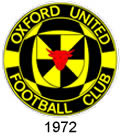
In 1972 a new crest was introduced and this version was worn on the shirts from 1973. This design appeared in various colour combinations until it was dropped in 1980.
 After eight seasons in
Division Two United, now wearing blue and gold once again, were relegated
in 1976.
After eight seasons in
Division Two United, now wearing blue and gold once again, were relegated
in 1976.
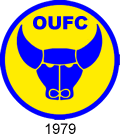
In 1979 the zoologist and author of popular science books, Desmond Morris, who was also a former director of the club, was asked to design a new crest. He came up with a stylised ox head, a design that was distinctive and easily recognisable 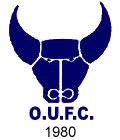 from a distance. The original version had the club's initials embroidered but from 1987 these were replaced by the club's name in full placed between the horns. Several variations of both versions appeared that featured commemorative wording embroidered around or below the badge.
After five years languishing in the lower reaches of the Third
Division and with financial 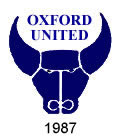 problems crippling the club, millionaire publisher,
Robert Maxwell bought Oxford United in January 1982 and saved them from
bankruptcy. Under Maxwell's ownership, the team wore a variety of sponsorship logos representing the various companies that were part of his publishing empire.
problems crippling the club, millionaire publisher,
Robert Maxwell bought Oxford United in January 1982 and saved them from
bankruptcy. Under Maxwell's ownership, the team wore a variety of sponsorship logos representing the various companies that were part of his publishing empire.
Two consecutive championships in 1984 and 1985 took Oxford into the First
Division for the first time in their history. For three seasons, Oxford
managed to stave off relegation 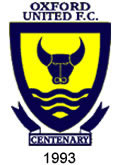 and in the process, they won the League Cup in April 1986. Meanwhile, Maxwell was floating the idea of merging
United with Reading FC to form a new club to be known as Thames Valley
Royals. Naturally the proposals met with hostility from both sets of supporters
and were eventually dropped. In 1991 Maxwell was lost at sea, presumed
to have fallen from his yacht and drowned. Without his money, United were
forced to sell off players and trim their costs. Inevitably t
and in the process, they won the League Cup in April 1986. Meanwhile, Maxwell was floating the idea of merging
United with Reading FC to form a new club to be known as Thames Valley
Royals. Naturally the proposals met with hostility from both sets of supporters
and were eventually dropped. In 1991 Maxwell was lost at sea, presumed
to have fallen from his yacht and drowned. Without his money, United were
forced to sell off players and trim their costs. Inevitably t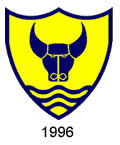 hey dropped
into what was now called Division Two (the old Third Division) in 1994, at the end of their centenary season (during which a special crest was worn).
hey dropped
into what was now called Division Two (the old Third Division) in 1994, at the end of their centenary season (during which a special crest was worn).
In 1995-96 the club was granted permission to build a new stadium to the south of Oxford and they won promotion. The crest was redesigned, based on a simplified version of the centenary crest.
Financial problems, exacerbated by the rising costs of the new stadium, led to the club going into administration. A takeover and the sale of the Manor Ground for redevelopment saved the stricken club but the cost was consecutive relegations in 1999
and 2001,  which left them in League Two, the lowest tier of the Football League.
In 2001 they moved into the Kassam Stadium (named after Firoz Kassam, who had bought the club for £1 and saved them from bankruptcy). Due to the club's reduced circumstances, only three sides of the ground were completed: the building of a fourth stand was postponed until the club's fortunes revive. The crest was once again redesigned to coincide with the move to their new home.
 Disaster
struck in 2006 when they were relegated to the Conference on the last
day of the season. By a cruel irony, one of the clubs promoted was the
revived Accrington Stanley, whom United had replaced in 1962. Their stay in the Conference lasted just four seasons before they regained their place in the Football League via the play-offs.
Disaster
struck in 2006 when they were relegated to the Conference on the last
day of the season. By a cruel irony, one of the clubs promoted was the
revived Accrington Stanley, whom United had replaced in 1962. Their stay in the Conference lasted just four seasons before they regained their place in the Football League via the play-offs.
 To mark the 30th anniversary of their Milk Cup win, the old ox head badge was revived in 2015-16 and worn on a strip similar to that worn in 1986. The team had a very successful season, reaching the Johnstone's Paint Trophy final and winning promotion as League Two runners up.
To mark their 125th anniversary a modified crest was introduced in 2018-19. The fine stripes were intended to evoke the shirts worn by the original team in 1893.
Sources
- (a) Yahoo UK Sports
- (b) Club Colours (Bob Bickerton 1998)
- (c) empics
- (d) Tranmere Rovers FC (Images of Sport - Peter Bishop)
- (e) Football Focus
- (f) Football Cards
- (g) York City FC - Images of Sport (David Batters)
- (h) Swindon Town FC - Images of Sport (Richard Mattick 2000)
- (i) Ipswich Town FC - Images of Sport (Tony Garnett)
- (j) Classic Kits
- (k) United We Stand
- (l) This is United
- (m) Ralph Pomeroy
- (n) Forever Villa (David Instone 2005)
- (m) Oxford United Official Site
- (n) Pete's Picture Palace
- (o) Robert Newton
- (p) David King
- (q) Alick Milne
- (r) oxfordkits.com is the successor to oxkits.co.uk
- (s) oxkits.co.uk
- (t) Nick Szczepanik
- (u) headington.org.uk
- (v) Tony Sealey
Historical crest details courtesy of oxkits.co.uk. Crests are the property of Oxford United FC. Colour matching for modern strips has been revised using oxfordkits.com as reference.