

Notts
County
Formed 1862
Founder member of the Football League 1888. Relegated to the National League 2019.
Kit History
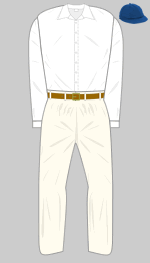
2 Jan 1865 t
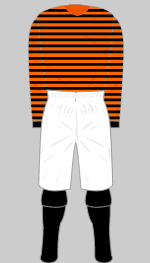
1866-1873 a n q t
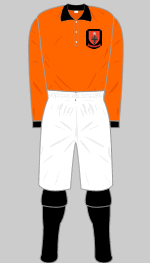
1877-1880 a r
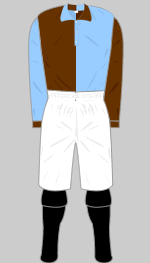
1880-1890 a t
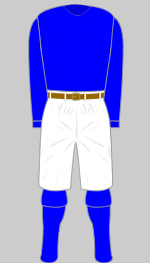
1 March-1890 x
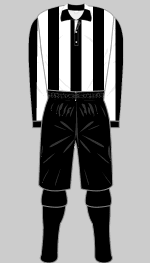
1890-1900 a t
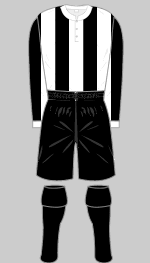
1900-1906 a d q
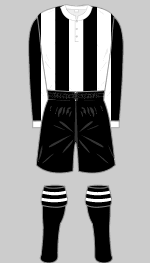
1906-1922 a d o
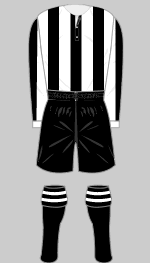
1922-1923 p
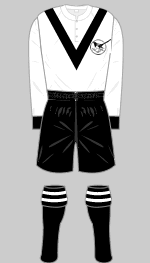
1923-1926 a d p
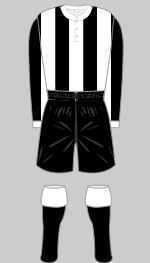
1926-1934 p
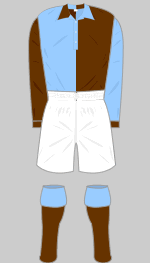
1934-1935 a w
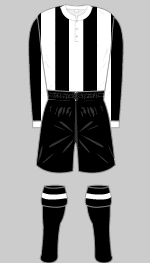
1935-1936 a p
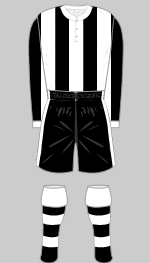
1936-1937 p
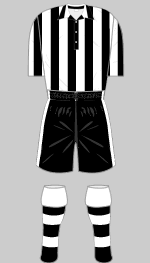
1937-1939 p
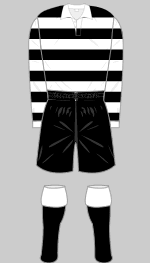
1940-1946 b
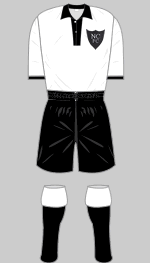
1946-1947

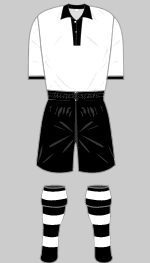
1947-1948 p
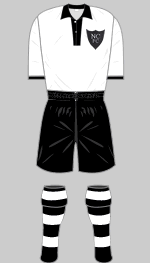
1948-1949 h
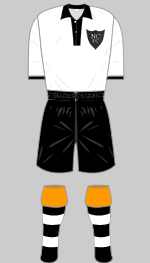
1949-1950
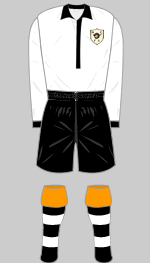
1950-1952 c
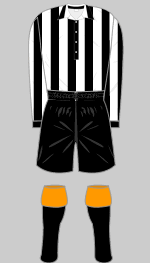
1952-1953 w
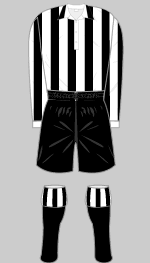
1953-1954 p
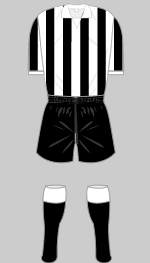
1954-1955 p w
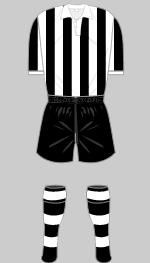
1955-1956 v
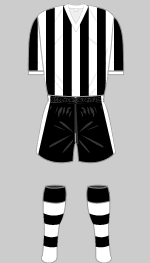
1956-1957 u
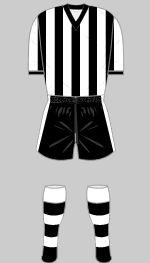
1958-1959 p
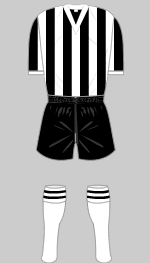
1959-1961 c p w
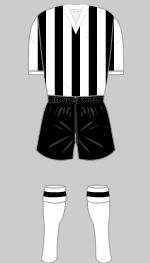
1961-1962 p
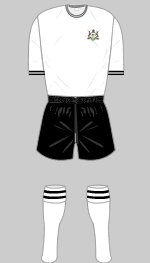
1962-1963 a
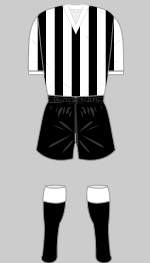
1963-1964 a p y
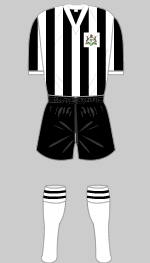
1964-1965 a
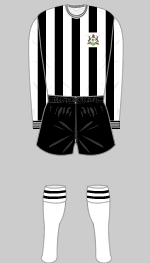
1965-1968 a
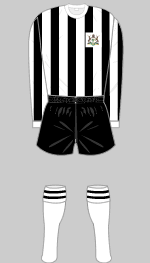
1968-1970 a l
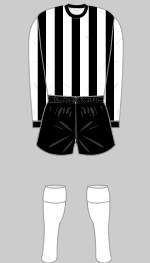
1970-1971 a j k l
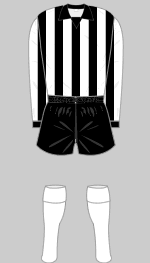
1971-1975 a j k l
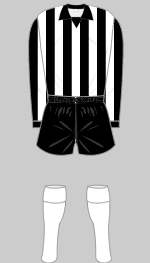
1975-1976 k
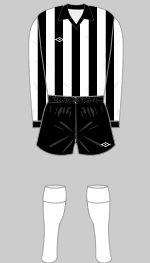
1976-1977 k
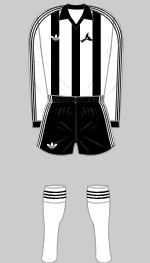
1977-1978 a k
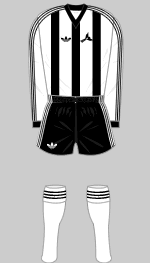
1978-1983 a k
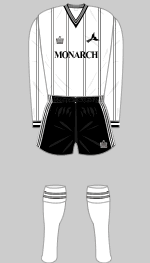
1983-1984 a m
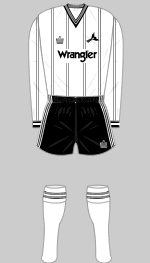
1984-1986 a i f m
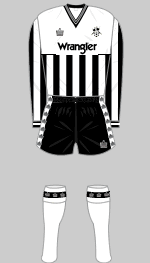
1986-1987 a f
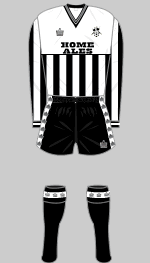
1987-1988 a
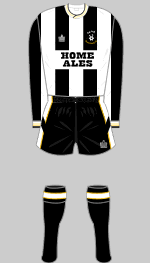
1988-1989 a f i
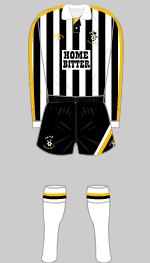
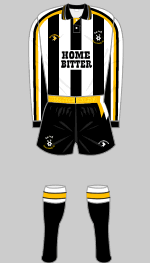
1991-1993 a f g i
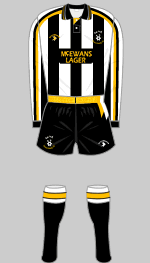
1991-1993 a f g i
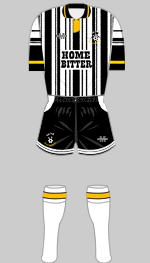
1993-1994 a f i z
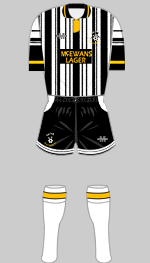
1993-1994 a f l z
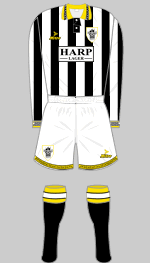
1994-1995 a f i
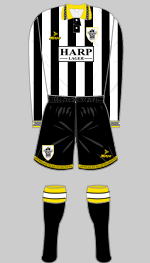
1995-1996 a f i
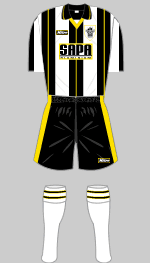
1996-1997 a f i
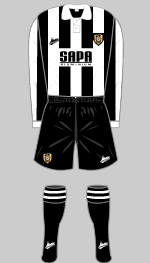
1997-1999 a f
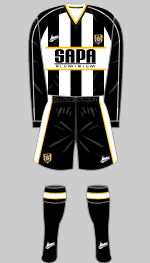
1999-2000 a f
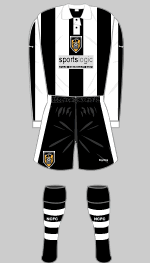
2000-2001 a f i
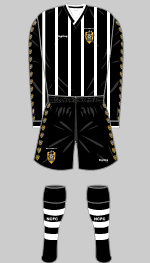
Aug-Sept 2001 a f
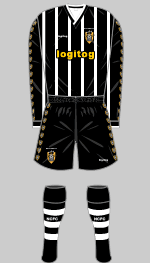
Sept 2001-2002 a f
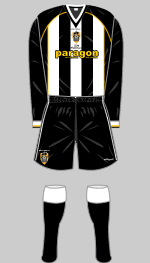
2002-2003 a f
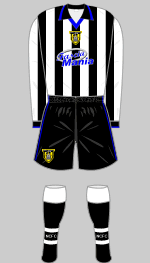
2003-2004 a f i
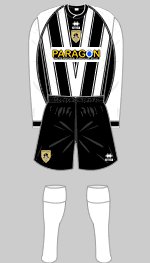
2004-2005 b f i
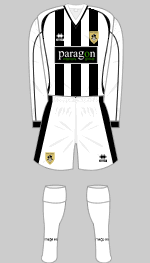
2005-2006 b f
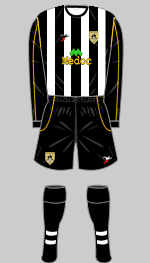
2006-2007 a f
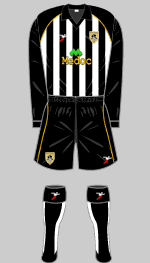
2007-2008 b f
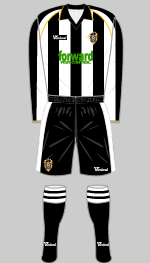
2008-2009 b
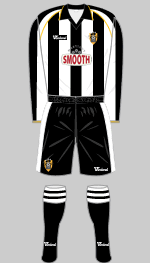
2008-2009 b
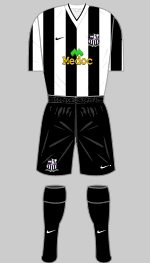
2009-2010 b
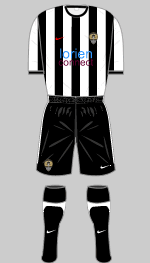
2010-2011 b
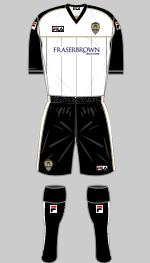
2011-2012 b
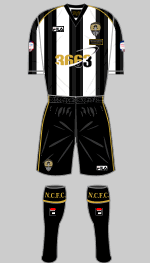
2012-2013 b
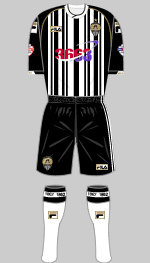
2013-2014 b
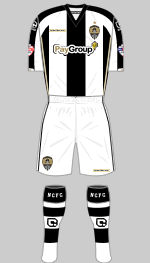
2014-2015 b
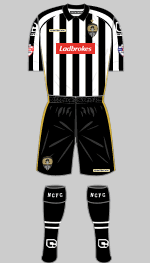
2015-2016 b
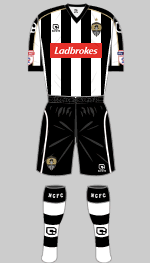
2016-2017 b
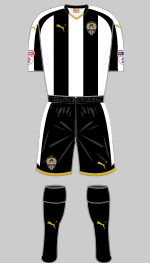

2019-2020 b
2020-2021 b
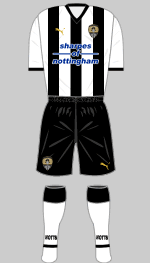
2021-2022 b
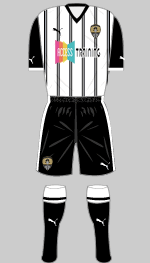
2022-2023 b
Background
 With a heritage that dates
back to 1862, Notts County was the oldest League club still in existence,
predating rivals Nottingham Forest by three years, until they lost their league status in 2019. Although there are
several older clubs still around, including Sheffield FC, Hallam FC and
Cray Wanderers, none of these has ever competed in the Football League.
The club was formally constituted in 1864 but its origins go back to 1860 and an informal structure was adopted in 1862. In those early days there were
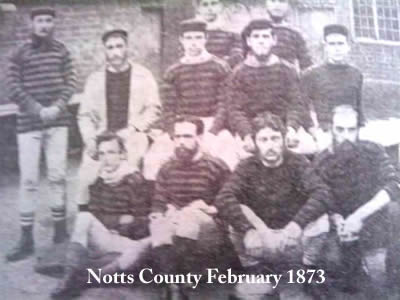
no team strips - games were played by scratch teams within the club. One of the first tasks taken on by the committee in 1864 was to "obtain caps and uniforms to distinguish themselves from other clubs." Darrin Foss has discovered a report in the Nottingham Express on their first inter-club match against Sheffield FC on January 2 1865 that states the new uniforms were not yet ready so the Notts players wore blue caps. Since the Notts team also played cricket for local clubs (and the county) it is assumed they wore their whites in this match.
With a heritage that dates
back to 1862, Notts County was the oldest League club still in existence,
predating rivals Nottingham Forest by three years, until they lost their league status in 2019. Although there are
several older clubs still around, including Sheffield FC, Hallam FC and
Cray Wanderers, none of these has ever competed in the Football League.
The club was formally constituted in 1864 but its origins go back to 1860 and an informal structure was adopted in 1862. In those early days there were
no team strips - games were played by scratch teams within the club. One of the first tasks taken on by the committee in 1864 was to "obtain caps and uniforms to distinguish themselves from other clubs." Darrin Foss has discovered a report in the Nottingham Express on their first inter-club match against Sheffield FC on January 2 1865 that states the new uniforms were not yet ready so the Notts players wore blue caps. Since the Notts team also played cricket for local clubs (and the county) it is assumed they wore their whites in this match.
 The first records of players wearing a uniform
kit are from February 1867, when the club turned out against Sheffield FC in "orange and black stripes", according to a match report in The Nottinghamshire Guardian. When County first entered the English FA Cup in 1877-78 they
were wearing plain shirts emblazoned with the coat of arms of the City of Nottingham against a black field. It is possible that these were in fact the badge of the Nottinghamshire FA awarded to players who had represented the county in a match with Queen's Park in November. It was common for players chosen to play for their county or indeed their country to sew the badges awarded on those occasions onto their club tops.
The first records of players wearing a uniform
kit are from February 1867, when the club turned out against Sheffield FC in "orange and black stripes", according to a match report in The Nottinghamshire Guardian. When County first entered the English FA Cup in 1877-78 they
were wearing plain shirts emblazoned with the coat of arms of the City of Nottingham against a black field. It is possible that these were in fact the badge of the Nottinghamshire FA awarded to players who had represented the county in a match with Queen's Park in November. It was common for players chosen to play for their county or indeed their country to sew the badges awarded on those occasions onto their club tops.
According to the Nottinghamshire Guardian, the team wore "orange and black" in December 1879.
By 1880 the club was one of the most respected in the north midlands and, now in chocolate and blue, County were naturally invited to become founder members of the Football League in 1888. A report in the Blackburn Standard and Weekly Express of 17 December 1888 researched by Darrin Foss states "...the Notts County men came on the ground...wearing their new colours, viz; white jerseys and chocolate pants." This outfit was also worn against Aston Villa and must have been a change kit as Foss has found numerous references to the team playing in chocolate and blue until 1890. The royal blue shirts worn at Preston North End (1 March 1890) seem to be an anomoly as the team were still referred to as "the chocolate and blues" in the press during that season. Perhaps their kit hamper was misdirected en route and they had to borrow a set of kit on arrival.
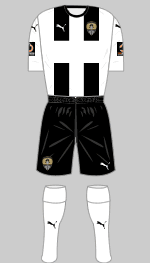
The first records of the club appearing in their now traditional black and white striped shirts date from 1890, a year before the club made their first FA Cup final appearance. The new colours were inspired by the black and white racing colours of the Duke of Portland and were introduced because of frequent colour clashes. The broad stripes were very unusual and for many years were County's signature outfit.
In 1894 County won the FA Cup for the first and so far, only time. They had been relegated in 1893 and so became the first Second Division club to win the cup. In 1897, Notts County won the Second Division championship and remained in the top division until 1913 when they were relegated but immediately returned to the top flight in 1914 as Division Two champions for the second time.
In 1903, Italian side Juventus decided to replace
their pink jerseys and asked John Savage, an Englishman in their side,
if he could help. Savage wrote to a friend in Nottingham, who happened
to be a County supporter and arranged the delivery of a set of black and
white striped shirts. This remains Juve's traditional kit to this day.
Fortune deserted County when the League resumed after the Great War with relegation in 1920. Two years later, wearing white shirts with a black chevron, County won the Second Division title for the third time. A magpie appeared on these shirts for the first time, one of the earliest examples of a club emblem being used as a crest rather than the more conventional town coat of arms. (Spurs were probably the first, adopting the cockerel on their shirts in 1921.)
County stayed in the First Division for only three years before relegation took them back to the Second Division. After spending the 1930-31 season in Division Three (North), County struggled in Division Two. In July 1934 it was announced that the team would revert to chocolate and blue halves but the season was a disaster at the end of which County were relegated again. In May 1935 the club announced that team would revert to their familiar black and white stripes the following season.
 During war time competition, County wore hooped
jerseys but when regular league fixtures were re-instated in 1946, they
adopted plain white shirts and signed England international Tommy Lawton,
regularly attracting 30-40,000 spectators to watch Third Division games.
From 1948, the players' shirts carried a large black shield with the club's initial embroidered
During war time competition, County wore hooped
jerseys but when regular league fixtures were re-instated in 1946, they
adopted plain white shirts and signed England international Tommy Lawton,
regularly attracting 30-40,000 spectators to watch Third Division games.
From 1948, the players' shirts carried a large black shield with the club's initial embroidered  on to it. In 1950 a new badge, featuring a Magpie was adopted but as results went
badly, the players removed it. (A lone magpie is considered a bad omen and footballers are a superstitious lot.)vIn 1950 County won promotion back to Division
Two but inevitably this fine side broke up.
on to it. In 1950 a new badge, featuring a Magpie was adopted but as results went
badly, the players removed it. (A lone magpie is considered a bad omen and footballers are a superstitious lot.)vIn 1950 County won promotion back to Division
Two but inevitably this fine side broke up.
Two successive relegations took County into Division Four in 1959 but they bounced back immediately to return to the Third Division in 1960.
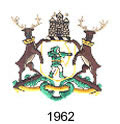 For the 1962-63 season, the club switched back to plain white shirts and black shorts with the club's official crest. This was based on the Nottingham coat of arms but with the figure of an archer, a reference to Nottinghamshire's most famous semi-legendary son, placed in the centre. This badge reappeared in 1964, by which time the team were playing in stripes once more and continued in use until the end of the decade.
In 1964 the "Maggies" dropped back into Division Four but promotion in 1971 and again in 1973 took the club back to Division Two. In the last game of the 1974-75 season, against Manchester United, the club's brand new magpie crest was worn for the first time. This did not, however, appear on the team's shirts on a regular basis until the 1977-78 season.
Few commentators predicted promotion to Division
One, but in 1981 manager Jimmy Sirrell guided the team into the top  flight. Two seasons of
struggle in the First Division were followed by successive relegations that
took County back into Division Three in 1985.
flight. Two seasons of
struggle in the First Division were followed by successive relegations that
took County back into Division Three in 1985.
For the 1986-87 season, the club crest was redesigned and now featured two magpies perched upon a football.
 In 1987 local businessman
Derek Pavis took control and under his regime the club returned to Division
One after successive promotions from the Third Division only to drop immediately
back into Division Two.
In 1987 local businessman
Derek Pavis took control and under his regime the club returned to Division
One after successive promotions from the Third Division only to drop immediately
back into Division Two.
The year of County's formation, stripes and the legend "Notts County FC" were added to  the crest in 1994 which received a further update three years later with the addition of an amber shield, a reminder of the clubs earliest colours.
By 1997 "The Maggies" were in the bottom division (now called Nationwide Division Three) but with Sam Allardyce in charge, County stormed to the championship to return to Nationwide Division Two in 1998.
When County's 140th anniversary arrived in 2002-03 celebrations were muted as the club fell went into financial administration and were relegated at the end of the end of the season. After 18 months in administration, the world's oldest club survived thanks to the intervention of the "Blenheim Consortium."
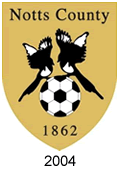 The 2004-05 season was marked by another revision of the club crest, which was simplified and rendered on a metallic gold shield.
In August 2006, the club had to withdraw 2,000 replica kits when the manufacturers supplied them with a white stripe down the centre of the shirt, the authentic team kit having a black stripe.
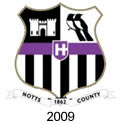 In July 2009 the club was taken over by two former Jersey financiers, Russell King and Nathan Willett, who claimed to represent a wealthy consortium who would provide substantial investment to take Notts County to the Premier League in five years. Without any consultation with supporters, the new owners introduced a new crest.
Former England coach, Sven Goran Eriksson was persuaded to join the club as Director of Football and Kasper Schmeichel and Sol Campbell were signed from Premier League teams Manchester City and Portsmouth. Campbell walked out after just one match in unexplained circumstances. As the season wore on the promised finance failed to materialise and media investigations failed to discover the identity of the club's new backers. County plunged deep into debt and faced a winding-up order taken out by HM Revenue & Customs over £500,000 in unpaid PAYE and it became apparent that the club had been subject to a massive confidence trick. In December County's chairman, Peter Trembling bought Notts County for a nominal fee from 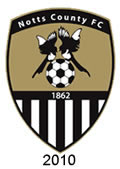 Munto Finance, the vehicle used by King and Willett to buy it months before and on 10 February 2010, Trembling sold the club on to a new consortium headed by Ray Trew. Within 24 hours Eriksson walked out and in an exclusive interview with The Guardian, revealed the full story of the previous chaotic seven months. Despite these tribulations, County won the League Two championship and were promoted to the third tier at the end of the season.
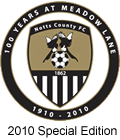 In April 2010, after consultations with supporters, a new crest was designed that incorporated earlier design features to be introduced from the start of the 2010-11 season. A special crest appeared on the one-off white strip commissioned to celebrate a century of County playing at Meadow Lane.
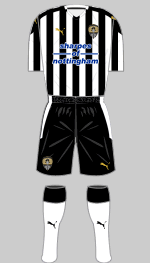
After an unpopular return to predominantly white shirts for 2011-12, the club celebrated its 150th anniversary with a specially commissioned kit that re-created the broad stripes that were for so long the team's signature strip as well as a fine re-creation of their original outfit used as an away strip.
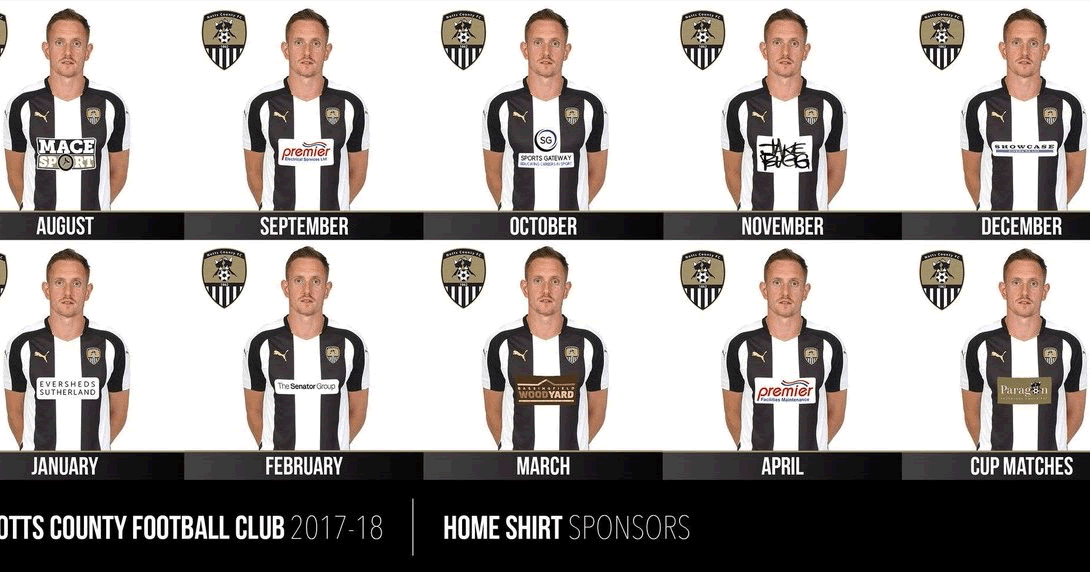
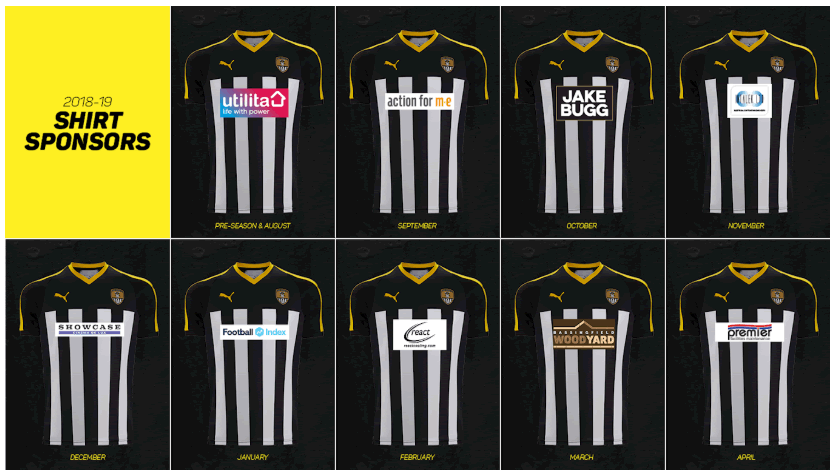
Instead of having a single shirt sponsor for 2017-18, the club announced that there would be a different sponsor every month while old friends, Paragon, would sponsor cup games. Supporters buying replica shirts could choose any one of the ten sponsors or leave their shirts unadorned. This approach was continued into the following season.
Under the ownership of Alan Hardy, who bought the club in 2017, Notts County began to unravel in 2018-19. Anchored at the bottom of League Two, Hardy put the club up for sale in January after his own company, Paragon, went into administration. They survived a winding up order taken out by HMRC over unpaid taxes but could not recover their form on the field and were relegated to the National League in 23rd place. In July 2019 a Danish consortium headed by Alexander and Christoffer Reedtz bought the club for an undisclosed sum (Hardy had asked for £7m) and paid off their debts. The team reached the play-off final that season but lost to Harrogate Town.
Sources
Crests are the property of Notts County FC.