
Nottingham
Forest
Formed 1865
Elected to Division One 1892
Kit History
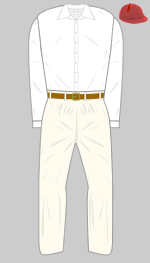
1865-1869 f x
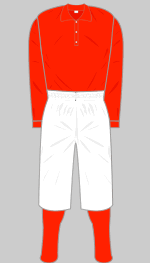
1869 f x
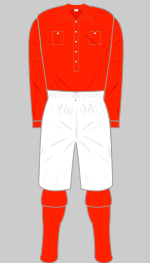
1881-1885 h s
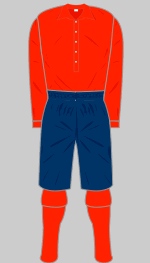
1891-1899 i u
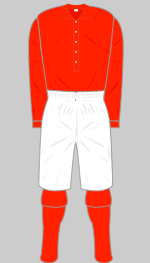
1899-1902 i s
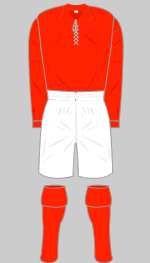
1902-1903 s
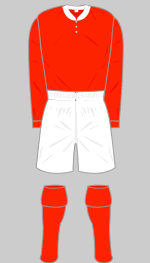
1904-1905 s
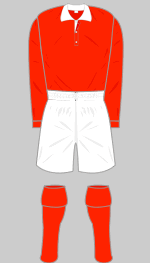
1905-1906 a o s
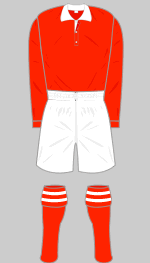
1906-1907 a
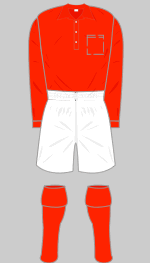
1907-1908 s
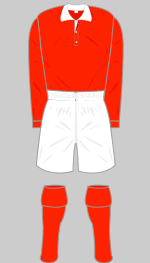
1908-1911 s
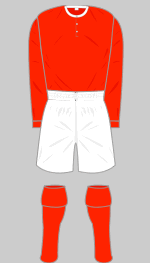
1911-1920 h s
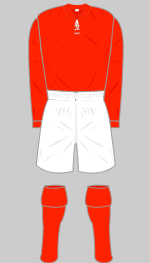
1920-1924 h s w
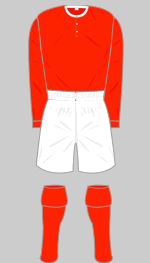
1924-1926 o s
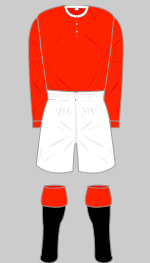
1926-1931 s v
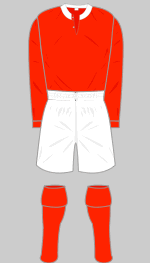
1932-1933 s
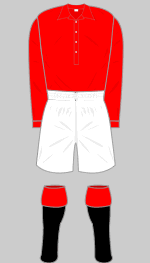
1934-1935 s
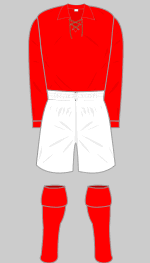
1935-1938 a q s
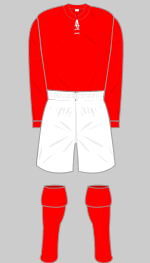
1938-1939 a
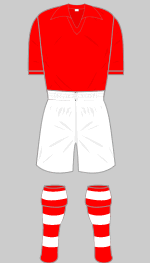
1945-1946 s
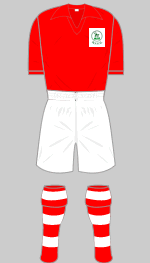
1946-1947 s

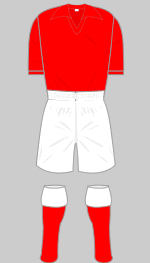
1947-1948 v
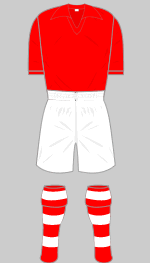
1948-1950 a s
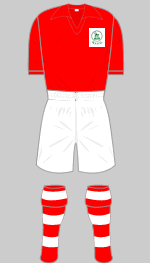
1950-1951 s
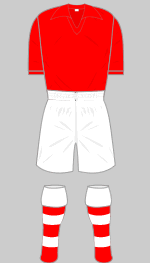
1951-1952 s
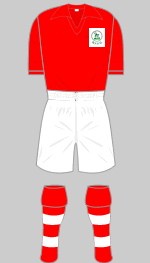
1952-1953 s
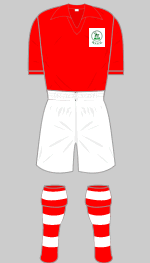
1953-1954 s
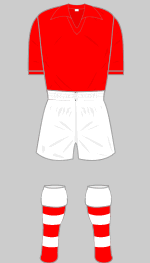
1954-1957 c g s
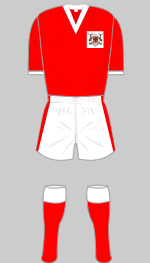
1957-1963 a g s v
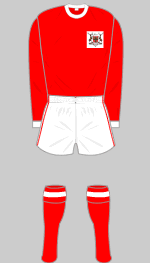
1963-1966 a s
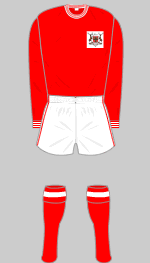
1966-1970 a g s
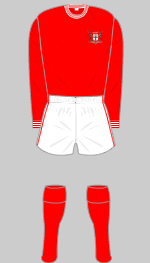
1970-1971 j
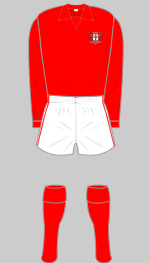
Aug-Sept 1971 a
Oct-Nov 1971 y
Dec 71-May 72 a
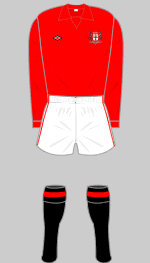
1973-Feb 1974? d n
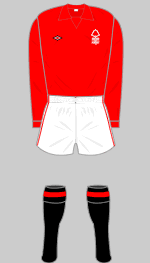
March 1974-1975 t
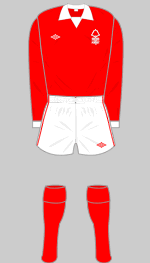
1975 late-1976 n
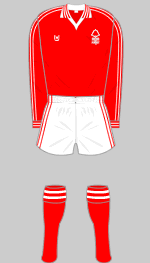
1976-1977 a t
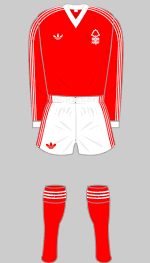
1977-1978 a
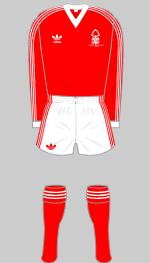
1978-1979 t
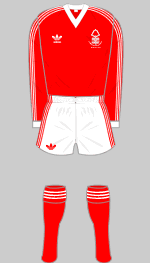
1979-1980 t
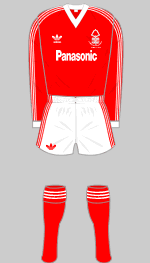
1980-1981 l m t
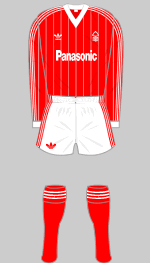
1981-1982 e l m t

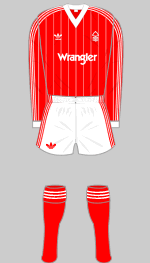
1982-1984 a l m t

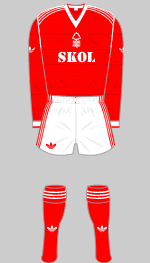
1984-1986 e
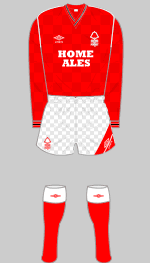
1986-1987 e m
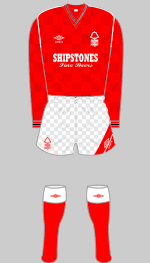
1987-1988 l m
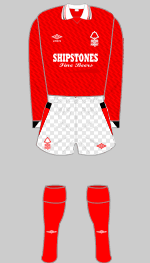
1988-1990 e
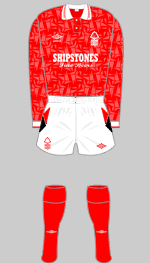
1990-1992 e
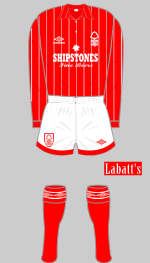
1992-1994 e k p
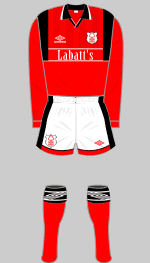
1994-1996 e
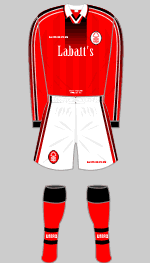
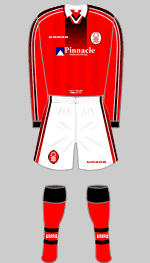
1997-1998 l m
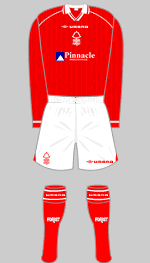
1998-2000 e m
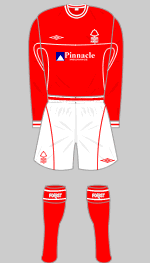
2000-2002 e l m
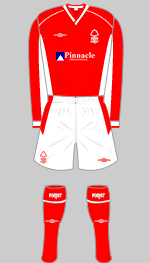
2002-2003 e l m
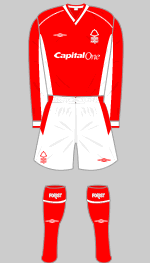
2003-2004 e l m
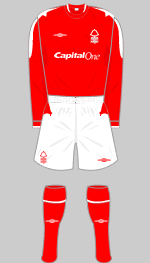
2004-2006 f
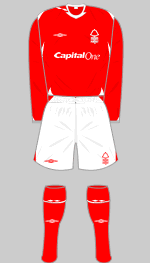
2006-2008 f m
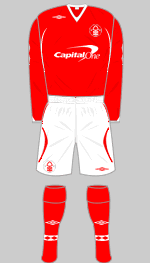
2008-2009 f
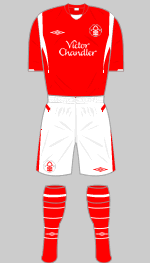
2009-2010 f
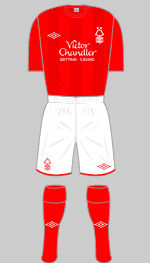
2010-2011 f
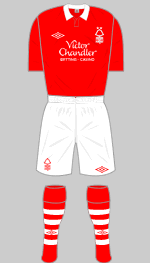
2011-2012 f
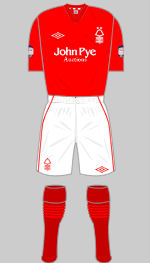
2012-2013 f
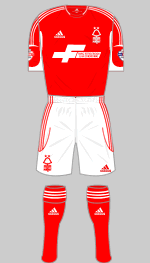
2013-2014 f
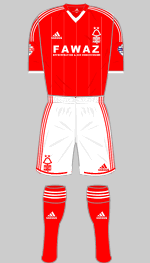
2014-2015 f
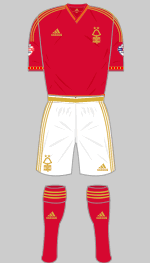
2015-2016 f
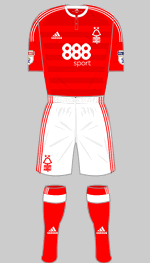
2016-2017 f
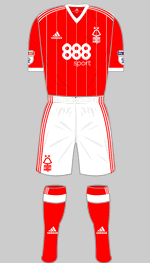
2017-2018 f
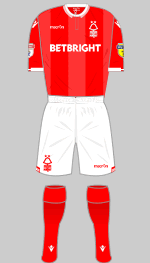
2018-2019 f
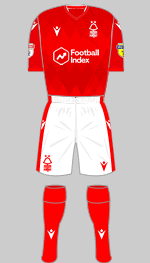
2019-2020 f
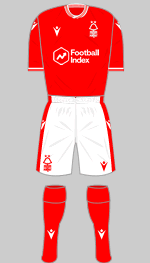
2020-2021 f
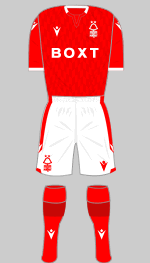
2021-2022 f
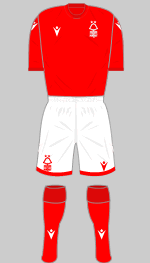
Aug-Dec 2022 f
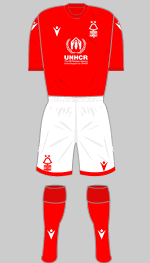
Dec 22-May 23 f

2023-2024 * f
Background
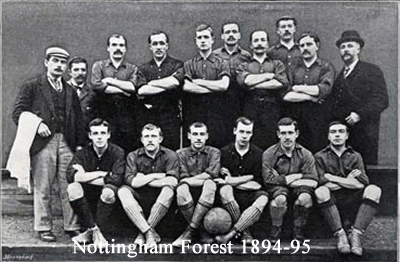 Nottingham Forest emerged from
a group of "shinny" players (a form of field hockey) who resolved
at a meeting in the Clinton Arms to adopt association football. Their
first game was played against Notts County (formed three years earlier)
in March 1866. In those very early days, teams did not play in kits as
we understand it: players would turn out in whatever they had to hand
and teams would be distinguished by wearing distinctive scarves and/or
caps. Forest ordered a dozen red caps "with tassels." The committee
resolved that the clubs official colours would be "Garibaldi Red"
after the Italian patriot whose party was known as the "Redshirts."
Forest are credited with a number of innovations: they were the first
team to adopt shin guards (1874) and to provide the referee with a whistle
(1878). The club are also believed to have invented the classic 2-3-5
formation that persisted into the 1960s.
Nottingham Forest emerged from
a group of "shinny" players (a form of field hockey) who resolved
at a meeting in the Clinton Arms to adopt association football. Their
first game was played against Notts County (formed three years earlier)
in March 1866. In those very early days, teams did not play in kits as
we understand it: players would turn out in whatever they had to hand
and teams would be distinguished by wearing distinctive scarves and/or
caps. Forest ordered a dozen red caps "with tassels." The committee
resolved that the clubs official colours would be "Garibaldi Red"
after the Italian patriot whose party was known as the "Redshirts."
Forest are credited with a number of innovations: they were the first
team to adopt shin guards (1874) and to provide the referee with a whistle
(1878). The club are also believed to have invented the classic 2-3-5
formation that persisted into the 1960s.
The team's unusual name derives from their original home, the Forest Recreation Ground (which itself was named for Sherwood Forest).
Newspaper reports researched by Darren Foss consistently describe Forest's shirts as "bright red" although photographs suggest they were very dark. HFK now believes this is because the photographic emulsions used at the time were highly sensitive to red light causing overexposure.
Forest refused an invitation to join the Football League in 1888 fearing that the FA would punish those that joined. Their fears proved groundless and a year later, Forest joined the rival Football Alliance instead. In 1892, the Alliance was incorporated into the Football League as Division Two. Forest, having won the Alliance championship were elected directly into Division One. In 1898 Forest won the English FA Cup, equalling the achievement of arch rivals Notts County who had won it four years earlier. Relegated in 1906, Forest immediately won promotion as champions of Division Two only to drop back down in 1911. In 1914 the club finished bottom and were forced to seek re-election in a season that saw Notts County promoted as Division Two champions. In 1915 the club almost went out of existence but they survived when the League was suspended and the club was relieved of the burden of paying players' wages.
In 1922 Forest won the Second Division championship
but struggled to survive in the First Division, finally being relegated
in 1925. By the late 1930s, Forest were struggling to stave off relegation
to the regional 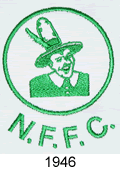 leagues. Once again facing a financial crisis, the club
was kept afloat by committee members digging into their own pockets.
leagues. Once again facing a financial crisis, the club
was kept afloat by committee members digging into their own pockets.
When the League resumed after World War Two, Forest
struggled and in 1949 they were relegated to Division Three (North). A bizarre crest appeared on the team shirts which appears to be of a crazed Robin Hood figure wearing an exaggerated cowboy hat and a puritan collar. This was mercifully 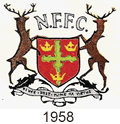 retired after a few seasons.
In 1951 Forest won promotion back to Division Two followed by a return to the First Division in 1957. In 1958, along with a modern "continental style" strip, a version of the Nottingham Coat of Arms was worn with the club's initials replacing the castle that surmounts the original. The centrepiece is a green wooden cross (representing Sherwood Forest) with three golden crowns (representing loyalty to the Crown) while the supporters are royal stags.
At the end of the 1958-59 season, Forest beat Luton Town in the
FA Cup final to win their first major trophy of the twentieth century.
The 1966-67 season brought the club tantalisingly close to the 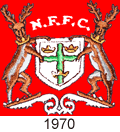 double,
finishing runners-up in Division One and losing in the semi-finals of
the FA Cup.
double,
finishing runners-up in Division One and losing in the semi-finals of
the FA Cup.
The club crest was slightly modified in 1970 and was now embroidered directly onto the shirt rather than appearing out of a white patch, a style now considered old fashioned. In 1972, Forest were relegated back into Division Two and
seemed to be 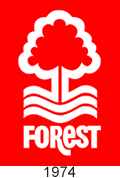 destined to continue to their career as chronic underachievers.
Around March 1974 the old club crest was replaced by a modern design above the word "Forest." This iconic design became associated with the transformation of the club under Brian Clough, who arrived on 6 January 1975.
With a side built around players from his championship winning Derby County team and bolstered by his old colleague, Peter Taylor, Clough built a series of sides that transformed Forest into Europe's premier club. Bearing in mind their meagre record to date, Clough's achievements are remarkable: Division One Champions in 1978, League Cup Winners in 1978, 1979, 1989, 1990; the only domestic trophy Clough failed to win was the FA Cup. In Europe, his sides were superlative and Nottingham Forest were crowned European champions in 1979 and 1980. By 1993 Clough's regime was running out of steam. With relegation inevitable, an FA investigation into illicit transfer "bungs" pending and allegations about his private live reverberating in the tabloid press, Clough retired amid tearful scenes.
Clough's place was taken by ex-player, Frank Clark,
who took Forest back into the Premier Division in 1994 and third place
the year after. In 1997, Forest were relegated, were Nationwide Division
One champions the 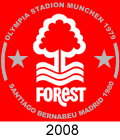 following season only to be relegated again
  in 1999.
On 20 September 2004, Clough died and the club that he had transformed
into European champions were relegated to League One, the equivalent of
the old Third Division. The club languished here until 2008 when they managed to win automatic promotion to the second level.
in 1999.
On 20 September 2004, Clough died and the club that he had transformed
into European champions were relegated to League One, the equivalent of
the old Third Division. The club languished here until 2008 when they managed to win automatic promotion to the second level.
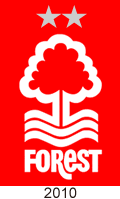
To mark the thirtieth anniversary of their European Cup triumphs, Forest's crest was enhanced with silver embroidery for the 2008-09 and 2009-10 seasons. The two silver stars were retained when the traditional version reappeared for the 2010-11 season.
2015-16 marked Forest's 150th anniversary and to celebrate, Adidas provided a strip in a deeper shade of red than usual with metallic gold trim without sponsorship.
In May 2017 Evangelos Marinakis completed the takeover of Forest from the Al-Hasawi family who had bought the club in 2012. Despite ambitious plans for a return to European football, the club continued to languish in the Championship. Over the summer of 2021 several key appointments were made to senior management and in September Steve Cooper was appointed head coach. He took the team from last place to seventh by Christmas, fourth place at the end of the season and the play-offs. After beating Sheffield United on penalties, Forest defeated Huddersfield Town 1-0 to return to the Premier League for the first time in 23 years.
Sources
- (*) Grpahic by Daniel Stoker
- (a) empics
- (b) Club Colours (Bob Bickerton)
- (c) Leyton Orient FC (Images of Sport - Neilson Kaufman)
- (d) Bristol Rovers FC (Images of Sport - Mike Jay)
- (e) Sporting Heroes
- (f) Nottingham Forest Official Website
- (g) Football Focus
- (h) Picture the Past
- (i) Association of Football Statisticians - provided by Pete Wyatt
- (j) Pete's Picture Palace
- (k) Classic Football Shirts
- (l) David King
- (m) True Colours Vol 2 (John Devlin 2006)
- (n) Alick Milne
- (o) Peter Moor
- (p) Jamie Scarrott
- (q) My photo library
- (r) The Lord Price Collection
- (s) Keith Ellis (HFK Research Associate)
- (t) Christopher Worrall
- (u) Brian Webb
- (v) Simon Monks
- (w) Football & the First World War
- (x) CW Alcock's Football Annuals 1868-1891 researched by Robin Horton
- (y) Tony Sealey
Crests are the property of Nottingham Forest FC.