


Norwich
City
Formed
1902
Wound up December 1917. Re-formed February 1919.
Founder member of Division Three 1920
Kit History
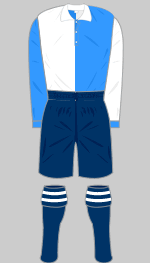
1903-1904 b u
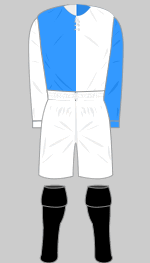
1905-1907 a p u
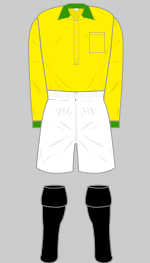
1907-1908 (1) a p
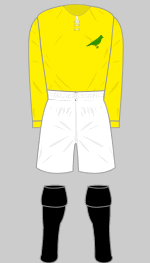
1907-1908 (2) p
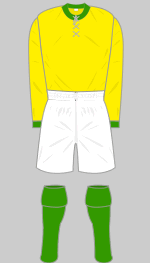
1908-1909 a p
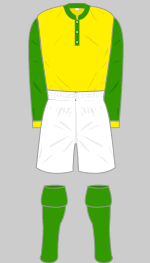
1909-1910 b v
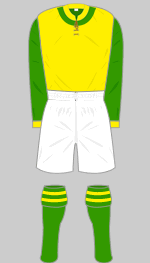
1910-1911 m o p
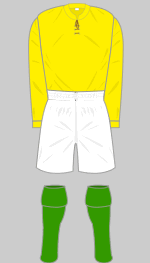
1911-1913 a p
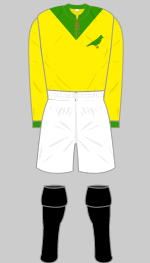
1913-1914 m p
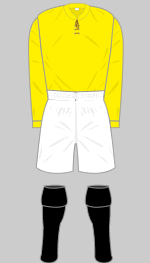
1914-1917 x
Club wound up December 1917
Re-launched February 1919
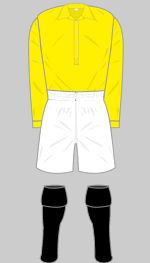
1918-1919 u
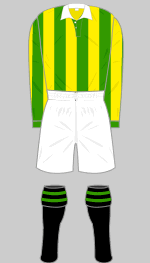
1919-1920 p u
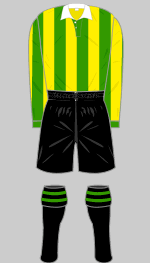
1920-1923 a p u
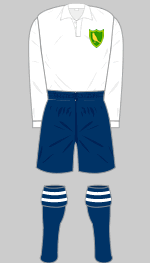
1923-1924 u
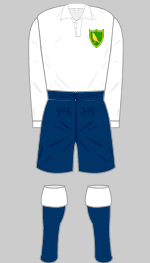
1924-1925 b p t u
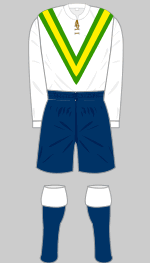
1925-1927 b s u y
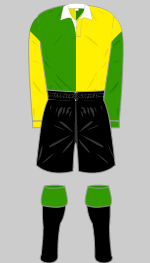
1927-1933 o u
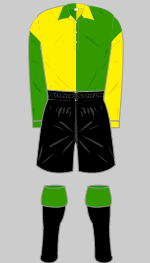
1933-1936 a u
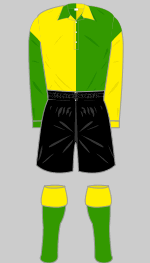
1936-1947 a o u
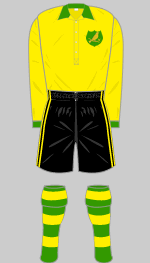
1947-1949 a u
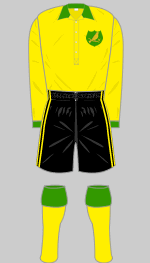
1949-1950 o u
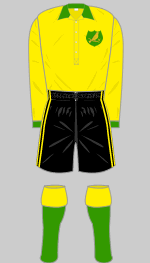
1951-1952 a o u
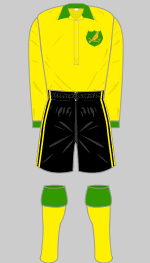
1952-1954 a
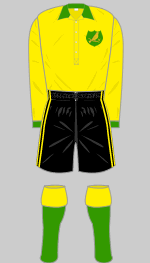
1954-1957 a o
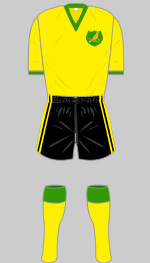
1957-Dec 1958 o u
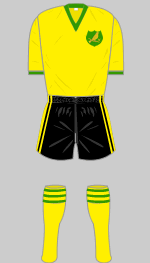
Jan 59-1960 a u
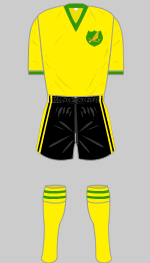
1960-1962 a f u
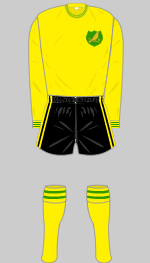
1962-Oct 65 a f u
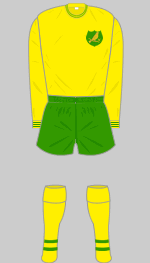
Oct 65-Oct 66 a l u
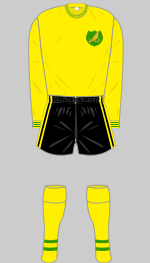
Nov 66-1967 a f u
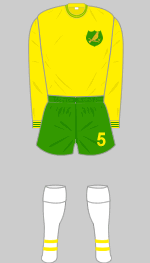
1967-1969 a f
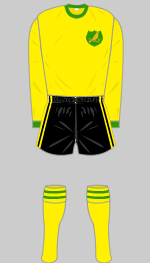
1969-1971 f u
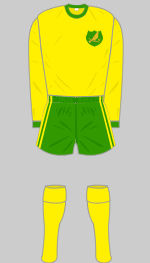
1971-1972 a u
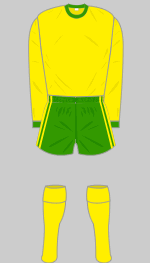
Aug-Sept 1972 u
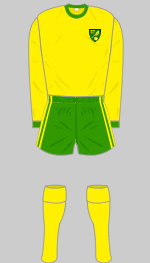
Sept 72-1974 a p k u
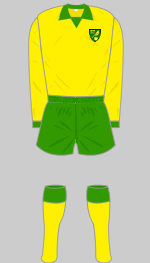
1974-1975 k
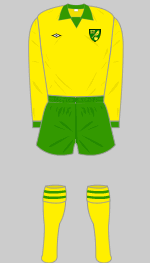
1975-1976 a k
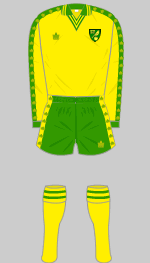
1976-1977 a k

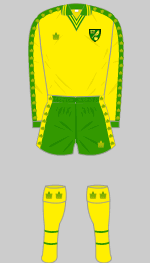
1977-1979 a k l
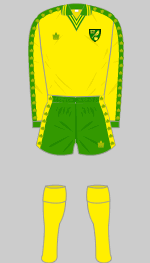
1979-1981 a
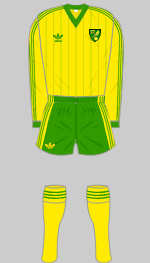
1981-1982 a j
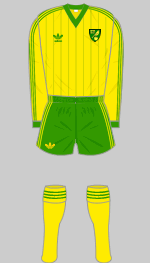
1982-1983 r
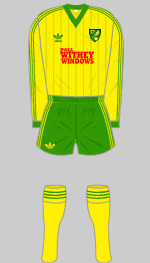
1983-1984 a
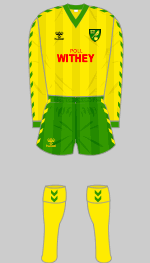
1984-1985 a g j
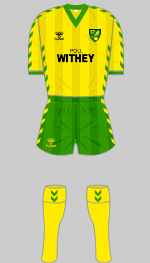
1985 League Cup w
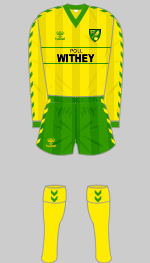
1985-1986 g j
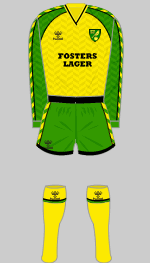
1986-1987 a
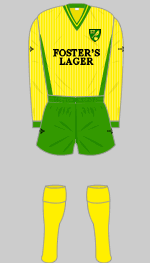
1987-1989 a i j
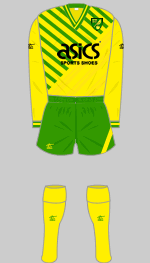
1989-Jan 90 a c h i j
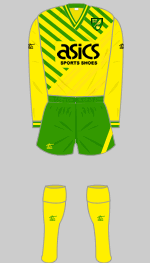
Feb 90-1992 a c h i j
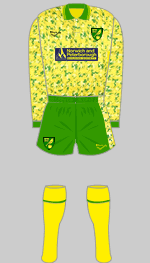
1992-1994 a h
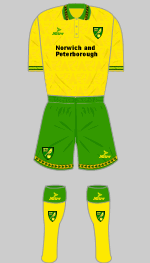
1994-1996 c j
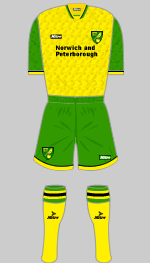
1996-1997 c j
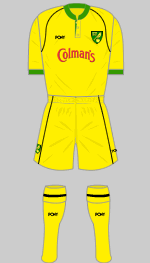
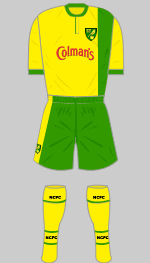
1999-2001 c j q
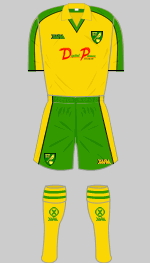
2001-2003 c h
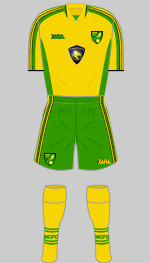
2003-2005 d h
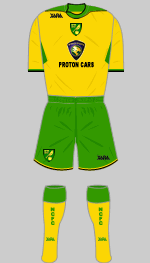
2005-2006 d
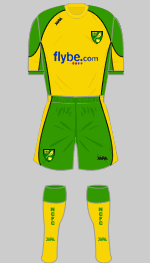
2006-2008 d
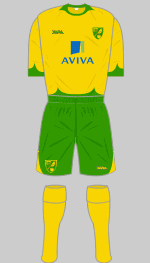
2008-2010 d
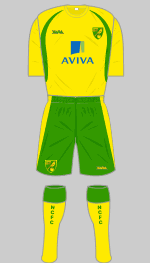
2010-2011 d
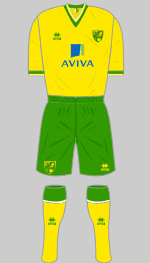
2011-2012 d
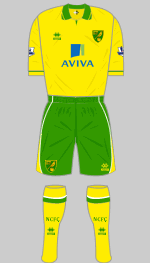
2012-2013 d
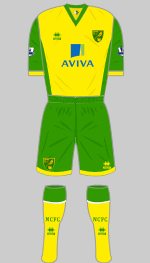
2013-2014 d
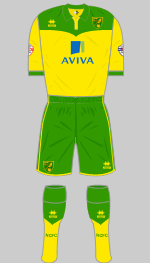
2014-2015 d
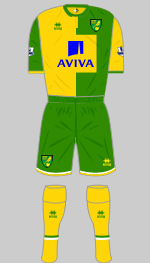
2015-2016 d
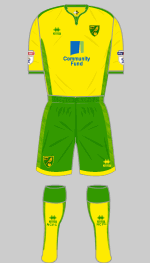
2016-2017 d
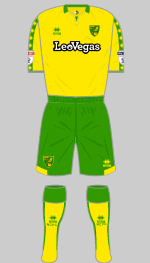
2017-2018 d
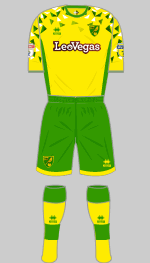
2018-2019 d
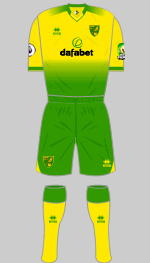
2019-2020 d
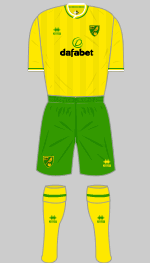
2020-2021 d
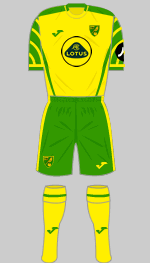
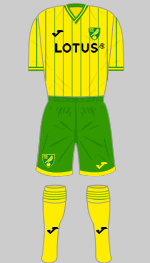
2022-2023 d
Background
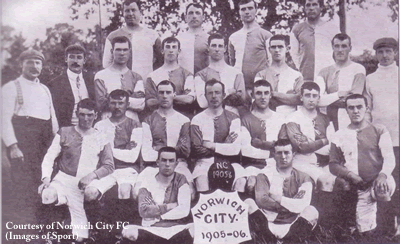 Although
association football had been played in Norfolk since 1881, the area was
without a senior team until June 1902, when two players from the amateur
CEYMS FC arranged a meeting at which Norwich City FC was formed. They
were admitted to the Norfolk & Suffolk League and played their first
competitive match in September 1902.
Although
association football had been played in Norfolk since 1881, the area was
without a senior team until June 1902, when two players from the amateur
CEYMS FC arranged a meeting at which Norwich City FC was formed. They
were admitted to the Norfolk & Suffolk League and played their first
competitive match in September 1902.
According to supporter Barry Gayton, his grandfather Frederick Gayton walked to Lancashire to pursue his trade as a cobbler in the late years of the 19th century, supplementing his income by playing for Blackburn Rovers. A little while later he returned home and became involved with the fledgling Norwich City FC. He persuaded some of his Blackburn team mates to join him and as players provided their own kit at the time they naturally brought their blue and white Rovers' jerseys with them. These were adopted as the club's first official colours.
In 1904 an FA Commission suspended the club's officials for breaching the strict amateur regulations of the period by paying for gym facilities, advertising for players, supplying their kit and incurring "excessive traveling expenses." A public meeting was called and on 3 March 1905, Norwich City officially became a professional club. Within weeks, they were admitted to the Southern League.
By 1907 the club, originally nicknamed "The Citizens," was being widely referred to as "The Canaries," the breeding of these song-birds being an important local concern. The club decided to drop their blue and white strip in favour of "canary yellow and green."
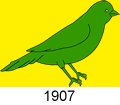 Photographs from the 1907-08 season indicate that at some stage the team's plain yellow shirts were replaced with lace-up jerseys that featured a canary embroidered onto the left breast. It was very unusual for club teams to wear a crest of any kind at this time. The canary reappeared in the 1913-14 season.
In 1908 the club built a new stadium in a disused chalk pit and christened it "The Nest." This ground had notoriously steep terraces and at one end, players whose momentum carried them over the goal line risked crashing into a concrete wall rising between 10 and 20 feet to where the spectators stood.
Norwich's career in the Southern League was without distinction and financial problems began to mount. In December 1917, with professional football suspended for the duration of the Great War, the club went into voluntary liquidation and 11 months later, Norwich City was formally wound up. Neverthless, the team continued to play fixtures against sides from the services and local clubs, including fundraisers for the Hospital Cup in 1918 and 1919.
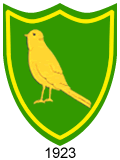 On 15th February 1919, sufficient capital was raised
to re-form the club and City rejoined the Southern League, becoming founder
members of Division Three the following season along with the rest of
the Southern League Division One clubs, when they adopted striped shirts. The 1920s brought little to celebrate,
despite a temporary change to white shirts, adorned once again with a canary, now appearing out of a shield in green and yellow.
On 15th February 1919, sufficient capital was raised
to re-form the club and City rejoined the Southern League, becoming founder
members of Division Three the following season along with the rest of
the Southern League Division One clubs, when they adopted striped shirts. The 1920s brought little to celebrate,
despite a temporary change to white shirts, adorned once again with a canary, now appearing out of a shield in green and yellow.
In 1927 the team adopted green and yellow halved shirts, which they retained for the next 20 years. Success finally arrived in 1934 when the Canaries won the Third Division (South) championship and moved up to Division Two. By this time the club had out grown The Nest and in September 1935, they moved to a new stadium at Carrow Road. In 1939, the club was relegated on goal average, by 0.048 of a goal.
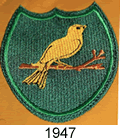 When League football resumed after World War Two,
Norwich played for one season in their old halved shirts before they adopted
all-yellow shirts with green trim. The canary crest was reinstated, now embroidered onto a rounded shield. The quality of the embroidery was variable and the edges of the shield often frayed badly. Another feature of this strip was the distinctive double stripe on the shorts, a detail that remained
until the mid seventies.
When League football resumed after World War Two,
Norwich played for one season in their old halved shirts before they adopted
all-yellow shirts with green trim. The canary crest was reinstated, now embroidered onto a rounded shield. The quality of the embroidery was variable and the edges of the shield often frayed badly. Another feature of this strip was the distinctive double stripe on the shorts, a detail that remained
until the mid seventies.
City had to apply for re-election in 1947 and 1948 but performances then improved and they were regularly pushing for promotion (apart from a disastrous 1957 season that brought another re-election). The following year they improved sufficiently to be placed in Division Three when the regional divisions were scrapped.
In 1958-59 City enjoyed a remarkable FA Cup run that took them to the semi-finals, beating Manchester United, Spurs and Sheffield United on the way. A year later Norwich were promoted to Division Two and in 1962, they won the League Cup, although in those early days, this competition lacked the prestige it has today.
On 16 October 1965, Norwich ran out for the game with Leyton Orient wearing green shorts instead of familiar black. The local press had published several letters from fans suggesting the change and it seems that management decided to go with the idea. Black shorts were reinstated the following October but the new look had proved popular and from 1971, green shorts became standard.
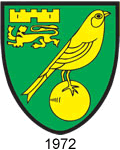 In 1972 The Canaries won the Second Division title
and took their place in the First Division for the first time. To mark this achievement the chairman, Sir Geoffrey Watling organised a competition through the local press. The smart new design, which unl;ike the old one couyld be made copyright, included a lion and castle from the city's coat of arms. It appears this was not ready for the start of the season and City played in plain shirts until 16 September when the badge was worn for the first time.
In 1972 The Canaries won the Second Division title
and took their place in the First Division for the first time. To mark this achievement the chairman, Sir Geoffrey Watling organised a competition through the local press. The smart new design, which unl;ike the old one couyld be made copyright, included a lion and castle from the city's coat of arms. It appears this was not ready for the start of the season and City played in plain shirts until 16 September when the badge was worn for the first time.
City lasted two seasons in the top flight before being relegated but bounced back immediately in 1975. Exactly the same thing occurred in 1981 and 1985 - relegated only to return the following season to the top flight. 1985 also brought a second League Cup win, this time at Wembley, when they beat Sunderland 1-0. Both sides were relegated at the end of the season and Norwich were denied a place in Europe due to the ban on English clubs following the Heysel Stadium disaster in May.
In 1993 the club finished third in the Premiership and qualified for European competition for the first time. In a stirring campaign, City beat Bayern Munchen before being narrowly defeated by Inter-Milan. This proved to be the team's high point and the following year, City struggled and suffered relegation in 1995.
In 1996, with the club struggling to manage its debts, a new board took control that included TV cook Delia Smith, who later took a majority shareholding jointly with her husband. Smith introduced various schemes to bring in revenue including a club restaurant that carried her name. As the club's financial position improved so did performances and in 2004, City won the Nationwide Division One championship to return briefly to the Premier League. Their success proved short lived and they soon returned to the Championship followed, in 2009, by relegation to League One.
Back-to-back promotions then saw Norwich return to the Premier League in 2011, a result described by manager Paul Lambert as, "An absolute miracle." The team were relegated in 2014 but bounced straight back via the play-offs. Since 2015 marked the 80th anniversary of Carrow Road, the club commissioned Errea to produce a halved shirt for the 2015-16 season, inspired by the strip worn for 20 years from 1927. The team 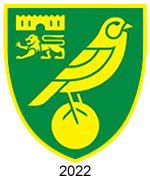 was relegated again at the end of the season.
The 2018-19 season finished with City five points clear at the top of the Championship. However, they were hopelessly out of their depth in the top tier and when the Premier League was suspended in March they were rooted to the bottom of the table although they had a mathematical chance of staying up. Unfortunately they lost every match after the competition resumed and went down only to bounce back immediately. The following season the Canaries won the Championship title but yet again they could not hack it in the Premier League, finishing last and being relegated for the sixth time, a record.
To mark their 120th anniversary in 2022 the club crest was given a make over.
Sources
- (a) Norwich City FC (Images of Sport: G Enderby)
- (b) Canary Citizens: The Official History of Norwich City FC
- (c) Sporting Heroes
- (d) Norwich City Official Website
- (e) Geoff Charles Collection at the National Library of Wales
- (f) Pete's Picture Palace
- (g) Barry Jones
- (h) David King
- (i) Daniel Thompson
- (j) True Colours Vol 2 (John Devlin 2006)
- (k) Alick Milne
- (l) Steve Browne
- (m) Simon Monks
- (n) Ralph Pomeroy
- (o) Keith Ellis
- (p) Norfolk Ancestors - a local history site with a wealth of historic pictures of the team and The Nest now closed.
- (q) Dave Walton
- (r) Mark Etches
- (s) Bury Free Press (24 October 1925) submitted by Richard Essen
- (t) Bury Free Press (2 June 1923) & Star Green'un (1 September 1923) submitted by Richard Essen
- (u) Paul Burnham
- (v) croydoncommon.com
- (w) YouTube
- (x) Canary Citizens: The Official History of Norwich City FC submitted by Nick Hayhoe
- (y) Tony Sealey & Richard Essen
Crests are the property of Norwich City FC.