



Middlesbrough
Formed 1876
Elected to Division Two 1899
Kit History
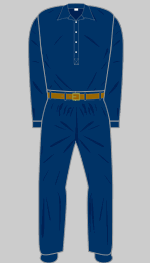
1877-1878 I
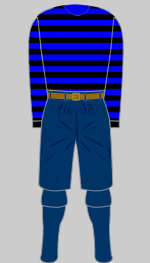
1878-1885 C
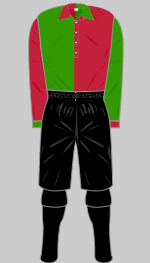
1885-1886 C
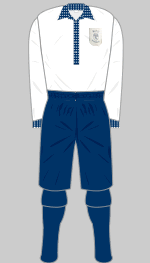
1886-1890 m y z C D K
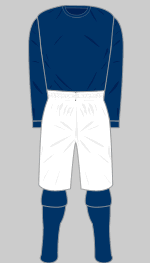
Sept-Dec 1890 m A
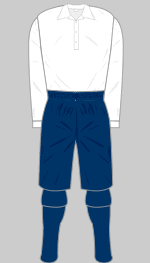
Jan 91-1901 b h k w B L
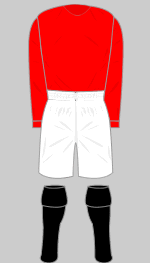
1901-1907 w x
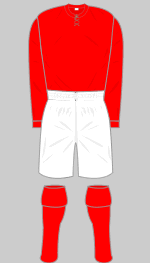
1908 w
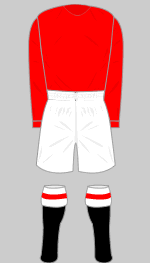
1909-1910 u
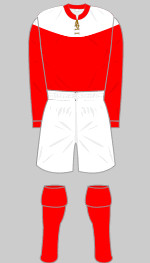
1912-1913
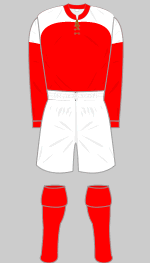
1913-1929 w F
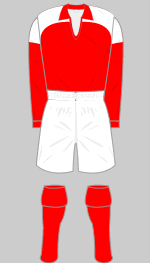
1929-1933 w
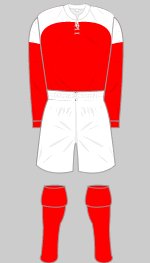
1933-1934 j
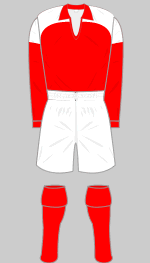
1934-1936 w
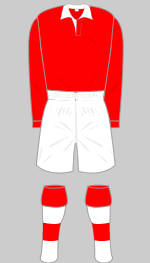
1936-1939 r w

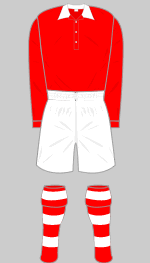
1946-1947 w

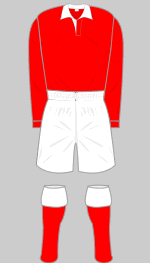
1947-1948 w
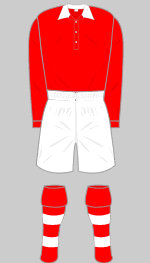
1948-1949 l w
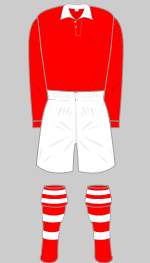
1949-1955 c g l
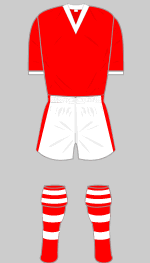
1955-1956 w
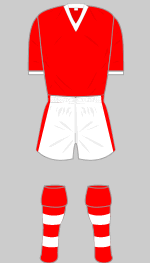
1956-1958 c g l w
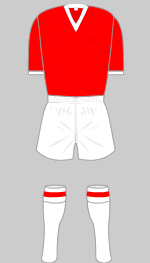
1958-1959 w
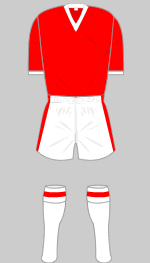
1959-Aug 1960 w
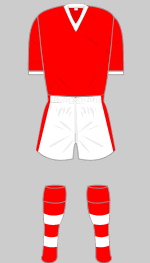
Sept? 1960-1961 b c g
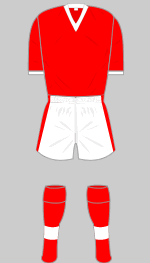
1961-1962 1 w I
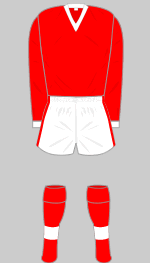
1961-1962 2 I
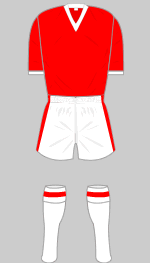
1962-1963 1 d g l
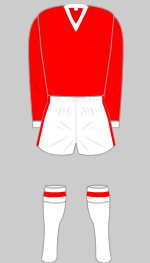
1962-1963 2 I
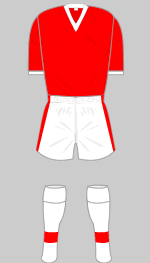
1963-1964 x I
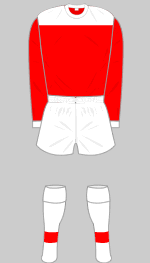
1964-April 66 d r I
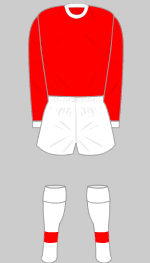
April-May 66 I
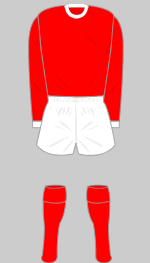
Aug-Dec 1966 I
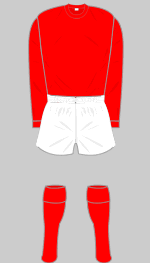
Dec 66-1969 c g w I
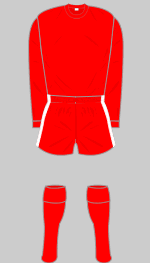
1969-1971 b o
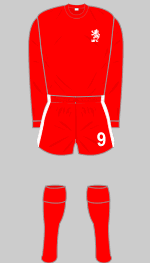
1971-1972 s
1972-1973 1 b g v
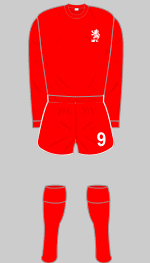
1972-1973 2 v
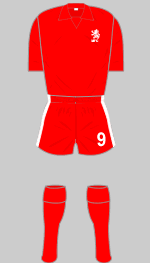
1972-1973 3 v
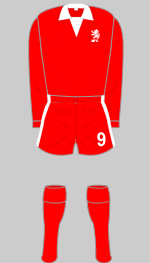
1972-1973 4 v J
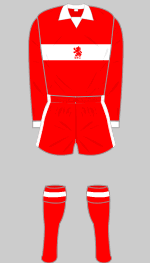
1973-1974 b o
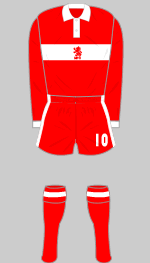
1974-1975 1 G
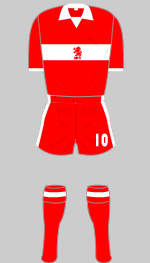
1974-1975 2 G
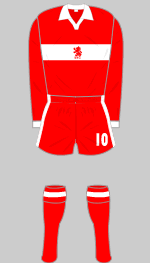
1975-1976 c s G
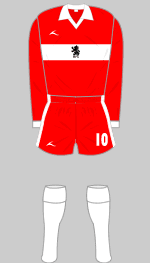
1976-1977 p s
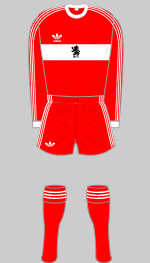
1977-1978 c o
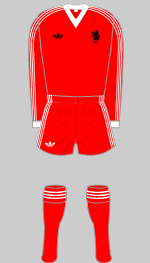
1978-1979 c p
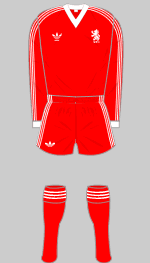
1979-1980 c p
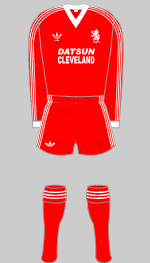
1980-1981 c
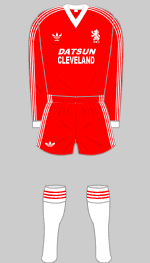
1981-1982 v

1982-1983 i

1983-1984 d H
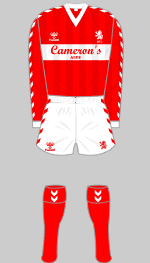
1984-1986 i
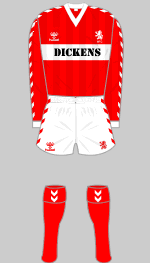
1986-1987 g
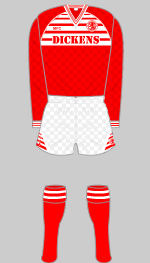
1987-1988 e s
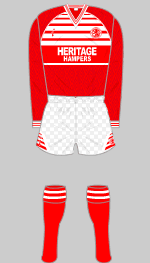
1988-1990 e s
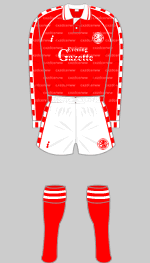
1990-1992 e
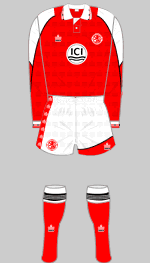
1992-1994 e

1994-1995 i n
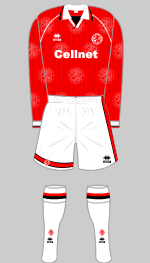
1995-1996 f n
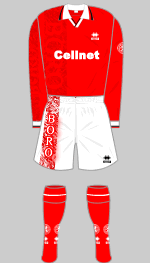
1996-1997 f n E
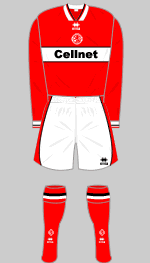
1997-1998 f
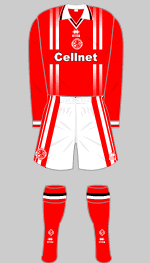
1998-1999 f n
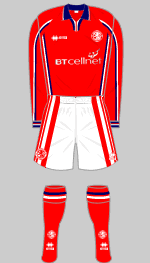
1999-2000 i n
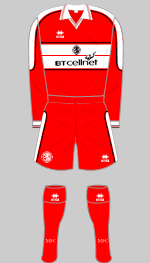
2000-2001 f n
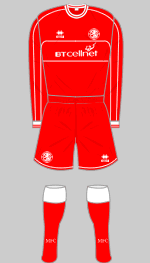
2001-2002 e
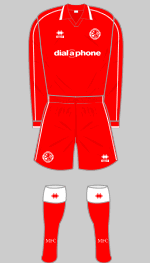
2002-2003 e
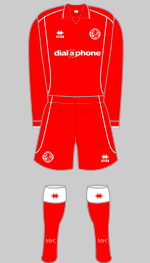
2003-2004 i
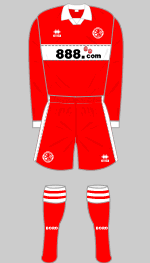
2004-2005 c
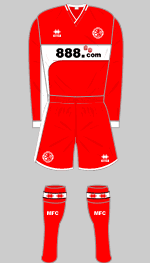
2005-2006 c
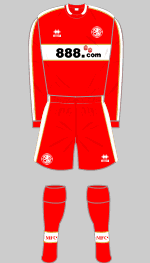
2006-2007 c
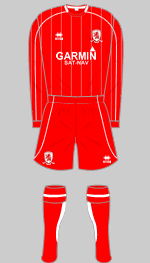
2007-2008 c q
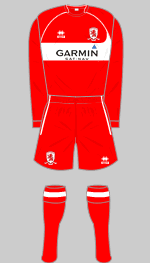
2008-2009 c t
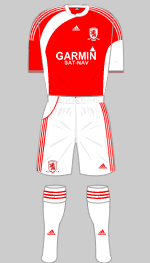
2009-2010 c
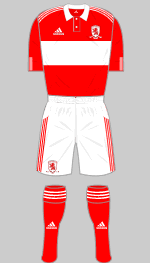
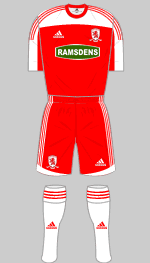
2011-2012 c
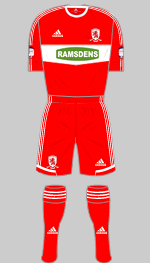
2012-2013 c
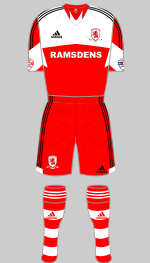
2013-2014 c
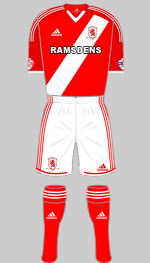
2014-2015 c
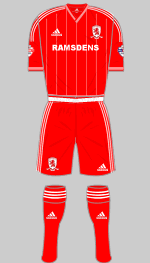
2015-2016 c
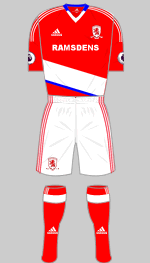
2016-2017 c
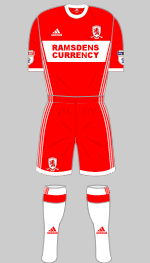
2017-2018 c
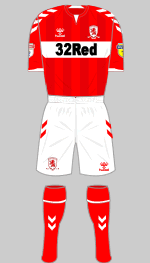
2018-2019 c
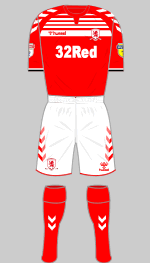
2019-2020 c
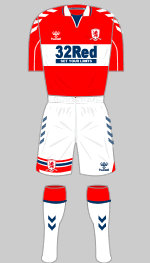
2020-2021 c
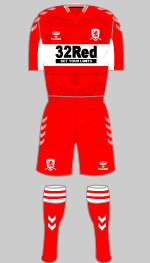
2021-2022 c
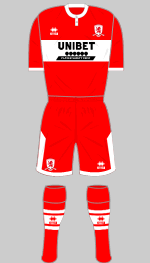
2022-2023 c
Background
 Middlesbrough was formed at
a meeting in the Albert Park Hotel by members of the town's cricket club.
The first recorded game took place in February 1877, a 1-1 draw with Teeside Wanderers. For this game the Middlesbrough players dyed their cricket whites dark blue and they appear to have played in these colours until the 1878-79 season.
Middlesbrough was formed at
a meeting in the Albert Park Hotel by members of the town's cricket club.
The first recorded game took place in February 1877, a 1-1 draw with Teeside Wanderers. For this game the Middlesbrough players dyed their cricket whites dark blue and they appear to have played in these colours until the 1878-79 season.
Charles Alcock's Football Annual of 1879 records the club colours as blue and black hoops.
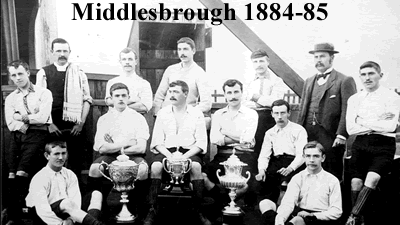
In May 2016 Richard Collinson submitted a report from the North-Eastern Daily Gazette (15th May 1886) that states, "the costume of the players shall consist of blue pants and white shirt, with blue trimmings and borough arms" (emphasis added). Charles 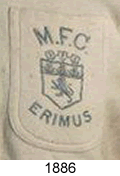 Alcock's Football Annuals confirm these were worn until 1889. Although the team photograph above was taken a few years later and the majority of players are wearing conventional white flannel shirts, two have blue collars adorned with white polka-dots and we can assume these are the earlier version. In March 2023 an original shirt featuring the polka dot trim was sold at auction for almost £20,000. The town motto, Erimus (We Shall Be) was embroidered below the crest.
In October 1890 the team wore "new colours of navy jerseys" but reports from January 1891 confirm they were again wearing white shirts. These remained the team's colours until 1901 when red shirts (which were previously their change kit) were promoted to first choice.
As professionalism took a grip on the game in the north during the late
1880s, Middlesbrough remained firmly committed to amateurism and as a
result, a faction of the club broke away to form Middlesbrough Ironopolis in 1889. The rivalry between the two clubs was intense: Middlesbrough
rejected a proposal from Ironopolis to merge the clubs and themselves
turned professional. It was obvious that the town could not support two
professional sides and in 1892, Middlesbrough reverted to amateurism.
Meanwhile, Ironopolis joined the Football League in 1893 only to resign
for financial reasons at the end of the season when the club 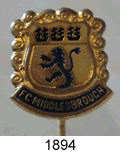 was wound
up.
was wound
up.
A metal pin badge found by Jonathon Auty confirms that the club badge was based on the town's coat of arms. The lion represents the Brus family who had substantial holdings after the Norman Conquest in northern England and south-west Scotland and from whom Robert the Bruce (Robert de Brus) was descended. The ships represent the town's association with shipbuilding and maritime trade.
Following the demise of Ironopolis, Middlesbrough became the town's dominant club and they went on to win the Northern League in 1893, 1895 and 1897 as well as the Amateur Cup in 1895 and 1898. The following year, Middlesbrough, now a professional outfit once again, were elected to the Second Division of the Football League. In 1902, "Boro" won promotion to the First Division and a year later moved into Ayrsome Park, which would be the club's home for the next 93 years. In 1905, the club paid out a record £1,000 transfer fee to sign Alf Common. Their best ever League position was achieved in 1914 when the team finished third in Division One.
The club were at best an average First Division
side and it was no surprise when they were relegated in 1924. 1927 saw
them return as Second Division champions. Relegated again at the end of
the season, "Boro" took the Division Two championship again
in 1929. They remained in the First Division without ever really threatening
to win anything. In 1958
the young Brian Clough made his debut for the club and proved a goal-scoring
sensation only to have his playing career 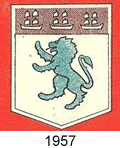 cut short by injury.
The rather crude drawing on the right indicates that the club crest had remained fundamentally unchanged since the Victorian era but this never appeared on the players' shirts.
In 1964 Boro' adopted white yokes on their shirts, a reminder of the distinctive 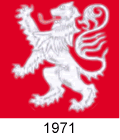 "epaulettes" worn between the wars.
In 1966, Middlesbrough dropped into the third Division for the first time in their history, winning promotion back to the Second Division at the first attempt.
In 1971 a crest appeared on the players' shirts, consisting of the traditional lion rampant.
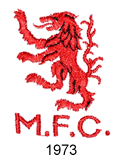 In 1973 England World
Cup hero Jack Charlton was appointed manager and at the end of the 1973-74 season,
Middlesbrough were promoted back to the top level as Second Division Champions.
It was Charlton who introduced the distinctive all red kit with a bold
white chest band, a style that has been revived several times and is still favoured by Boro fans. A rather skinny lion
In 1973 England World
Cup hero Jack Charlton was appointed manager and at the end of the 1973-74 season,
Middlesbrough were promoted back to the top level as Second Division Champions.
It was Charlton who introduced the distinctive all red kit with a bold
white chest band, a style that has been revived several times and is still favoured by Boro fans. A rather skinny lion 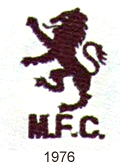 was enhanced with "MFC" and rendered in red. A rather more well-proportioned version appeared a few years later.
The team made little impression and in 1982, they
dropped into Division Two and then, four years later, facing mounting
debts, Division Three and went into liquidation.
On August 23rd the receivers locked the gates of Ayrsome Park and the
club faced expulsion from the League if they failed to fulfil their 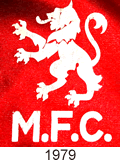 fixture
against Port Vale. The match was played at Hartlepools United's ground
and a consortium led by Steve Gibson stepped in to save the club. To mark the rebirth, a new crest was adopted that included the year that the new limited company was formed.
fixture
against Port Vale. The match was played at Hartlepools United's ground
and a consortium led by Steve Gibson stepped in to save the club. To mark the rebirth, a new crest was adopted that included the year that the new limited company was formed.
A
year later, Middlesbrough were promoted back to Division Two. Even more
remarkably, i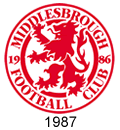 n 1988 they achieved promotion to Division One through the
play-offs. Even though they lasted only one season at the top, it was
a truly remarkable recovery.
n 1988 they achieved promotion to Division One through the
play-offs. Even though they lasted only one season at the top, it was
a truly remarkable recovery.
In the early 1990s Middlesbrough were promoted
and relegated with bewildering regularity, unable to consolidate at the
highest level. In 1995, however, former England captain Bryan Robson took
over as manager and the club returned to the Premier League. Some important international signings were made including Brazilian Footballer
of the Year, Juninho and (a year later) Fabrizio Ravanelli. Together with
the completion of their brand new, 30,000 seater Riverside Stadium, Boro
had found a sense of ambition. In 1997 they were beaten finalists in both
the FA and League Cups, appearing in the League Cup final again the following
year. In 2004, at the Millennium Stadium in Cardiff, 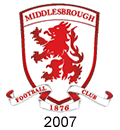 Middlesbrough beat
Bolton 2-1 to win the League Cup, their first major trophy in 128 years
of existence.
Middlesbrough beat
Bolton 2-1 to win the League Cup, their first major trophy in 128 years
of existence.
For the 2007-08 season, the club introduced a new badge to replace the roundel introduced when the club was reformed in 1986. The central lion rampant motif was retained but now appeared out of a shield with a scroll at the bottom. Significantly the year of the formation club's original formation now appeared.
Following a vote of their supporters, the club announced their intention to return to their white chest band for the 2008-09 season but this talisman could not save them from relegation to the Championship. Unable to secure a sponsor in the 2010-11 season, the club arranged a number of short-term deals until Ramsdens stepped in.
After a seven-year spell in the Championship, 'Boro were promoted back to the Premier League in 2016 but lost their place after one season.
The 2021-22 Hummel shirt featured a graphic based on the iconic Tees Transporter Bridge, the town's most famous landmark.
Sources
- (b) Encyclopedia Of Middlesbrough FC
- (c) Middlesbrough Official Website
- (d) Classic Kits
- (e) empics
- (f) Sporting Heroes
- (g) Football Focus
- (h) Nineteen66 Rare Football Memorabilia
- (i) True Colours (John Devlin 2005)
- (j) The Football Encyclopaedia (Associated Sporting Press 1934) Information provided by Arthur Fergus
- (k) Association of Football Statisticians - provided by Pete Wyatt
- (l) Pete's Picture Palace
- (m) Raynerseye - a site produced by Richard Pete Rayner with splendid paintings recreating historic matches
- (n) David King
- (o) Football League Review provided by Simon Monks
- (p) Alick Milne
- (q) Jack Elleker
- (r) Middlesbrough Football Club by Eric Paylor (Archive Publications ISBN 0 948946 32 6) provided by Liam O'Brien
- (s) Christopher Worrall
- (t) Fabrizio Taddei (Errea)
- (u) London Hearts
- (v) Tony Sealey
- (w) Keith Ellis
- (x) Paul Robinson
- (y) Darren Foss
- (z) North-Eastern Daily Gazette (15th May 1886) submitted by Richard Collinson
- (A) York Herald (15th October 1890) submitted by Brian Webb
- (B) York Herald (26th January 1891) submitted by Brian Webb
- (C) Charles Alcock's Football Annuals 1869-1891 researched by Robin Horton
- (D) Jonathon Auty
- (E) Tom Connolly
- (F) Football & the First World War
- (G) Tony Sealey & Nik Yeomans
- (H) Andrew Coxon
- (I) The Threads of History (Anthony Vickers 2022) submitted by Tony Sealey
- (J) Mark Jones
- (K) BBC
- (L) The North Star (August 27 1900) submitted by Robin Horton
Crests are the property of Middlesbrough FC.