

Kit History
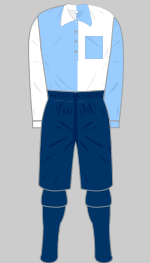
1892-1896 b f h n u
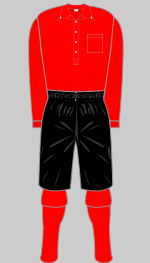
1896 x
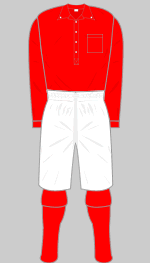
Sept 96-1900 a b f n w
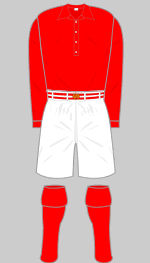
1900-1902 a b
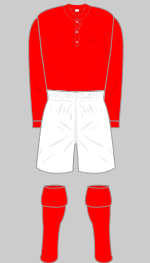
1902-1904 b q r
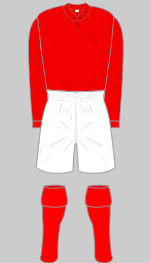
1904-1907 b r v
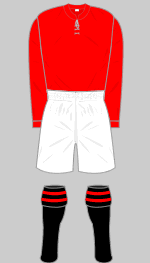
1907-1910 b
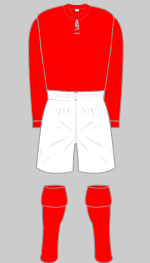
1910-1931 b
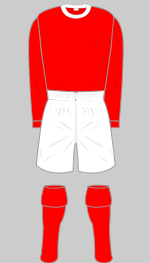
1931-1932 1 b
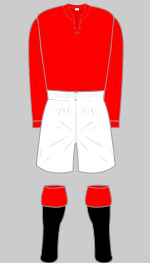
1931-1932 2 m
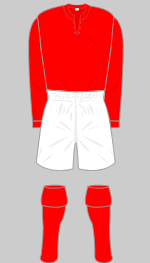
1932-1933 b
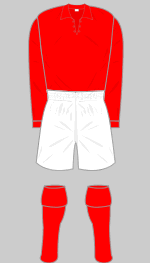
1933-1934 r
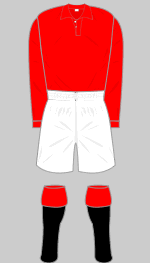
1934-1936 b r
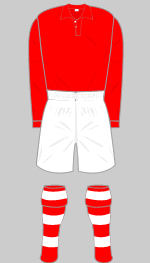
1936-1940 b
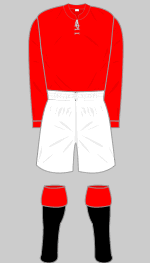
1944-1945 b
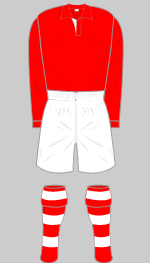
1945-1946 r
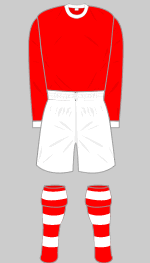
1946-1947 p r
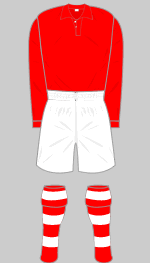
1947-1949 b c i
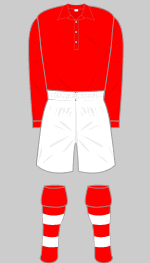
1949-1951 b
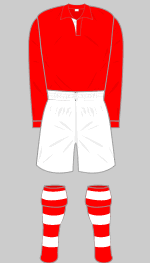
1951-1955 b
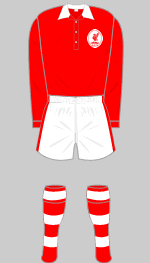
1955-1956 r v
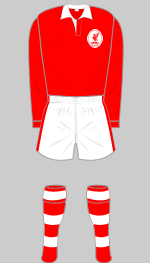
1956-1958 r
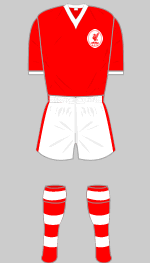
1956-1959 b d m r v
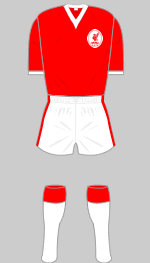
1959-1962 b
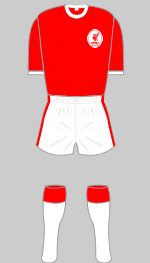
1962-1963 b
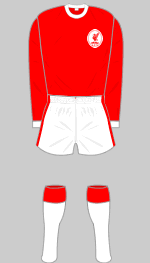
1963-1965 b g

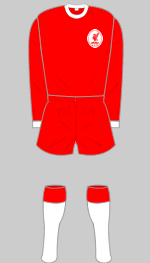
1964-1965 Cup y
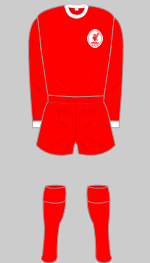
1965-1968 b e s
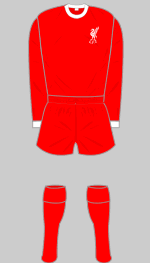
1968-1973 b e
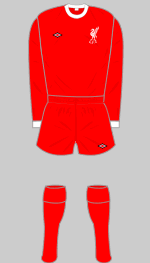
1973-1974 o
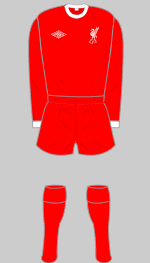
1974-1975 o v
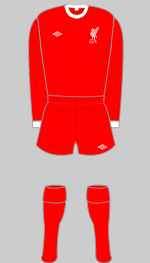
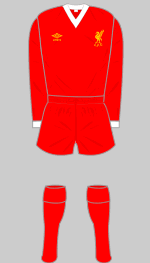
1976-1979 e

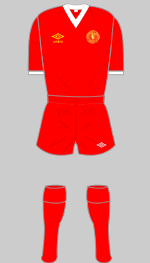
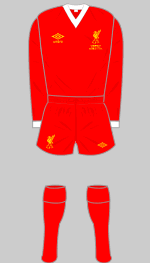
1978 Eur Cup Final
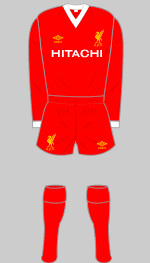
1979-1982 e

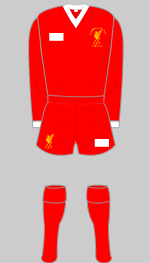
1981 Eur Cup Final
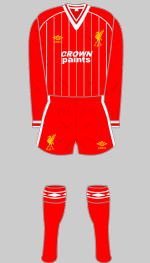
1982-1983 e
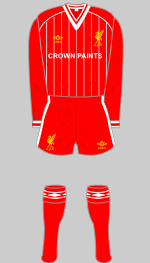
1983-1985 e
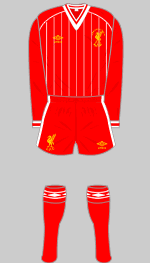
1984 Eur Cup Final
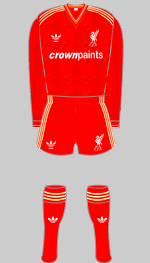
1985-1986 j
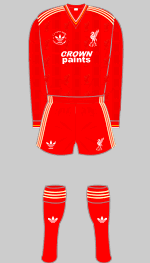
1986-1987 e t
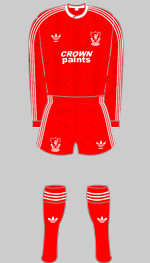
1987-1988 e
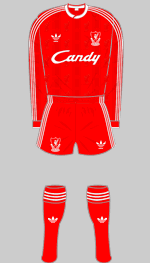
1988-1989 e
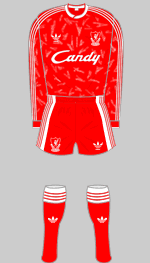
1989-1991 e k
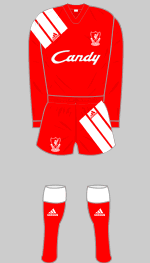
1991-1992 e l
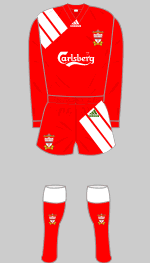
1992-1993 e
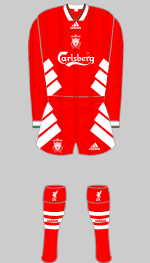
1993-1995 e
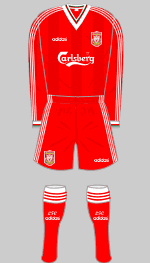
1995-1996 e
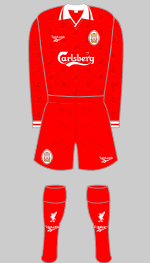
1996-1998 e

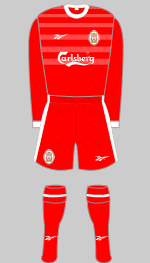
1998-2000 e
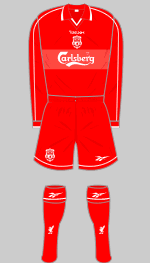
2000-2002 e
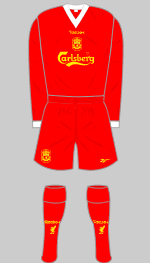
2001-2003 EUR
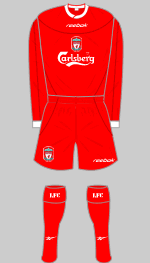
2002-2004 a
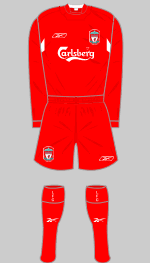
2004-2006 a
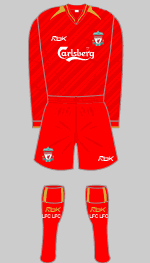
2005-2006 EUR
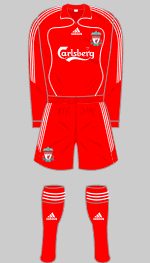
2006-2008 a
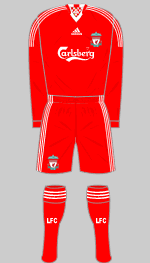
2008-2010 a
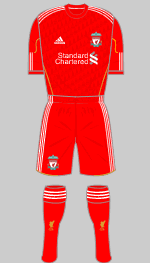
2010-2012 a
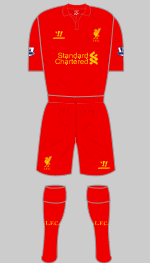
2012-2013 a
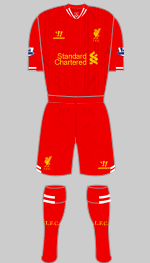
2013-2014 a
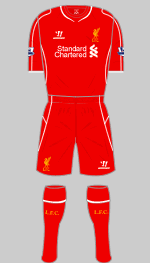
2014-2015 a
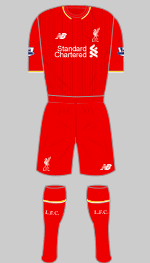
2015-2016 a
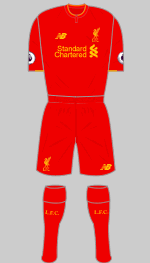
2016-2017 a
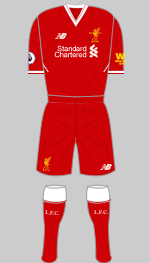
2017-2018 a
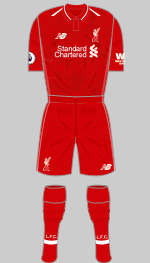
2018-2019 a
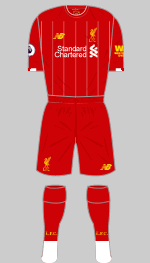
2019-2020 a
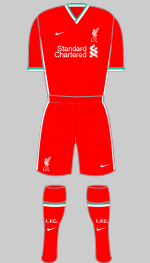
2020-2021 a
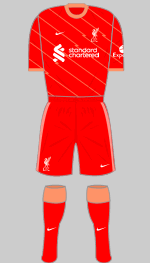
2021-2022 a
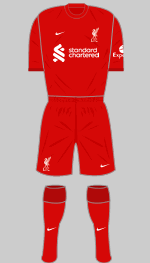
2022-2023 a

2023-2024 * a
Background
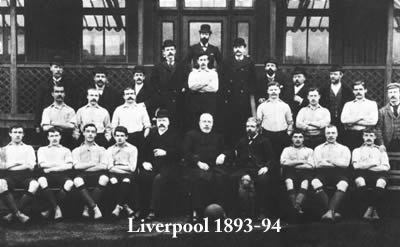 The club came into existence
following a row between the directors of Everton FC and the owner of their
Anfield ground, John Houlding. Houlding was a brewer as well as the club's
landlord. He insisted that only his beers be sold inside the ground and,
as Everton grew in stature he put up their rent from £100 in 1884
to £250 in 1890. On the 12th March, 1892, Everton quit Anfield and
three days later, Houlding formed Liverpool FC. Originally the new club
played in the blue and white shirts that Everton left behind (see photograph - Everton
changed to ruby red) but on 1st September 1896, they turned out in the municipal colours of red and
white with, according to a contemporary newspaper report, "a dark red or black stand collar with buttons down the front and white pants." A team photograph shows the team in black knickers so presumably this was changed when the season started.
The club came into existence
following a row between the directors of Everton FC and the owner of their
Anfield ground, John Houlding. Houlding was a brewer as well as the club's
landlord. He insisted that only his beers be sold inside the ground and,
as Everton grew in stature he put up their rent from £100 in 1884
to £250 in 1890. On the 12th March, 1892, Everton quit Anfield and
three days later, Houlding formed Liverpool FC. Originally the new club
played in the blue and white shirts that Everton left behind (see photograph - Everton
changed to ruby red) but on 1st September 1896, they turned out in the municipal colours of red and
white with, according to a contemporary newspaper report, "a dark red or black stand collar with buttons down the front and white pants." A team photograph shows the team in black knickers so presumably this was changed when the season started.
With a generous loan of £500 from Houlding, the club's Secretary-Manager, John McKenna brought no fewer than twelve Scots to play for the club, which was known as the "Team of All the Macs." After one season playing in the Lancashire League, Liverpool were elected to the Second Division of the Football League in 1893, winning the championship at the first attempt. A year later they were relegated only to win Division Two once again in 1896.
Having established themselves in the top division, Liverpool won the first of their many League Championships in 1901 and adopted the city's liver bird emblem although this did not appear on their shirts until 1947. In 1904, Liverpool were relegated and then won the Second Division title for the third time in 1905 followed by a second First Divisoin title in 1906. At the time the players wore heavy, ribbed woolen jerseys with high drawstring collars.
In 1914, the Reds reached the FA Cup final for the first time but, remarkably, it would be another 50 years before they won this particular trophy. Successive Division One championships followed in 1922 and 1923 followed by a period of relative decline during which Everton were in the ascendant.
 In 1947, Liverpool won the League for the fifth
time and in 1950, they reached the FA Cup final, where they were beaten by Arsenal. This match was the first occasion on which the iconic liver bird crest appeared on Liverpool's shirts.
In 1947, Liverpool won the League for the fifth
time and in 1950, they reached the FA Cup final, where they were beaten by Arsenal. This match was the first occasion on which the iconic liver bird crest appeared on Liverpool's shirts.
After these initial successes, Liverpool once again went into decline, dropping into Division Two in 1954. For season 1955-56 the crest was revived, now appearing out of a white oval and with LFC embroidered below the liver bird. This version was used until 1969.
In 1959 the club appointed Bill Shankly as manager. The passionate Scot transformed the club, laying the foundations for a period of unprecedented success and became a legend on Merseyside. After winning Division Two in 1962, his side became League Champions in 1964, won the FA Cup for the first time in 1965 and were again Division One champions in 1966.
The iconic all-red strip first appeared in a European match against Anderlecht in the 1964-65 season. According to Ian St John's autobiography, "He (Shankly) thought the colour scheme would carry psychological impact—red for danger, red for power. He came into the dressing room one day and threw a pair of red shorts to Ronnie Yeats. “Get into those shorts and let’s see how you look,” he said. “Christ, Ronnie, you look awesome, terrifying. You look 7ft tall.” “Why not go the whole hog, boss?” I suggested. “Why not wear red socks? Let’s go out all in red.” Shankly approved and an iconic kit was born." St John's memory seems to have ben faulty as archive photographs published in the Liverpool Echo to mark 50 years since the Anderlecht game show Liverpool wore their regular white socks with red turnovers. This kit was worn in FA Cup and European matches, all red socks finally being introduced in an FA fourth round replay against Stockport County on 3 February 1965. All-red was worn at Wembley when Liverpool won the FA Cup in May and has been their first choice ever since.
In 1968 the decision was taken to introduce a more modern version of the club crest.  The liver bird was now embroidered directly onto the team's shirts without a background. For seven years this was rendered in white but from 1976 the emblem was embroidered in gold, reverting to white when the club dropped Umbro as their kit supplier and signed a contract with Adidas in 1985.
Shankly's team won the League title again in 1973 and took the UEFA Cup, their first European honour, the same year. A year later Liverpool won the FA Cup and Shankly announced his retirement.
Shankly's successor was assistant coach, Bob Paisley,
the first of a series of appointments from the  legendary "boot room"
that would ensure a degree of continuity that no other club has emulated.
Paisley's achievements eclipsed even Shankly's. In nine years, his sides
won six League Championships, three European Cups, three League Cups and
one UEFA Cup. In 1979 the club recorded another landmark of sorts by becoming
the first Football League club to feature their sponsor's logo on players' shirts.
(In fact Derby County had signed a deal with Saab a year before but the
logo never appeared in competitive matches.)
legendary "boot room"
that would ensure a degree of continuity that no other club has emulated.
Paisley's achievements eclipsed even Shankly's. In nine years, his sides
won six League Championships, three European Cups, three League Cups and
one UEFA Cup. In 1979 the club recorded another landmark of sorts by becoming
the first Football League club to feature their sponsor's logo on players' shirts.
(In fact Derby County had signed a deal with Saab a year before but the
logo never appeared in competitive matches.)
Bill Shankly's legacy at the club was immortalised by the opening of the Shankly Gates on 2 August 1982, a year after he died, which include the title of the club's anthem, You'll Never Walk Alone, which was adopted by supporters after Liverpool group Gerry & The Pacemakers recorded a hit version in the early Sixties.
In 1983 Paisley retired, handing over to his assistant, Joe Fagan who led the club to an unprecedented treble of League, European Cup and League Cup in 1984. He would no doubt have gone on to even greater achievements but for the Heysel Stadium disaster. On May 29, 1985, Liverpool were to meet Juventus in the European Cup final: before the game, Liverpool fans rioted, attacking a group of Italian fans. In the chaos, a wall collapsed and 39 Italian supporters were killed. Fagan retired from football and English clubs were banned from European competition as a result.
 It now fell to Kenny Dalglish, generally regarded
as Liverpool's finest ever player, to take over as player/manager, an
unprecedented position for such a major club. Shankly's legacy was further immortalised with a new crest which replicated the famous sign above the players' tunnel onto the pitch, which the great man had mounted above the words, "This is Anfield."
It now fell to Kenny Dalglish, generally regarded
as Liverpool's finest ever player, to take over as player/manager, an
unprecedented position for such a major club. Shankly's legacy was further immortalised with a new crest which replicated the famous sign above the players' tunnel onto the pitch, which the great man had mounted above the words, "This is Anfield."
Dalglish led the club to the League and FA Cup double in 1986, two more League titles (1988, 1990), and another FA Cup win in 1989. This last win followed the dreadful tragedy at Hillsborough in April 1989 when 96 fans were crushed to death in the FA Cup semi-final. The trauma of this event prompted Dalglish to resign in 1991.
Another former player, Graeme Souness now took
over the reins but, despite an FA Cup win in 1992, his period in charge
is regarded as the beginning of the relative decline in the fortunes of
this great club.
In 1992, the club adopted a new crest to celebrate their centenary: the familiar liver bird remained as the centrepiece but now appeared against a red and white shield. A representation of the Shankly Gates complete with the team's anthem, appears above  the shield while to each side twin flames represent the Hillsborough Memorial outside Anfield, where an eternal flame burns in memory of those who died in the 1989 disaster.
A slightly different version was introduced the following season, without the centenary script but with the eternal flame added. This version of the club crest appeared embroidered directly onto the shirts, out of an oval lozenge or a shield at various times.
In 1999 the design was again updated. Initially this appeared on the shirts in just two colours but after 2002 it also appeared in full colour.
Under the management of Gerard Houlier (1998-2004) the Reds regained some of their former glory, picking up another FA Cup (2001) and two more League Cups (1995, 2001) and the UEFA cup (another epic performance with Gary McAlistair scoring from a free kick to end the match on the Golden Goal rule in extra time). The League Championship, however, eluded them. Houlier was replaced by Spaniard Rafael "Rafa" Benitez in 2004. In May 2005 the Reds came from 0-3 behind to defeat AC Milan in the European Champions League Final on penalties in the most dramatic come back ever witnessed in a European final. Twelve months later, the Reds came twice from behind to overcome West Ham on penalties to win one of the finest FA Cup Finals of modern times.
In February 2007, chairman David Moores sold his interest in the club to American businessmen George Gillett and Tom Hicks for £218m in a leveraged buyout (with an additional £218m promised to build a new stadium in Stanley Park). Open disagreements between the new owners, failure to secure a new stadium and concern over the levels of debt loaded on to the club caused considerable anger amongst supporters who began a campaign of protest in January 2008.
In May 2010 the club was £350m in the red and showing losses of £55m in the accounts, largely due to the high rates of interest charged to service their debts. Their creditors, which included the Royal Bank of Scotland took Gillett and Hicks to court to force them to sell. The affair rumbled on with a real threat that they would be forced into administration. The club chairman, Martin Broughton, brought in in April to secure a buyer, along with the independent directors faced down a last minute attempt by the American owners to block the sale of the club and on 15 October the board confirmed that New England Sports Ventures were now the owners of Liverpool FC. The deal, worth $447m wiped out the debts loaded onto the club by Hicks  and Gillett who were left with nothing apart from the millions of pounds extracted from the club in fees to their various companies.
Negotiations to renew the kit deal with Adidas broke down in 2011 and in January 2012 the club announced a record six year deal worth £25m a season (almost double the value of the Adidas contract) with the US based Warrior Sports company. The classically simple design introduced for 2012-13 attracted some criticism for relegating the Hillsborough commemorative crest to the back of the shirt.
 On 26 April 2016 the jury at the Hillsborough inquests found that the 96 supporters who died 27 years previously were unlawfully killed and that the then match commander, Ch Supt David Duckenfield was "responsible for manslaughter by gross negligence." The inquest, which lasted two years, was ordered after the original inquests were quashed in December 2012 following an indomitable campaign by the families of those who died.
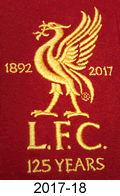
To mark their 125th anniversary during the 2017-18 season, the crest was modified with appropriate details.
In 2018-19, under the management of Jürgen Klopp, Liverpool pressed Manchester City for the Premier League title right up until the final round of matches, losing just once and amassing 97 points which would normally be enough to secure the title. City held on to their slender lead by winning their final match but consolation arrived for Liverpool's supporters a couple of weeks later when their team beat Spurs in the Champions League final to lift the trophy for the sixth time.
The following season brought even more success. The Reds won the UEFA Super Cup and the Club World Cup in the first part of the season but when football was suspended in March with Liverpool well clear at the top of the Premier League table, there was concern that they might miss out on the title. In the event, the Premier League resumed in June and the team quickly clinched their first championship for thirty years.
The 2021-22 season was also memorable: they won the EFL and FA Cup (remarkably beating Chelsea on penalties in both matches) and narrowly lost 1-0 to Real Madrid in the Champions League final, a match marred by the violent behaviour of French police towards Liverpool fans. They also came within an ace of overtaking Manchester City on the final day of the Premier League season.
You are welcome to Contact Me with corrections and additions.
Sources
- (*) Graphic by Daniel Stoker
- (a) Liverpool Official web site
- (b) LFC History - an independent site with an impressive collection of team pictures going back to 1892.
- (c) Association of Football Statisticians
- (d) Bristol Rovers FC (Images of Sport - Mike Jay)
- (e) Sporting Heroes
- (f) Association of Football Statisticians - provided by Pete Wyatt
- (g) Pete's Picture Palace
- (h) Phil Parker
- (i) Mark Parker
- (j) Nicholas Clark
- (k) True Colours 1 (John Devlin 2005)
- (l) Matt Hudson
- (m) Simon Monks
- (n) Kjell Hanson
- (o) Christopher Worrall
- (p) Ralph Pomeroy
- (q) British Film Institute archive (Youtube)
- (r) Keith Ellis
- (s) Paul Rodgers (Liverpool FC)
- (t) Dave Atkinson
- (u) Shane Malia
- (v) Pavel Shalaev
- (w) Top of the Kops (Peter Crilly 2007)
- (x) The Unofficial Liverpool FC Museum submitted by Paval Shalaev.
- (y) Liverpool Echo 27 Nov 2014 submitted by Tony Sealey
Crests are the property of Liverpool FC. Artwork for 1987-92 crest provided by Andrew Moran.