Lincoln
City
Formed 1884
Founder member of Division Two 1892. Failed re-election 1908.
Elected to Division Two 1909. Failed re-election 1911.
Elected to Division Two 1912. Failed re-election 1920.
Founder member of Division Three (North) 1921. Relegated to the Conference 1987.
Promoted to Division Four 1988. Relegated to the Conference 2011.
Promoted to League Two 2017.
Kit History
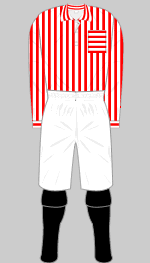
1885-1886 a
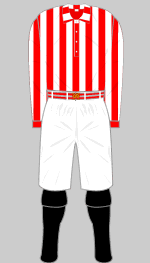
1886-1894 b l D
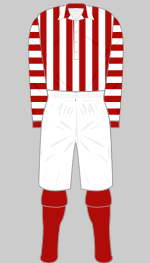
1894-1897 l o B F
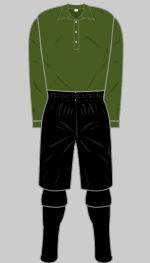
1897-1900 l
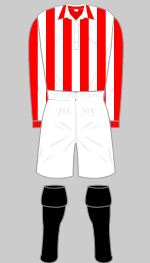
1900-1901 l
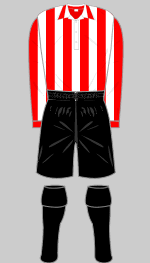
1901-1905 a l q
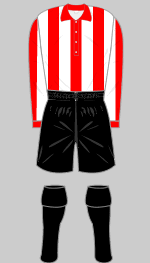
1907-1908 i
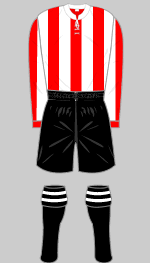
1909-1910 q

1910-1911 E
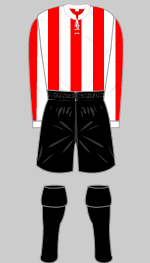
1911-1921 q z
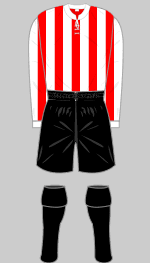
1921-1922 q
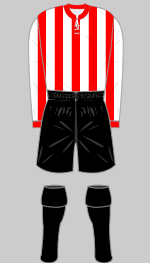
1922-1923 q
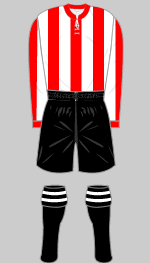
1924-1925 q
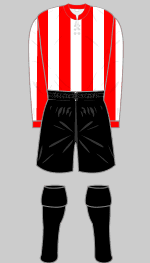
1926-1927 q
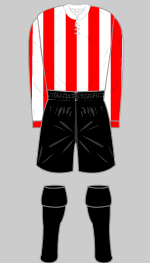
1928-1931 a q
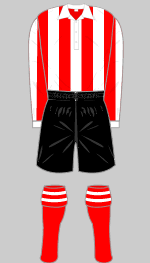
1931-1936 a
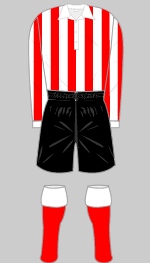
1938-1957 a q

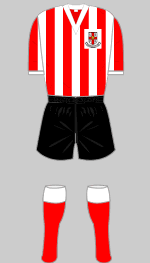
1957-1958 q
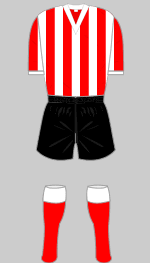
1958-1960 c
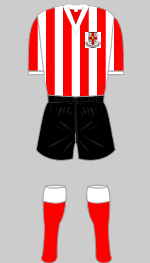
1960-1964 d o
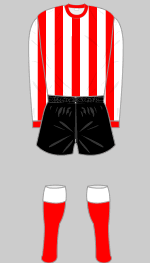
1964-1965 A
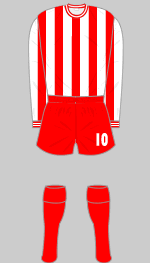
1965-1966 o
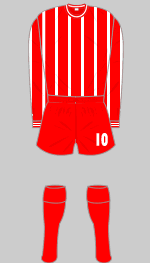
1966-1967 q
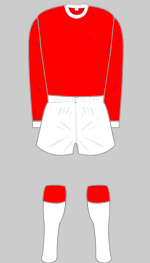
1967-1968 o
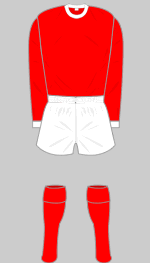
1968-1969 q
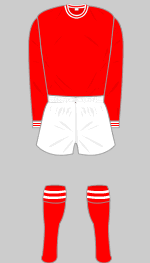
1969-1971 e k
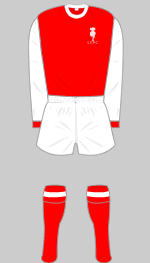
1971-1972 f k s
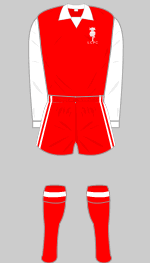
1972-1973 g
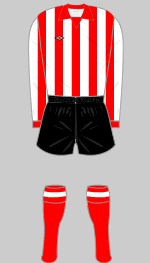
1973-1975 b p
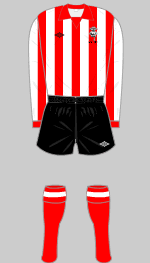
1975-1976 a p
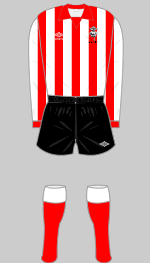
1976-1978 p
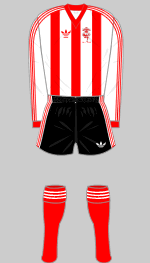
1978-1983 a p
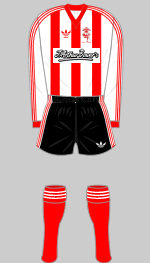
1982-1983 late o
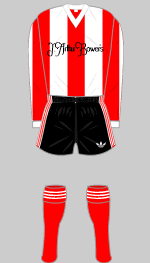
1982-1983 late 2 u
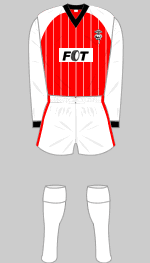
1983-1985 a j k r t
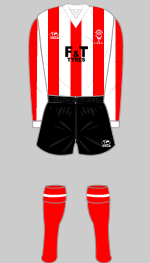
1985-1987 a h v
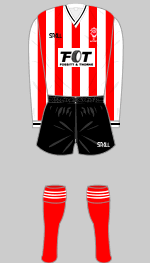
1987-1989 r
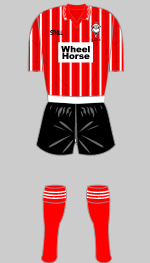
1989-1990 n v C
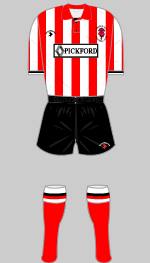
1990-1991 a v
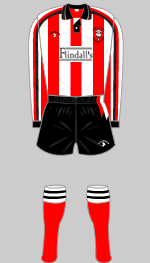
1991-1992 a
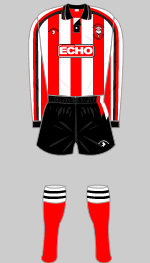
1992-1993 n
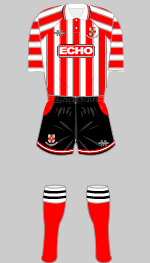
1993-1994 n C
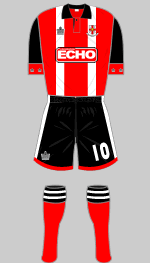
1994-1995 g v
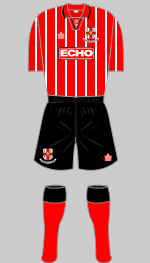
1995-1996 n v
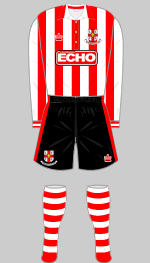
1996-1997 g n v
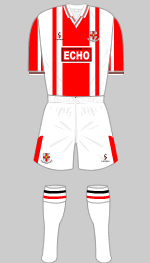
1997-1998 a r v
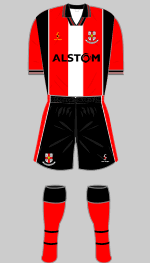
1998-1999 g v
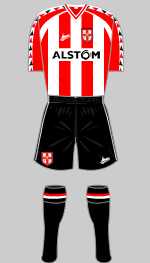
1999-2000 g q w v
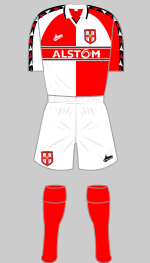
2000-April 2001 g w v
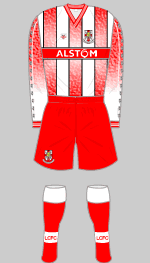
April 2001 t x
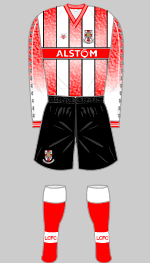
2001-2002 g r x
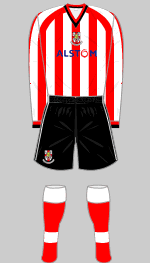
2002-2003 g
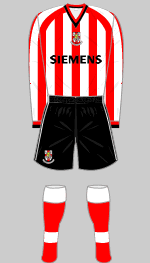
2003-2004 a
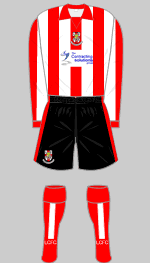
2004-2006 a q
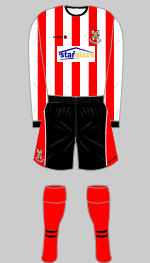
2006-2007 m
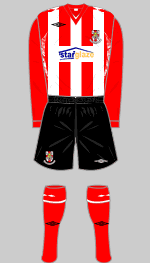
2007-2008 a
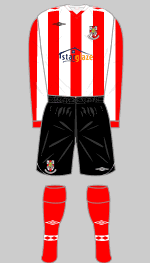
2008-2010 a
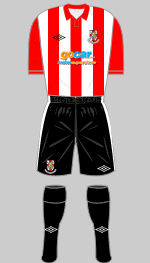
2010-2011 a
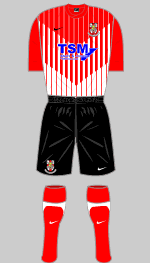
2011-2012 a
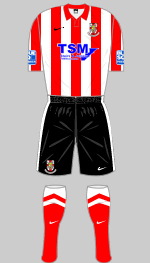
2012-2013 a
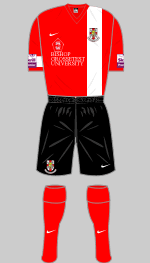
2013-2014 a
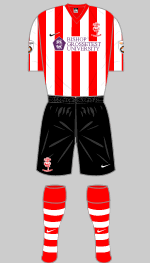
2014-2015 a
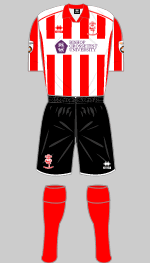
2015-2016 a
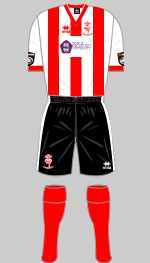
2016-2017 a
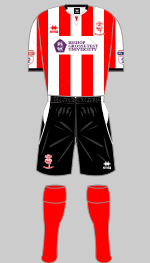
2017-2018 a
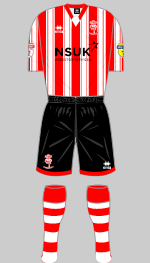
2018-2019 a
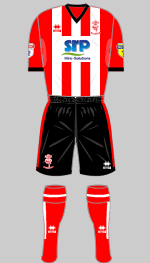
2019-2020 a
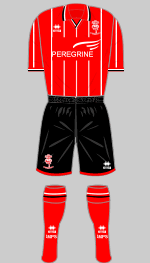
2020-2021 a
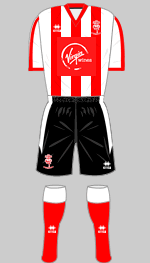
Aug-Sept 2021 a
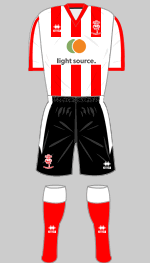
Sept-Nov 2021 a
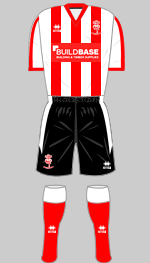
Nov 21-Jan 22 a
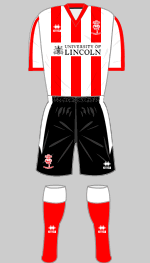
Jan-March 2022 a
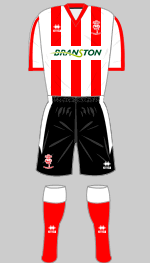
March-May 2022 a
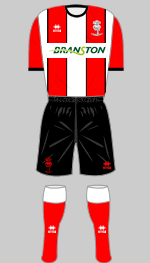
2022-2023 a
Background
 Football was being played in
Lincolnshire as far back as the 1860s when Lincoln FC (later Lindum FC)
regularly hosted games with Sheffield FC, the oldest club in the world.
There were no playing strips in those days although the Lincoln players
wore red caps and belts to distinguish themselves from the opposition.
By the early 1880s the game had become a popular spectator sport for working
men who now had more leisure time following employment reforms. The city's
leading sides, Lincoln Rovers and Lindum FC fielded a joint team for a
while in order to attract a better class of opposition but resisted attempts
to merge permanently. Lincoln City emerged in the summer of 1884 at a
public meeting following the demise of Lincoln Rovers. A number of players
from the Rovers side joined the new club who adopted their predecessor's
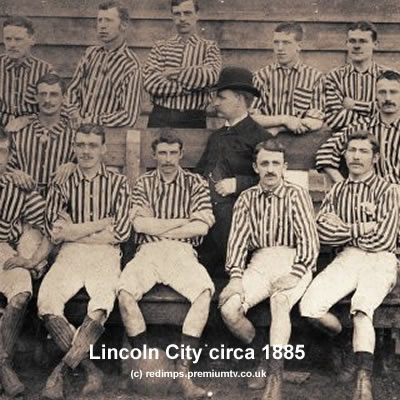
red and white shirts. As can be seen in the team photograph on the left, players took considerable latitude in how their stripes were aranged.
Football was being played in
Lincolnshire as far back as the 1860s when Lincoln FC (later Lindum FC)
regularly hosted games with Sheffield FC, the oldest club in the world.
There were no playing strips in those days although the Lincoln players
wore red caps and belts to distinguish themselves from the opposition.
By the early 1880s the game had become a popular spectator sport for working
men who now had more leisure time following employment reforms. The city's
leading sides, Lincoln Rovers and Lindum FC fielded a joint team for a
while in order to attract a better class of opposition but resisted attempts
to merge permanently. Lincoln City emerged in the summer of 1884 at a
public meeting following the demise of Lincoln Rovers. A number of players
from the Rovers side joined the new club who adopted their predecessor's
red and white shirts. As can be seen in the team photograph on the left, players took considerable latitude in how their stripes were aranged.
In 1885 there was an attempt by Lindum FC to take over the new club and although this came to nothing, there followed a period of intense competition between the two teams. City eventually prevailed and Lindum returned to amateur status and were finally wound up in 1939.
City have continued to play in red and white apart from a brief period at the end of the nineteenth century when they wore, "Lincoln green" jerseys.
The club's nickname is "The Imps" so named after a celebrated carving in Lincoln Cathedral. An entertaining account of the legend of the Lincoln Imp is available at www.theimp.lincolfans.co.uk/lincoln.shtml
In 1888, City helped form the Combination, effectively the reserves division for the new Football League. This folded after one season and Lincoln joined the Midland League and then the Football Alliance in 1891. In 1892, the Alliance was incorporated into the Football League as Division Two. City were out of their depth and between 1893 and 1908, they had to apply for re-election no fewer than six times. On the last occasion, they were narrowly voted out in favour of Bradford (Park Avenue). A second ballot was arranged after Stoke FC resigned: after this was tied the League management decided in favour of Tottenham Hotspur and City were out. After one season in the Midlands League, in which City were runaway champions, Lincoln were elected back into Division Two. Remarkably, history repeated itself in 1911, when Lincoln lost their League place to Grimsby Town by a single vote and then were voted back in after winning the championship of the new Central League (the only non-reserve side ever to do so).
According to the Grimsby Daily Telegraph (7 March 1911) when Lincoln travelled to Grimsby Town for the semi-final of the Lincolnshire Cup the visitors wore black and white striped shirts forcing the home side to wear their old chocolate and blue tops. It is not clear if Lincoln wore these shirts in other fixtures.
After surviving yet another re-election in 1914,
City were again at the foot of the table in the first season after the
Great War and lost their League status for the third time. Back into the
Midland League, Lincoln won the championship and were duly invited to
join the new Third Division (Northern Section) in 1921. The club spent
most of the next thirty years at this level but did enjoy two brief
periods in the Second Division  (1932-34 and 1948-49). Promotion in 1952
brought a period of more sustained success with nine years spent in the
Second Division but successive relegations took the club down to the Fourth
in 1962.
(1932-34 and 1948-49). Promotion in 1952
brought a period of more sustained success with nine years spent in the
Second Division but successive relegations took the club down to the Fourth
in 1962.
In the 1957-58 season the club crest was worn on team shirts for the first time. Based on the heraldic arms of the city of Lincoln, this consisted of a fleur-de-lis, symbol of the city's patron saint, Mary, on a red cross, symbol of the diocese of Lincoln. To this were  added the club's initials and scroll bearing their full name. Although this disappeared the following season it was revived between 1960 and 1964.
 Between 1963 and 1971, "The Imps" had to apply for
re-election five times. During this period the traditional red and white stripes with black shorts fell out of favour. In 1971 a brand new crest was introduced consisting of the Lincoln Imp embroidered directly onto the shirt.
Between 1963 and 1971, "The Imps" had to apply for
re-election five times. During this period the traditional red and white stripes with black shorts fell out of favour. In 1971 a brand new crest was introduced consisting of the Lincoln Imp embroidered directly onto the shirt.
In 1975 a young Graham Taylor arrived and he transformed the club (incidentally restoring the traditional striped kit). A year later City broke League and club records by scoring 111 goals and amassing 74 points (two points for a win) to take the Fourth Division championship. There was, however, no money to consolidate and Taylor was tempted away to manage Watford while Lincoln were relegated back to the basement in 1979.
 In 1981 City were promoted to Division Three and
almost got into Division Two the following year. In the mid 1980s the
club lost its way. There was instability in the boardroom, a succession
of managers and financial problems that at one stage led to a threatened
strike by players over unpaid wages. C
In 1981 City were promoted to Division Three and
almost got into Division Two the following year. In the mid 1980s the
club lost its way. There was instability in the boardroom, a succession
of managers and financial problems that at one stage led to a threatened
strike by players over unpaid wages. C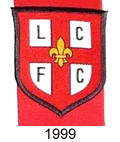 ity were relegated to Division Four
in 1986 and, a year later, they became the first club to be automatically
relegated to the Conference. After winning the Conference title, City
returned to the League in 1988. It is a remarkable fact that Lincoln City
has lost its League status four times and on each occasion has regained
it after one season.
ity were relegated to Division Four
in 1986 and, a year later, they became the first club to be automatically
relegated to the Conference. After winning the Conference title, City
returned to the League in 1988. It is a remarkable fact that Lincoln City
has lost its League status four times and on each occasion has regained
it after one season.
In 1994 the Imp badge was dropped and the old crest reinstated. A modified version appeared in 1999. When the club started to market 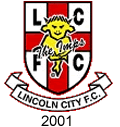 strips under its own brand name in 2001 a new crest was introduced based on the traditional design but with the Lincoln Imp superimposed along with the club's nickname.
 Nine seasons of relative stability followed culminating
in promotion to Nationwide Division Two in 1998 but they lasted only one
season at the higher level. Further boardroom and financial crises
followed and in February 2001, the club became owned by a consortium
representing supporters, making City one of the first community owned
clubs in the country.
Nine seasons of relative stability followed culminating
in promotion to Nationwide Division Two in 1998 but they lasted only one
season at the higher level. Further boardroom and financial crises
followed and in February 2001, the club became owned by a consortium
representing supporters, making City one of the first community owned
clubs in the country.
Lincoln dropped out of the Football League for the fifth time in 2011 after finishing 23rd in League Two.
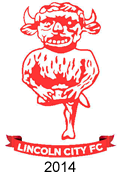
In 2014 the Lincoln Imp badge was revived once more.
After an absence of six seasons Lincoln won the National League title (formerly the Conference) in 2017 and returned to the English Football League. Two years later they won the League Two Championship.
Before the start of the 2021-22 season the club announced that there would be five different front-of-shirt sponsors each of which would be featured for about six weeks.
Sources
- (a) Lincoln City Official Website
- (b) The Imp Fansite
- (c) Hull City FC (Images of Sport)
- (d) Norwich City FC (Images of Sport - Gary Enderby)
- (e) Bob's 1970-71 Footballers
- (f) Football Cards
- (g) empics
- (h) Football Focus
- (i) The Mighty Mighty Whites
- (j) Ralph Pomeroy
- (k) Pete's Picture Palace
- (l) Association of Football Statisticians - provided by Pete Wyatt
- (m) Colours of Football
- (n) David King
- (o) Lincoln City - The Official History (Ian Nannestad)
- (p) Alick Milne
- (q) Keith Ellis (HFK Research Associate)
- (r) James Bride
- (s) Christopher Worrall
- (t) Charles Jennison
- (u) Antony Borrett
- (v) Old Football Shirts
- (w) Oleg Baranov
- (x) Ian Nannestad
- (y) Alliance to Conference 1979-2004 submitted by Michael Gluck
- (z) Sheffield Daily Telegraph (28 August 1912), Lincolnshire Echo (various reports March 1917-August 1920, Yorkshire Post & Leeds Intelligencer (22 August 1921) submitted by Richard Essen
- (A) The Senior Tigers Club
- (B) Athletic News (26 October 1896) submitted by Dave Wherry
- (C) John Taylor
- (D) Charles Alcock's Football Annuals 1869-1891 researched by Robin Horton
- (E) Grimsby Daily Telegraph (7 March 1911) submitted by Richard Bedwell
- (F) The Stacey West
Crests are the property of Lincoln City FC. Newspaper cuttings retrieved from the British Newspaper Achive.