




Leicester
City
Formed 1884
Elected to Division Two 1894
Kit History
Leicester Fosse
1884
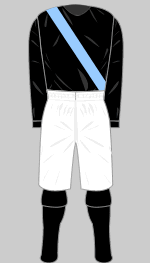
1884-1886 a
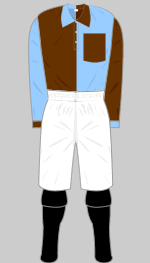
1886-1890 a s
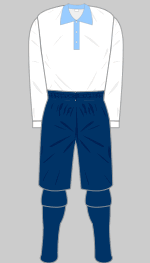
1890-1891 s
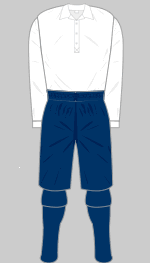
1892-1897 a e s
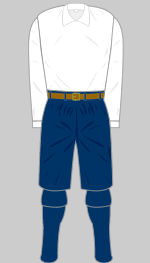
1897-1898 x
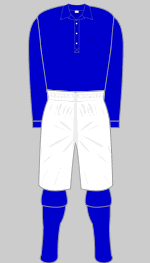
1899-1900 h
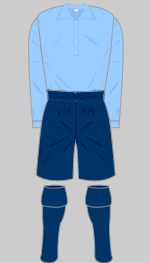
1900-1901 a h
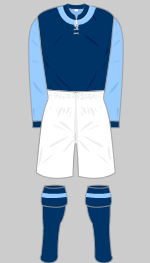
1901-1903 a h
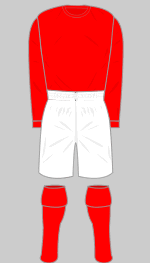
1903-1904 u v
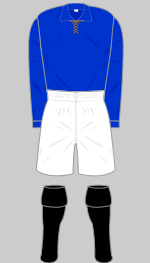
1904-1907 a h o z
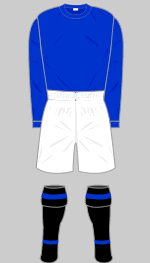
1907-1909 n o t
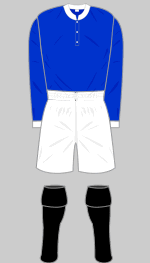
1910 n o
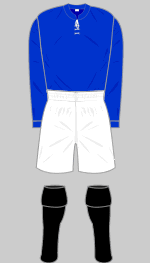
1912-1913 a h o r y
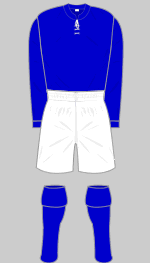
1914-1915 E
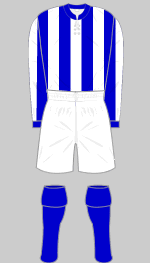
1915-1919 a o B
Leicester City
1919
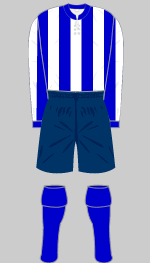
1919-1920 y
1920-1921 A
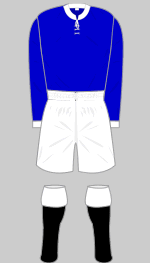
1921-1925 A C

1925-1932 a n
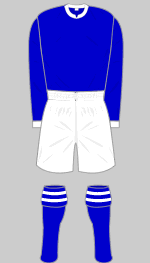
1932-1933 n
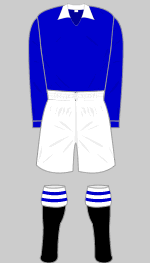
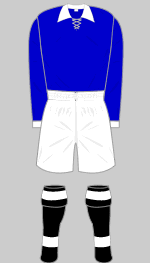
1935-1938 n I
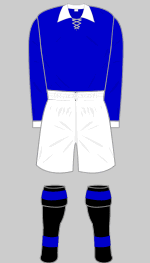
1938-1946 I
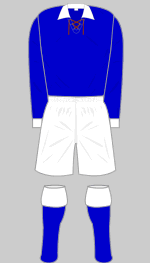
1946-1947 G
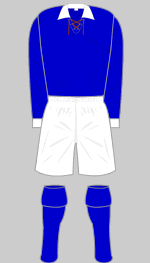
1947-1948 G
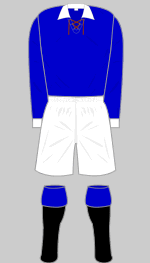
Aug 1948 G
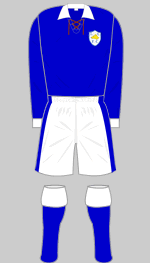
1948-1949 G
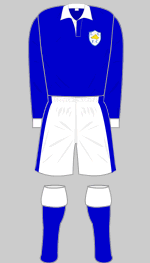
1949-1950 H

1950-1951
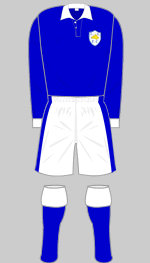
1951-1952 H
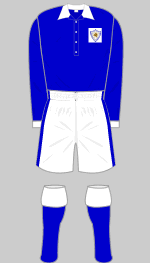
1952-1956 a n
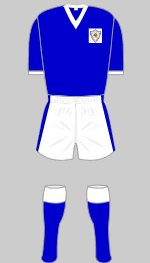
1956-1960 a g
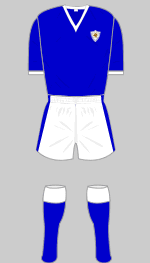
1960-1961 n
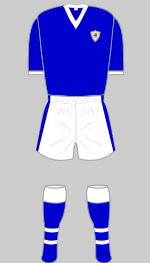
1961-1962 n
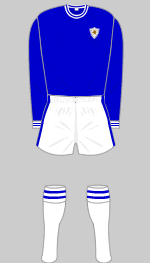
1962-1966 a g
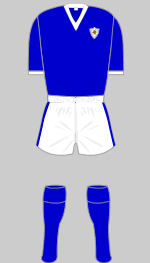
August 1965 w
Sept 1965-1966 a g
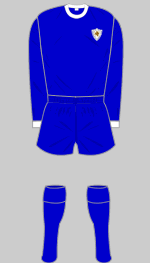
1966-1969 a n
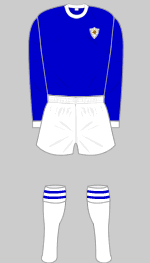
1969-Feb 70 a f n
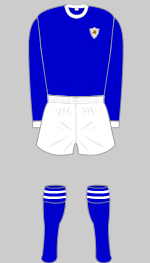
March-May 1970 D
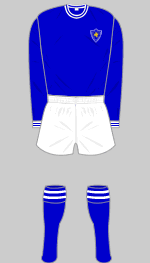
1970-1971 a
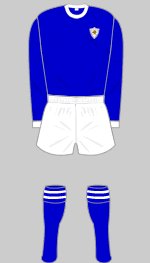
1971-1972 l p
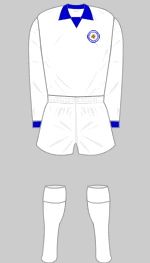
1972-March 73 a
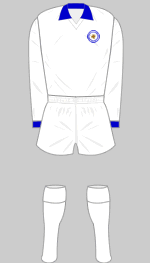
March-May 1973 F
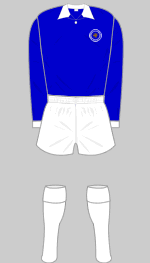
1973-1976 a g b l F
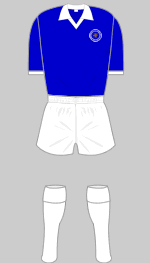
1973-1976 alt o p
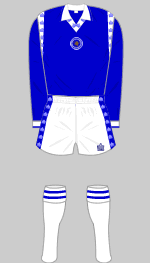
1976-1978 f g l

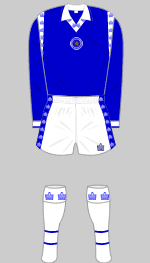
1978-1979 b f l p
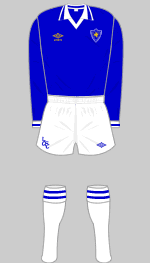
1979-1983 a l m o
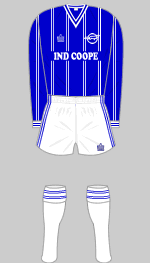
1983-1985 a i m
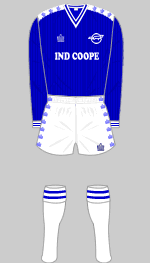
1985-1986 a f

1986-1987 a f k
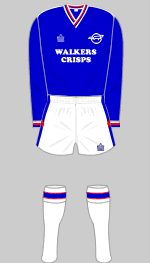
1987-1988 a f m
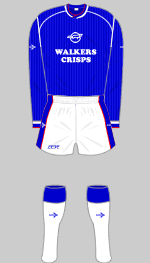
1988-Dec1989 a k m o
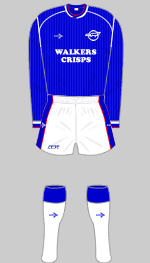
Jan-May 1990 o
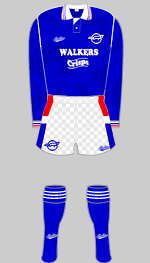
1990-1992 a f m
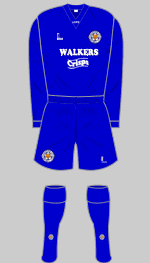
1992-1994 a

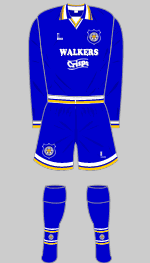
1994-1996 a f k
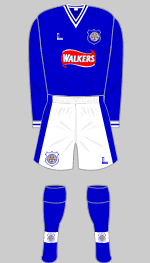
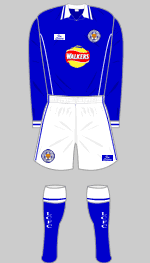
1998-2000 b m
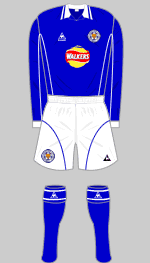
2000-2001 a
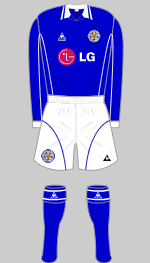
2001-2002 c
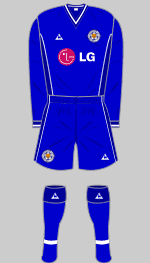
2002-2003 c
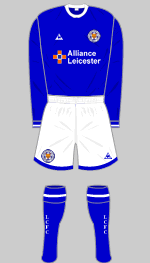
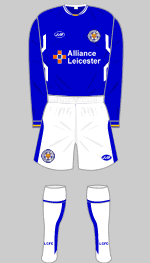
2005-2006 c m

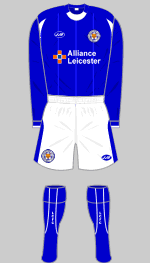
2006-2007 c
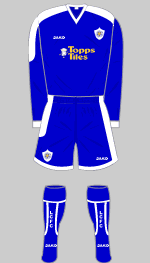
2007-2009 c k
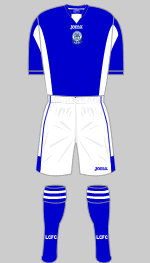
2009-2010 c o
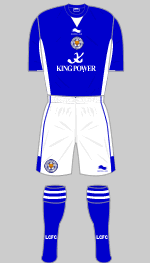
2010-2011 c
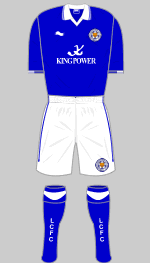
2011-2012 c
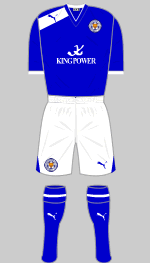
2012-2013 c
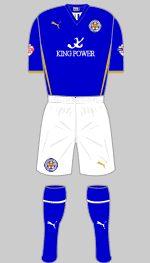
2013-2014 c
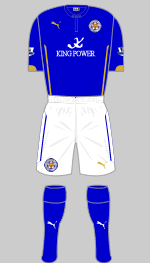
2014-2015 c
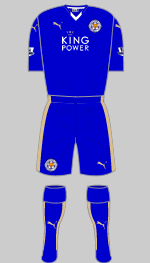
2015-2016 c
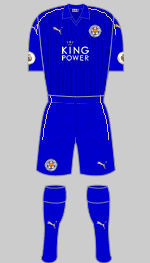
2016-2017 c
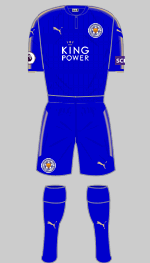
2017-2018 c
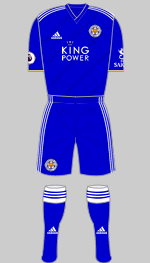
2018-2019 c
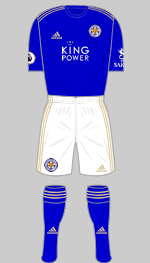
2019-2010 c
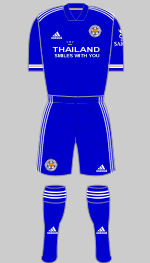
2020-21 Prem c
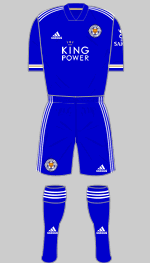
2020-21 Cup/Eur c
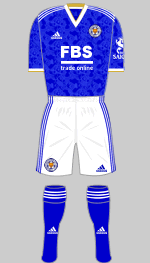
2021-2022 c
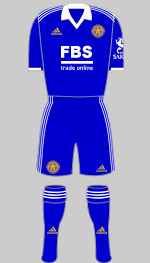
2022-2023 c
Background
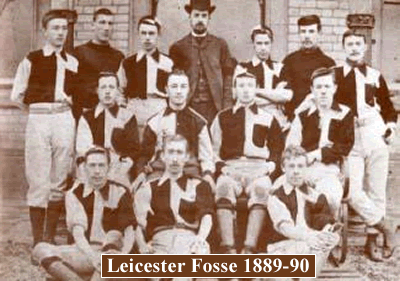 Leicester Fosse FC was founded
by a group of former public school pupils and members of a bible class
who met in the Emmanuel Church in Park Street. Their unusual name is derived
from a noted local landmark that dates from the Roman occupation, "Fosse"
being Latin for "fortified ditch." Indeed, their first game
was played on fields next to Fosse Road against Syston Fosse FC!
Leicester Fosse FC was founded
by a group of former public school pupils and members of a bible class
who met in the Emmanuel Church in Park Street. Their unusual name is derived
from a noted local landmark that dates from the Roman occupation, "Fosse"
being Latin for "fortified ditch." Indeed, their first game
was played on fields next to Fosse Road against Syston Fosse FC!
For seven years Leicester played only friendly matches and in cup competition but in 1888 they signed their first professional player, Harry Webb, who received 2/6d (12.5p) a week. In 1891, Leicester joined the Midland League along with local rivals Loughborough Town. After years of nomadic existence, the club finally settled into a new ground off Filbert Street that same year. Only three years later, the club was elected to Division Two of the Football League with the maximum 20 votes.
During these early years the club played in various shirts and it was not until around 1904 that the plain royal blue shirts that would become traditional were adopted. In 1908, Fosse won promotion to Division One only to be relegated immediately.
During the First World War the club continued to play in war time competition and turned out in striped shirts that had originally belonged to their reserves. These shirts continued to be worn until the end of the 1920-21 season when plain royal blue shirts with white facings were introduced.
In 1919 Leicester Fosse ceased trading and was reformed as Leicester City FC.
In 1925, Leicester won the Second Division championship and this time
retained their place at the top level for ten years. Relegated in 1935, 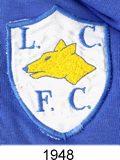 they bounced back again in 1937 only to be relegated once more in 1939.
When football resumed after the Second World War, Leicester remained a modest Second Division outfit. According to the Leicester Mercury the fox head crest appeared on the team shirts for the first time on 4 September 1948 for the home game with Sheffield Wednesday, (the county is associated with hunting) giving rise to their modern nickname, "The Foxes."
In 1949 Leicester were
beaten FA Cup Finalists while narrowly avoiding the drop into the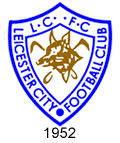 Third
Division.
Third
Division.
The original crude crest was replaced in 1952 with a rather more distinguished design. This usually appeared out of a white rectangle until it was stitched directly on to the shirts from 1960.
1954 brought another Second Division championship followed by
yet another immediate relegation. In 1957 City won the Second Division
again and this time, narrowly retained  their staus and became established
as a First Division side. During the 1960s, City played in three FA Cup
Finals, only to lose them all. There was some compensation when the club
won the League Cup in 1964 beating Stoke City over two legs in the final.
their staus and became established
as a First Division side. During the 1960s, City played in three FA Cup
Finals, only to lose them all. There was some compensation when the club
won the League Cup in 1964 beating Stoke City over two legs in the final.
In 1969 City were relegated once more but in 1971
the club won the Second Division championship yet again. The crest was reversed out during this season. This sojourn
at 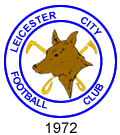 the top lasted seven years and included one season (1972-73) when the
traditional colours were dropped in favour of an all-white strip. This proved unpopular with supporters and blue shirts were reinstated the following season. The circular crest adopted with the white outfit remained in use until 1979 when the 1970 version was briefly reinstated.
the top lasted seven years and included one season (1972-73) when the
traditional colours were dropped in favour of an all-white strip. This proved unpopular with supporters and blue shirts were reinstated the following season. The circular crest adopted with the white outfit remained in use until 1979 when the 1970 version was briefly reinstated.
Between 1978 and 1983, City were relegated and promoted with bewildering regularity. At this time the young Gary Lineker emerged, a striker who would go on to a glittering international career before returning to save the club from extinction.
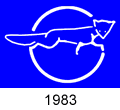 A radical new crest design, popularly known as the "walking fox," was introduced in 1983
  and lasted for nine seasons.
In 1992, a smart new crest was introduced and the team finally returned to the
top level (now the Premiership) via the play-offs in 1994. Immediately
relegated, City were back again the year after, once again by the play-off
route. Between 1996 and 2002 City not only consolidated at the top level
but also won the League Cup twice (1997 and 2000). A traumatic period
followed in October 2002 when the club went into  administration after
dropping into Division Two. A consortium led by Gary Lineker took the
club over and guided it back into the Premiership that same season. There
was a huge controversy as rival clubs complained that, by going into administration,
City had been protected from their creditors while consolidating its playing
staff, thus gaining an unfair advantage. As a result, League rules
administration after
dropping into Division Two. A consortium led by Gary Lineker took the
club over and guided it back into the Premiership that same season. There
was a huge controversy as rival clubs complained that, by going into administration,
City had been protected from their creditors while consolidating its playing
staff, thus gaining an unfair advantage. As a result, League rules  have
now been changed so that any club that enters administration has ten points
deducted.
have
now been changed so that any club that enters administration has ten points
deducted.
The club continued to rise and fall with extraordinary
regularity between the top two tiers until 2008 when they were relegated to the third tier (League  One) for the first time. They proved strong enough to win the League One title at the first time of asking. Their return to the Championship coincided with their 125th anniversary for which they adopted a special commemorative strip without sponsorship and a special crest.
The roundel crest was restored in 2010 with a slightly modified font.
In 2014 City won the Championship title and returned to the highest tier. After an unimpressive 2014-15 campaign, Claudio Ranieri was appointed as coach. He transformed the underachieving side who soon found themselves on top of the Premer League. Few believed they could possibly win the competition (they were 5000/1 outsiders at the start of the season) but week after week they defied the odds and with two matches to go, they clinched the title with a comfortable margin when  their nearest rivals, Spurs, drew against Chelsea.
For the 2020-21 season City's principal sponsor donated a "significant part" of its inventory, including stadium advertising and shirt sponsorship in Premier League matches, to a programme aimed at supporting Thailand's recovery from the Covid-19 pandemic.
In May 2021 Leicester beat Chelsea 1-0 to win the FA Cup for the first time.
Sources
- (a) "Of Fossils & Foxes: The Official History of Leicester City FC" 2001
- (b) Sporting Heroes
- (c) Leicester City Official Website
- (d) Football Focus
- (e) Nineteen66 Rare Football Memorabilia
- (f) foxfanzine - run by Gary Silke with a terrific section on kit history, now sadly unavailable
- (g) Pete's Picture Palace
- (h) Association of Football Statisticians - provided by Pete Wyatt
- (i) Bjørn-Terje Nilssen
- (j) David King
- (k) Football Shirt Culture
- (l) Alick Milne
- (m) True Colours 2 (John Devlin 2006)
- (n) Keith Ellis (HFK Research Associate)
- (o) Gary Silke
- (p) Christopher Worrall
- (q) Josh Malpass provided details of crests 1992-2010
- (r) LCFC News 26/9/13
- (s) University of Huddersfield
- (t) Football and the First World War
- (u) Athletic News (7 September 1903) submitted by Kingsley (Wrexham AFC)
- (v) Histoire Maillots
- (w) Chetan Murarji
- (x) The Straw Plaiters
- (y) Leicester Mercury
- (z) Vintage Footballers
- (A) colorsport
- (B) Lincolnshire Echo (19 November 1917, 30 November 1918) submitted by Richard Essen
- (C) Athletic News (17 October 1921) submitted by Richard Essen
- (D) The Senior Tigers Club
- (E) Football & the First World War
- (F) Leicester City Match Worn Shirts
- (G) Tony Sealey
- (H) Leicester 'Till I Die
- (I) Leicester City FC
Crests are the property of Leicester City FC.