

Ipswich
Town
Formed 1878
Elected to Division Three (South) 1938
Kit History
Ipswich Association
1878
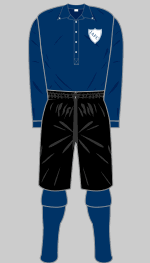
c1880-1887 a s
Ipswich Town
1887
1887-1888 s
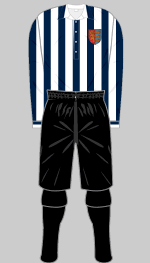
1888-1900 a q r s
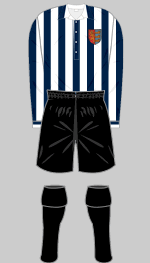
1902-1908 a s
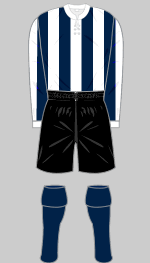
1909-1911 a n
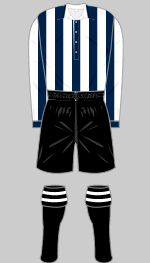
1912-1914 a
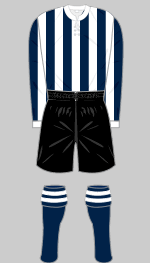
1920-1921 a
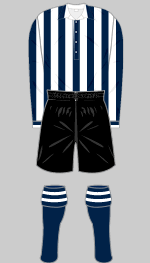
1921-1929 a
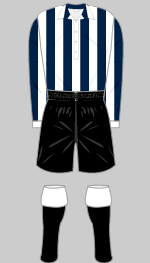
1928-1929 a
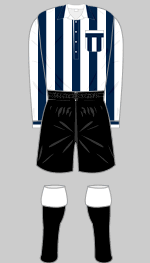
1929-1930 a
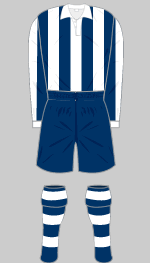
1932-1933 a
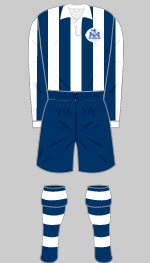
1933-1934 a
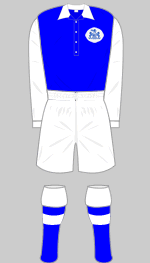
1936-1937 a

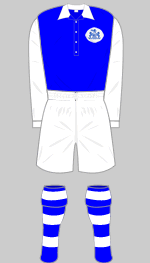
1937-1947 a b
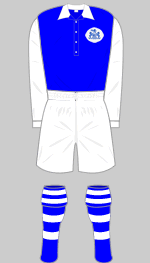
1948-1951 a n
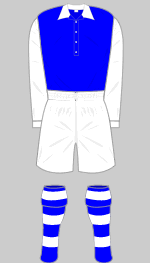
1952-1953 n
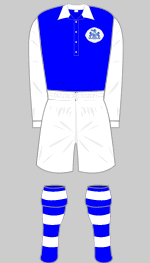
1953-1954 a
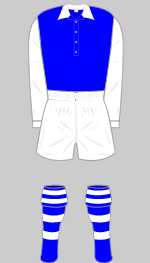
1955-1956 a
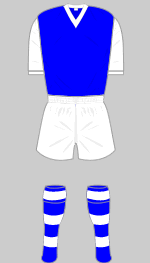
1956-1962 a b n
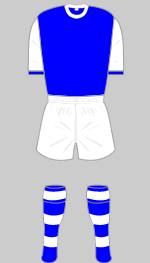
1962-1963 a b
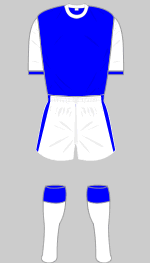
1963-1964 b
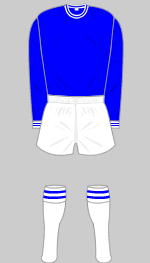
1964-1965 a
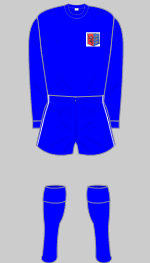
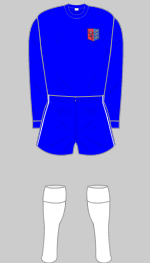
1966-1967 a c g
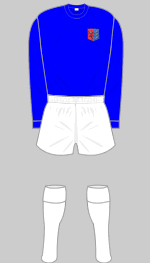
1967-1969 a n
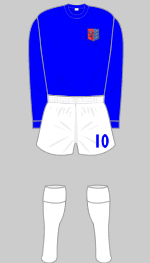
1969-1971 p
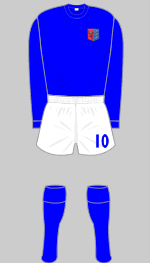
1971-1972 d
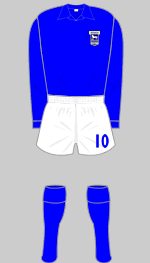
Aug-Nov 1972 i p
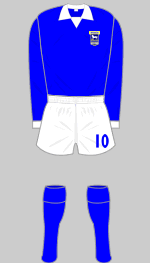
Nov 72-Oct 74 k p
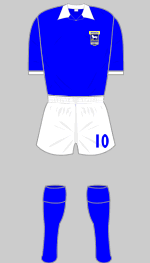
1973-1975 alt d i p
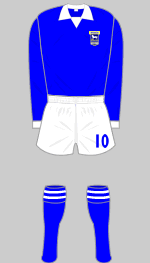
Nov 1974-1975 a d l p
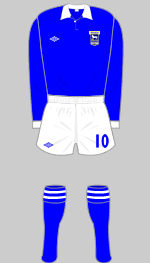
1975-1977 a d o p
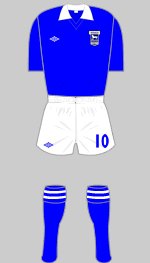
1975-1977 o p
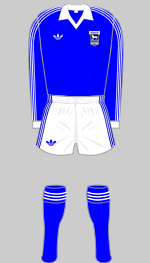
1977-1978 d
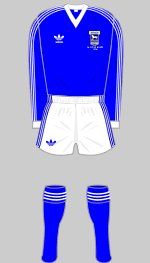
1978-1979 m
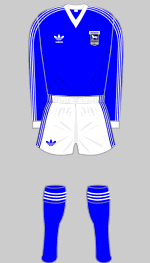
1978-1981 d
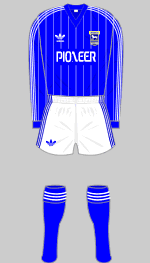
1981-1984 d h i
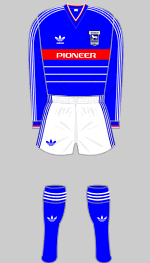
1984-1985 d
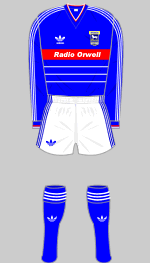
1985-1986 d
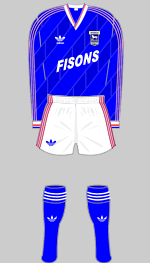
1986-1988 d i l
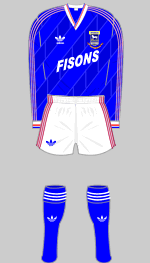
1988-1989 d i
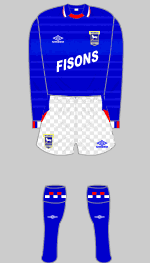
1989-1992 b i
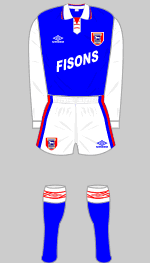
1992-1994 b i

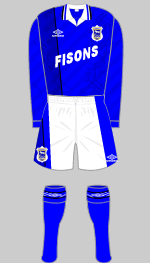
1994-1995 a i l


1995-1997 l
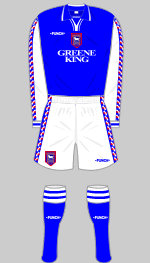
1997-1999 d l
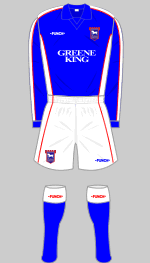
1999-2001 d j l
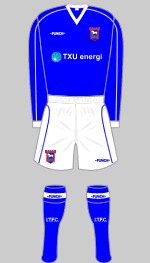
2001-2003 a

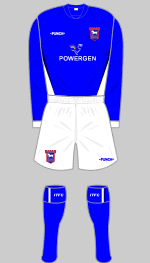
2003-2005 e i l
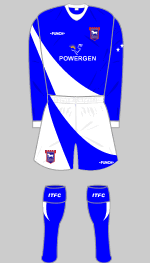
2005-2006 e
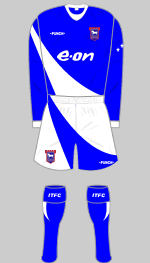
2006-2007 e
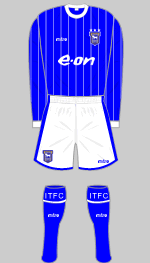
2007-2008 e
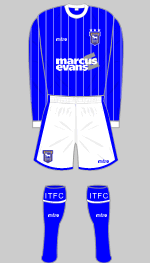
2008-2009 e
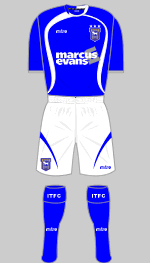
2009-2011 e
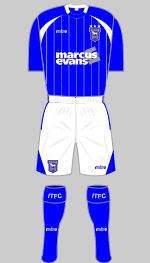
2011-2012 e
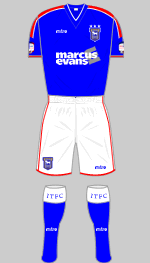
2012-2013 e
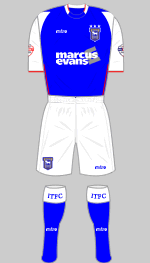
2013-2014 e
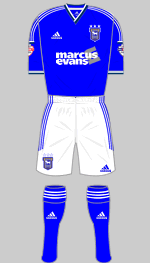
2014-2015 e
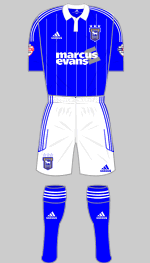
2015-2016 e
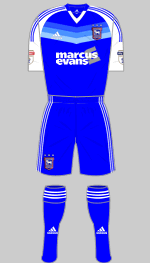
2016-2017 e
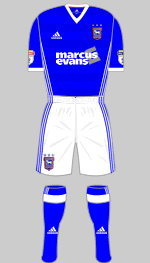
2017-2018 e
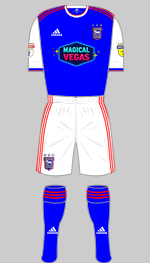
2018-2019 e
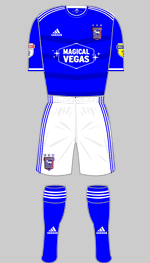
2019-2020 a
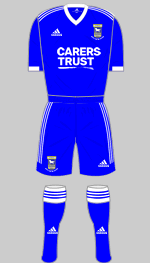
2020-2021 a
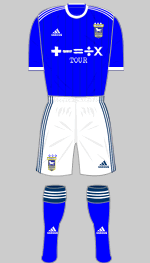
2021-2022 a
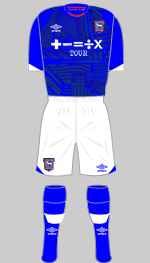
2022-2023 a
Background
 The club was formed on 16 October, 1878, as
Ipswich Association FC, many of their players being former pupils of Ipswich
Public School. The club's first
president was Thomas Clement Cobbold, the Tory MP for Ipswich and a member
of the famous brewing family which has remained associated with the club right up to the present. They quickly became one of the leading sides in Suffolk, winning their first trophy in 1887, when they beat Ipswich School 2-1 to win the Suffolk Challenge Cup.
The club was formed on 16 October, 1878, as
Ipswich Association FC, many of their players being former pupils of Ipswich
Public School. The club's first
president was Thomas Clement Cobbold, the Tory MP for Ipswich and a member
of the famous brewing family which has remained associated with the club right up to the present. They quickly became one of the leading sides in Suffolk, winning their first trophy in 1887, when they beat Ipswich School 2-1 to win the Suffolk Challenge Cup.
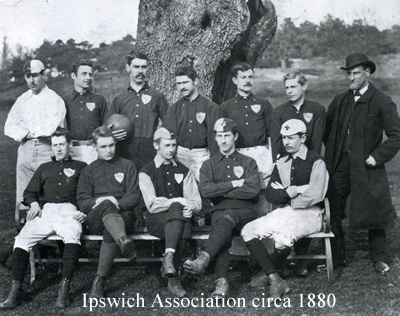
The club's original colours were dark blue and although the players in this early photograph are wearing shirts in various 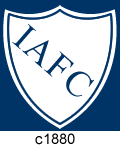 patterns, by 1882 the team had uniform shirts although dark and light knickers are still in evidence. The crest, an unusual feature for such a modest side at this time, had the letters IAFC embroidered diagonally on a white shield.
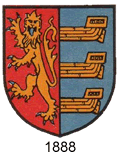 In 1887 the club changed its name to Ipswich Town FC. The following season they merged with Ipswich RUFC and took up residence at the rugby team's Portman Road. According to a report in the East Anglian Daily Times (1 October 1888) there was a lengthy discussion in the committee meeting that approved the merger about what colours the team should wear. In the end they registered their colours with the Suffolk FA as "Oxford Blue and White (stripes)." A simplified version of the town coat of arms was added to the new shirts but these did not meet with the approval of the captain, EA Kent, who continued to wear the old dark blue shirt.
In 1890, Town entered the FA Cup for the first time. In 1894 Ipswich were invited to join the newly formed Southern League, which would have meant turning professional. The directors did not even consider the proposal until April 1895 when it was dismissed out of hand. In 1899, having been described in the press as "fossilised amateurs," the club joined the Norfolk & Suffolk League. In 1907 Town joined the new Southern Amateur League.
As an amateur side the players had to provide their own kit and while the shirts were more or less uniform, all sorts of knickers and socks were worn right up until the 1930s.
 After almost 60 years of genteel and unambitious
existence, the winds of change blew through the club in 1936 with the
decision to finally turn professional and join the Southern League. The
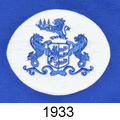
old striped shirts were replaced with smart new blue ones with white sleeves, complete with a full version of the Ipswich coat of arms.
Ipswich's first professional players were signed, led by former Scottish
international Jimmie McLuckie. Over 14,000 fans took time off from the
harvest to cheer the club on in their first fixture against Tunbridge
Wells Rangers on 29 August 1936, which Town won 4-1. Having won the Southern
League championship at the first attempt, Ipswich made a confident application
to join the Football League but they were rejected. Chairman Capt. "Ivan"
Cobbold instructed the manager, Mick O'Brien to recruit the best players
available so that the team could not be ignored and the following season
they were elected to Division Three (South).
After almost 60 years of genteel and unambitious
existence, the winds of change blew through the club in 1936 with the
decision to finally turn professional and join the Southern League. The
old striped shirts were replaced with smart new blue ones with white sleeves, complete with a full version of the Ipswich coat of arms.
Ipswich's first professional players were signed, led by former Scottish
international Jimmie McLuckie. Over 14,000 fans took time off from the
harvest to cheer the club on in their first fixture against Tunbridge
Wells Rangers on 29 August 1936, which Town won 4-1. Having won the Southern
League championship at the first attempt, Ipswich made a confident application
to join the Football League but they were rejected. Chairman Capt. "Ivan"
Cobbold instructed the manager, Mick O'Brien to recruit the best players
available so that the team could not be ignored and the following season
they were elected to Division Three (South).
The town crest was worn between 1933 and 1957 although photographic evidence indicates it was absent for at least part of the 1953-54 and 1955-56 seasons.
In 1954, Ipswich were promoted to Division Two but the following season they came straight back down again. In 1955 Alf Ramsey was appointed manager. He led the club back into Division Two in 1957 and then, in 1961, to the Division Two title. To everyone's astonishment, the unfashionable club from East Anglia then won the First Division title at the first attempt. In 1963 European Cup football came to Portman Road for the first time, the club being eliminated by AC Milan who went on to win the competition. Ramsey was appointed England manager and went on to earn his knighthood in 1966.
 In 1964 the famous blue and white shirts were replaced with more modern, self-coloured tops (although they would be revived briefly in 1997). The change was no doubt prompted by the club's relegation at the end of 1963-64, following which they spent four years
in the lower division before clinching the Second Division championship
in 1968.
In 1964 the famous blue and white shirts were replaced with more modern, self-coloured tops (although they would be revived briefly in 1997). The change was no doubt prompted by the club's relegation at the end of 1963-64, following which they spent four years
in the lower division before clinching the Second Division championship
in 1968.
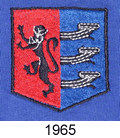
The crest worn during this period was a revived version of the original version from 1888.
 Bobby Robson arrived and under his management, Ipswich embarked
on a period of prolonged and consistent success. In the League the club
finished in the top six nine times between 1973 and 1983: their worst
position was 18th in 1978, the year that they won the FA Cup. In 1981
and 1982 they were runners up in the League and in 1981 they won the UEFA
Cup. Two years later Robson left the club to follow in Ramsey's footsteps
and become England coach. Inevitably the side he built broke up and in
1986, the "Tractorboys" found themselves back in Division Two.
Bobby Robson arrived and under his management, Ipswich embarked
on a period of prolonged and consistent success. In the League the club
finished in the top six nine times between 1973 and 1983: their worst
position was 18th in 1978, the year that they won the FA Cup. In 1981
and 1982 they were runners up in the League and in 1981 they won the UEFA
Cup. Two years later Robson left the club to follow in Ramsey's footsteps
and become England coach. Inevitably the side he built broke up and in
1986, the "Tractorboys" found themselves back in Division Two.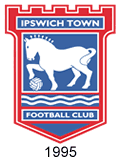
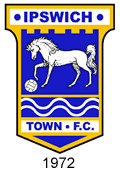
To mark their centenary season (1988-89) Ipswich added a scroll below their badge. The badge itself had been introduced in 1972 following a competition and featured a "Suffolk Punch", a local breed of heavy horse (although the dainty steed in the original would have been more at home at a Suffolk gymkhana than pulling a plough). This popular crest was given a facelift in 1995.
 In 1992, Ipswich won the Second Division championship
for the third time and took their place in the Premier League in its first
season. After three difficult seasons, they were relegated in 1995. After
reaching the play-offs four times, they returned to the top in 2000 and
when they qualified for Europe by finishing in fifth place in 2001, it
seemed that the great days had returned. Sadly, relegation in 2002 ended
t
In 1992, Ipswich won the Second Division championship
for the third time and took their place in the Premier League in its first
season. After three difficult seasons, they were relegated in 1995. After
reaching the play-offs four times, they returned to the top in 2000 and
when they qualified for Europe by finishing in fifth place in 2001, it
seemed that the great days had returned. Sadly, relegation in 2002 ended
t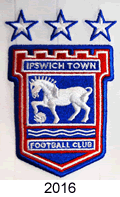 hat particular dream.
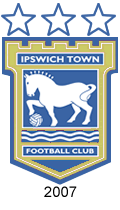
In 2007 the crest was slightly modified and three stars, representing the major trophies won by the team, added. This followed the takeover of the club by Marcus Evans in December 2007. The Marcus Evans Group logo appeared on the shirts once their existing sponsorship contract ended.
In 2016 red was revived as a secondary colour for the crest and two years later red was 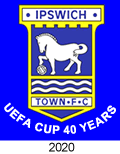 once again used as an accent colour for the first strip. Unfortunately the team were relegated to the third tier wearing this strip and it was not surprising that the red trim was dropped the following season.
The team were still stuck in League One in 2020-21, the 40th anniversary of their landmark UEFA Cup win. To mark the occasion Adidas provided a strip based on that worn in the second leg of the final and bearing the yellow trimmed crest of the period.
Sources
- (a) Pride of Anglia - an outstanding independent website with a valuable collection of team photographs covering both the amateur and professional periods.
- (b) Ipswich Town FC (Images of Sport: Tony Garnett)
- (c) Club Colours (Bob Bickerton)
- (d) Sporting Heroes
- (e) Ipswich Town Official Website
- (f) Workington AFC - Images of Sport (Paul Eade 2003)
- (g) Football Focus
- (h) Kuen-Wah Cheung
- (i) Ian Hunneybell
- (j) David King
- (k) Football League Review provided by Simon Monks
- (l) True Colours 2 (John Devlin 2006)
- (m) Christopher Worrall
- (n) Keith Ellis
- (o) Dan McNeill
- (p) Tony Sealey
- (q) East Anglian Daily Times (17 February 1896) submitted by Brian Webb
- (r) East Anglian Daily Times (7 September 1896) submitted by Brian Webb
- (s) Richard Wall
Crests are the property of Ipswich Town FC.