


Huddersfield
Town
Formed 1908. Voluntarily wound up April 1912.
Reconstituted July 1912
Elected to Division Two 1910
Kit History
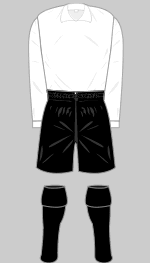
Sept 1908 l v H
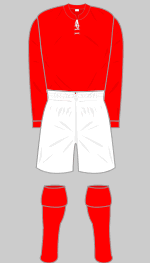
Sept 1908-1909 l v A
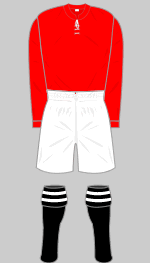
1908-1909 2 A
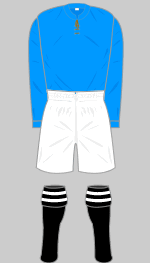
1909-1910 l v A
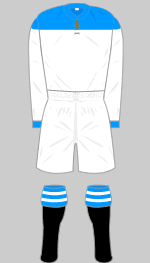
1910-1911 a b v A
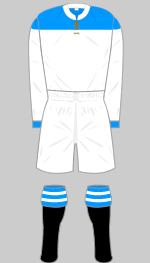
1911-March 1912 v A
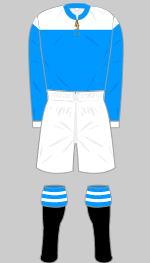
9 April 1912 I
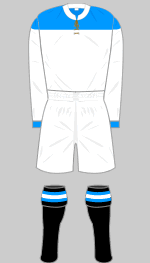
1912-1913 v A
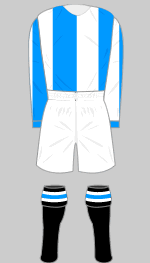
1913-1914 1 w A
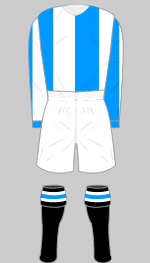
1913-1914 2 A
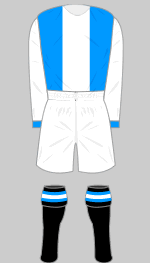
1914-1916 v A
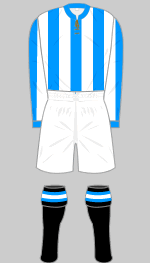
1916-1917 A
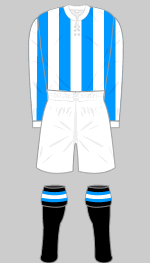
1918-1919 v
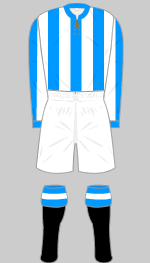
1919-1920 b A
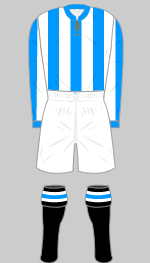
1920-1923 v A
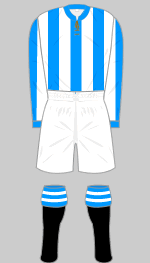
1923-1924 v
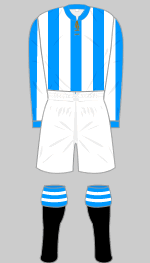
1924-1925 c i v
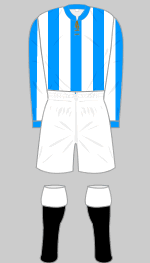
1925-1926 i v
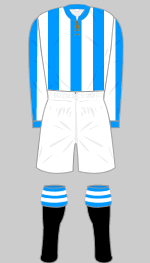
1926-1927 v
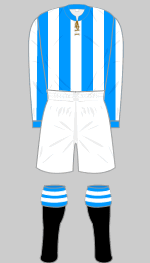
1927-1933 d v A
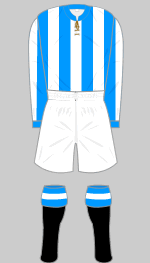
1933-1935 v z A
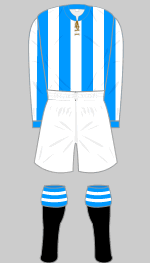
1935-1937 A
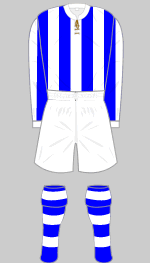
1937-1940 k v A
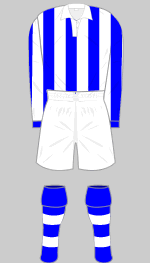
1944-1945 A
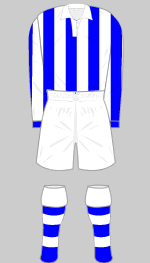
1945-1946 A
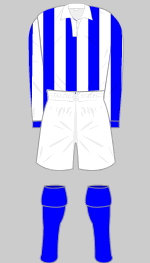
1946-1947 u A
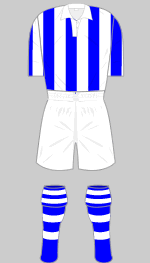
1947-1950 m v A
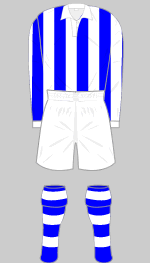
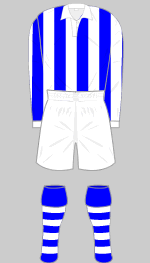
1951-1952 v A
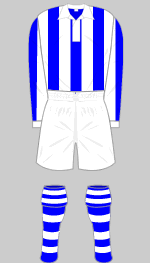
1952-1953 e v A
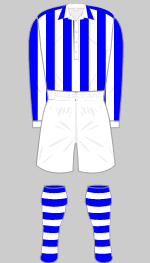
1953-1955 v A

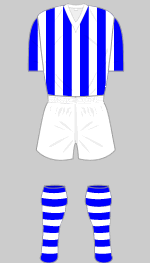
1955-1956 c t v B A
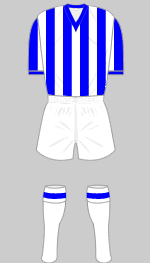
1956-cJan 1957 v
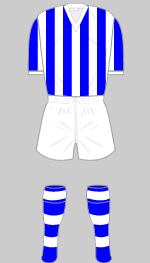
cJan 57-Jan 58 v
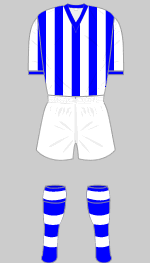
Jan-May 1958 i
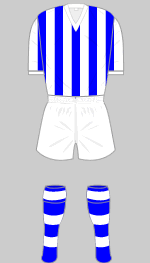
1958-1959 c A
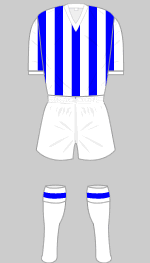
1959-1962 m v A F
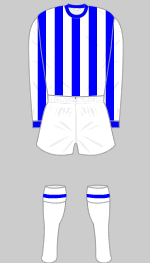
1962-1963 v A
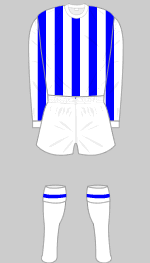
1963-1965 v A
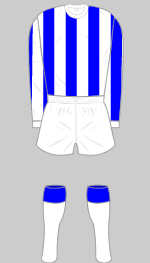
1965-1966 m v
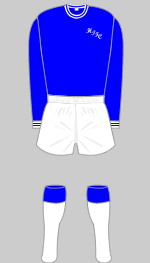
1967-1968 f v A
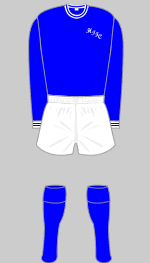
1968-1969 g v
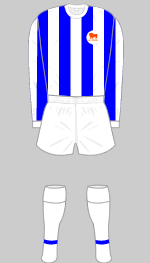
1969-1970 1 i
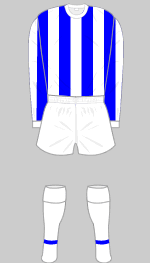
1969-1970 2 F
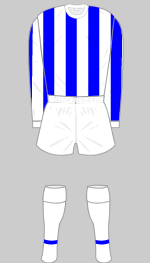
1970-1971 1 m v A
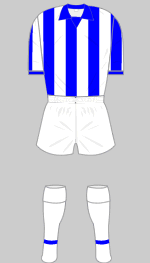
1970-1971 v
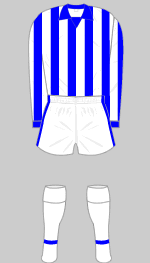
August 1971 i
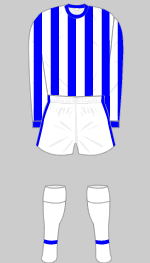
1971-1972 h v
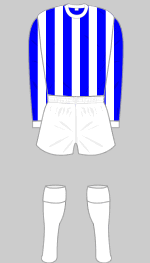
1971-1972 late r
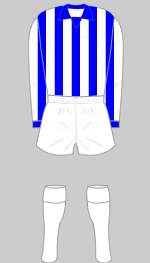
1972-1973 r
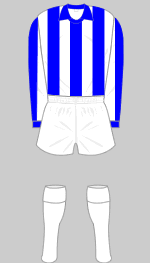
1973-1974 i j r

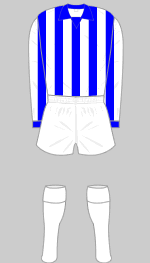
1974-1975 r
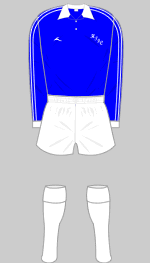
1975-1977 r
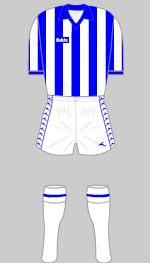
1977-1978 r v
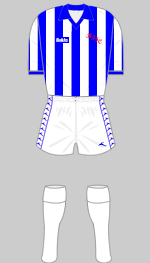
1978-1979 r w
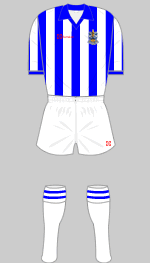
1979-1980 r A
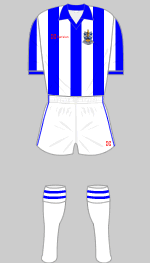
1980-1981 r
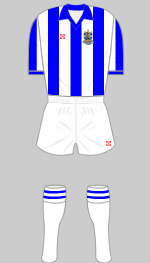
1981-1982 r
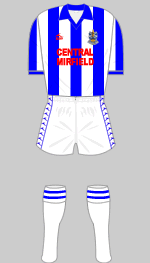
1982-1984 r
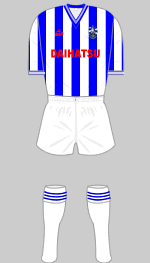
1984-1985 j m A
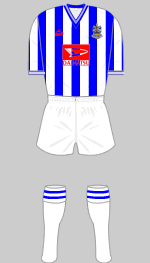
1985-1986 j o
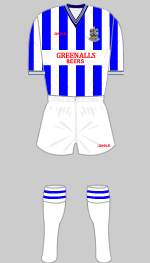
1986-1987 s
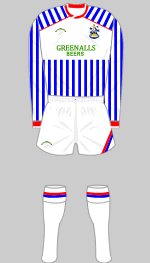
1987-1989 j s y D
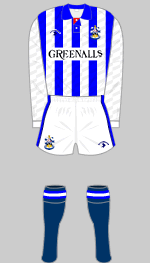
1989-1990 j o s A C E
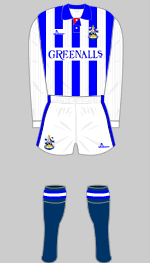
1990-1991 s E
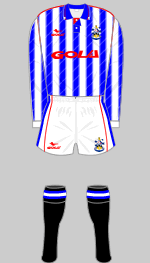
1991-1993 i x A
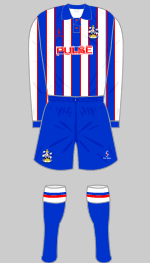
1993-1995 i s A
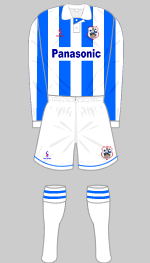
May 1995-1997 i
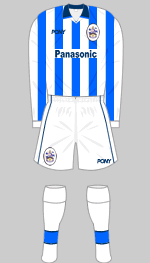
1997-1999 i
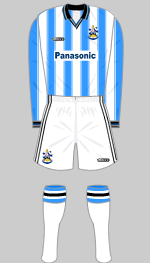
1999-2001 c i s
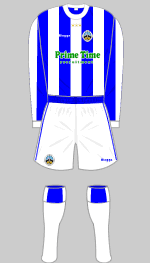
2001-2002 i
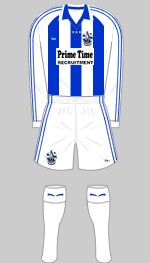
2002-2003 i
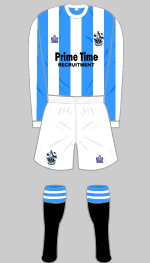
2003-2005 i
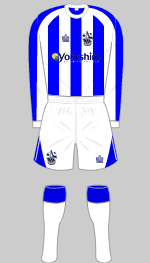
2005-2007 k
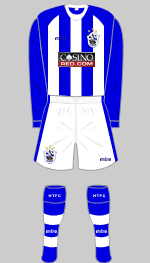
2007-2008 k q
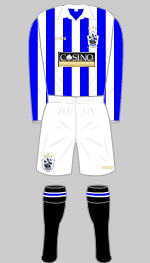
2008-2009 k
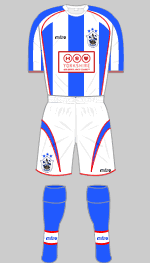
2009-2010 k
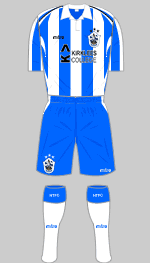
2010-2011 k
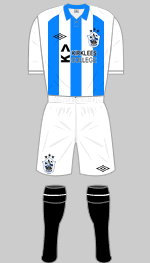
2011-2012 k
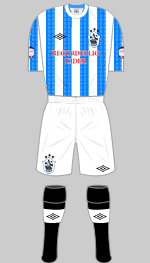
2012-2013 k
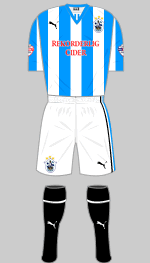
2013-2014 k
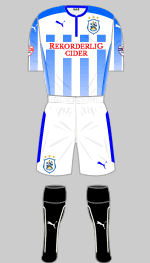
2014-2015 k
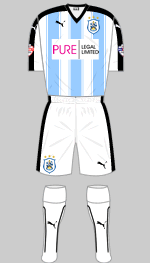
2015-2016 k
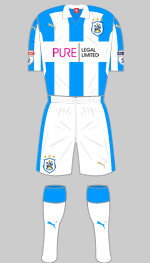
2016-2017 k
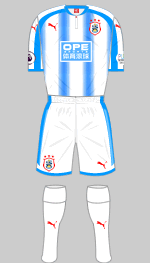
2017-2018 k
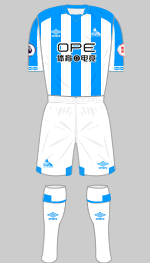
2018-2019 k
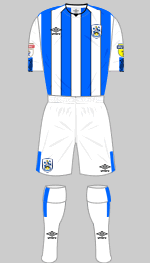
2019-2020 k
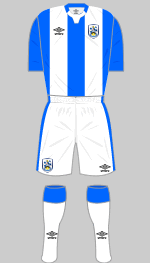
2020-2021 k
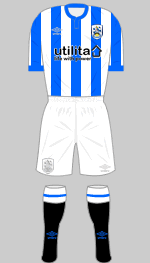
2021-2022 k
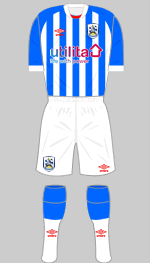
2022-2023 k
Background
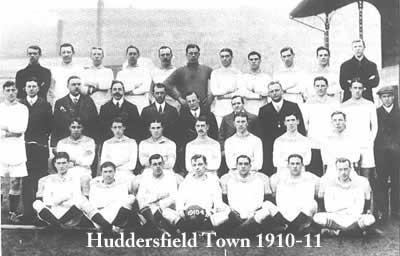 Huddersfield is where Rugby League was created
towards the end of the 19th century and it was not until 1907 that moves
to form a professional association football club came to fruition. Having
had their approach to share Huddersfield RFCs ground rebuffed, the founders
bought a site on Leeds Road for £500. In September 1908 Huddersfield
Town AFC was launched and joined the North Eastern League. They wore white shirts in a pre-season game against Bradford but then adopted red tops and became known as the "Scarlet Runners." The following season
they joined the Midland League in order to reduce traveling costs. A
resolution passed in July 1909 is recorded as deciding on a playing strip
of blue shirts with white knickers which a fixture card later clarified as being "light blue and white." Photographs suggest that this was an intermediate shade between pale Cambridge Blue and conventional mid-blue and this seems to have been worn until 1937 or thereabouts.
Huddersfield is where Rugby League was created
towards the end of the 19th century and it was not until 1907 that moves
to form a professional association football club came to fruition. Having
had their approach to share Huddersfield RFCs ground rebuffed, the founders
bought a site on Leeds Road for £500. In September 1908 Huddersfield
Town AFC was launched and joined the North Eastern League. They wore white shirts in a pre-season game against Bradford but then adopted red tops and became known as the "Scarlet Runners." The following season
they joined the Midland League in order to reduce traveling costs. A
resolution passed in July 1909 is recorded as deciding on a playing strip
of blue shirts with white knickers which a fixture card later clarified as being "light blue and white." Photographs suggest that this was an intermediate shade between pale Cambridge Blue and conventional mid-blue and this seems to have been worn until 1937 or thereabouts.
The club’s ambitious directors invited Archibald Leitch, the architect responsible for most of the larger stadia of the period, to design a ground capable of holding 34,000. Armed with these plans, the directors successfully applied to join the Football League, who were at that time actively promoting membership in the Rugby League heartlands of Yorkshire. They now wore a distinctive white kit with a blue yoke.
The costs of the development proved too great a burden and, with gates of less than 7,000, Huddersfield went into liquidation in 1912. A new limited company was formed in July to take over the club’s assets but they fared little better. Gates fell to around 3,000 and by 1919 the club was £25,000 in debt.
In November 1912 the board instructed that samples of both striped and plain blue shirts "of good quality" be purchased. Three weeks later they decided to order a set of "blue and white vertical stripes of three inches in width for the following season."
Immediately after the First World War, the football
establishment was shocked when Leeds City were ordered to disband for
illegally paying players during wartime competition. A new club, Leeds
United was immediately formed. Huddersfield’s chairman, J Hilton
Crowther, announced in November 1919 that he planned to merge with the
new outfit and move operations to Leeds where the public might be more
supportive. The announcement roused the seemingly indifferent townspeople
and, led by the local newspaper, there was an outcry. After weeks of frantic
negotiations and fundraising, J Hilton Crowther was offered a financial
settlement and he left to pursue his ambitions with Leeds United. The
impact on the players was equally dramatic and at the end of the season
they were beaten FA Cup finalists and won promotion to the First 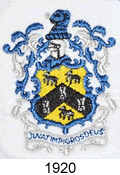 Division
into the bargain.
Division
into the bargain.
The first time a crest appeared on Huddersfield's shirts was in the 1920 FA Cup final when the town coat of arms was worn. Although this did not appear in league games, it was worn in the team's several FA Cup final appearances over the next two decades.
Huddersfield Town now embarked on a period of incredible success, winning the FA Cup in 1922 and then an unprecedented hat-trick of League championships in 1924, 1925 and 1926. The following two seasons they were runners-up. The architect of their success was Herbert Chapman, the genius who, ironically, had been Leeds City’s manager at the time they were closed down. Chapman joined Arsenal after Town’s second League title and he went on to repeat his extraordinary achievements there.
With crowds well in excess of 65,000 cramming themselves into Leeds Road, conditions on the terraces were primitive and after a series of near accidents that could have been fatal, the directors strengthened the barriers during the 1930s. While they could not recapture the achievements of the 1920s, Huddersfield remained a strong First Division outfit until the outbreak of the Second World War.
 Immediately after the war, Huddersfield began to
struggle. They spent one season in the Second Division (1952-53) but bounced
back immediately. They were relegated again in 1956 and spent the next
14 seasons in the Second Division. During the mid 1960s manager Tom Johnston
introduced plain blue shirts adorned with a monogram crest, stripes having
Immediately after the war, Huddersfield began to
struggle. They spent one season in the Second Division (1952-53) but bounced
back immediately. They were relegated again in 1956 and spent the next
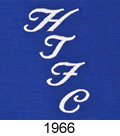
14 seasons in the Second Division. During the mid 1960s manager Tom Johnston
introduced plain blue shirts adorned with a monogram crest, stripes having 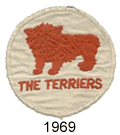 become unfashionable.
In 1969-70 the traditional shirts were restored and the club adopted the official nickname of "The Terriers" with a suitable badge to match. At the end of the season Town returned briefly to Division One. There followed a catastrophic decline and in 1975, they were in the Fourth Division. Scot Johnston returned to the club and reintroduced the plain blue shirts with monogram associated with his previous spell at the club.
Meanwhile, the club’s enormous ground was becoming increasingly dilapidated. Capacity had been gradually reduced from 67,000 to 31,000 on safety grounds and would eventually be set at 14,000 after the Hillsborough disaster.
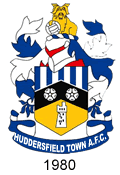 In 1980, Huddersfield won the Fourth Division title. The following season a new crest was introduced that combined elements of the old town coat of arms with modern motifs such as blue and white stripes
and a terrier with a football. Three seasons later Huddersfield were promoted back to the Second Division.
In 1988, they dropped down to what was now Barclay’s Division Two
(the old Third Division). Seven years later they returned to the second
level, now called Nationwide Division One. The manager for much of this period (1978-86) was Mick Buxton who insisted that all his players wore short sleeved shirts.
In 1980, Huddersfield won the Fourth Division title. The following season a new crest was introduced that combined elements of the old town coat of arms with modern motifs such as blue and white stripes
and a terrier with a football. Three seasons later Huddersfield were promoted back to the Second Division.
In 1988, they dropped down to what was now Barclay’s Division Two
(the old Third Division). Seven years later they returned to the second
level, now called Nationwide Division One. The manager for much of this period (1978-86) was Mick Buxton who insisted that all his players wore short sleeved shirts.
In 1992, planning permission was granted for a
new stadium and, in a rather ironic twist, Huddersfield RLFC moved in
to share the club’s Leeds Road ground, 85 years after they 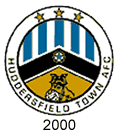 had snubbed
the fledgling association club’s approaches. In May 1994 the two
clubs moved into the new McAlpine stadium and the following season, Town
were promoted back to Nationwide Division One.
had snubbed
the fledgling association club’s approaches. In May 1994 the two
clubs moved into the new McAlpine stadium and the following season, Town
were promoted back to Nationwide Division One.
In 2000 a modern, circular crest was introduced but proved very unpopular with supporters not least because the team were relegated at the end of the season so this 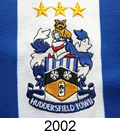 was soon dropped in favour of the traditional design with three stars (representing Town's historic hat-trick of Division One titles).
Huddersfield plunger into the fourth tier in 2003. At the time the club were £20 million in debt and on the verge of liquidation when they were bought out of administration by Ken Davy. Reamarkably, the team finished in fourth place in 2003-04 and were promoted via the play-offs.
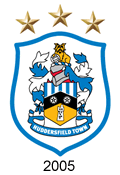 A modified crest was introduced for the 2005-06 season that placed the popular heraldic design inside a shield.
In 2012 the Terriers won promotion back into the second tier. One day after sacking their manager in November 2015 "for failing to meet the club's objectives", former US  international David Wagner was appointed to the post. In May 2017 he took the team to the Championship play-off final where they beat Reading on penalties to secure a place in the top tier for the first time since 1972.
For the 2018-19 season a new badge was introduced, inspired by the Yorkshire Terrier that featured in 1969, but drawn rather better and looking considerably more fierce. This was used soley on the strip and did not replace the heraldic crest which continued to 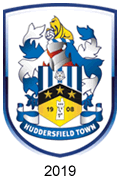 appear on all official media and documents. The season ended badly with the team ten points adrift at the foot of the Premier League.
In July 2019 the club was at the centre of a controversy when their new sponsor, Paddy Power, revealed a new strip adorned with a large sash with the sponsor's name across it that clearly exceeded the permitted size. Having stirred things up (the Daily Mail and the FA got drawn in) it was revealed the strip was a hoax set up to launch Paddy Power's "Save Our Shirt" promotional campaign. The novel terrier badge was dropped after the disappointing 2018-29 campaign in favour of a more traditional design.
Sources
- (a) Club Colours (Bob Bicketon 1998)
- (b) Mighty Leeds Website
- (c) Football Focus
- (d) Sheffield United FC - Images of Sport (Denis Clareborough)
- (e) Association of Football Statisticians
- (f) Tranmere Rovers FC - Images of Sport (Peter Bishop)
- (g) Bury FC - Images of Sport (Peter Cullen 1998)
- (h) Football Cards
- (i) empics
- (j) Classic Kits
- (k) Huddersfield Town Official Website
- (l) Max Pages
- (m) Pete's Picture Palace
- (n) Bjørn-Terje Nilssen
- (o) jumpers4goalposts
- (p) David King
- (q) Football Shirt Culture
- (r) Alick Milne
- (s) Paul Moorhouse
- (t) The Times 17 December 2007
- (u) Simon Monks
- (v) Keith Ellis
- (w) Alan Hodgson
- (x) Andrew Guads
- (y) Ralph Pomeroy
- (z) Alisdair Gibbs-Barton
- (A) The Huddersfield Town Collection from Roger Pashby (HFK Research Associate)
- (B) Oleg Boranov
- (C) Nick Bruzon
- (D) Philip Jenkinson
- (E) Steve Mellor
- (F) The Senior Tigers Club
- (G) Football & the First World War
- (H) Huddersfield Examiner (5 Sept 1908) retrieved from The Huddersfield Town Collection
- (I) Leeds Road: Home of my Dream (Ian Thomas 1994) retrieved from The Huddersfield Town Collection
Crests are the property of Huddersfield Town FC.