

Halifax
Town
Formed 1911. Wound up May 2008.
Founder member of Division Three (North) 1921. Relegated to the Conference 1993.
Promoted to Division Three 1998. Relegated to the Conference 2002.
Kit History
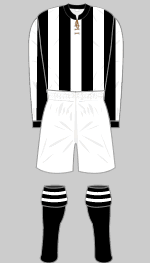
1911-1916 z
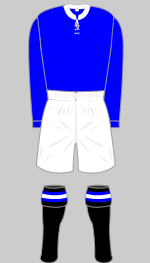
1919-Dec 1920 z
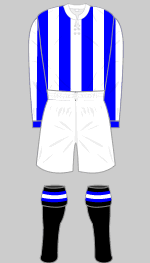
Jan-May 1921 z
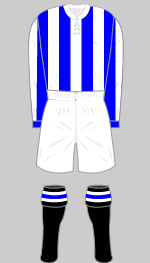
1921-1923 z B
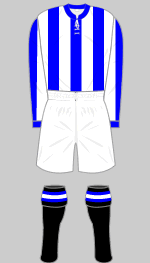
1923-1924 z D
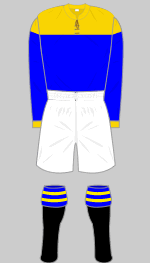
1924-1926 z
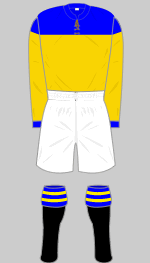
1926-1929 C E
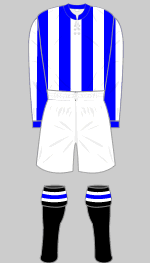
1930-1932 j m z
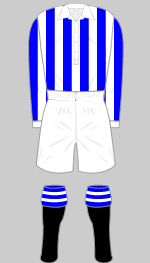
1932-1933 H
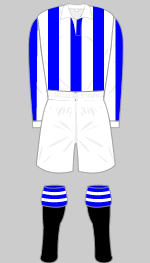
1934-1937 zE
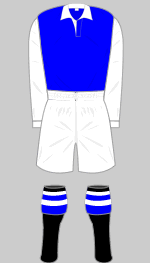
1938-1939 H
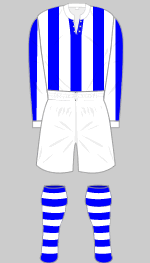
1943-1944 e
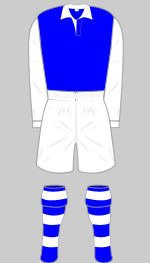
Jan-May 1948 z
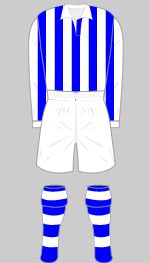
1948-1950 v x z E
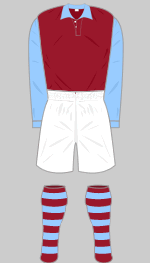
1950-1952 a x z
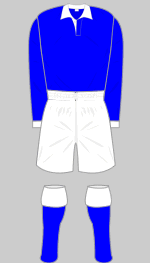
1952-1953 z

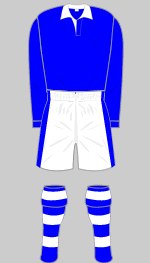
1952-1956 b d x z
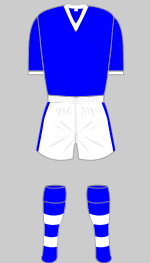
1957-1959 w z
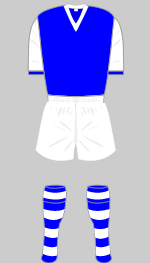
1959-1962 l z

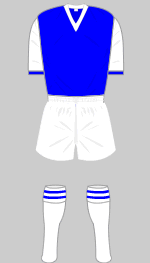
1962-1963 F
1963-1964
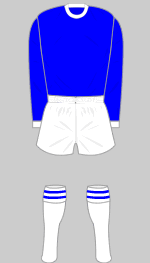
1964-1965 G
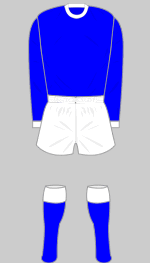
1965-1966 w G
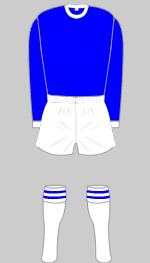
1966-1967 w
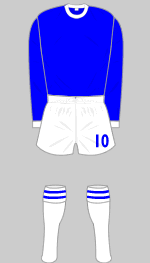
1968-1969 b
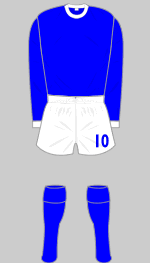
1969-1970 b
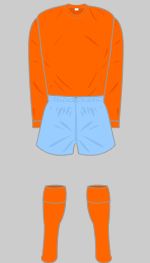
1970-1971 c t
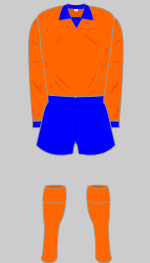
1971-1972 q t
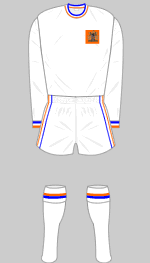
1972-March 1973 p t
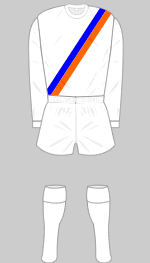
March-April 1973 z
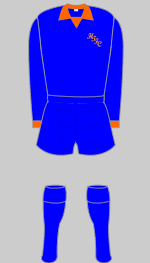
1973-1974 a t
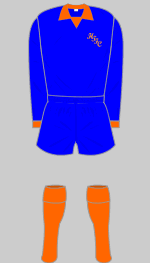
1974-1975 f
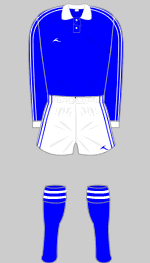
1975-1976 q
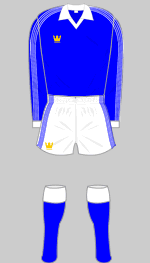
1976-1977 g q A
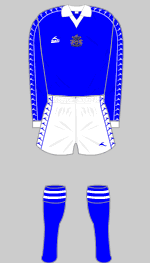
1977-1978 l q
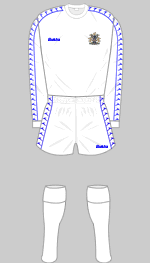
1978-1979 l n q
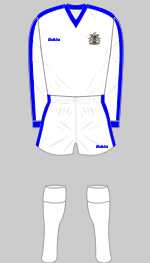
1979-1980 l q
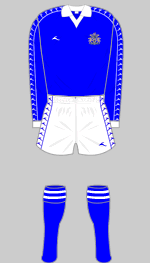
1980-1982 l m q
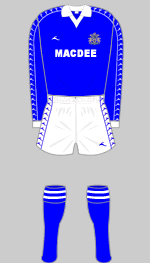
1982-1983 l
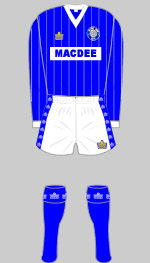
1983-1984 l
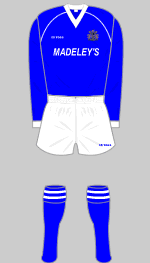
1984-1985 l q
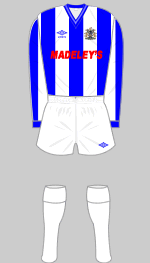
1985-1986 l s y
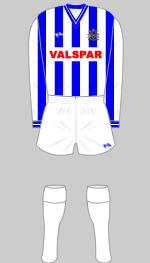
1986-1987 b s y
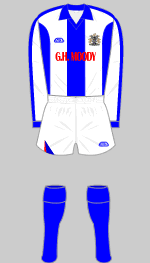
1987-1988 n s
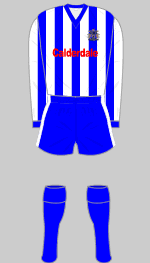
1988-1989 l
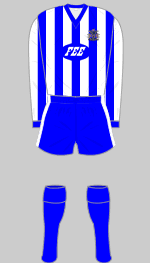
1989-1990 l
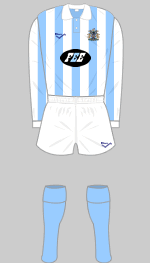
1990-1991 i
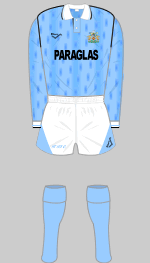
1991-1992 early e l n A
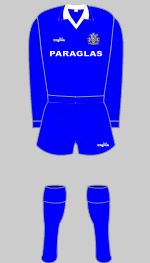
1991-1992 mid y
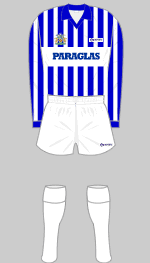
1992-1993 e n
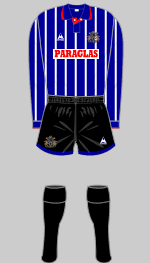
1993-1994 k n s u A
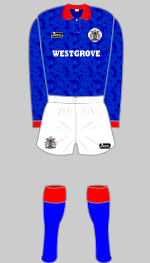
1994-1995 s A
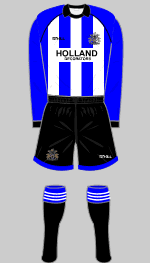
1995-1996 k s
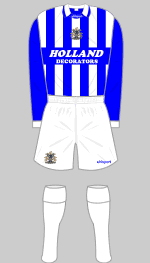
1996-1997 k l s
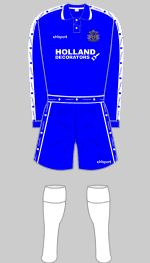
1997-1998 e h n s
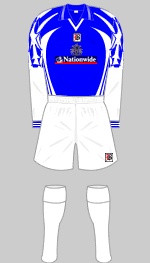
1998-1999 e
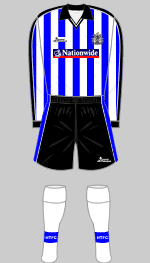
1999-2000 e
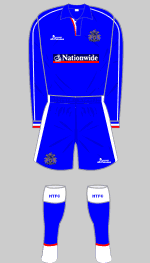
2000-2001 e
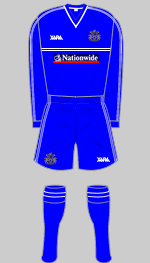
2001-2002 e
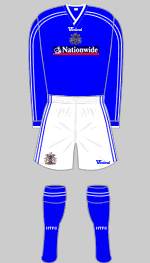
2002-2004 e s
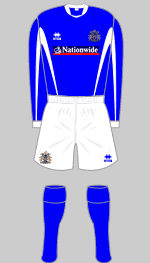
2004-2005 g
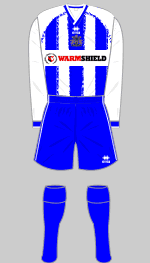
2005-2006 h s
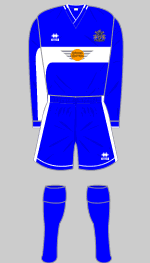
2006-2007 h
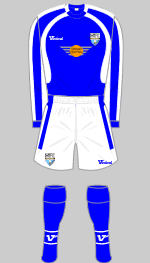
2007-2008 h
Background
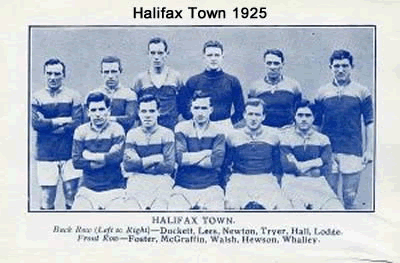 Halifax’s formation by Dr Muir and Jock McClelland in 1911 was
the last in a series of ventures that brought professional association
football to the rugby league heartland of West Yorkshire. Since the turn of
the twentieth century, Leeds City, Huddersfield Town, Hull City and the
two Bradford clubs had been created. Halifax always struggled to
compete against their more powerful neighbours in both codes.
Halifax’s formation by Dr Muir and Jock McClelland in 1911 was
the last in a series of ventures that brought professional association
football to the rugby league heartland of West Yorkshire. Since the turn of
the twentieth century, Leeds City, Huddersfield Town, Hull City and the
two Bradford clubs had been created. Halifax always struggled to
compete against their more powerful neighbours in both codes.
Halifax originally played in black and white stripes but after the First World War they switched to blue and white. They played in the Midland League before being elected to the new northern section of the Football League in 1921. They had to seek re-election in their first season and again in 1930 but came close to promotion when they finished as runners-up in 1935.
After the Second World War “the Shaymen” (derived from the name of their ground, The Shay) had to go through the re-election process three times in four seasons. A change of colours in 1950 made no difference and in 1953 they were facing the re-election ballot once again. In 1957-58 they managed to finish in the top half of the table for the first time since the war and were placed in the Third Division for the following season, following the abolition of the old regional divisions.
They held on to their place until 1963 when they were relegated to the
Fourth Division. Re-elected yet again in 1965, Halifax won their first
ever promotion in 1969.
in 1965, Halifax won their first
ever promotion in 1969.
During the 1970s, in an effort to improve their
fortunes, Halifax experimented with orange and blue and during this period the club's initials were embroidered on to the team shirts. In 1976 the club was
relegated back to the Fourth Division and over the next ten seasons they
had to  seek re-election no fewer than five times.
From 1977 the Halifax coat of arms was worn on their shirts (this probably also appeared on the club's first all-white strip worn in 1972-73). The chequered shield at the centre of this elaborate heraldic device dated from the original arms of the Earls Warenne, who held the town in Norman times.
During the 1980s and 1990s the team turned out in a variety of striped tops, recalling  their original shirts but their fortunes on the pitch did not improve. In 1993 the inevitable
occurred although by now the election system had been replaced by automatic
promotion and relegation between the League and Conference. Finishing
bottom, Halifax lost their League place and spent five seasons in the
Conference before winning the championship in 1998.
their original shirts but their fortunes on the pitch did not improve. In 1993 the inevitable
occurred although by now the election system had been replaced by automatic
promotion and relegation between the League and Conference. Finishing
bottom, Halifax lost their League place and spent five seasons in the
Conference before winning the championship in 1998.
In 2002 The Shaymen dropped back into the Conference for the second time and in May 2006 they came within ten minutes of returning to the Football League in the play-off final, losing out to Hereford United.
In 2007 Halifax introduced their own crest design.
In March 2008, the club went into administration after their former chairman, Raymond Moreland, took out a winding up order over an unpaid debt of £8,000. A consortium of local business people agreed to meet day to day running costs with a view to buying the club but an offer to pay creditors 2.5p in the pound was dismissed as derisory. Negotiations continued and the outlook seemed improved when, on the final day of the season, Halifax managed to retain their place in the National Conference despite being docked ten points for entering administration. Days later, however, it was revealed that the club owed over £800,000 to the Inland Revenue and were more than £2m in debt. Because they had failed to reach agreement with their creditors, Halifax lost their place in the Conference and the club was formally wound up.
A new "phoenix club," FC Halifax Town was promptly constituted and accepted into the Northern Premier League Division One North for the following season.
Sources
- (a) Club Colours (Bob Bickerton 1998)
- (b) Football Focus
- (c) Football Cards
- (d) York City FC - Images of Sport (David Batters)
- (e) empics
- (f) Aldershot Has It Website
- (g) Classic Kits
- (h) Halifax Town Official Website
- (i) Programmes for Sale
- (j) The Football Encyclopaedia (Associated Sporting Press 1934) Information provided by Arthur Fergus
- (k) Alliance to Conference (John Harman 2005)
- (l) Ralph Pomeroy
- (m) Pete's Picture Palace
- (n) Richard Catton
- (o) David King
- (p) Football League Review provided by Simon Monks
- (q) Alick Milne
- (r) Robert Gray
- (s) Matthew Pearson
- (t) Martin SHAYMAN
- (u) Mark Alton
- (v) Pete Wyatt
- (w) Keith Ellis (HFK Research Associate)
- (x) Roger Tilbury
- (y) Anthony Borrett
- (z) Johnny Meynell (Halifax Town FC Historian)
- (A) OldFootballShirts.com
- (B) Athletic News (19 February 1923) submitted by Kingsley (Wrexham FC)
- (C) Lancashire Evening Post 19 June 1926 submitted by Richard Essen
- (D) Athletic News 19 February 1923 submitted by Richard Essen
- (E) Halifax Town Legends
- (F) The Senior Tigers Club
- (G) Peter Stevenson
- (H) Simon Monks
- (I) yorkcitysouth.co.uk