
Grimsby
Town
Formed 1878
Founder members of Division Two 1892. Failed re-election 1910.
Elected back into Division Two 1911. Failed re-election 1920.
Founder member of the Third Division 1920. Relegated to the Conference 2010.
Promoted to League Two 2016. Relegated to the National League 2021.
Promoted to League Two 2022.
Kit History
Grimsby Pelham
1878

1878-1879 G
Grimsby Town
1879
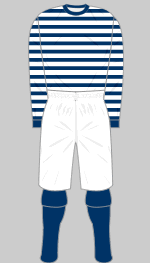
1882-1884 1 B F G

1882-1884 2 G
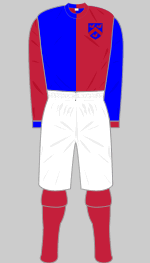
1884-1885 B
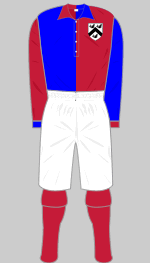
1885-1887 A B
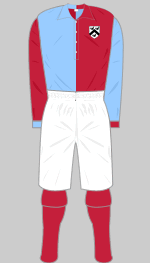
1887-1894 n B
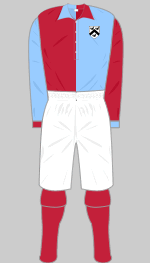
1887-1894 alt n B
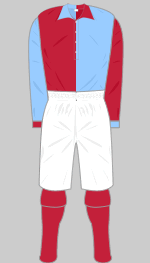
1894-1897 B n
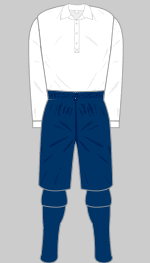
1897-1899 n B
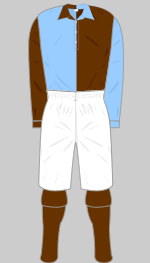
1899-1902 a n s B
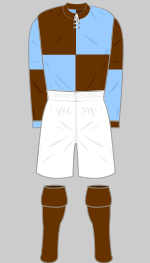
1902-1904 a B
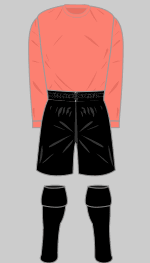
1904-1905 B
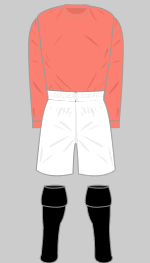
1905-1906 a s B
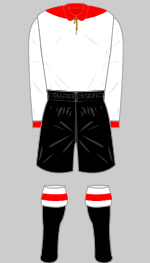
1906-1908 a m n x B
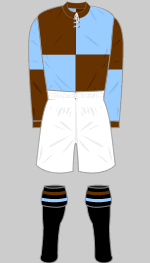
1908-1910 x B
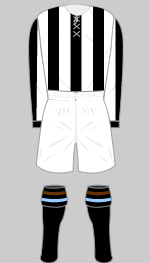
1910-1911 x B
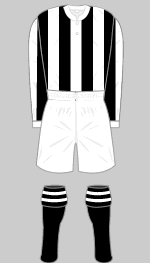
1911-1920 a r x B
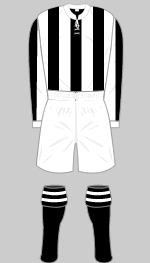
1920-1923 B
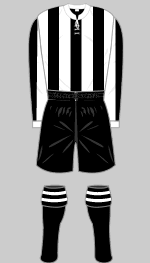
1924-1925 B
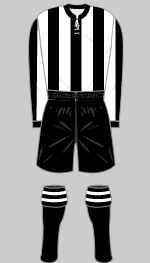
1925-1926 B
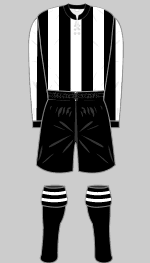
1928-1933 x B
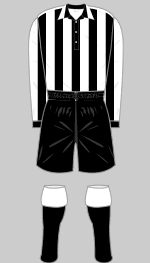
1933-1934 s u x B
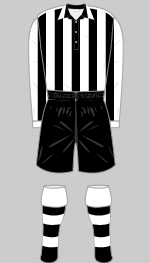
Sept 1934 B
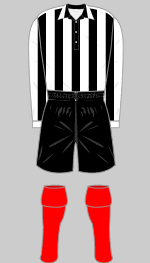
5 Oct 1934-1936 B
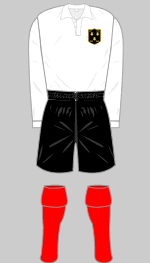
Jan-March 1936 B
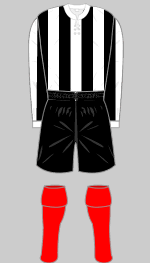
1936-1937 s x B
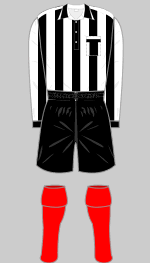
1938-1939 s x B
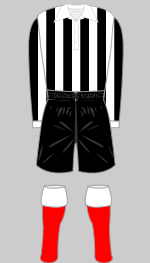
27 March 1939 s B
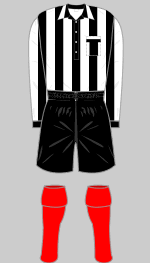
1939-1947 s x B
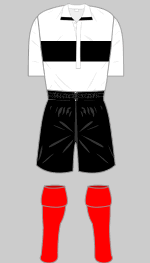
10 May 1947 B
1947-1948 B
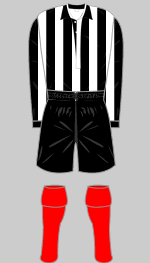
1948-1949 b c d B
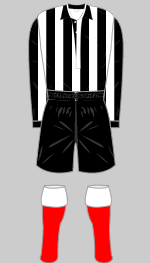
1949-1950 B

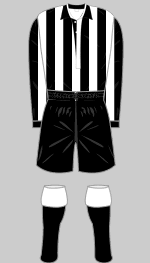
1950-1952 B
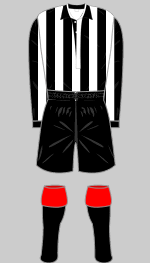
1952-1953 x B
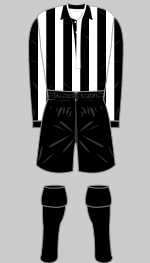
1953-1954 B
1954-1955 B
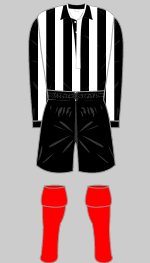
1955-1958 b B
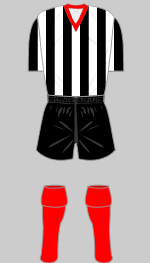
1955-1958 e s x
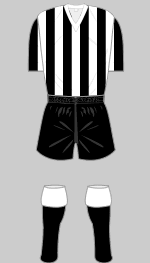
August 1958 B
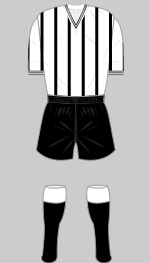
Sept 1958-1959 f x B
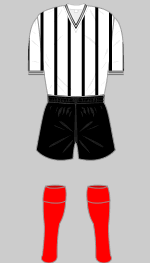
1959-1960 B
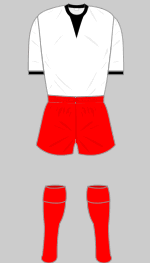
1960-1963 a B
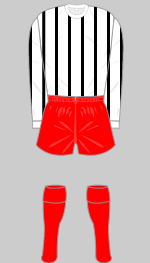
8 Jan 1963 B
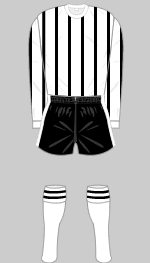
1963-1964 g h x B
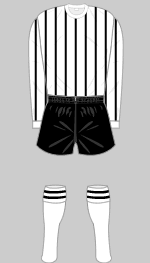
1964-1966 x B
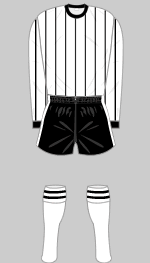
1966-1969 B
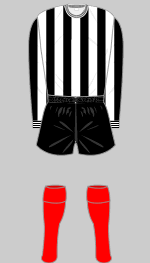
1969-1970 x B
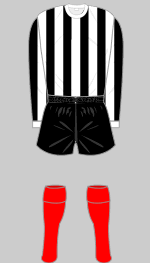
1970-1971 h B
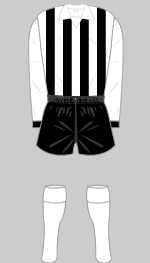
1971-1972 p x B
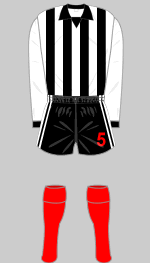
1972-1973 1 B
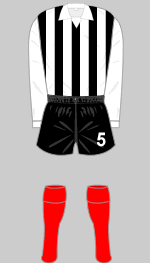
1972-1973 2 B
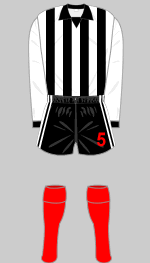
1973-1974 1 j x B
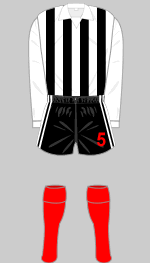
1973-1974 2 B
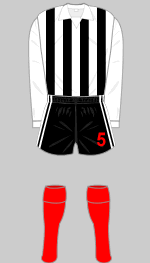
1974-1975 h B
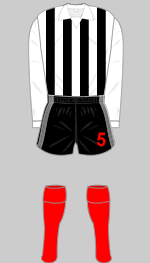
1975-March 76 h q B
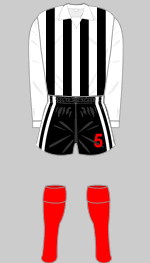
March-May 1976 B
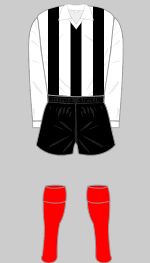
1976-1977 B
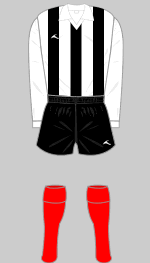
1977-1978 1 q B
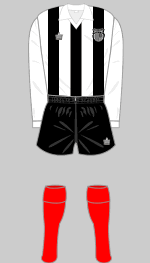
Oct 77-Jan 80 2 q v B
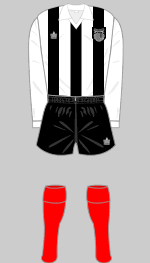
Oct 77-Jan 80 3 B
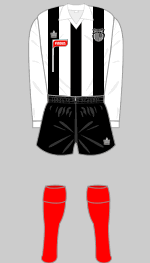
Jan-May 1980 b
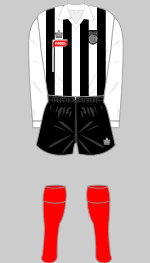
1980-Jan 81 q B C
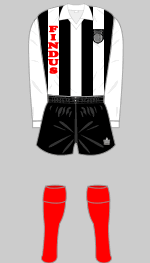
Jan-May 1981 q B
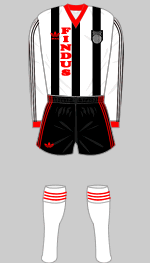
1981-Oct 1982 h o B
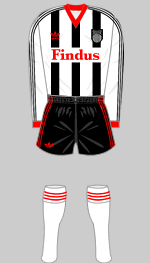
Oct 1982-1983 q B
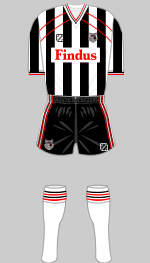
1983-1984 h o z B
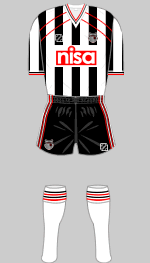
1984-1985 1 B
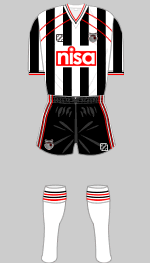
1984-1985 2 b o z B
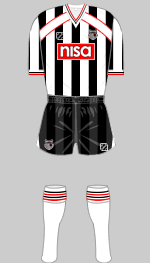
1985-1986 h B
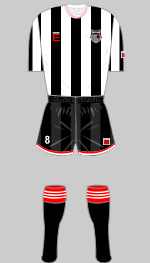
Aug-Sept 1986 B
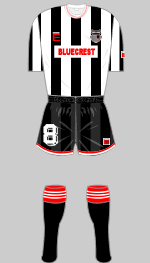
7 Oct 1986 b
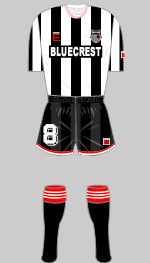
Oct 86-March 87 b B
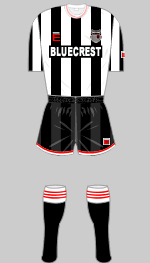
April-May 1987 B
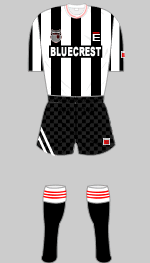
1987-Feb 1988 B
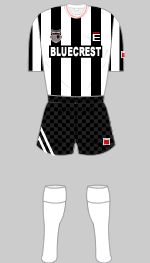
March-May 1988 B
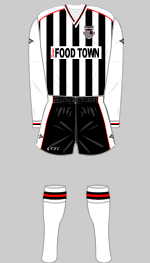
1988-March 90 w y B
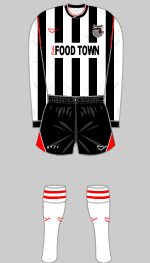
March-May 1990 B
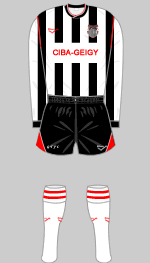
1990-1991 g o B
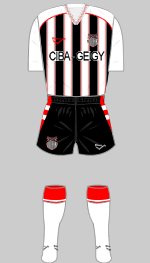
1991-1992 o B
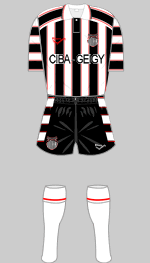
1992-1993 g o B
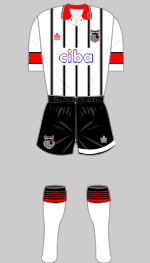
1993-May 1994 g h B
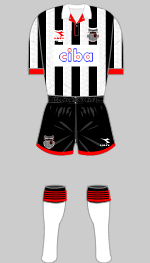
May 1994 B
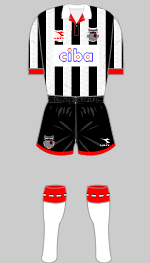
1994-1995 g B
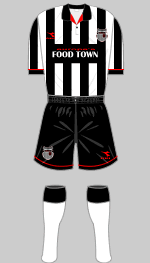
1995-1996 g B
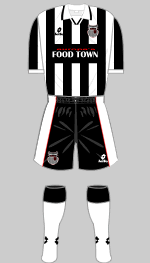
1996-April 98 g k o B
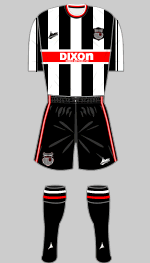
April 1998-1999 g B
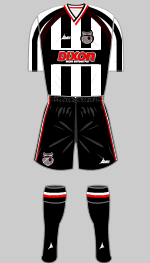
1999-2000 g o B
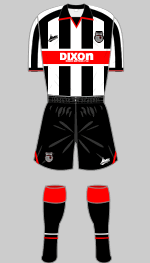
2000-2001 g h o B
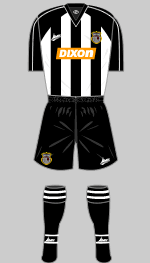
2001-2002 g B
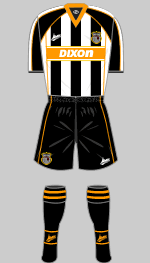
2002-2003 g o B
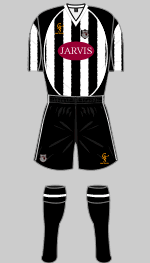
2003-2004 g o B
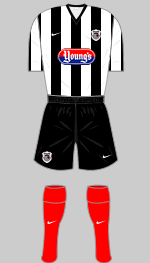
2004-2006 g l o B
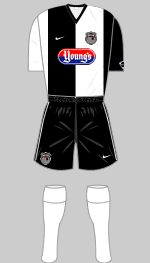
2006-2007 l B
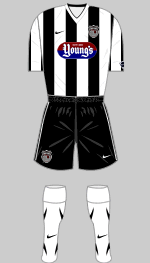
2007-Feb 2008 l
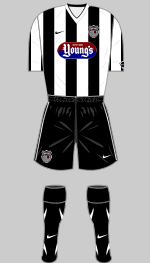
March-May 2008 B
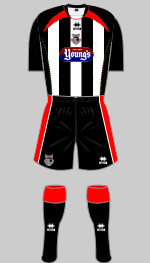
2008-Jan 2009 l t B
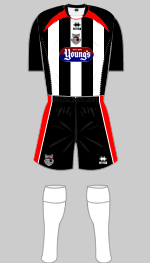
Jan-May 2009 B
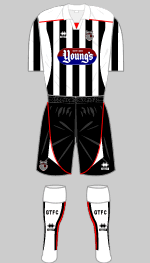
2009-2010 l B
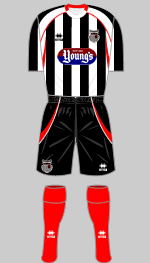
2010-2011 l
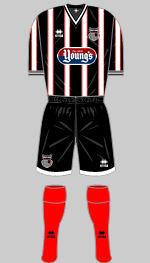
2011-2012 l
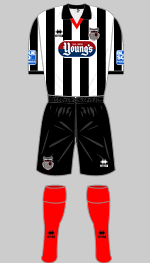
2012-2013 l
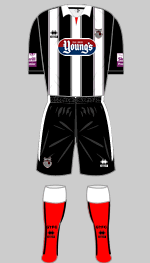
2013-2014 l
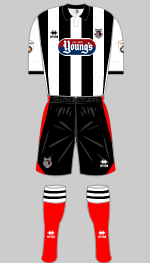
2014-2015 l
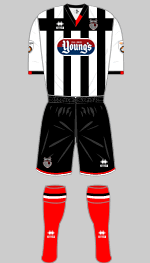
2015-2016 l
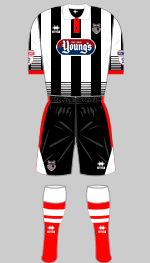
2016-2017 l
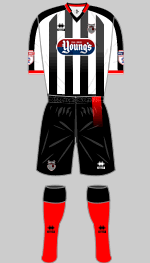
2017-2018 l
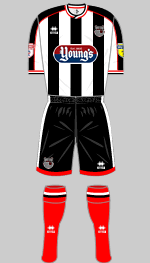
2018-2019 i
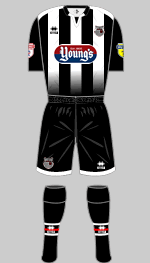
2019-2020 i
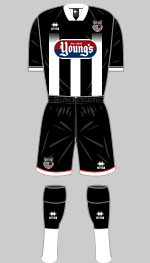
2020-2021 i
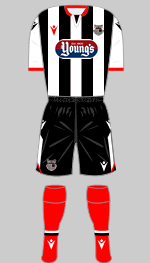
2021-2022 i
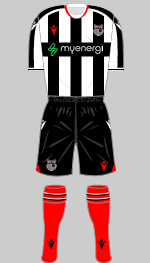
2022-2023 l
Background
 The club was formed in
September 1878 at a meeting in a public house of members of Worsley Cricket Club. They were called Grimsby
Pelham FC after a local landowning family but a year later they became Grimsby
Town. One of the founders, Bob Smart, wrote "It was put in the hands of Jim Coates (vice captain) to order the uniforms. Great Scott what an outfit! Broad blue and white stripes, stockings the same and caps hanging to the shoulder!"
The club was formed in
September 1878 at a meeting in a public house of members of Worsley Cricket Club. They were called Grimsby
Pelham FC after a local landowning family but a year later they became Grimsby
Town. One of the founders, Bob Smart, wrote "It was put in the hands of Jim Coates (vice captain) to order the uniforms. Great Scott what an outfit! Broad blue and white stripes, stockings the same and caps hanging to the shoulder!"
By 1882-83 the team were playing in narrow one-inch hoops although a few players sported slightly wider hoops and both white and navy knickers appeared, suggesting that the players were providing their own kit.
In 1884 the hooped jerseys were replaced by royal blue and cardinal halves adorned with the Grimsby coat of arms. Blue caps were supposed to be part of the uniform but there is no photographic evidence that these were worn. Between 1887 and 1894 the blue appears to be a lighter shade (this might be due to the film stock used) and 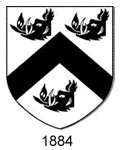 there were variations in the arrangement of the halves. The crest appeared on some tops but not others.
In 1890, the club adopted professionalism and joined the Football Alliance after an application to the Football League was turned down. In 1892 the Alliance was incorporated into the Football League as the Second Division. Since 1899 the club has played in neighbouring Cleethorpes. Between 1897 and 1899 the team played in striped shirts but it has not been possible to confirm the colours.
In 1901 Grimsby won the Second Division championship and played in the First Division for two seasons before relegation in 1903. Plain jerseys in salmon pink were adopted in 1904-05 followed by unusual white tops with a red yoke before chocolate and blue was reinstated.
At the end of the 1909-10 season, Grimsby failed re-election and were replaced by Huddersfield Town. The old chocolate and blue jerseys were replaced the following season with black and white striped shirts, which have become the club's signature kit to this day. After one season in the Midland League, which they won, Grimsby were elected back into the League by a single vote at the expense of their local rivals Lincoln City. Despite this rapid return, they failed to make much impression and in 1920 they finished bottom and were voted out for the second time. In a remarkable stroke of fortune they were then invited to join the new Third Division (formed by incorporating the First Division of the Southern League). When the League was further expanded a year later with the formation of Division Three (North), Grimsby transferred to the northern section.
In 1926, the Mariners won their division and with
it promotion back to the Second Division. Three years later they were
promoted back to the First Division. Aside from two seasons back in the
Second (1932-33 and 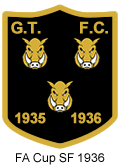 1933-34), they remained in the top division until
1948, appearing in the FA Cup semi-final in 1936 (when they wore a special kit in all their cup games) and 1939. On 5 October 1934 the team wore red socks for the first time. According to Dave Wherry, one source suggests these were a gift from an anonymous fan who had won the football pools after putting Chelsea down to beat Grimsby. A more prosaic account is that the manager, Frank Womack, thought they would make it easier for players to spot each other on the pitch.
1933-34), they remained in the top division until
1948, appearing in the FA Cup semi-final in 1936 (when they wore a special kit in all their cup games) and 1939. On 5 October 1934 the team wore red socks for the first time. According to Dave Wherry, one source suggests these were a gift from an anonymous fan who had won the football pools after putting Chelsea down to beat Grimsby. A more prosaic account is that the manager, Frank Womack, thought they would make it easier for players to spot each other on the pitch.
The first time that numbers were worn on the back of Grimsby's shirts was in the 1939 semi-final when another special strip was commissioned. For the record the numbers were grey on a white patch.
When Sunderland visited Blundell Park in the penultimate game of 1946-47, Grimsby wore white shirts with a broad black band and unusual collar. It is unclear if this was because Sunderland traveled with only their striped shirts and the referee decided they clashed with the home team or if they were trying out a new look.
Grimsby's decline in the 1950s was dramatic. Relegated from the First Division in 1948, they were seeking re-election to the Third Division (North) in 1955. The following season they were champions and were promoted back to Division Two were they stayed for four seasons. The so called "cod war" dispute with Iceland in the late 1950s struck a severe blow to the traditional trawler fleet that provided the basis of Grimsby's industry. As the local economy suffered so did the football club's fortunes. Throughout this period the team wore the standard striped shirts of the period with various sock combinations.
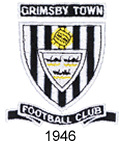 A new crest was designed in 1946 and although it never appeared on the team shirts it certainly featured on programmes in the 1960s. The three trawlers represent the town's traditional industry.
Fashionable candy striped shirts were worn in the late 1950s followed by a white shirt with novel trim combined with red shorts and socks. In this outfit they returned to Division Two in 1962. Long sleeved candy striped shirts were worn in an FA Cup tie with Leicester City in January 1963, a game played in freezing temeratures and these tops were reinstated in 1963 but another crash followed and in 1969 the Mariners were once again forced to seek re-election. Stripes of a traditional width returned in 1969 and three seasons later, plain white sleeves were introduced. This became the Mariners' signature strip until the 1980s.
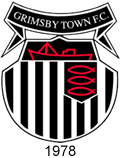 1972 brought the Fourth Division championship but they were
back in the lowest division in 1977. A new crest was designed by George Palejowski in 1972 (for which he received an inscribed rose bowl from the club) but this did not appear on the team's shirts until the centenary season, 1978-79. The principle motif shows the club's traditional black and white stripes with stylised drawings of a trawler and fish representing the historical importance of the fishing industry to the town. Although these elements were printed in white in many publications, they were in fact red.
1972 brought the Fourth Division championship but they were
back in the lowest division in 1977. A new crest was designed by George Palejowski in 1972 (for which he received an inscribed rose bowl from the club) but this did not appear on the team's shirts until the centenary season, 1978-79. The principle motif shows the club's traditional black and white stripes with stylised drawings of a trawler and fish representing the historical importance of the fishing industry to the town. Although these elements were printed in white in many publications, they were in fact red.
Successive promotions (1979 and 1980) took them back to the Second Division but then in 1987 and 1988 they were relegated and back in the Fourth. Remarkably, they repeated the successive promotions in 1990 and 1991.
In 1997 they were relegated from Nationwide Division One (the old Second Division) but came back via the play-offs the following season, also winning the Auto Windscreens Trophy. A new kit, sponsored by Dixon's Motors was worn in that final and then in the remaining league games. History repeated itself between 2003 and 2004 when Grimsby plunged down the divisions once more. In 2004 the club began an association with Young's Seafood, the town's largest private sector employer.
After struggling during the 2009-10 season, the Mariners were relegated to the Conference. Success has been agonisingly elusive since then: they reached the final of the FA Trophy in 2013 but were beaten by Wrexham on penalties. They also lost out in the promotion play-offs at the semi final stage in 2013 and 2014 before they returned to Wembley for the Conference Promotion Final where they lost to Bristol Rovers. In 2016 they returned to Wembley yet again where they beat Forest Green Rovers 3-1 to regain their place in the Football League.
The next five seasons were marked by poor form and turbulence behind the scenes culminating in relegation to the National League in May 2021. Shortly afterwards local technology entrepeneurs Jason Stockwood and Andrew Pettit completed their takeover of the club and pledged to rebuild it as a community asset and a catalyst for regeneration. At the end of an emotional campaign Grimsby finished sixth and were considered underdongs going into the play-offs. In their first eliminator against Notts County they 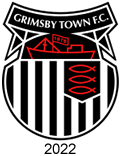 equalised in the 96th minute before going on to win in extra time. They then beat Wrexham 5-4 with a goal in the last minute of extra-time and in the final, played at the London Stadium, a goal in extra-time eased them past Solihull Motors. As a commentator said after the match, "There's a hard way, there's an easy way...and then there's the Grimsby way."
In January 2022 the owners engaged Rich Lyons, a supporter who worked as a designer with Apple, to update and digitise the club crest. A flag was added to the trawler with the date of the club's formation and the scrollwork was modified but otherwise all the main features of the original were preserved.
Sources
- (a) Grimsby Town F.C - The Official History 1878 to 2000 (Dave Wherry) - provided by Richard Owen.
- (b) Football Focus
- (c) Hull City FC - Images of Sport (C Elton)
- (d) Workington AFC - Images of Sport (Paul Eade 2003)
- (e) Leyton Orient FC - Images of Sport (Neilson N Kaufman)
- (f) Bristol Rovers FC - Images of Sport (Mike Jay)
- (g) empics
- (h) Kit Classics
- (i) Football Cards
- (j) Aldershot Has It Website
- (k) Southend United FC (Images of Sport: Peter Miles & David Goody)
- (l) Grimsby Town FC
- (m) Mighty Mighty Whites
- (n) Mariners Archive
- (o) David King
- (p) Football League Review provided by Simon Monks
- (q) Alick Milne
- (r) Topical Times Cards
- (s) Simon Monks
- (t) Fabrizio Taddei (Errea)
- (u) My photo library
- (v) Steve Browne
- (w) Matt Keenan
- (x) Keith Ellis (HFK Research Associate)
- (y) Christopher Worrall
- (z) Nolan Bennett
- (A) Warren Lyons
- (B) Dave Wherry
- (C) Peter Anderson
- (D) Lincolnshire Echo (19 November 1898) submitted by Brian Webb.
- (E) Hull Daily Mail (6 February 1896) submitted by Brian Webb.
- (F) Charles Alcock's Football Annuals 1869-1891 researched by Robin Horton
- (G) History of Grimsby Town FC Volume One (Bob Cavallini 2025)
Team photograph courtesy of Football League Grounds For A Change (David Twydell 1991). Modern crests are the property of Grimsby Town FC. This section was substantially revised in January 2016 with material provided by Dave Wherry.