Darlington
Formed 1883.
Founder member of Division Three (North) 1921. Relegated to the Conference 1989
Promoted to Division Four 1990. Relegated to the Conference 2010.
Kit History
Darlington
1883
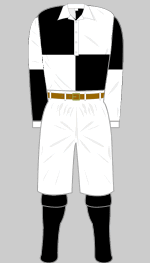
1884-1887 w K
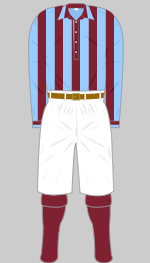
1887-1888 K
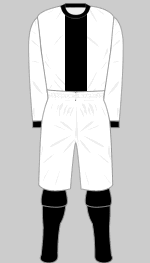
1889-1890 w

1890-1902
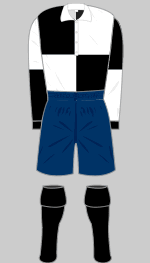
1902-1908 y z F
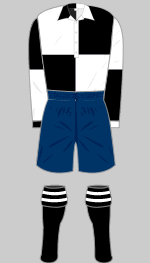
1910-1911 x
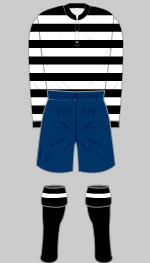
1912-1913 s y
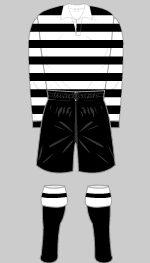
1920-1921 H
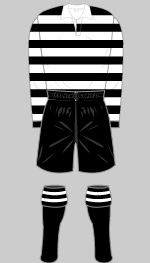
1921-1936 a j A
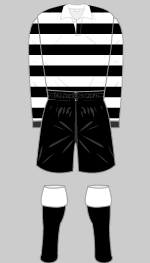
1936-1938 y z
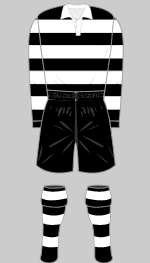
1938-circa 1939 a
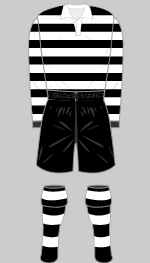
1947-1954 k v z
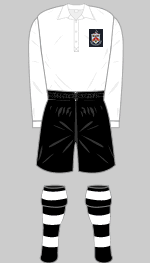
1954-1957 r

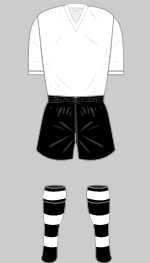
1957-1958 v
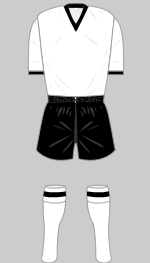
1958-1960 b y B
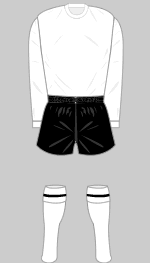
1961-1962 C
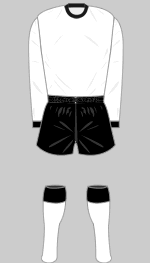
1964-1965 z
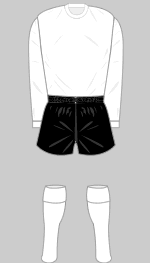
1965-1966 v
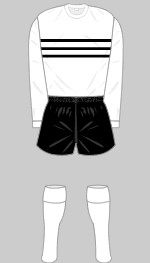
1966-1969 a c
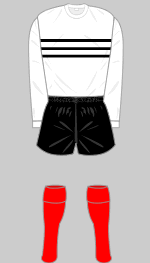
1969-1970 G
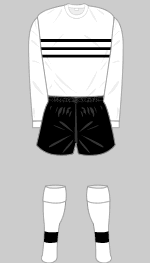
1970-1972 d I
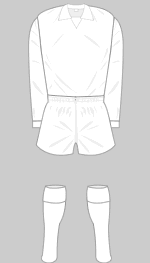
1972-1975 p
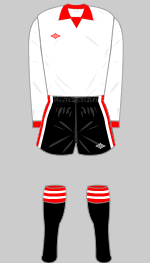
1975-1976 p
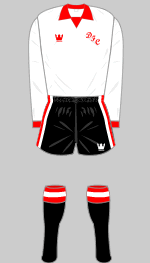
1976-1977 early p
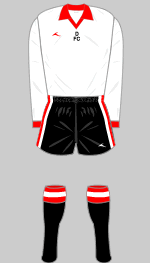
1976-1977 late p
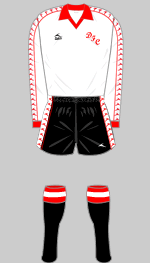
1977-1979 e p
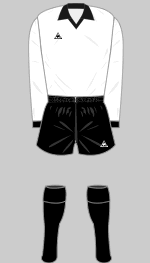
1979-1980 p
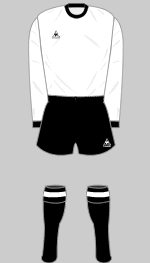
1980-1981 l p
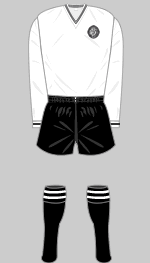
1981-1982 f
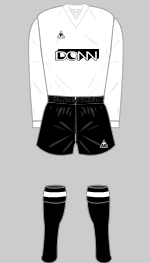
1982-1984 t v
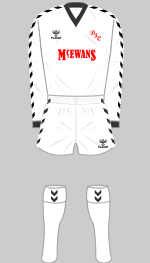
1984-1987 e m n p v
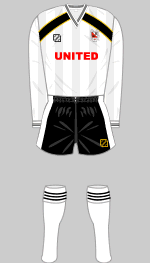
1987-1988 l m
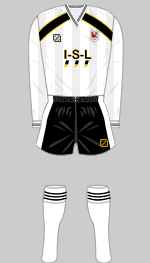
1988-1989 f m
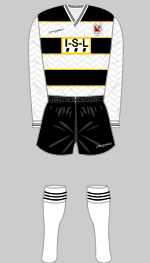
1989-1991 c g E
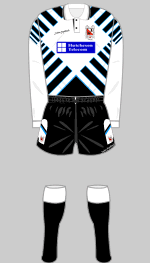
1991-1993 i m
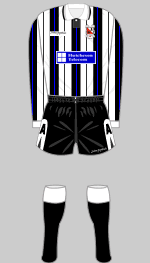
1993-1995 b m
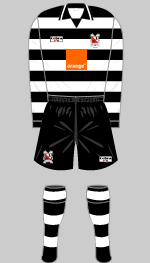
1995-1996 m
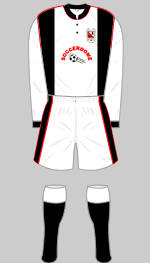
1996-1997 b m u
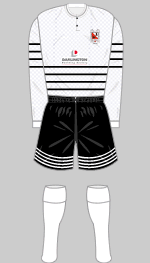
1997-1998 b u
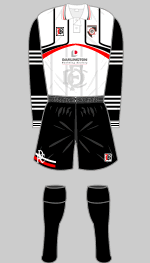
1998-1999 b m u
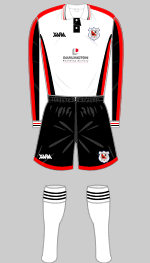
1999-2000 b m
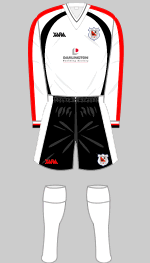
2000-2002 b m
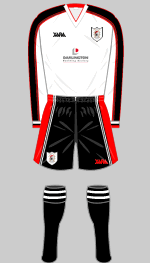
2002-2003 b m D
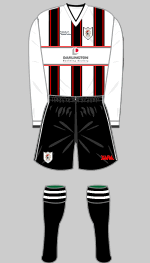
2003-2004 b m u
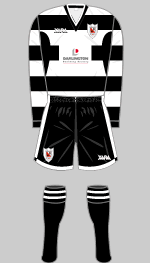
2004-2005 g m
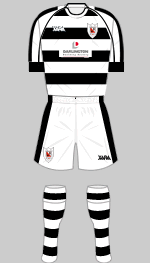
2005-2006 h m
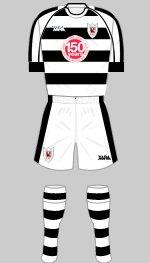
2006-2007 h m
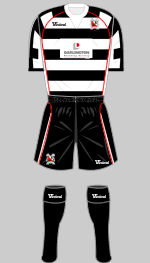
2007-2008 q
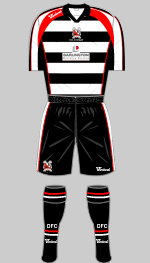
2008-2009 u
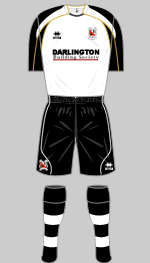
2009-2010 q
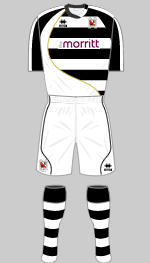
2010-2011 q
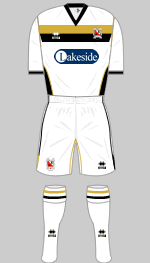
2011-2012 q
Darlington 1883
2012
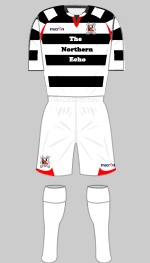
2012-2013 q
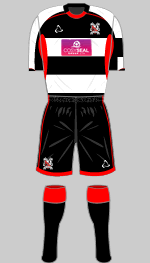
2013-2014 q
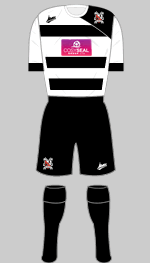
2014-2015 q
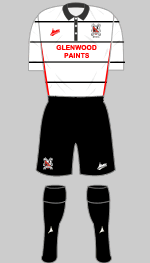
2015-2016 q
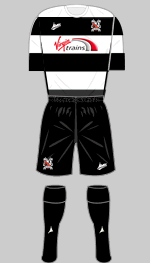
2016-2017 q
Darlington
2017
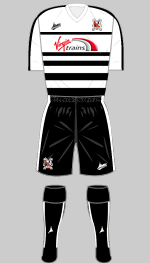
2017-2018 q
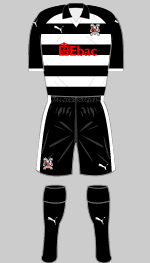
2018-2019 q
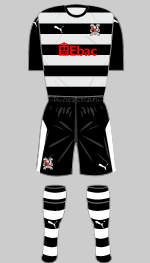
2019-2020 q
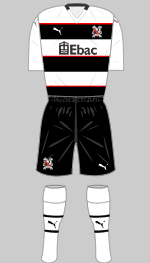
2020-2021 q
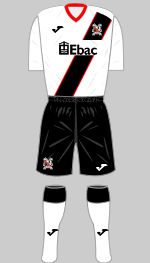
2021-2022 q
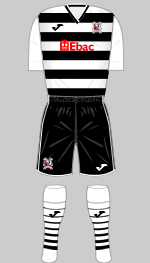
2022-2023 q
Background
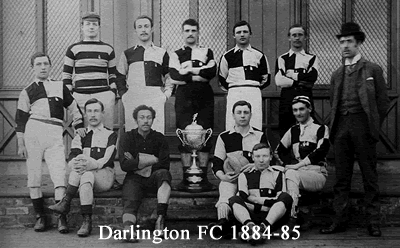 In July 1883 representatives of the various amateur clubs playing
in the area met at the local grammar school and decided to form a single
senior club to represent the town. In 1884-85 the team won the Durham Senior Cup (pictured left).
In July 1883 representatives of the various amateur clubs playing
in the area met at the local grammar school and decided to form a single
senior club to represent the town. In 1884-85 the team won the Durham Senior Cup (pictured left).
Although their first playing shirts were black and white quarters (often described as "harlequin") we cannot be sure if these were worn in later seasons but we do know that the state of their tops became a cause for comment. Writing in the Northern Echo in September 1889, a journalist described the teams new jerseys. "They are white with black neckband and wrists, and a black stripe down the front. There is no possibility of the colour "running" like the old ones, many of which had a grotesque appearance towards the end of last season."
The following season Darlington entered the FA Cup for the first time only to be given an 8-0 hiding by Grimsby Town. In 1889, Darlington became founder members of the Northern League, which they won in 1896 and 1900.
Darlington turned professional in 1908 and joined the North Eastern League, winning the championship in 1913. The Great War almost brought the club to extinction but they were bailed out by a works side, Darlington Forge Albion, whose chairman, JB Haw, paid off their debts and financed the completion of a new grandstand at the club’s Feethams ground.
Having finished as North Eastern League as runners-up in 1920 and champions
in 1921, Darlington were offered a 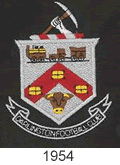 place in the new northern section of
the Football League Third Division. In 1925 they won the championship
and promotion to Division Two, only to be relegated two years later. This remains the only time they played at this level.
place in the new northern section of
the Football League Third Division. In 1925 they won the championship
and promotion to Division Two, only to be relegated two years later. This remains the only time they played at this level.
A crest based on the Darlington coat of arms appeared on the team's shirts between 1954 and 1957.
 In the Sixties the official badge of the club was a monogram superimposed on a football but this did not appear on the team shirts (although it may have been worn in 1981-82).
The club remained rooted in the lowest division and in 1958 they became
founder members of the new Fourth Division. Their first promotion for 40 years finally came in 1966 when they finished as runners-up. The 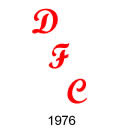 following season, however, they finished in 22nd place and
went straight back down. Between 1970 and 1980, “Darlo” had
to apply for re-election no fewer than five times and they were lucky
to retain their place in the League. During this period a simple cypher was often worn on the shirts, as was fashionable at the time. This was embroidered in red although when the club switched to Bukta late in the 1976-77 season, it appeared in black just below the collar.
following season, however, they finished in 22nd place and
went straight back down. Between 1970 and 1980, “Darlo” had
to apply for re-election no fewer than five times and they were lucky
to retain their place in the League. During this period a simple cypher was often worn on the shirts, as was fashionable at the time. This was embroidered in red although when the club switched to Bukta late in the 1976-77 season, it appeared in black just below the collar.
During the 1980s results on the pitch improved but Darlington were in a financial mess: at one stage supporters and local people raised £50,000 in just six weeks to stave off closure. Their efforts were rewarded with promotion in 1985 and this time they stayed up for two seasons.
In 1987 the club adopted a new crest, which became a near permanent feature from then on. The design consisted of a shield, divided diagonally white over red (red having become the favoured accent colour since 1975) supported by oak leaves (symbolising 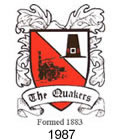 strength). The motifs on the shield are a Quaker hat, representing the important role of the Religious Society of Friends in the development of the town, and George Stephenson's Locomotive No 1, which hauled the world's first steam train on the Stockton and Darlington Railway in 1825. This excellent design sums up the importance of the Quaker movement (from whom the club takes its official nickname) and the railways in the history of the town.
In 1989 Darlington finished bottom of the League and were relegated to
the Conference. They were back after only one season, having won the Conference
title and the following season they won the Fourth 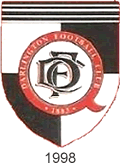 Division championship,
only to be relegated yet again after a single season. Darlington
remained in the lowest tier, occasionally challenging for promotion.
Division championship,
only to be relegated yet again after a single season. Darlington
remained in the lowest tier, occasionally challenging for promotion.
In 1998 a new crest appeared but seems to have been unpopular with supporters as it was retired after just one season and the traditional version reinstated.
 Off the field things became rather more lively after former
safe-cracker “Gorgeous George” Reynolds became chairman in
1999. He paid off the club’s debts, rumoured to be around £5m
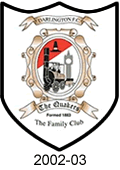
and financed a new 25,000 all-seated Darlington Arena, which the club moved into in 2003. To mark the club's 120th anniversary a special crest was worn during the 2002-03 season.
Off the field things became rather more lively after former
safe-cracker “Gorgeous George” Reynolds became chairman in
1999. He paid off the club’s debts, rumoured to be around £5m
and financed a new 25,000 all-seated Darlington Arena, which the club moved into in 2003. To mark the club's 120th anniversary a special crest was worn during the 2002-03 season.
The running costs of the new stadium drove Darlington into administration in December 2003 and, after a bitter struggle, Reynolds finally relinquished control to Darlington’s main creditors, the Sterling Consortium in September 2004.
 The Darlington Arena proved to be a costly legacy and in February 2009 Darlington entered administration again, the ten point penalty incurred costing them a place in the League Two play-offs. Ownership passed to Raj Singh (although their main assets remained with Philip Scott and Graham Sizer, who owned the stadium) but at the end of the 2009-10 season, Darlington finished bottom of League Two and were relegated to the Conference for the second time. Their fortunes appeared to improve when they won the FA Trophy in 2011 but in January 2012, Singh placed the club into administration for the third time in a decade incurring a points penalty that ensured relegation to Blue Square North.
When it became clear that Singh's holding company would not achieve a Creditors' Voluntary Agreement (CVA) the club's remaining assets were sold by the administrators to DFC 1883 Ltd, a consortium of supporters, to avoid liquidation. The new owners announced the club would quit the Arena to seek a ground sharing arrangement. By leaving administration without a CVA in place, DFC 1883 were in breach of Conference rules so Darlington were expelled and placed in Division One of the Northern League, the ninth tier of the English pyramid.
The new owners then hit a major snag when it turned out that Raj Singh had retained the so-called "Golden Share" when he handed the club over to the administrators. This is 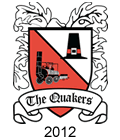 the right to play in the English pyramid under a specific name and receive a proportion of the revenue generated by the relevant league from TV rights, sponsorship etc. The supporters contacted Singh who agreed to sign over the Golden Share but he twice failed to turn up to meetings to complete the paperwork, flying to India instead. With time running out the FA advised the new owners that without the Golden Share the club would have to adopt a new name. Various alternatives were considered including Lokomotive Darlington (a reference to the town's railway heritage) but in the end Darlington 1883 was chosen to emphasise continuity with the club's original formation.
In February 2013 the club became 100% supporter-owned when the Darlington Football Club Community Interest Company took a 52% stake. The supporters' club held 15% while the remaining 33% were in the hands of individual supporters. The new owners committed to paying off the club's debts and five months later they made a final payment to HMRC on taxes owed. On the pitch Darlington 1883 won the Northern League Division One title with a record 122 points from 46 games.
By 2016-17 Darlington 1883 were in the National League North and qualified for the promotion play-offs but were disqualified because their new Blackwell Meadows ground had insufficient covered seating. The directors blamed a misinterpretation of the rules and apologised to supporters.
In 2017, Singh's Golden Share having expired, the club were able to return to their traditional name while work began on a new playing surface and covered stand.
Sources
- (a) Club Colours (Bob Bickerton)
- (b) empics
- (c) Football Focus
- (d) Football Cards
- (e) Aldershot Has It
- (f) Crewe Alexandra FC (Images of Sport) Harold Finch 2001
- (g) Classic Kits
- (h) This is the North East Website
- (i) Premier Shirts
- (j) The Football Encyclopaedia (Associated Sporting Press 1934) Information provided by Arthur Fergus
- (k) Geoff Charles Collection at the National Library of Wales
- (l) Pete's Picture Palace
- (m) Darlington Rivals part of the Rivals network with a fine collection of shirts since the 1970s.
- (n) jumpers4goalposts
- (o) David King
- (p) Alick Milne
- (q) Darlington FC Official Website
- (r) Toffs
- (s) Durham Museum
- (t) Scunthorpe United - A Pictorial History (John Staff 2007)
- (u) Paul Reid
- (v) Ralph Pomeroy
- (w) Northern Echo (14/9/1889) submitted by Kjell Hanssen
- (x) Durham Record Website provided by Simon Monks
- (y) Keith Ellis
- (z) Paul Robinson
- (A) Tony Sealey
- (B) Andrea Bealey
- (C) Terry Morley
- (D) Oleg Baranov
- (E) Paul Coates
- (F) Athletic News (3 November 1902) submitted by Kingsley (Wrexham FC)
- (G) Book of Football 1971 submitted by John Taylor
- (H) Simon Monks
- (I) Greger Lindberg
- (J) Wikipedia
- (K) Charles Alcock's Football Annuals 1869-1891 researched by Robin Horton