

Chester
City
Formed
1885. Wound up 1898.
Re-formed 1901.
Wound up March 2010.
Elected to Division Three (North) 1930. Relegated to the Conference 2000.
Promoted to League Two 2004. Relegated to the Conference 2009.
Kit History
Chester Rovers
1879
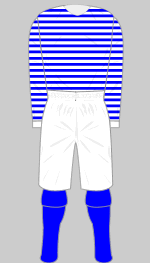
1881-1885 1 a q s

1881-1885 2 a q s
Chester
1885-1898
Formed by merger of Chester Rovers & Old King's Scholars
Club wound up 1898
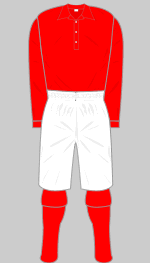
1885 b
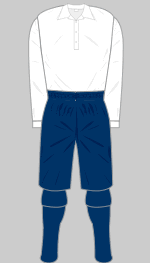
1889-1894 a n
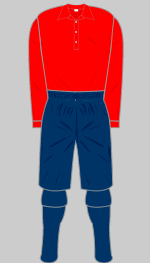
1896-1897 a
Chester
1901
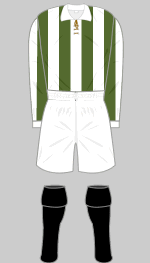
1901-1902 b

1902-1906
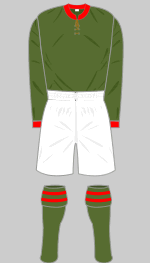
1906-1909 a b l
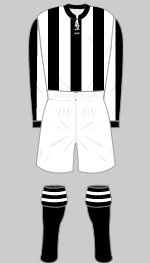
1909-1910 o
1910-1914
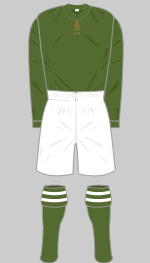
1914-1920 b p
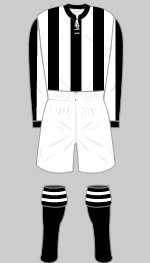
1920-1930 a p
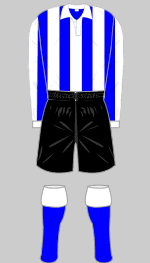
1930-1931 a
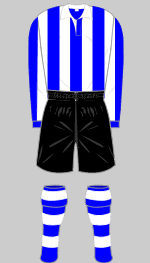
1931-1932 d
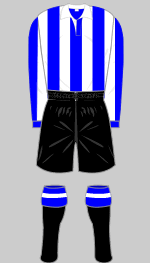
1932-1933 b
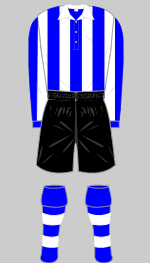
1934-1939 a

1946-1947 r
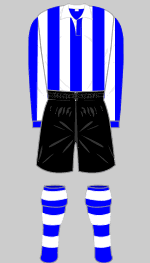
1947-1952 a
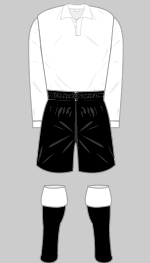
1952-1953 b
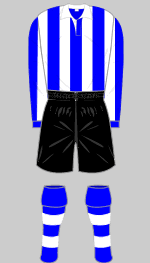
1953-1957 b
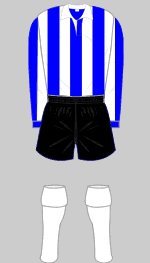
1957-1958 b
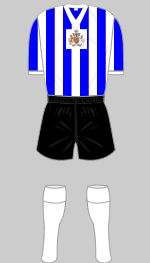
1958-1959 a b
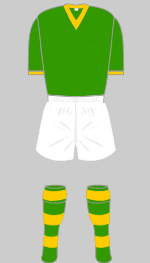
1959-1961 a b
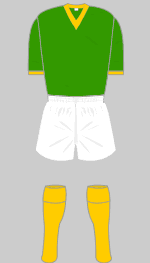
1961-1962 a
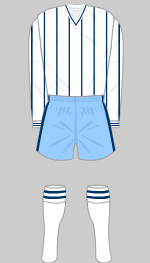
1962-1964 a j
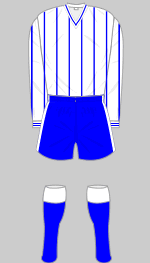
1964-1968 a b
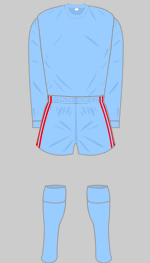
1968-1972 a b
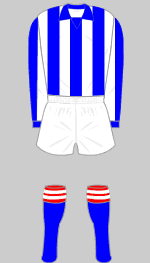
1972-1974 a g

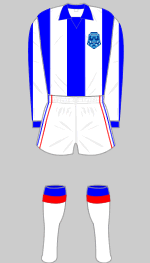
1974-1975 a g
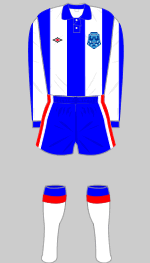
1975-1976 a g k
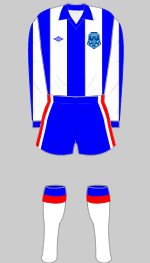
1976-1977 g
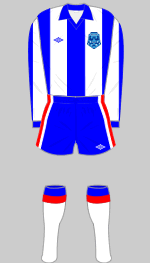
1977-1979 g
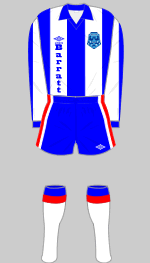
1979-1981 g h
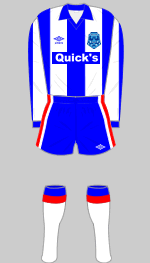
1981-1982 g
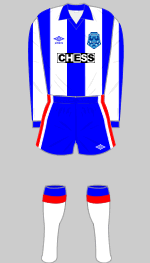
1982-1983 b
Chester City
1983
Formerly Chester
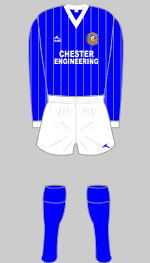
1983-1984 a
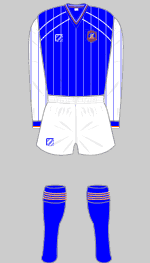
1984-1986 a
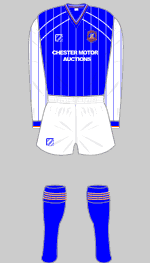
1986-1987 a
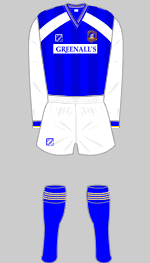
1987-1988 b
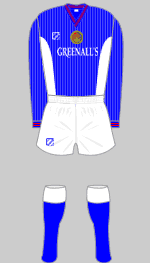
1988-1989 a
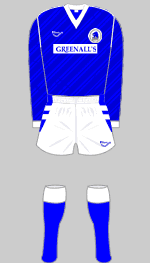
1989-1990 b
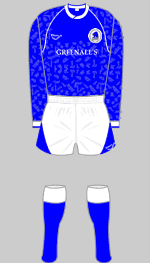
1990-1991 b
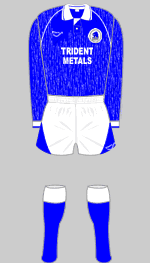
1991-1992 b
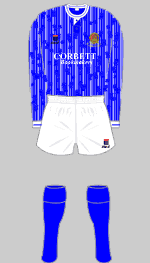
1992-1993 b

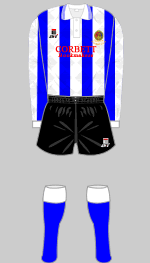
1993-1994 b m
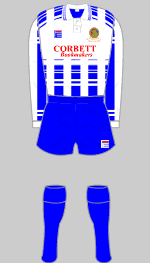
1994-1995 b
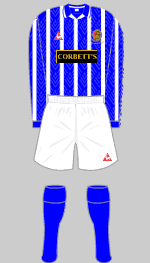
August 1995 f
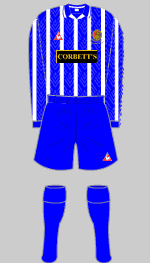
Sept 1995-1996 a
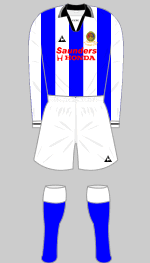
1996-1997 b j m
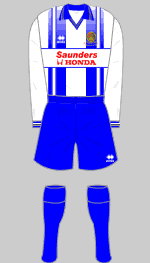
1997-1998 b e
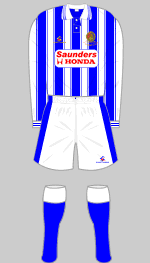
1998-1999 b
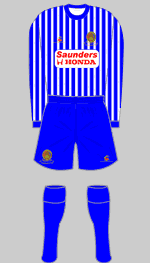
1999-2000 b
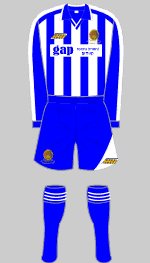
2000-2001 b
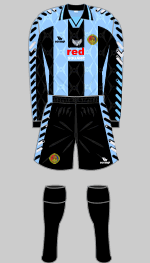
Aug-Sept 2001 a m
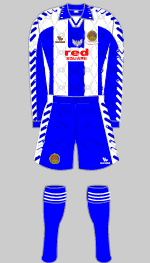
Oct 2001-2002 a
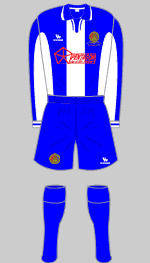
2002-2004 b
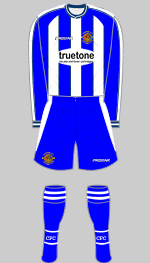
2004-2005 b d e m
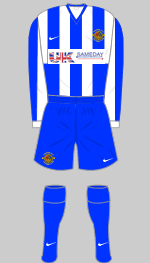
2005-2007 c
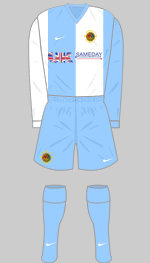
2007-2008 c m
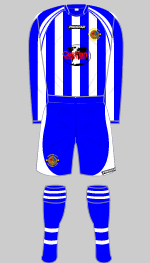
2008-2009 c
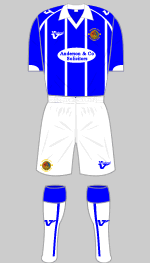
2009-2010 c
Background
 In 1885 Chester Rovers and
Old King's Scholars amalgamated to form Chester FC. For the first five
years of their existence the club played only friendly matches until in
1890 they joined the Combination. Five years later, Chester won their
first honour - the Cheshire Senior Cup. In 1898, Chester moved to a new
ground but were forced to disband only twelve months later when the ground
was sold for housing.
In 1885 Chester Rovers and
Old King's Scholars amalgamated to form Chester FC. For the first five
years of their existence the club played only friendly matches until in
1890 they joined the Combination. Five years later, Chester won their
first honour - the Cheshire Senior Cup. In 1898, Chester moved to a new
ground but were forced to disband only twelve months later when the ground
was sold for housing.
In 1901, the club was reformed, adopting dark green and white colours that earned them the nickname of "The Ivies." According to the club's official historian, Chas Sumner, these colours were worn in various combinations including plain green shirts, stripes and halves but I have only been able to corroborate the 1906-10 period. A press item from November 1906 confirms that the team wore "new olive green jerseys with red collars" against Wrexham.
In 1920 the club moved up to the Lancashire League and adopted a black and white strip. After the First World War, the club became founder members of the Cheshire County League, winning the championship in 1922, 1926 and 1927. In 1930 Charlie Hewitt was appointed manager and he introduced the much loved blue and white stripes. A year later the club were elected to Division Three (North), taking the place of Nelson.For the first ten years of their League career, Chester never finished below tenth place.
When the Football League resumed after the war in 1946-47, the club could not source their traditional striped shirts due to clothes rationing and had to play in plain white shirts. A set of pre-war striped tops that were "much the worse for wear" were kept as a stand by in case of a clash of colours.
Chester struggled
and when the regional divisions were scrapped in 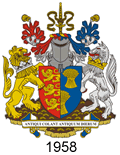 1958, they found themselves
in Division Four. The Chester coat of arms appeared on a white patch in the middle of the team shirts during 1958-59. A change to green and gold shirts the following season did little
to change their fortunes. indeed, they had to seek re-election three times
in succession between 1960 and 1963 and must count themselves fortunate
to have retained their league place. During the Sixties the club turned
out in a variety of strips but results stayed mediocre.
1958, they found themselves
in Division Four. The Chester coat of arms appeared on a white patch in the middle of the team shirts during 1958-59. A change to green and gold shirts the following season did little
to change their fortunes. indeed, they had to seek re-election three times
in succession between 1960 and 1963 and must count themselves fortunate
to have retained their league place. During the Sixties the club turned
out in a variety of strips but results stayed mediocre.
 The traditional stripes returned in 1972 and three
years later the club achieved promotion for the first time in their history.
Seven years were spent in Division Three.
The traditional stripes returned in 1972 and three
years later the club achieved promotion for the first time in their history.
Seven years were spent in Division Three.
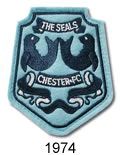
In 1974 a competition was organised to design a crest for the team, the winning entry coming from the School of Art in nearby Handbridge. It features a pair of frolicking seals inspired by the club's nickname ("The Seals") which derives from the name of their ground at Sealand Road.
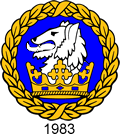 In 1983 the club became Chester City and a new strip of plain blue shirts and white
shorts was introduced. To go with the new title a new crest was designed with elements derived from the Chester coat of arms. These include the lion's head and crown, which date back to Norman times. Variations in colour and supporting script appeared down the years but the design remained fundamentally unchanged.
In 1983 the club became Chester City and a new strip of plain blue shirts and white
shorts was introduced. To go with the new title a new crest was designed with elements derived from the Chester coat of arms. These include the lion's head and crown, which date back to Norman times. Variations in colour and supporting script appeared down the years but the design remained fundamentally unchanged.
 Results continued to be poor and in 1984 the
club was forced to seek re-election for the seventh time. In 1986, however,
City's fortunes improved and they returned to Division Three. In 1990,
history cruelly repeated itself when the club's ground was sold for development
and for two year's they shared Macclesfield's ground while their
Results continued to be poor and in 1984 the
club was forced to seek re-election for the seventh time. In 1986, however,
City's fortunes improved and they returned to Division Three. In 1990,
history cruelly repeated itself when the club's ground was sold for development
and for two year's they shared Macclesfield's ground while their  new Deva
Stadium was built. Sadly, the year they returned to Chester also brought
relegation.
new Deva
Stadium was built. Sadly, the year they returned to Chester also brought
relegation.
In 1994, "The Seals" went back up to
what was now Nationwide Division Two only to drop back to the basement
after a single season. Five years later, Chester narrowly avoided closure
due to financial problems. In July 1999 the club was bought by controversial
American Terry Smith. At the end of the season  they finished bottom
of Nationwide Division Three and were relegated to the Conference. In
October 2001, with the team struggling,
Smith sold the club to Stephen Vaughan, a Liverpool business man. After
replacing the sky-blue and black strip with a more traditional design,
Vaughan's new management team started to turn the club around. In 2004
Chester won the Conference championship and
they finished bottom
of Nationwide Division Three and were relegated to the Conference. In
October 2001, with the team struggling,
Smith sold the club to Stephen Vaughan, a Liverpool business man. After
replacing the sky-blue and black strip with a more traditional design,
Vaughan's new management team started to turn the club around. In 2004
Chester won the Conference championship and  returned to League Two. Five years later, however, they finished 23rd and dropped back into the Conference.
Over the summer of 2009 Vaughan transferred legal ownership of the club to his son, Stephen Vaughan Junior prior to placing the club in administration (an attempt to avoid the FA rule that bars anyone who takes a club into administration twice  from being a director, Vaughan senior having previously taken Barrow into administration). Furthermore Vaughan became the first person to fail the FA's "Fit and Proper Person" test after being convicted of VAT fraud. This led the FA to withdraw the club's licence although it was later restored just in time for the new season when the club were handed a 25-point penalty. This was not, however the end of the saga: on 12 February the club, rooted at the bottom of the Blue Square Premier Division, was suspended by the Conference for five alleged breaches of the league's rules. The crisis was precipitated when the players went on strike in protest against the failure of the club to pay their wages for three months, forcing the postponement of their game at Forest Green. Their home match with Wrexham was also postponed after the local council issued a prohibition order on the Deva Stadium after the police refused to provide coverage because of the failure by the club to pay for policing costs earlier in the season. The supporters group, City Fans United, frustrated that their attempts to take over the club were rebuffed, called for Chester City to be wound up so that a new, community-owned club could be formed.
On Friday 26 February, 2010, the members of the Blue Square Conference voted to expel the club and their record was expunged. A fortnight later, Chester City FC was wound up in the High Court, opening the way for the supporters to set up a "phoenix club" to play at the Deva Stadium. Following a poll of fans, the new club adopted the title Chester FC.
Sources
- (a) Chester City FC (Images of Sport)
- (b) Chester-City.co.uk Excellent unofficial website that includes a history of the club and their colours by Chas Sumner, the club historian as well as a collection of team pictures going back to 1930
- (c) Chester City Official Site
- (d) Pete's Picture Palace
- (e) David King
- (f) Derek Hart
- (g) Alick Milne
- (h) Ralph Pomeroy
- (i) jumpers4goalposts
- (j) Arthur Morris
- (k) Simon Monks
- (l) The Weekly News & Visitors' Chronicle (2 November 1906) submitted by Kingsley (Wrexham FC)
- (m) Old Football Shirts.com
- (n) Athletic News (23 October 1893) submitted by Kingsley (Wrexham AFC)
- (o) North Wales Weekly News (12 November 1909) submitted by Adam Squire
- (p) Mark Bettany
- (q) Charles Alcock's Football Annuals 1869-1891 researched by Robin Horton
- (r) Southport AFC match programme (10 September 1946) submitted by Tony Sealey
- (s) Chester FC History
Photo credit Chester FC Website.