Burton Albion
Formed 1950
Promoted to League Two 2009
Kit History
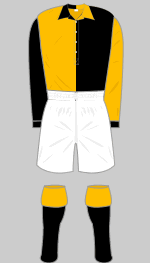
1950-1951 m
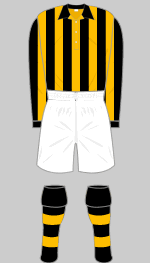
1951-1955 a m
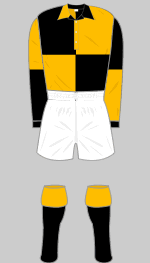
1955-1956 a
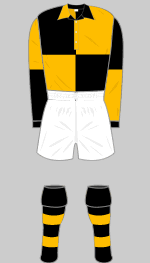
1956-1957 m
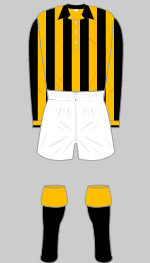
1957-1958 a
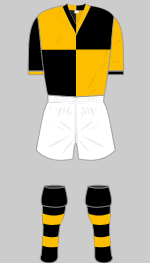
1958-1960 m
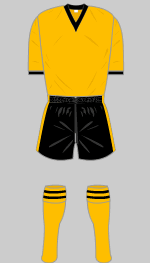
1960-1962 m
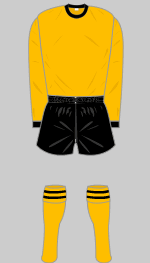
1963-1967 a m
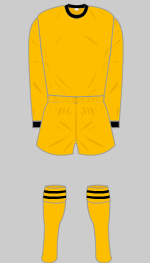
1967-1969 m
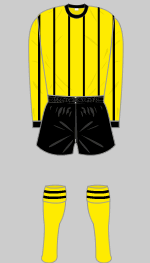
1969-1971 m
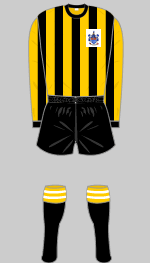
1971-1972 i m
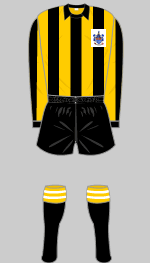
1972-1973 f m
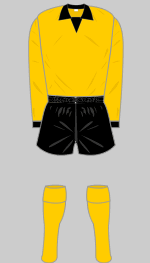
1973-1975 e j m
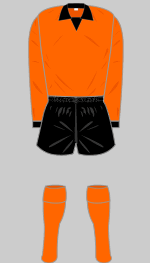
1975-1976 f
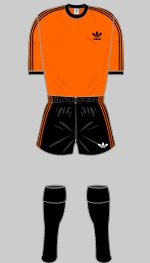
1976-1977 m
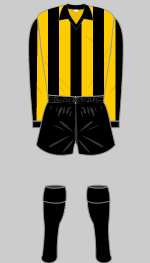
Aug-Oct 1977 m
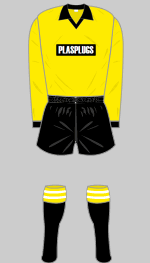
Nov 77-Jan 78 m
Feb 78-1979
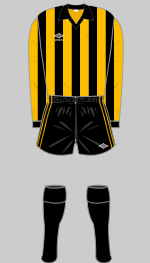
1979-1980 a l m
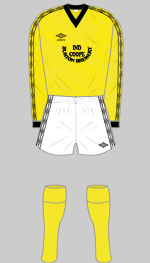
1981-1982 l
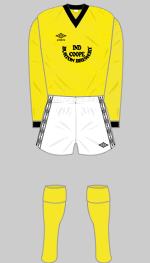
1982-1983 k m
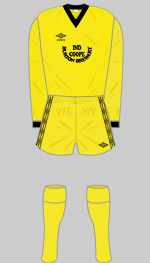
1983-1984 m
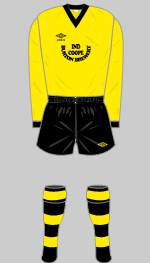
Aug-Dec 1984 m
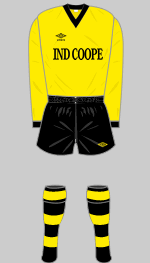
Dec 1984-1985 a m
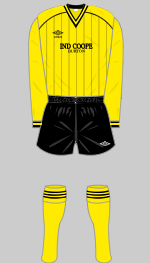
1985-1986 m
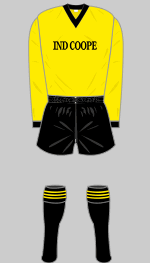
1986-1988 a h m
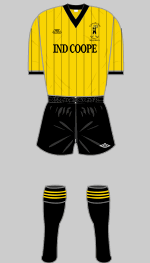
1987 FA Trophy Final h m
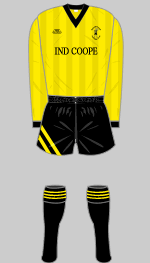
1988-1989 h l m
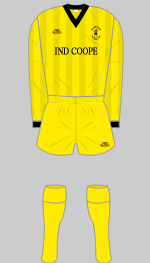
1989-1990 h l m
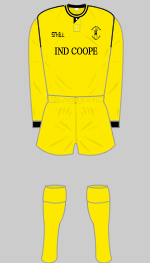
1990-1991 m
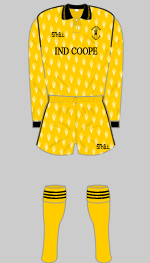
1991-1992 m
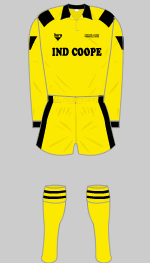
Aug-Dec 1992 m
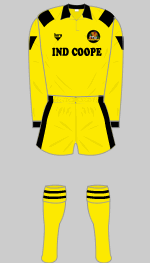
Jan-May 1993 m
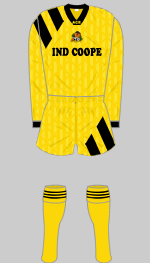
1993-1994 i m
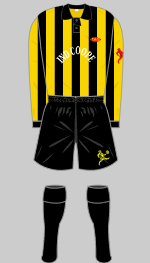
1994-1995 c h i
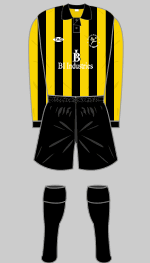
1995-1996 e i m
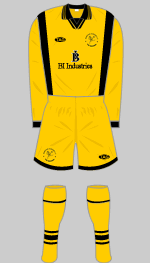
1996-1998 a i
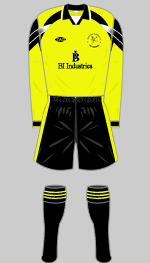
1999-2000 a g i
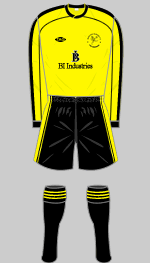
2000-2002 b m
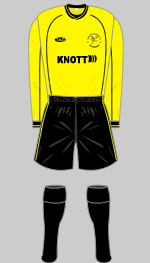
2002-2004 Home b c i
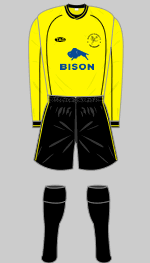
2002-2004 Away b c i
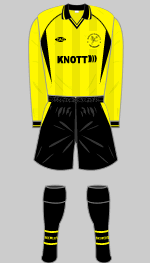
2004-2005 Home c g i
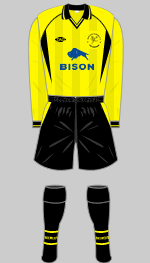
2004-2005 Away c g i
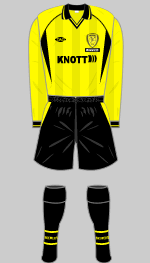
2005-2006 Home i
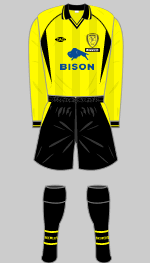
2005-2006 Away i
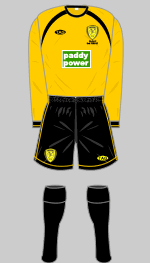
'06 FA Cup 3rd Rd i
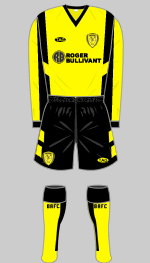
2006-2008 c i m
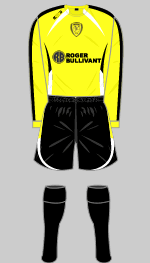
2008-2010 d
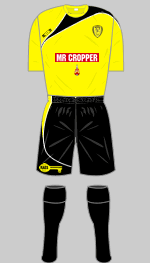
2010-2011 d
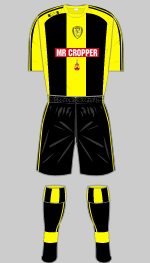
2011-2013 d
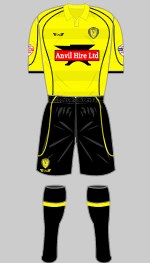
2013-2015 d
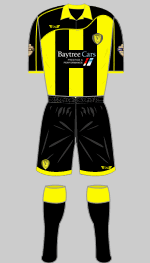
2015-2016 d
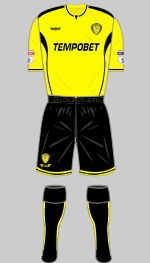
2016-2017 d
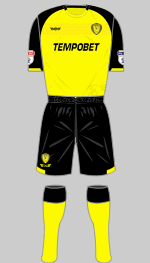
2017-2018 d
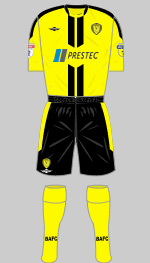
2018-2019 d
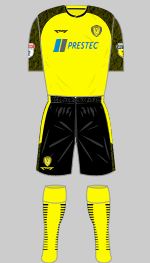
2019-2020 d
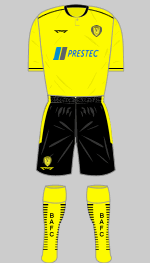
2020-2021 d
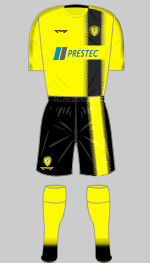
2021-2022 d
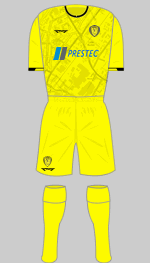
2022-2023 d
Background
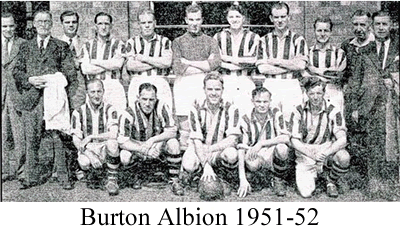 When Burton Albion were 19 points clear at the top of the Blue Square National Conference in December 2008, promotion to the Football League seemed a formality but over the next four months they managed to squander their lead and might have conceded the championship when they lost at Torquay in their final game. Fortunately for them, Cambridge United, now only three points behind, failed to win their last game against Altrincham. Albion's elevation meant that the brewing centre of Burton on Trent had a team in the Football League for the first time since Burton United failed re-election in 1907.
Burton United, formed by the merger of Burton Swifts and Burton Wanderers, went out of business in 1910. 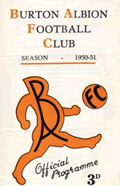 During the inter-war years, the town's senior team was Burton Town but they also closed down during the Second World War. Burton Albion, who are inevitably known as "The Brewers," were formed in 1950 to fill the gap. The brand new team played at the Lloyds Foundry Ground, attracting 5,000 spectators for their inaugural game against Gloucester City. Although the team did not wear a badge the rather clever graphic on the front of their programmes would reappear as their official crest some 44 years later.
Over the next few years the team became established in the Birmingham League and reached the third round of the FA Cup in 1956.
In the Spring of 1958 Albion were admitted to the Southern League and in September they moved into their new home, Eton Park, which had been built on a plot of land bought for £2,000 by their supporters' club. The team struggled at this higher level and the cost of their new ground left them in a precarious financial position, with crowds rarely rising above 300. In October 1962 a young Peter Taylor was appointed manager, consolidating the team and leading them to win the Southern League Cup in 1964. Taylor left to become 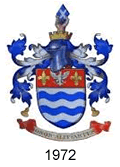 assistant manager to Brian Clough at Hartlepools United but the team he built won promotion to the Southern Premier league in 1966.
For the 1972-73 season, the coat of arms of the County Borough of Burton on Trent appeared on the team's shirts. In 1974 the borough was subsumed into East Staffordshire District Council.
The Brewers moved between the Southern Premier and First Divisions during the 70s and 80s but when the Alliance Premier League was formed in 1979, they were invited to join the Northern Premier League. With the top teams now competing in the APL, the standard in the feeder leagues was somewhat lower and Albion's results and attendances improved considerably. During Neil Warnock's period as manager in the early 80s, the Northern Premier League Cup was won and the club produced a steady stream of promising young players. In January 1985, Albion reached the FA Cup Third Round for the second time with a plum fixture against Leicester City. To accommodate the enormous crowd, the match was played at Derby's Baseball Ground: after Albion equalised 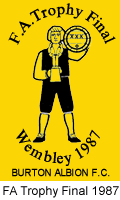 elements of the crowd rioted and Albion's goalkeeper was struck on the head by a piece of wooden seating. He spent the rest of the game in a dazed state as Leicester ran out 6-1 winners. The FA ordered the game to be replayed behind closed doors, Leicester winning 1-0. The shirts ordered from Umbro for this tie became the regular first choice the following season, 1985-86.
 In January 1987 Burton Albion travelled to Wembley to play Kidderminster Harriers in the FA Challenge Trophy final. A new crest was designed for the occasion inspired by the town's traditional brewing industry. The match ended 0-0 and was replayed the following week at The Hawthornes: Albion were beaten 1-2, the Harriers' goalkeeper having saved a penalty in the 86th minute.
After this high point, managers came and went in rapid succession before the team sunk into mid-table mediocrity after the club rejoined the Southern League in 1987-88. The  brewer crest reappeared the following season.
For the 1992-93 season the playing strips were provided by Hero with the club's name simply printed on until a new crest was introduced in January. A modified version that looked less like a beermat appeared the next season.
 Perhaps the brewer crest did not go down too well with supporters
  because in 1994 the tubby footballer drawn around the club's initials which had originally appeared in 1950 was reinstated and worn on the team's shirts for the first time.
A new chairman, Ben Robinson launched a share issue in 1997 that helped fund improvements to bring Eton Park up to Conference requirements but playing standards failed to match up to the raised expectations of supporters. A few weeks into the 1998-99 season Nigel Clough was appointed player-manager, a coup that captured national headlines. Over the following years, and despite  being courted by a number of top level clubs, Clough built a highly successful team. After finishing as Southern Premier Division runners up in 2000 and 2001, Albion switched back to the Northern Premier League,
  winning the championship at the first attempt and moving up to the National Conference.
In 2005 Burton Albion moved to the new Pirelli Stadium and the crest was updated to coincide with this move, now appearing out of a shield that included the teams third colour, white. Pirelli's logotype was placed just below the new badge.
The following season Albion took Manchester United to a replay in the FA Cup third round, for which a special kit was commissioned.
In 2008 the team reached the play-offs for the first time. Clough was finally tempted away in January 2009 to manage Derby County, the club where his father had made his reputation, and his place as manager was taken by Roy MacFarland, another of Clough Senior's protégés. Albion secured promotion to the Football League at the end of the season.
The 2014-15 season ended with Albion as champions of League Two followed immediately by promotion to the Championship but in 2018 they dropped back into the third tier.
Sources
- (a) brewersnet
- (b) Alliance to Conference (John Harman 2004)
- (c) Oldfootballshirts.com
- (d) Burton Albion Official website
- (e) Clive Nicholson
- (f) Richard Ralph
- (g) Keith Ellis (HFK Research Associate)
- (h) Mark E Mosedale
- (i) Dan Bower
- (j) Keith Ellis
- (k) Mark Monk
- (l) Mark Alton
- (m) Dan & Rob Bower
- (n) Michael Gluck
Photograph courtesy of Burton Albion Football Club, The Birmingham League Years (Chris Wood 2013) available from Burton Albion's club shop and the Magic Attic.
Crests are the property of Burton Albion FC. I am grateful to Dan and Rob Bower who supplied comprehensive details of missing kits for this section as well as details of Albion's early crests. Mark Alton discovered the 1950-51 programme with the original tubby footballer.