




Burnley
Formed 1882
Founder member of the Football League 1888
Kit History
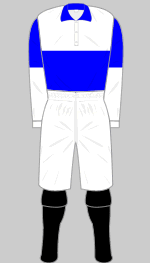
1882-1883 a
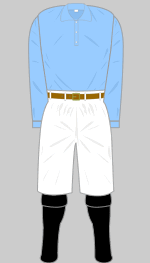
1884-1885 h
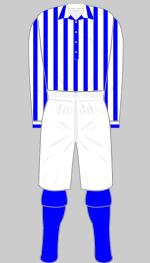
1886-1887 A
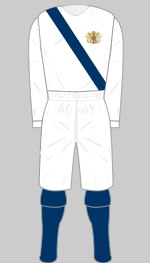
Dec 1887-1888 a h
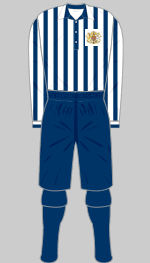
1888-1889 e
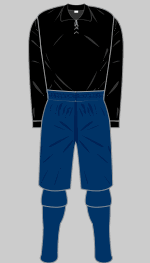
January 1889 h
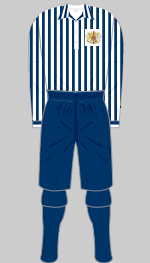
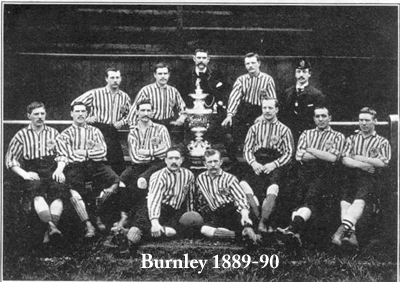
1889-1890 m A
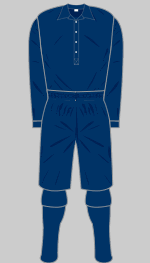
1890-1891 t C
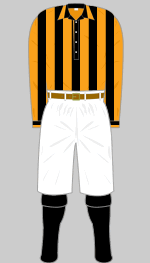
1891-1892 A
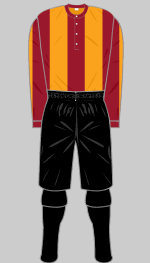
1892-1893 r B
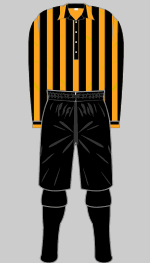
1893-1894 h
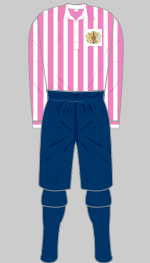
1894-1895 k
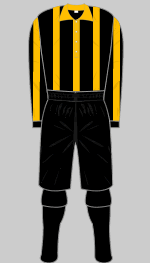
1895-1897 a h k r s
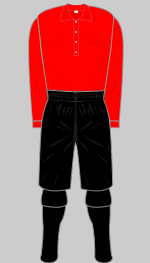
1897-1898 k
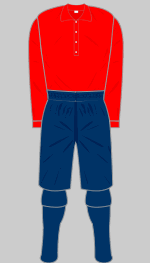
1898-1899 k
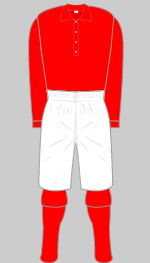
1899-1900 k
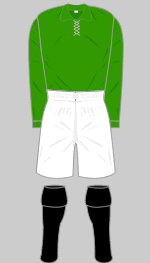
1900-1902 a h k
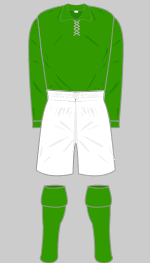
1902-1905 a r
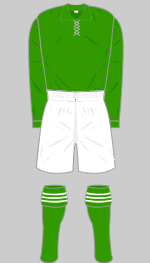
1905-1907 a z
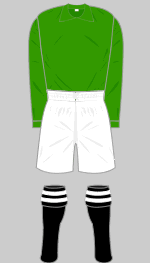
1907-1908 q
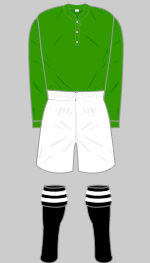
1908-1910 a y
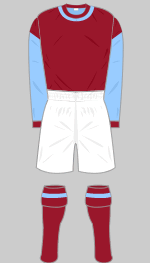
1910-1915 a r x
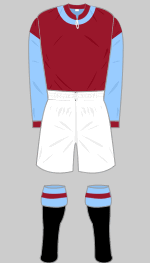
1919-1921 a r

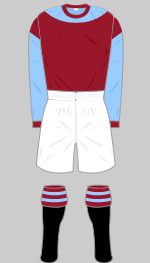
1922-1923 r
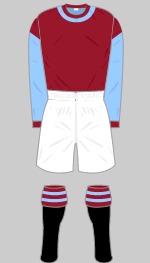
1923-1925 a r
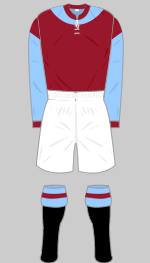
1925-1926 a r
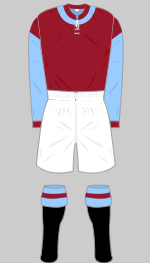
1926-1931 a

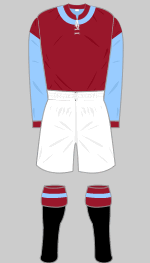
1931-1934 f w
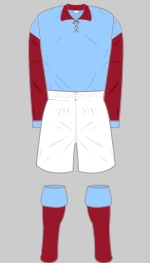
1934-1935 a r
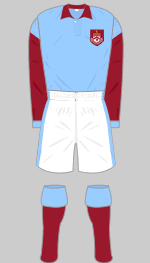
16 March 1935 r
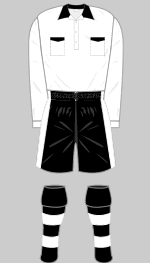
1935-1936 a g r
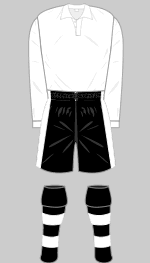
1936-1940 a g r
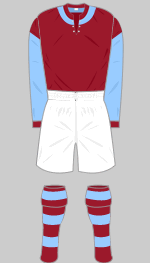
1946-1951 a
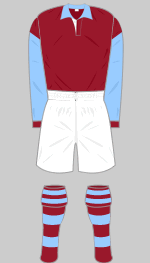
1951-1955 b d u
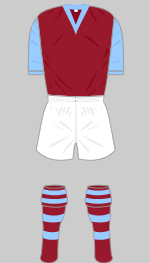
1955-1960 a d r
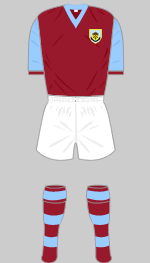
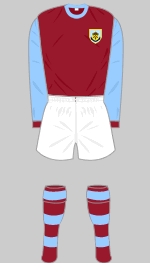
Nov 1961-1966 a d h r
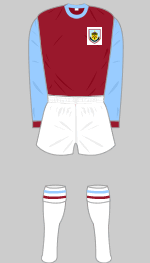
1966-1967 h r
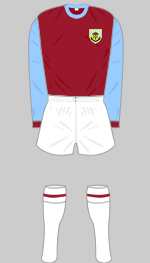
1967-1969 a d
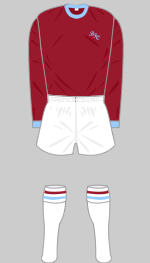
1969-1975 a d n
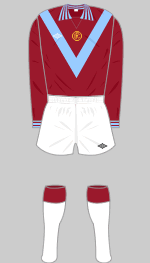
1975-1979 b d g
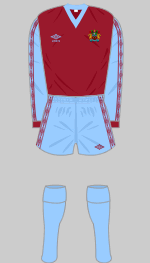
1979-1980 g j

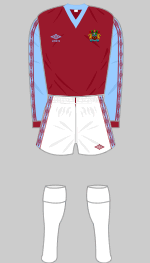
1980-1981 h
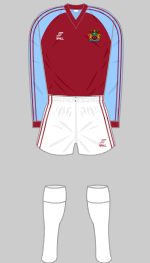
1981-1982 g
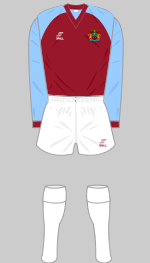
August 1982 g h
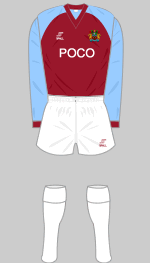
Sept 1982-1983 g h
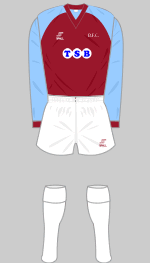
1983-1984 h j
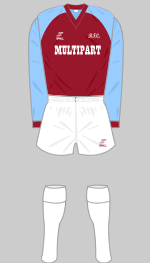
1984-1987 c g
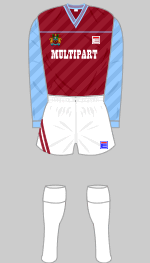
1987-1988 g h
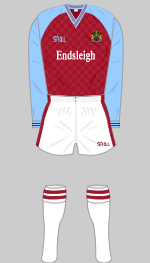
1988-1989 h o
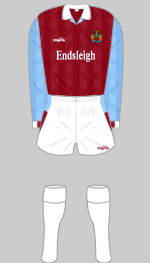
1989-1991 h o
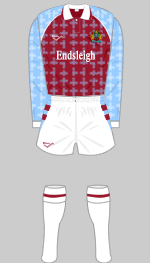
1991-1993 b g o
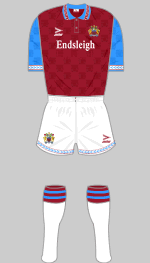
1993-1995 b g h
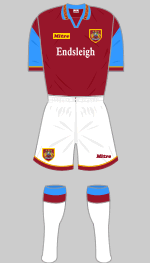
1995-1996 b h
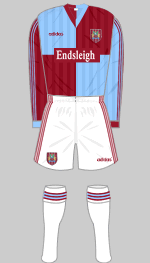
1996-1998 b g h v
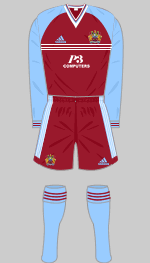
1998-1999 c g
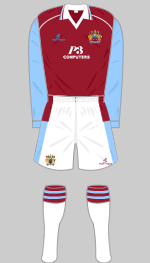
1999-2000 b
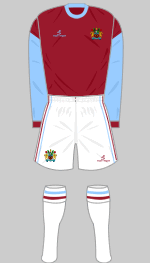
2000-March 2001 b
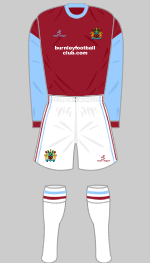
April-May 2001 b
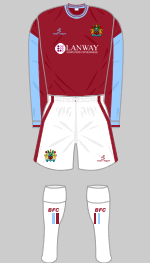
2001-2002 b g l
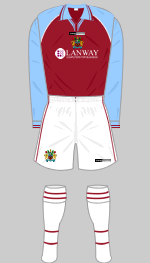
2002-2003 b g l
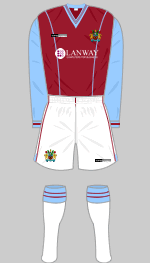
2003-2004 Home b g h l
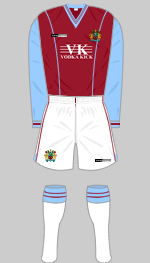
2003-2004 Away b g h
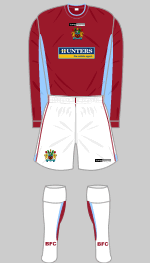
2004-2005 b l
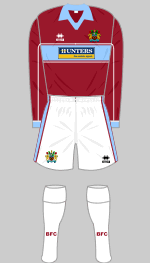
2005-2006 c g l
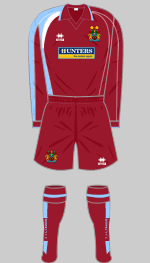
2006-2007 c
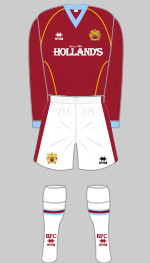
2007-2008 c
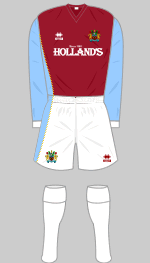
2008-2009 c h p
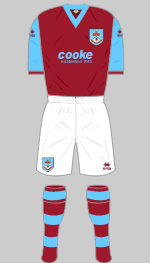
2009-2010 c
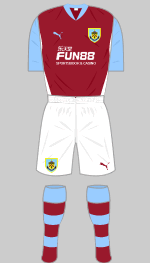
2010-2011 c h
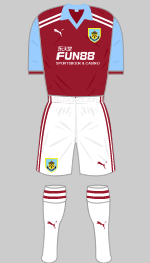
2011-2012 c
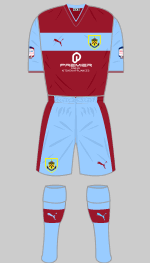
2012-2013 c
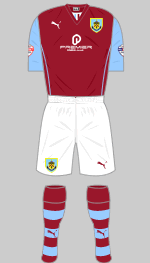
2013-2014 c
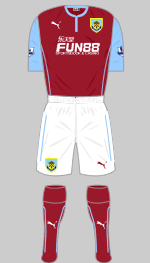
2014-2015 c
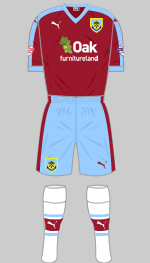
2015-2016 c
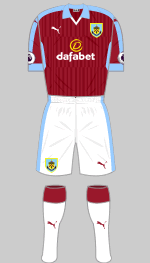
2016-2017 c
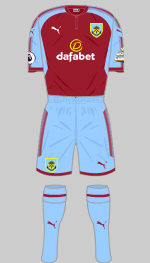
2017-2018 c
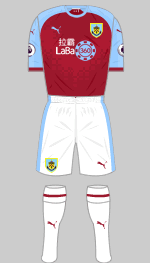
2018-2019 c

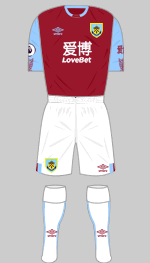
2019-2020 c
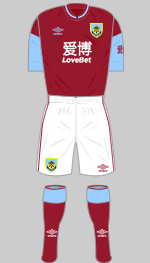
2020-2021 c
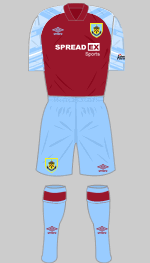
2021-2022 c
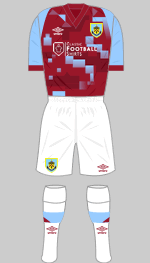
2022-2023 c

2023-2024 c *
Background
 Burnley started out as a rugby
club known as Burnley Rovers (who wore, incidently, blue shirts with a
white maltese cross and white knickers) but in 1882 the members decided
to switch codes and dropped "Rovers" from their name.
Burnley started out as a rugby
club known as Burnley Rovers (who wore, incidently, blue shirts with a
white maltese cross and white knickers) but in 1882 the members decided
to switch codes and dropped "Rovers" from their name.
A team photograph from their first season shows the players wearing unusual shirts that are halved horizontally. The picture is so underexposed as to make it difficult to discern the design but two players are wearing brand new tops in which the contrast is clear. In August 1884 the local press caled the team "the Light Blues" and in 1886-87, they registered their colours as "blue and white" in Charles Alcock's Footbal Annual.
In 1886
the Prince of Wales called at Turf Moor on a visit to the town. Some time
later Mr S MacFarlane presented the team with a set of white jerseys featuring
a blue sash and emblazoned with the Prince of Wales' coat of arms to commemorate the visit. These were held back, according
to contemporary press 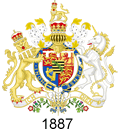 reports researched by Peter Pomeroy, "while the fortunes of the club were
somewhat under a cloud" and were first worn on 17 December 1887 and made an appearance in the team's first ever home fixture in the Football League against Bolton Wanderers on 10 October 1888. The royal crest can be seen on team photographs up until 1894-95.
reports researched by Peter Pomeroy, "while the fortunes of the club were
somewhat under a cloud" and were first worn on 17 December 1887 and made an appearance in the team's first ever home fixture in the Football League against Bolton Wanderers on 10 October 1888. The royal crest can be seen on team photographs up until 1894-95.
Burnley made a poor start in the Football League, being forced to apply for re-election in their first two seasons but they survived.
In January 1889, the players turned out in plain black shirts in a match against Derby County as a tribute to a player named Cropper who had died of injuries sustained playing for Staveley FC the previous week.
In 1897, Burnley were relegated and
although they bounced back as Division Two 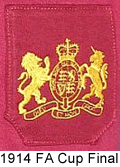 champions the following year,
in 1900 they dropped back into Division Two again.
champions the following year,
in 1900 they dropped back into Division Two again.
Legend has it that in 1910 the committee decided to drop the supposedly unlucky green shirts in favour of the claret and blue associated with the famous Aston Villa. It seemed to do the trick: in 1914, they won the FA Cup, with the royal crest once again featuring on their jerseys.
 The First World War interrupted the
clubs progress but in 1921 they carried off the Division One championship.
The club then went into decline and in 1930, "The Clarets" were
relegated to Division Two where they languished until after the Second
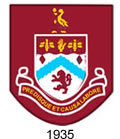
World War. Burnley had adopted a new change strip of white shirts and black knickers which made an appearance at Barnsley on 2 February 1935. When Burnley qualified for the FA Cup semi-final against Sheffield Wednesday it seems they assumed both teams would change for the match and they commissioned a smart set of white shirts with black trim at the pockets and collar. In March, however, Stanley Rous, secretary of the FA, wrote to the clubs stating that a change was not required as there was sufficient contrast between the teams' regular kit. Claret and blue shirts were ordered instead and these featured the town coat of arms for the first time.
The First World War interrupted the
clubs progress but in 1921 they carried off the Division One championship.
The club then went into decline and in 1930, "The Clarets" were
relegated to Division Two where they languished until after the Second
World War. Burnley had adopted a new change strip of white shirts and black knickers which made an appearance at Barnsley on 2 February 1935. When Burnley qualified for the FA Cup semi-final against Sheffield Wednesday it seems they assumed both teams would change for the match and they commissioned a smart set of white shirts with black trim at the pockets and collar. In March, however, Stanley Rous, secretary of the FA, wrote to the clubs stating that a change was not required as there was sufficient contrast between the teams' regular kit. Claret and blue shirts were ordered instead and these featured the town coat of arms for the first time.
In August Burnley registered their first choice colours for the 1935-36 season as white shirts and black knickers.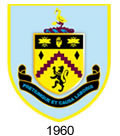
The first post-war league season saw Burnley, now
back in claret and blue, firing on all cylinders: they achieved promotion
back to Division One and reached the FA Cup final only to lose 0-1 to
Charlton Athletic. Throughout the Fifties, Burnley were established as
a leading Division One side. In 1960, the club won 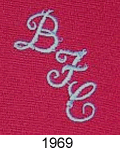 their second League
title (following which they were allowed to wear the town's crest of the period on their
shirts).
their second League
title (following which they were allowed to wear the town's crest of the period on their
shirts).
In 1962 Burnley came close to the double, finishing as runners-up to Ipswich Town in the league and losing 1-3 to Spurs in the FA Cup Final. Burnley continued to be a feared side for the rest of the decade, enjoying two European campaigns but in 1971 the bubble burst when the team was relegated to Division Two. The crest was replaced in 1969 with a simple script badge, a style that was very popular at the time.
 In 1973 Burnley won the Second Division championship
and the following year they finished a respectable 6th in Division One and reached the FA Cup semi-final. Hopes that
In 1973 Burnley won the Second Division championship
and the following year they finished a respectable 6th in Division One and reached the FA Cup semi-final. Hopes that 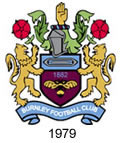 the glory days were about
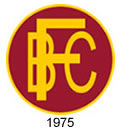
to return were encouraged by the introduction of a smart new strip in 1975, with a bold V and gold lettering, but these were shattered when Burnley were relegated in 1976 and
this time, they went into almost terminal decline.
the glory days were about
to return were encouraged by the introduction of a smart new strip in 1975, with a bold V and gold lettering, but these were shattered when Burnley were relegated in 1976 and
this time, they went into almost terminal decline.
In 1979 a smart new, traditionally designed crest appeared for the first time on the team's claret tops (it had been adopted as the official club crest in 1973 and had appeared on their yellow change shirts since August 1976). This was dropped in 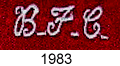 1983 in favour of a simple cypher (horizontal in white) as the team plunged down the divisions. In 1987 they were faced with relegation
to the Conference on the final day of the season. Amid high emotion, Burnley
beat Leyton Orient 2-1 to
1983 in favour of a simple cypher (horizontal in white) as the team plunged down the divisions. In 1987 they were faced with relegation
to the Conference on the final day of the season. Amid high emotion, Burnley
beat Leyton Orient 2-1 to 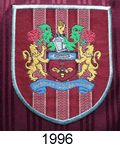 send Lincoln City down. Sensibly, the old crest was reintroduced the following season.
After those dark days the club rebuilt and
steadily climbed back up the ladder and when the new millennium
arrived, Burnley were back in the second tier. In the course of a remarkable 2008-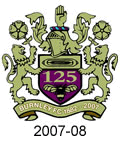 09 season, Burnley beat Chelsea and Arsenal in the Carling Cup before Spurs edged them out in the semi-final. They also reached the fifth round of the FA Cup and finished in fifth place to qualify for the play-offs. To the delight of their supporters, the Clarets beat Sheffield United by a single goal in the Wembley final to secure their return to the top flight for the first time in 33 years.
To celebrate the 50th 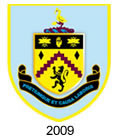 anniversary of their last League Championship win, the club adopted a replica of the kit worn during the 1959-60 campaign, complete with the crest of that period for their first ever season in the Premier League. Although they were relegated after just one season, the retro-look strip proved so popular that it was only slightly
 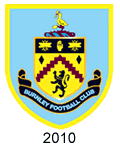 updated for the 2010-11 season and the crest retained with one minor alteration: the Latin legend on the scroll was replaced by "Burnley Football Club."
In 2014 the team were promoted back into the Premier League but found the competition too stiff and they went back down immediately. The next season (2015-16) they went back up, this time as winners of the Championship.
Burnley's 2020-21 shirt was modelled on classic jerseys worn when the team won the Division One championship a century earlier. During this season an American investment company, ALK Capital, bought a controlling stake in the club, the first time that Burnley was in the hands of anyone other than local businessmen or supporters.
The following season Burnley were relegated after defeat on the final day saw them drop into 18th place. They bounced back immediately winning the Champioship title in 2022-23 but were relegated again 12 months later.
Sources
- (a) Burnley FC (Images of Sport) by Ray Simpson
- (b) empics
- (c) Burnley FC Official Website
- (d) Football Focus
- (e) Preston North End Official Website
- (f) Bury FC - Images of Sport (Peter Cullen 1998)
- (g) The History Of The Burnley Shirt - photographic archive including a fine collection of modern shirts by Martin Pickering
- (h) Ralph Pomeroy - HFK Research Associate
- (i) Peter Pomeroy
- (j) Pete's Picture Palace
- (k) Association of Football Statisticians - provided by Pete Wyatt
- (l) David King
- (m) Greger Lindberg
- (n) Alick Milne
- (o) Christopher Worrall
- (p) Fabrizio Taddei (Errea)
- (q) Simon Monks
- (r) Keith Ellis
- (s) George Chilvers
- (t) Burnley Express July 11 1891 researched by Kjell Hanssen
- (u) Grandad's Football Blog
- (v) Graeme Parker
- (w) Burnley Express (various reports February 1933-February 1934) submitted by Richard Essen
- (x) Burnley Express (7 September 1910) submitted by Richard Essen
- (y) Burnley Express (1 September 1909, 10 April 1910) submitted by Richard Essen
- (z) Lancashire Evening Post (17 August 1906), Birmingham Gazette (23 October 1906) submitted by Richard Essen
- (A) Charles Alcock's Football Annuals 1869-1891 researched by Robin Horton
- (B) uptheclarets.com
- (C) Lancashire Evening Post (23 August 1890) submitted by Robin Horton
* Kit graphic by Daniel Stoker
Crests are the property of Burnley FC.