


Bristol
Rovers
Formed 1883
Founder member of Division Three 1920. Relegated to the Football Conference 2014.
Promoted to League Two 2015.
Kit History
Black Arabs
1883
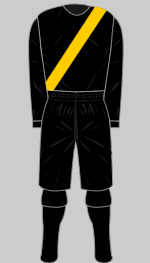
1883-1884 a d
Eastville Rovers
1884
1884-1893 a
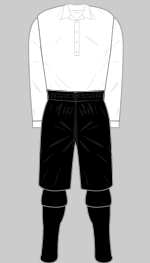
1893-1894 b
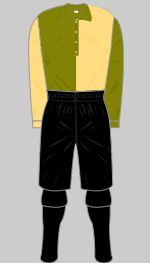
1895-1896 f
Bristol Eastville Rovers
1897
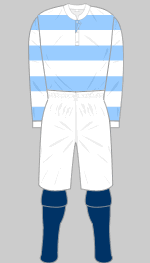
1897-1898 a
Bristol Rovers
1898
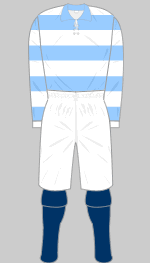
1898-1900 a
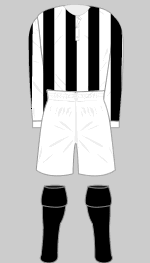
1900-1902 a
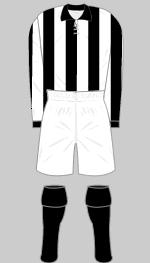
1902-1903 a
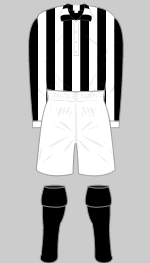
1903-1913 a
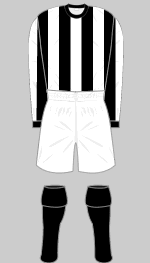
1913-1914 b
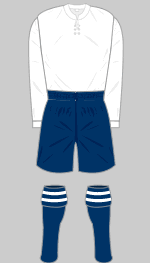
1920-1928 a
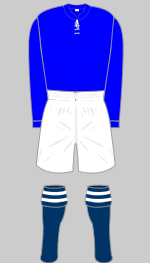
1930-1931 c
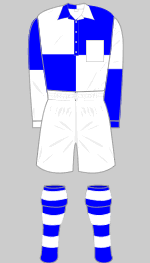
1931-1935 a

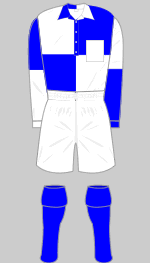
1935-1936 b
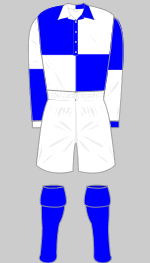
1936-1937 b
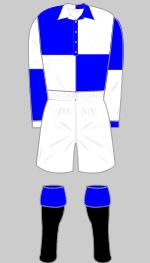
1938-1939 b
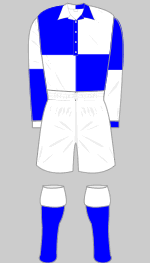
1946-1947 b
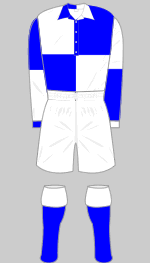
1947-1948 b
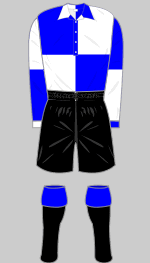
1949-1950 p
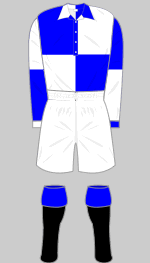
1950-Feb 1951 b
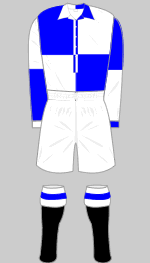
Feb-May 1951 b
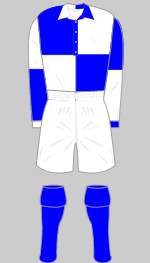
1951-1952 b
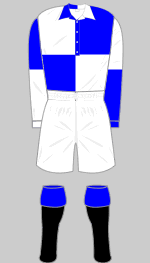
1952-1953 b e
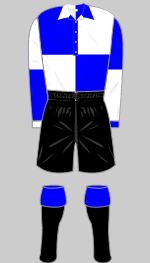
1953-1954 p
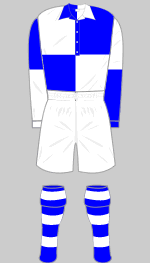
1954-1955 p
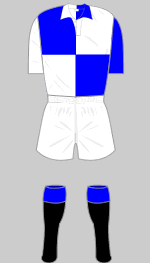
1954-1955 b e m
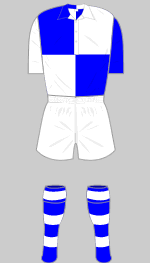
1955-1956 e
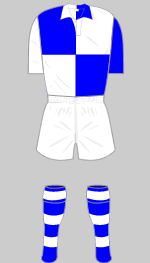
1956-1957 m
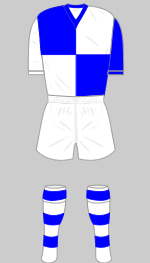
1957-1958 b
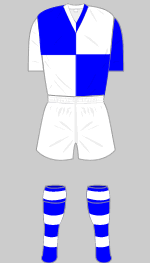
1958-1959 b
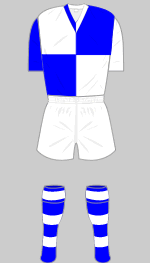
1959-1962 b s
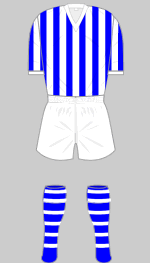
18 August 1962 s
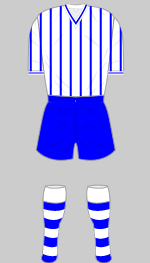
25 August 1962 p
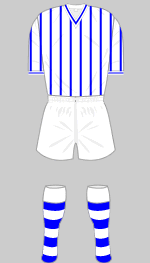
Sept-Dec 1962 b n
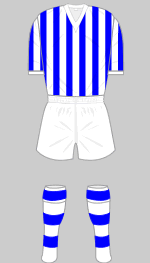
March-May 63-64 b
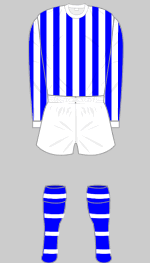
1964-1965 b r s
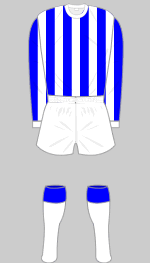
1965-1966 p r s
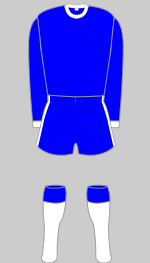
Aug-Sept 1966 p
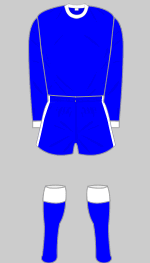
24 Sept 66-1969 b e
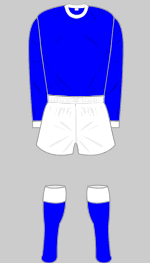
1969-1970 a
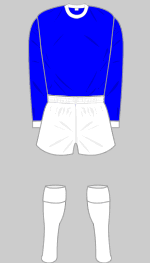
1970-1972 a e
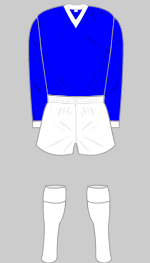
1972-1973 h
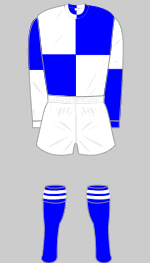
1973-April 1976 a
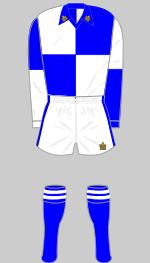
April 1976 t
1976-1977 a
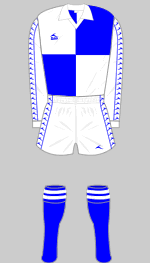
1977-1978 b
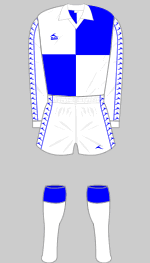
1978-1979 e
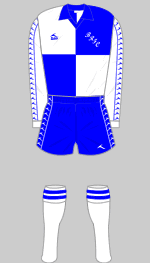
1979-1980 b
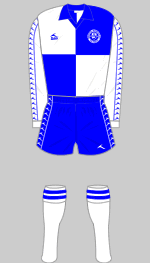
1980-1981 j o
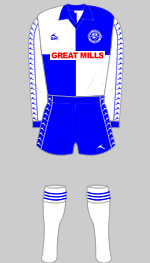
1981-1982 a j
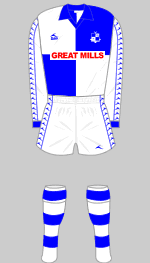
1982-1983 b j
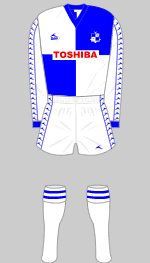
1983-1984 j
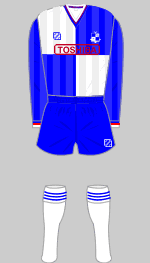
1984-1985 b
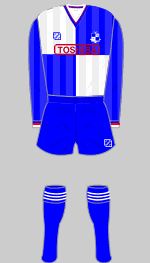
1985-1986 b
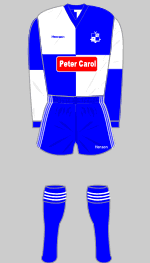
1986-1987 b j
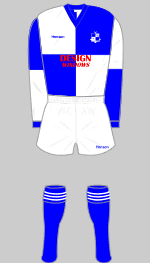
1987-1988 a j
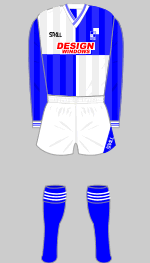
1988-1989 b g j
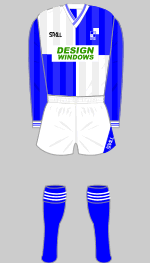
1989-1990 Home b
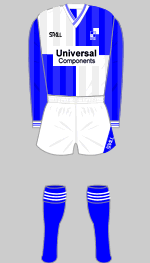
1989-1990 Away b
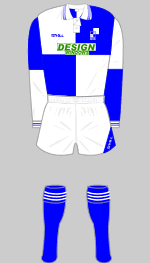
1990-1991 b
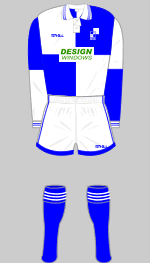
1991-1992 e
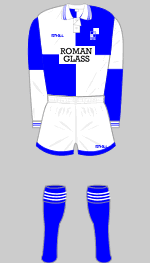
1992-1993 a
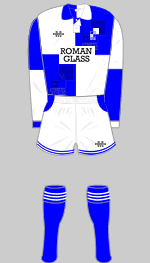
1993-1995 a g j
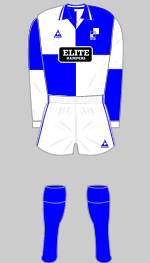
1995-1996 a g j
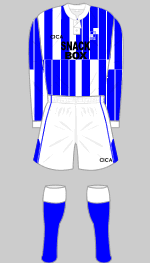
1996-1997 a g k l
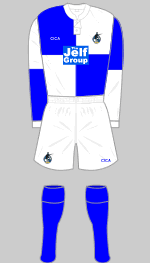
1997-1998 b K
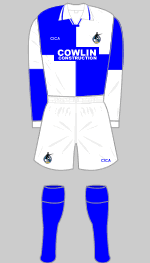
1998-1999 b

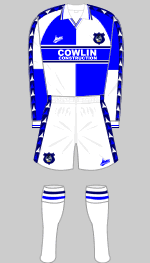
1999-2000 a g l
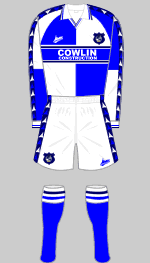
2000-2001 l
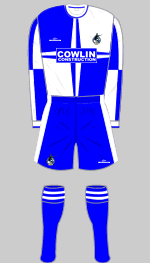
2001-2003 a g l
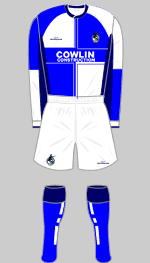
2003-2005 d
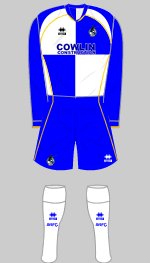
2005-2006 d l q
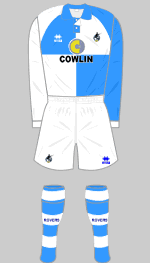
2006-2007 d
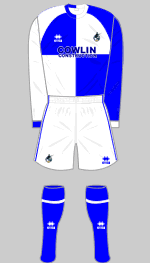
2007-2008 d
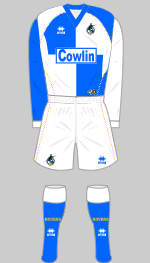
2008-2009 d i
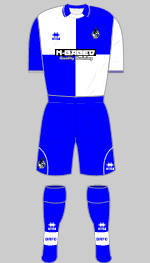
2009-2010 d
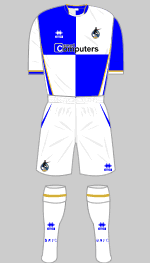
2010-2011 d
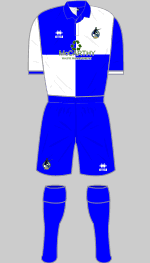
2011-2012 d
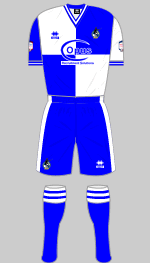
2012-2013 d
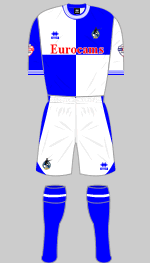
2013-2014 d
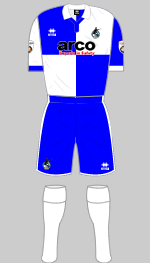
2014-2015 d
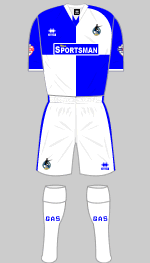
2015-2016 d
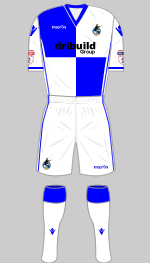
2016-2017 d
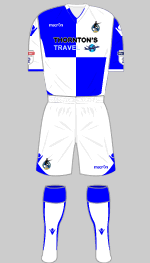
2017-2018 d
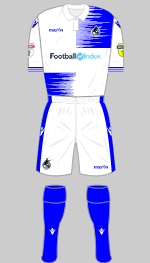
2018-2019 d
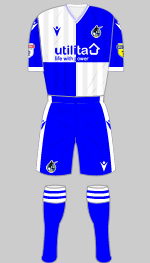
2019-2020 d
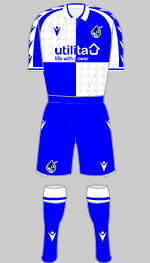
2020-2021 d
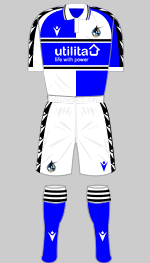
2021-2022 d
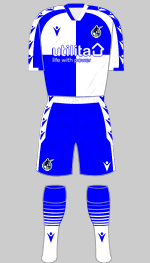
2022-2023 d
Background
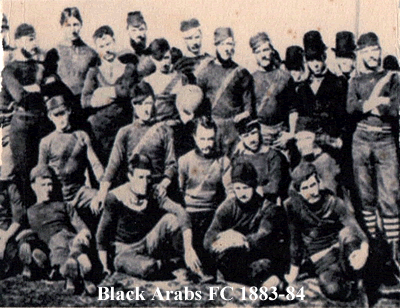 In September 1883 a group of
young men formed a football club and decided to call it Black Arabs FC.
They played at Purdown in East Bristol and became known as the "Purdown
Poachers" due to their habit of persuading players of other clubs
to join them. The following year they changed their name to Eastville
Rovers and in 1892 they joined the Bristol & District League. By the
summer of 1895, Eastville Rovers were based at the Star Inn on Fishponds
Road and played all their home matches at the Ridgeway Ground in, according
to Byrne, Stephen & Jay a "a kit of buff and green." As
no photographs of this unusual outfit exist I have used artistic licence
to present it here. In 1897 the club turned professional and became Bristol
Eastville Rovers: the following year "Eastville" was dropped
and they became known as Bristol Rovers. In 1899 the club joined the Southern
League, winning the championship in 1905. In 1920, Rovers became founder
members of the Football League Third Division along with the rest of the
Southern League Division One clubs.
In September 1883 a group of
young men formed a football club and decided to call it Black Arabs FC.
They played at Purdown in East Bristol and became known as the "Purdown
Poachers" due to their habit of persuading players of other clubs
to join them. The following year they changed their name to Eastville
Rovers and in 1892 they joined the Bristol & District League. By the
summer of 1895, Eastville Rovers were based at the Star Inn on Fishponds
Road and played all their home matches at the Ridgeway Ground in, according
to Byrne, Stephen & Jay a "a kit of buff and green." As
no photographs of this unusual outfit exist I have used artistic licence
to present it here. In 1897 the club turned professional and became Bristol
Eastville Rovers: the following year "Eastville" was dropped
and they became known as Bristol Rovers. In 1899 the club joined the Southern
League, winning the championship in 1905. In 1920, Rovers became founder
members of the Football League Third Division along with the rest of the
Southern League Division One clubs.
 Rovers hardly set the world alight and remained
an average to poor Third Division team until the 1950s. In 1931, the club
adopted blue and white quartered shirts: the manager believed that this
design would make his players look bigger. This strip has since become
synonymous with the club. In March 1940 the club, faced with financial
problems, sold their Eastville Stadium to the Bristol Greyhound Company
and thereafter rented their ground. This decision would come back to haunt
the club some forty years later.
Rovers hardly set the world alight and remained
an average to poor Third Division team until the 1950s. In 1931, the club
adopted blue and white quartered shirts: the manager believed that this
design would make his players look bigger. This strip has since become
synonymous with the club. In March 1940 the club, faced with financial
problems, sold their Eastville Stadium to the Bristol Greyhound Company
and thereafter rented their ground. This decision would come back to haunt
the club some forty years later.
In the 1950s the club's official crest was a variation on the Bristol Coat of Arms but this was never worn on the team shirts.
In 1953 the Pirates won the Third Division (South)
championship and took their place in Division Two and for the rest of
the decade the club were firmly established in the top half of the division.
In 1962 Rovers were  relegated to the Third Division. During the Sixties
the cherished quartered shirts were dropped in favour of striped shirts
and later plain blue. It is fitting that the side that won promotion in
1974 did so wearing quartered shirts that had been revived the previous
season.
relegated to the Third Division. During the Sixties
the cherished quartered shirts were dropped in favour of striped shirts
and later plain blue. It is fitting that the side that won promotion in
1974 did so wearing quartered shirts that had been revived the previous
season.
Rovers' shirts were, perhaps, considered sufficiently distinctive for the club to eschew  wearing their crest during the Seventies, when these began to return to fashion. In 1979 BRFC was embroidered in white on the upper left (blue) quarter. In 1980 a crest finally did appear, a rather ropy pirate leering out of a roundel.
A fairly new crest design that incorporated the traditional quartered motif and the  year of their formation was introduced in 1982. This was replaced in 1988 by a simplified version. Throughout the period these badges were used, the upper left quarter was always blue.
In August 1980 the South Stand burnt down and Rovers played five "home" matches at Ashton Gate before they were able to return to Eastville the following month.
 The team made little headway at the higher level
and in 1981 they were back in Division Three. In April 1986, faced
with mounting debts and increasing rental payments, the club moved away
from Bristol to share Bath City's Twerton Park ground. Many believed that
their days were numbered but they survived and ten years later, with Gerry
Francis in charge, Rovers were promoted once again and spent three seasons
in Division Two before the inevitable relegation in 1993.
The team made little headway at the higher level
and in 1981 they were back in Division Three. In April 1986, faced
with mounting debts and increasing rental payments, the club moved away
from Bristol to share Bath City's Twerton Park ground. Many believed that
their days were numbered but they survived and ten years later, with Gerry
Francis in charge, Rovers were promoted once again and spent three seasons
in Division Two before the inevitable relegation in 1993.
During the Eighties and Nineties, considerable imagination was applied to producing variations on the basic quartered shirts. The 1996 version, however, was universally despised and nicknamed "The Tesco Bag" for reasons that are obvious.
In 1996 Rovers entered into a ground sharing agreement with Bristol Rugby and returned to their home city to play at the Memorial Ground, known locally as "The Mem." Within a few years, the rugby club fell on hard times and Rovers were able to buy out their interest in the ground for a mere £10,000.
 A redesigned crest was adopted in 1997, incorporating the figure of a pirate, to reflect Rovers' official nickname of "The Pirates", which reflects the city's maritime heritage. Understandably the club preferred to adopt this identity rather than their more colloquial local nickname, "The Gas," which derives from the term "Gasheads," coined by City supporters and adopted by Rovers' supporters in the Eighties. The term comes from the days when Rovers' old Eastville ground was frequently filled with an overpowering smell from the neighbouring town gas works.
In 2001 Rovers dropped into Nationwide Division Three the first time that the club has been in the lowest division since their Division Three (South) days. In the early years of the new millennium the club struggled, narrowly avoiding the drop into the Conference.
In 2007, planning permission was granted to redevelop The Memorial Ground as a 18,500 all-seat stadium but work was delayed by the withdrawal of the club's principal partner and the economic recession. After further delays it was announced in June 2011 that the Memorial Ground site would be sold to Sainsbury's and the funds used to build a 21,700 seat stadium on the University of the West of England campus in Frenchay. It was hoped the new stadium would be ready for the 2015-16 season but the project collapsed under the weight of multiple legal challenges leading to Sainsbury's withdrawal.
Going into their final game of 2013-14 Rovers needed one point from their home fixture with Mansfield but lost 1-0, having hit the woodwork three times. As a result they lost their place in the Football League after 94 years but they bounced straight back and then went up to League One in 2016 under the ownership of the Al-Qadi family from Jordan.
After being relegated to League Two in 2021, Rovers clinched an automatic promotion place on the final day of the 2021-22 season in remarkable fashion, beating Scunthorpe United 7-0 to draw level with Northampton Town on both points and goal difference. Rovers took third place having scored more goals than the Cobblers who were then knock out in the play-offs
Sources
- (a) Bristol Rovers FC: The Definitive History 1883-2003 (Byrne, Stephen & Mike Jay 2003)
- (b) Bristol Rovers FC Images of Sport (Mike Jay 1999)
- (c) Club Colours (Bob Bickerton)
- (d) Bristol Rovers Official Site
- (e) Football Focus
- (f) Mike Jay
- (g) David King
- (h) Alick Milne
- (i) Fabrizio Taddei (Errea)
- (j) Peter Hilder
- (k) Harry Amos
- (l) Laurence Fallon
- (m) Keith Ellis
- (n) Andrew Williams
- (o) Andrew Bartlett
- (p) Simon Monks
- (q) Bertie Wright
- (r) Soccer Review 1965-66
- (s) The Senior Tigers Club
- (t) Bristol Rovers Memorabilia retrieved by Tony Sealey
Crests are the property of Bristol Rovers FC. Photo credit Bristol Rovers FC.