


Bristol
City
Formed 1894
Elected to Division Two 1901
Kit History
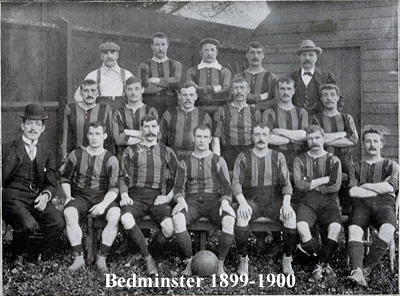
Bedminster
Formed as Southville in 1887. Merged with Bristol City in 1900.
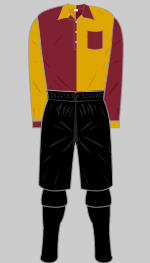
1892-1898 a
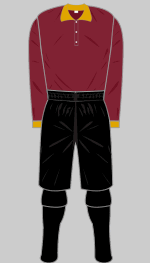
1898-1899 a
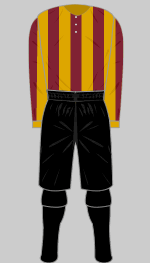
1899-1900 a
Bristol City
Formed as Bristol South End in 1894. Changed name to Bristol City in 1897.
Merged with Bedminster in 1900.
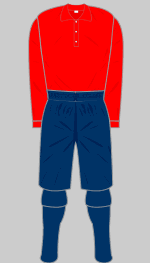
1894-1895 a
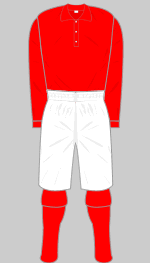
1897-1898 a
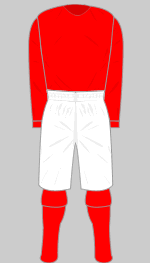
1898-1899 a
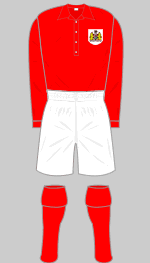
1901-1903 a
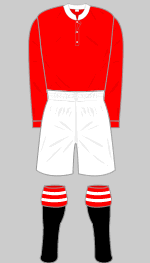
1903-1905 a
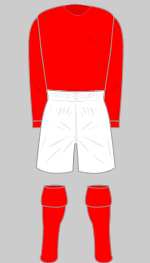
1905-1906 a
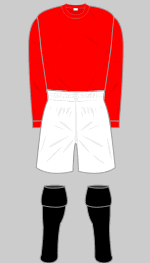
1906-1907 a q
1907-1908 a
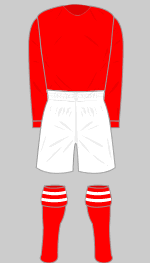
1908-1915 a
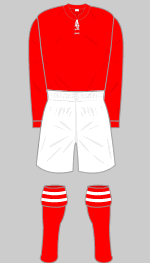
1919-1924 a
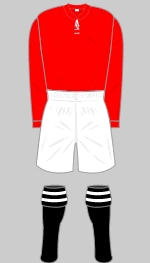
1924-1925 p
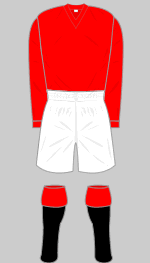
1926-1932 a
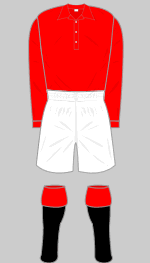
1932-1939 a
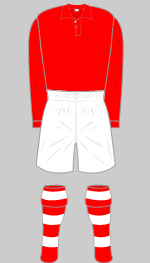
1945-1947 a
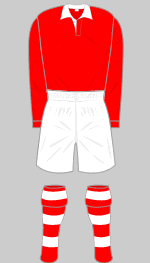
1947-1949 a

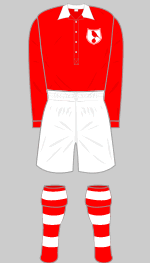
1949-1950 p v
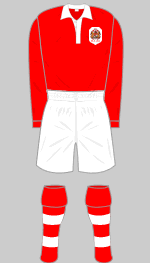
1951-1953 f p
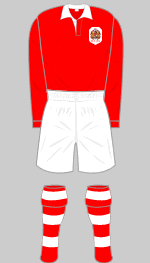
1953-1954 a
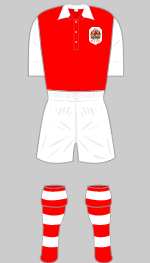
1954-1955 a
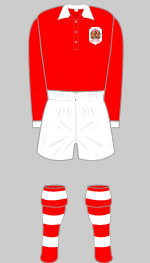
1955-1957 a p

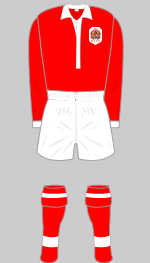
1956-1957 alt p
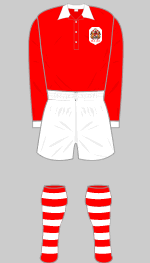
1957-1958 s
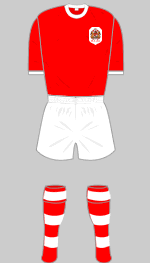
1957-1958 a
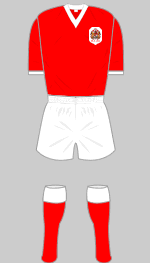
1958-1961 a
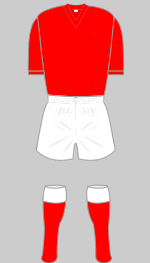
Aug-Oct 1961 a
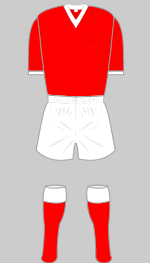
Nov-March 1962 a f w
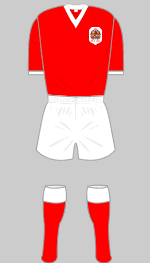
April 1962 a
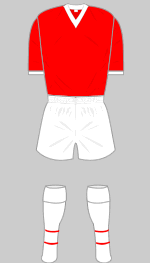
1962-1963 early a
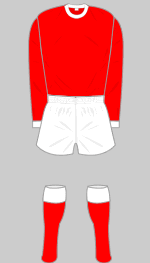
1962-1963 late a
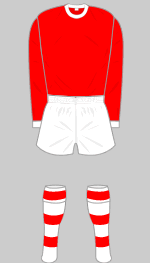
1963-1964 w
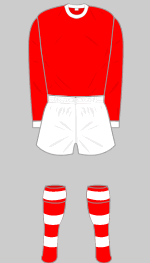
1964-1965 a w
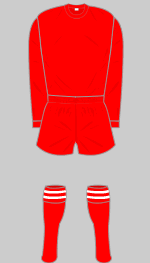
1965-1966
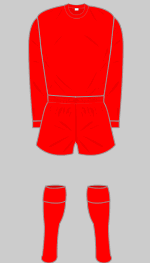
1966-1970 b w
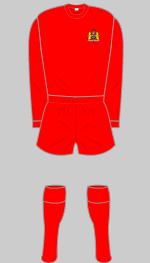
1970-1971 b f i
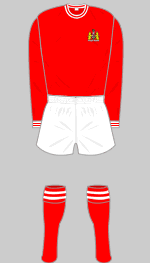
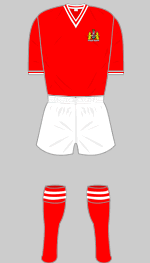
1972-1976 b i y
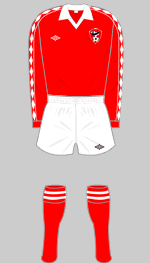
1976-1981 b i m
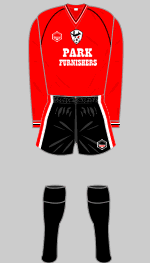
1981-1982 b g k
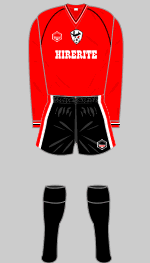
Feb 1982 b g k
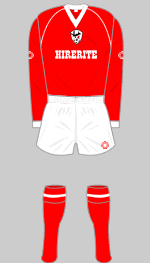
1982-1983 b
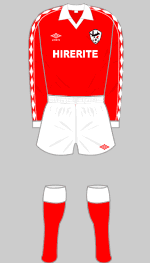
Aug-Dec 1983 b
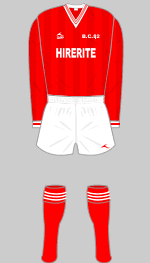
Dec 1983-1986 b n
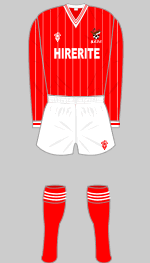
Aug-Dec 1986 r t
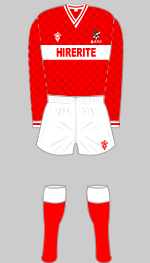
Dec 1986-1988 b j
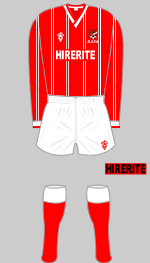
1988-1990 b j l
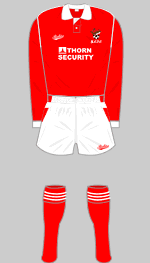
1990-1992 b j
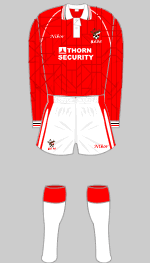
1992-1993 b h l
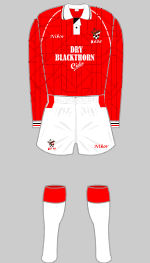
1993-1994 b
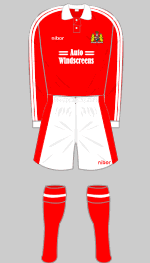
1994-1996 b
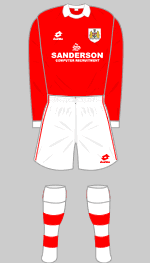
1996-1997 b
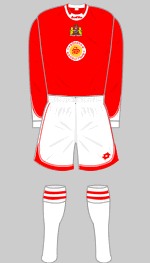
1997-1998 b
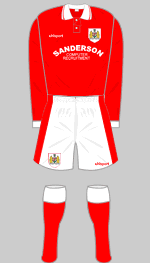
1998-1999 b
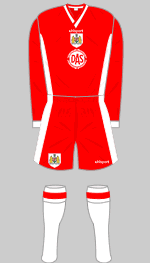
1999-2000 b
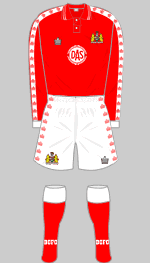
2000-2001 h l
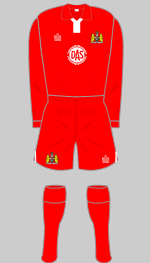
2001-2002 b h
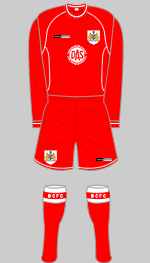
2002-2003 c h
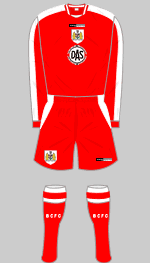
2003-2004 c
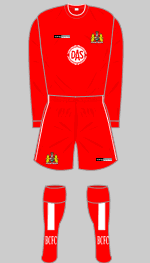
2004-2005 c
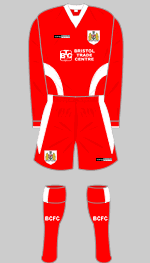
2005-2006 c
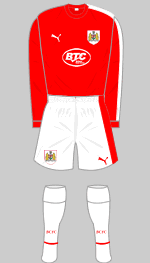
2006-2007 c j
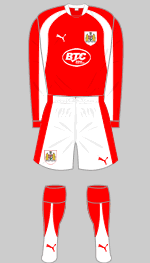
2007-2008 c
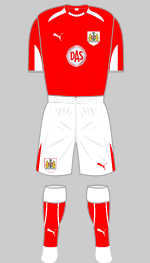
2008-2009 c
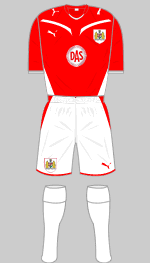
2009-2010 c
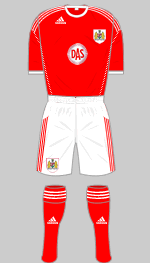
2010-2011 c
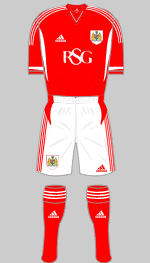
2011-2012 c
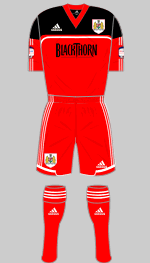
2012-2013 c
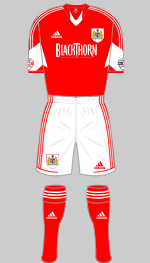
2013-2014 c
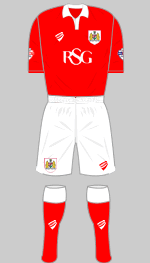
2014-2015 c
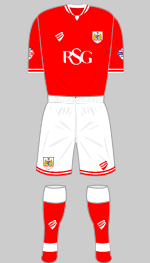
2015-2016 c
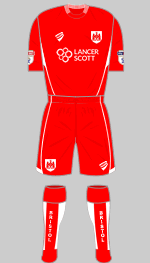
2016-2017 c
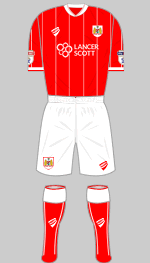
2017-2018 c
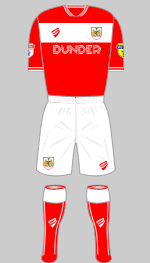
2018-2019 c
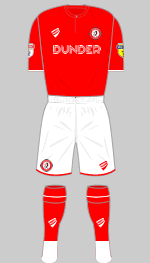
2019-2020 c
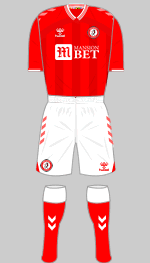
2020-2021 c
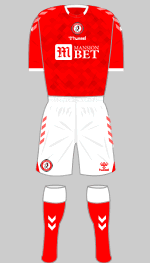
2021-2022 c
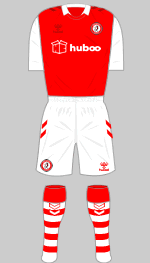
2022-Feb 23 c
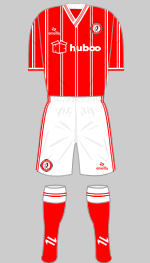
Feb-May 1923 c y
Background
 On 12 April, 1894, Bristol
South End FC was formed. Three years later, the club turned professional
and joined the Southern League, changing their name to Bristol City in
the process. In 1900, after a disappointing campaign, the club merged
with neighbours Bedminster FC, also a professional side. For a while the
club used both City's St John's Lane and Bedminster's Ashton Gate grounds
alternately for home matches. In 1901, the club finished second in
the Southern League and successfully applied to join the Football League,
replacing Walsall in Division Two. At this time it was unusual for teams to wear a crest but the coat of arms of the City of Bristol was worn between 1901 and 1903, possibly in recognition of the club's elevation to the League.
On 12 April, 1894, Bristol
South End FC was formed. Three years later, the club turned professional
and joined the Southern League, changing their name to Bristol City in
the process. In 1900, after a disappointing campaign, the club merged
with neighbours Bedminster FC, also a professional side. For a while the
club used both City's St John's Lane and Bedminster's Ashton Gate grounds
alternately for home matches. In 1901, the club finished second in
the Southern League and successfully applied to join the Football League,
replacing Walsall in Division Two. At this time it was unusual for teams to wear a crest but the coat of arms of the City of Bristol was worn between 1901 and 1903, possibly in recognition of the club's elevation to the League.
After four solid campaigns, City were promoted
in 1906 having won the Second Division championship. The following year
they finished in second
place three points behind c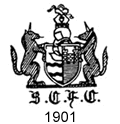 hampions Newcastle. In 1909, there was another
near-miss when City reached the FA Cup Final only to lose to Manchester
United 0-1. (The crest was worn in this match on the blue shirts worn for the occasion.) Two years later, City were relegated on the last day of the
season: they would not return to the top flight for 66 years.
hampions Newcastle. In 1909, there was another
near-miss when City reached the FA Cup Final only to lose to Manchester
United 0-1. (The crest was worn in this match on the blue shirts worn for the occasion.) Two years later, City were relegated on the last day of the
season: they would not return to the top flight for 66 years.
 In 1922, City were relegated to Division Three
(South), returned the following season as champions only to be relegated
for a second time the year after that. In 1928 they were promoted once
more but in 1932 it was back to the basement.
In 1922, City were relegated to Division Three
(South), returned the following season as champions only to be relegated
for a second time the year after that. In 1928 they were promoted once
more but in 1932 it was back to the basement.
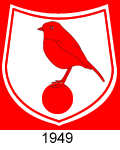
A crest was worn during the 1949-50 season that featured a robin standing on a football. 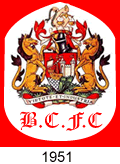 This was replaced during the Fifties when the coat of arms crest was worn once again embroidered onto a white patch.
Their next promotion did not come until 1955 when they spent five years in the Second Division before being relegated once more. In 1965, City were promoted again and this time succeeded in consolidating and holding on to their place.
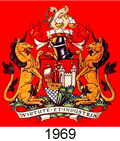 The city crest appeared once again in the 1969-70 season, now embroidered directly onto the shirts, and was used until 1976. Pre-season photos for 1971-72 show the all-red shirts and socks worn with white shorts but this strip was never worn: the photographs were taken before the new kit with white trimmings and shorts was delivered.
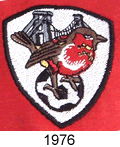 In 1976, City finished in runners-up position and
were promoted to the First Division. To mark the occasion, a new badge replaced the city's coat of arms on players' shirts, featuring a robin (the club's nickname) and the Clifton suspension bridge, Bristol's most famous landmark. Predictably they struggled to survive
at this level, narrowly avoiding relegation twice before finishing
In 1976, City finished in runners-up position and
were promoted to the First Division. To mark the occasion, a new badge replaced the city's coat of arms on players' shirts, featuring a robin (the club's nickname) and the Clifton suspension bridge, Bristol's most famous landmark. Predictably they struggled to survive
at this level, narrowly avoiding relegation twice before finishing  a respectable
13th in 1979. The following year, however, City were relegated and in
successive seasons plunged all the way down to Division Four and bankruptcy.
A new company was formed (Bristol City 1982 Ltd) and closure was narrowly
avoided. The club was so strapped for cash that for the opening weeks of the 1983-84 season, an old set of shirts with the (now obsolete) Umbro diamond trim down the sleeves were pressed into service before a new set were delivered, made by Bukta. The crest was missing from the new set; instead "B.C.82" in felt characters
a respectable
13th in 1979. The following year, however, City were relegated and in
successive seasons plunged all the way down to Division Four and bankruptcy.
A new company was formed (Bristol City 1982 Ltd) and closure was narrowly
avoided. The club was so strapped for cash that for the opening weeks of the 1983-84 season, an old set of shirts with the (now obsolete) Umbro diamond trim down the sleeves were pressed into service before a new set were delivered, made by Bukta. The crest was missing from the new set; instead "B.C.82" in felt characters 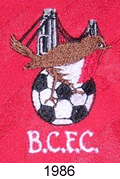 was ironed onto the chest.
In 1984, The Robins began the long climb back up the league,
gaining promotion in fourth 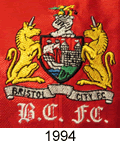 position. In 1986, the robin crest was reinstated but without the background shield.
By the early Nineties, City were back in the Second Division but, aside from an FA Cup win against Liverpool in 1994, there was little for the fans to cheer about.
At the beginning of the 1994-95 season, a simplified version of the Bristol coat of arms once again became City's official crest, appearing with and without a white shield background. The team were relegated to the third tier at the end of the season. They went back up in 1998 but were immediately relegated. After a struggle to avoid 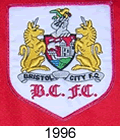 relegation in 2005-06, however, they were promoted to the Championship (second tier) as League One runners-up, reaching the promotion play-offs a year later.
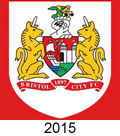 In April 2013 City were relegated to League One and it is probably no coincidence that a group of fans started a campaign to restore the robin crest. By November 2014 their petition had attracted 1,000 signatures but when the club updated their crest in 2015, it was only to simplify the design.
Plans to develop a new ground at Ashton Vale came to nothing so the club went ahead with a major redevelopment of Ashton Gate. Work started in May 2014 and was due to be completed in time for the start 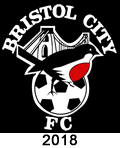 of the 2016-17 season with a capacity of 27,000.
After a sustained campaign by a large section of the club's supporters, the Robin and 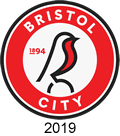 Clifton Bridge crest was reinstated for 2018-19 but only on the white and black change kit. The familiar coat of arms continued to be the official crest and was worn on the first and third choice strips.
With a view to marking the club's 125th anniversary in 2019 a consultation was organised to decide on a new image. Over 3,350 responses were received, the majority of which favoured the return of the robin motif. A new version of the crest was revealed in May of that year.
The Hummel strip worn in 2022-23 featured contrasting white sleeves and collar, a reference to the kit worn in 1954-55 when the team won promotion from Division Three (South). This was dropped in February after Hummel's UK agent, Elite Sports Group, went into administration and supplies of replica shirts dried up. In February 2023 the club anounced a new partnership with the Irish sportswear supplier, O'Neills.
Sources
- (a) Bristol City FC 1894-1967 (Images of Sport) by Tom Hopegood
- (b) Bristol City FC 1966-2002 (Images of Sport) by Tom Hopegood & David Woods
- (c) Bristol City Official Website
- (d) Football Focus
- (e) Tractor Driver of Somerset
- (f) Pete's Picture Palace
- (g) Mark Salisbury
- (h) David King
- (i) Alick Milne
- (j) Dave Orr
- (k) Martin Voisey
- (l) jumpers4goalposts
- (m) Christopher Worrall
- (n) Mike Deady
- (o) Mark Leech
- (p) Keith Ellis
- (q) Simon Monks
- (r) Steven Thomas
- (s) Pavel Shavalev
- (t) Mark Leech
- (u) Phil Rollings
- (v) picklick.co.uk
- (w) The Senior Tigers Club
- (y) Tony Sealey
Crests were provided by Oleg Baranov and are the property of Bristol City FC.