


Bolton
Wanderers
Formed 1874
Founder member of the Football League 1888
Kit History
Christ Church
1874
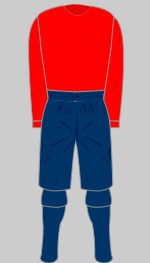
1874-1877 a v

Bolton Wanderers
1877
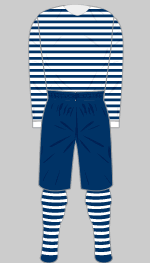
1879-1881 u
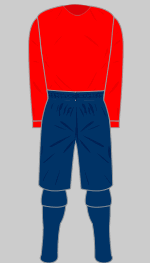
1881-1882 u
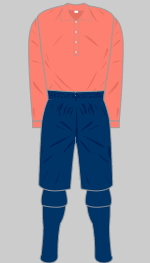
1882-1883 a
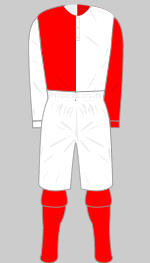
1883-1884 m u
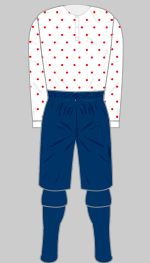
1884-1885 a u w
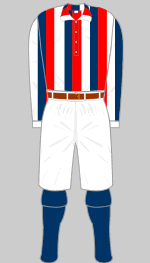
1885-1886 c D
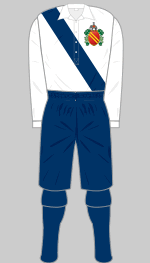
1887-1888 z
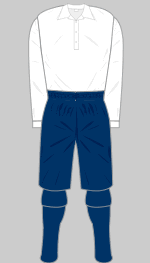
1888-1890 a
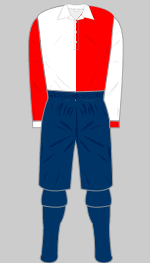
1890-1891 r u
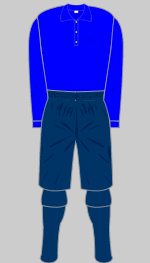
1891-1892 r
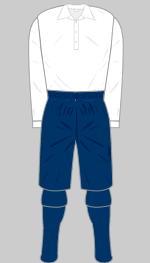
1892-1900 a h
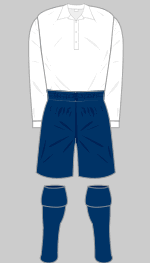
1900-1908 f n p
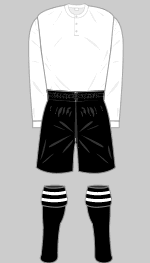
1908-1911 h p
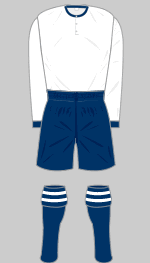
1911-1921 c g h q
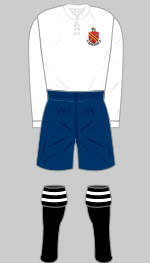
1921-1933 c g k p
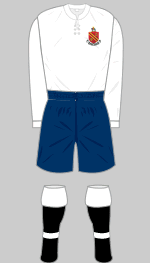
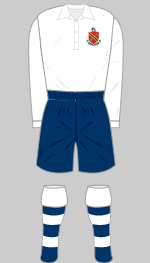
1936-1937 g k

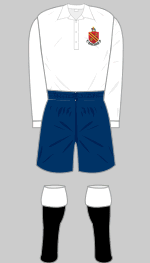
1937-1938 k
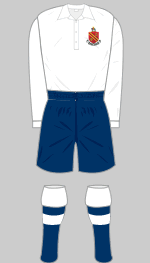
1938-1939 k p
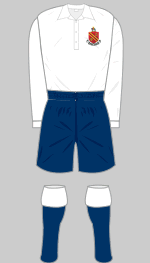
1939-1944 c p
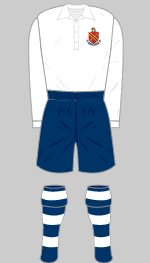
circa 1944-1946 g B C
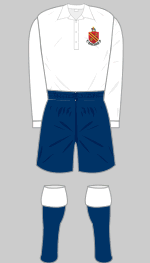
1946-Dec 49 d g k B
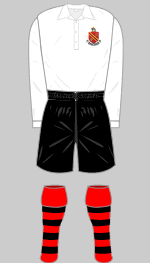
Jan-1950-1951 B
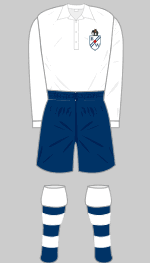
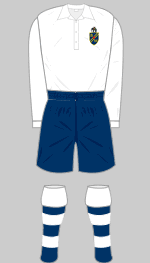
1953-1955 g

1955-1956 E
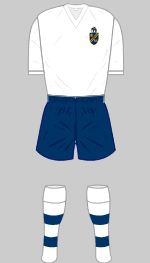
1956-1962 c g p
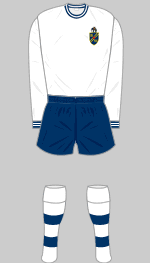
1962-1966 g s
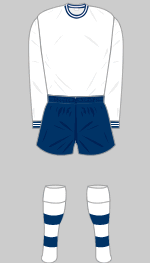
1966-1967 x
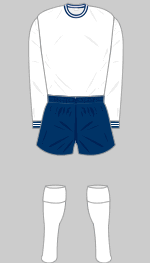
1967-1969 d g
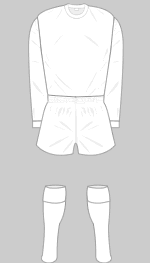
1969-1971 g
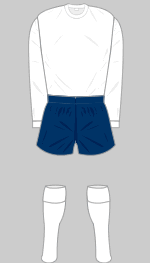
1971-1972 g
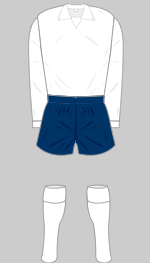
1972-1975 g i j
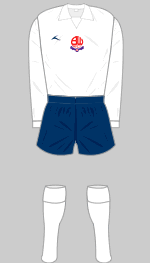
Aug-Dec 1975 c g
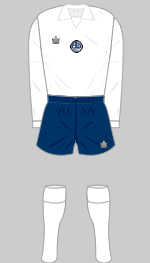
January 1976 l
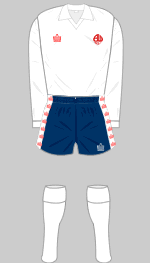
1976-1977 late 1 g j
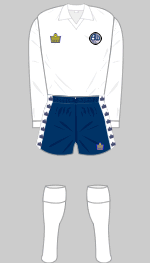
1976-1977 late 2 l
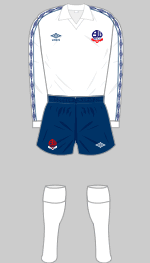
1977-1980 b g A
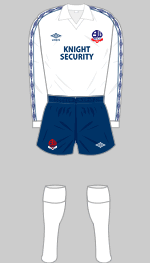
1980-1981 e A
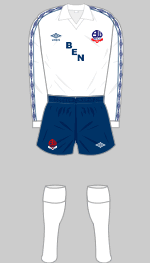
1981-1982 b A
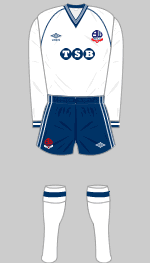
1982-1983 e g
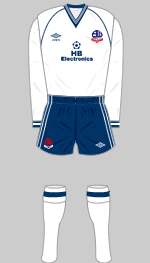
1983-1985 e
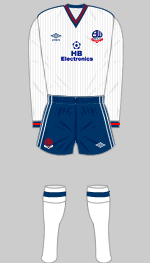
1985-1986 e
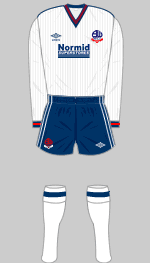
1986-1988 e
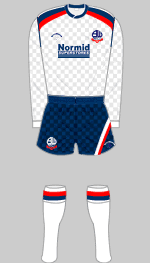
1988-1990 e

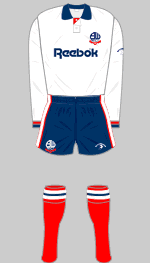
1990-1993 b
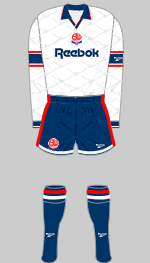
1993-1995 b
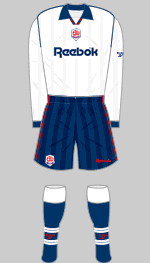
1995-1997 b
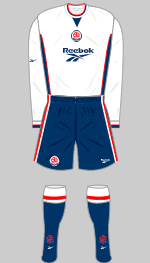
1997-1999 b
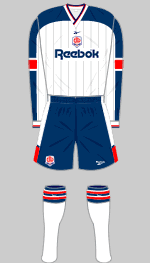
1999-2001 b
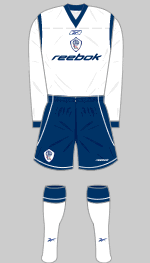
2001-2003 b
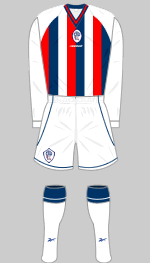
2002 anniversary e
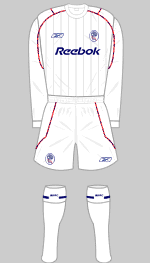
2003-2005 c

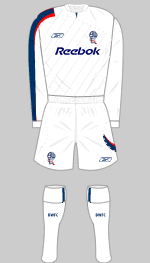
2005-2007 c
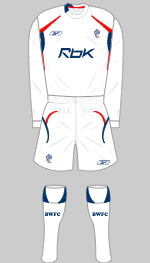
2007-2008 c
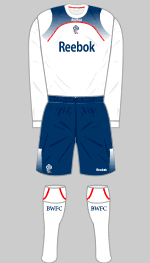
2008-2009 c
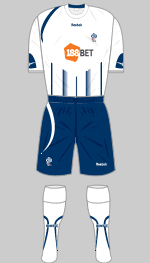
2009-2010 c
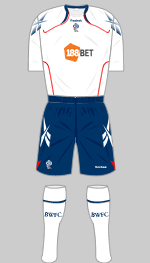
2010-2011 c
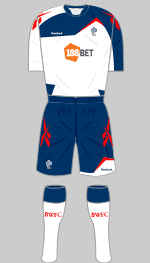
2011-2012 c
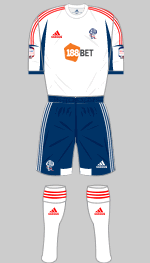
2012-2013 c
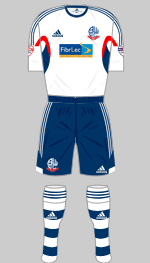
2013-2014 c
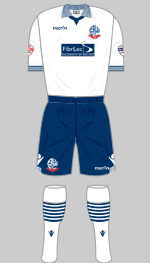
2014-2015 c
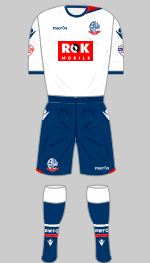
2015-March 2016 c
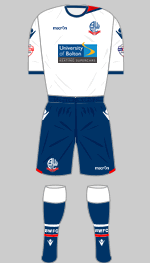
April-May 2016 c t
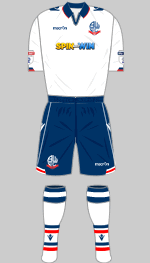
2016-2017 c
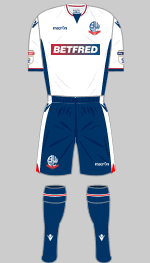
2017-2018 c
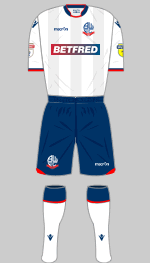
2018-2019 c
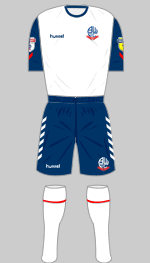
Aug-Oct 2019 c
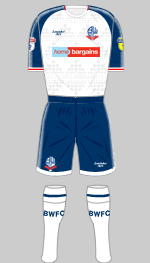
Oct 2019-2020 c
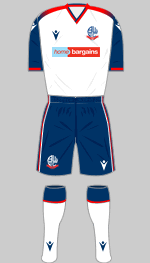
2020-2021 c
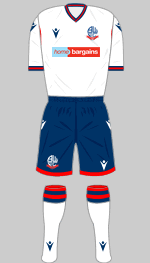
2021-2022 c
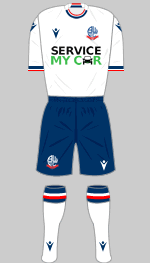
2022-2023 c
Background
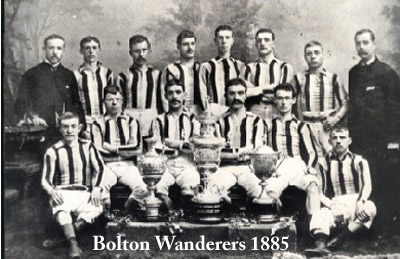 The Wanderers were formed in 1874 by Thomas Ogden,
a schoolmaster and were originally called Christ Church FC. After a dispute
with the vicar, who objected to meetings being held in the school without
his presence, the club moved its base to a local public house in 1877
and adopted the name of Bolton Wanderers. Four years later the club moved
to a new ground and entered the FA Cup for the first time. Season tickets
were made available at a guinea (£1.05) apiece.
The Wanderers were formed in 1874 by Thomas Ogden,
a schoolmaster and were originally called Christ Church FC. After a dispute
with the vicar, who objected to meetings being held in the school without
his presence, the club moved its base to a local public house in 1877
and adopted the name of Bolton Wanderers. Four years later the club moved
to a new ground and entered the FA Cup for the first time. Season tickets
were made available at a guinea (£1.05) apiece.
The team wore a variety of colours in the early years. Journalist Jack Urry interviewed for the Villa News & Record in 1920 recalled "watching the Villa play against Bolton Wanderers, who at the time played in white jerseys with blobs of scarlet about the size of threepenny-bits dotted all over them - the most hideous dress ever known."
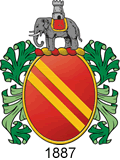 Striped shirts were worn in 1885-86 but a report on a match against Great Lever, Wanderers' great local rivals, on New Years' Day 1886 has the team wearing "white, spot yellow" jerseys. This was evidently Rovers' change kit as their striped tops would have clashed with those of their opponents. In 1887-88 Bolton met Everton in the FA Cup, a tie that needed three replays before Everton won 2-1, ony to be disqualified. The Athletic News noted that in the third replay Bolton wore "the Royal Arms and an ugly sash across their white jerseys." This seems to employ considerable journalistic licence as only Burnley FC were entitled to wear royal arms: it seems more likely that the writer is refering to the town's unofficial crest, which appeared in several locations in the town hall prior to the official coat of arms being granted in 1890.
Although eclipsed
by local rivals Blackburn Rovers, Bolton built a strong reputation within
the county and in 1886 they won the Lancashire Cup, as well as the Bolton
and Derbyshire Charity Cups. On the strength of their achievements, Bolton
were invited to join the Football League in 1888. That same year, the
club 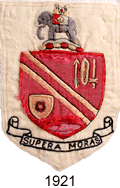 adopted what became their traditional plain white shirts and dark
blue knickers.
adopted what became their traditional plain white shirts and dark
blue knickers.
Bolton performed well in the League and in 1894 reached their first FA Cup final. Relegation became a regular event in the Edwardian period but on each occasion the club bounced back more or less immediately. The 1920's were a golden era for the club which brought three FA Cup wins in 1923 (the famous "Wembley white horse final") 1926 and 1929. The team adopted a simplified version of Bolton's coat of arms in 1921. Although absent in some team photographs it was always worn in competitive games after that. The reason for the inclusion of an elephant in the design is obscure but it dates from around 1799 and elephants appear on buildings all over the town.
During the Thirties Bolton spent two seasons in Division
Two but otherwise they 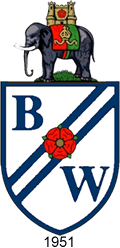 continued as a reliable if unambitious side, with an unbroken spell in the First Division from 1935 to 1964.
On 14 January 1950 the team wore black knickers with red and black socks against Liverpool. There is no record of why the club made this unexpected change. The rationing of clothing had just 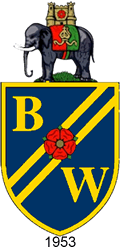 ended so shortages is one explanation. Another theory, recounted by a supporter who recalled watching the Trotters in the early fifties is that the dye in the navy knickers was of poor quality and faded quickly. According to the club's official historian, Simon Marland, the red and black socks came from stock held by the 53rd Royal Artillery. In 1939 the majority of the Bolton team had joined up and served with this artillery regiment in the North Africa and Italian campaigns. The traditional colours were restored in 1951-52.
In 1951 the old crest was redesigned to give it a more modern look. The elephant and castle were retained, the diagonal lines were reversed and the old symbols were replaced by the letters "BW." The Lancashire rose now appeared in the centre of the shield. The colours were adjusted in 1953 to make it more visible against the team's white shirts.
What success the Trotters had continued to be in
the FA 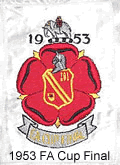 Cup rather than the League and after defeat in the 1953 "Stanley
Matthews Final", (in which Bolton reverted to black knickers) they won the cup again in 1958. In these finals a special crest was worn, based on the older design but placed against
Cup rather than the League and after defeat in the 1953 "Stanley
Matthews Final", (in which Bolton reverted to black knickers) they won the cup again in 1958. In these finals a special crest was worn, based on the older design but placed against 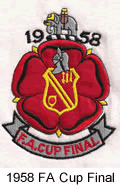 a large Lancashire rose.
The club's career since then has been a remarkable story of repeated decline and recovery. After losing their First Division place in 1964, Wanderers dropped into the Third Division in 1971. Two years later they were promoted as champions and in 1978 they won the Second Division to return to the top flight.
The modernist crest adopted in 1975 proved popular and was used for 26 years before it was replaced. Several variations appeared: the 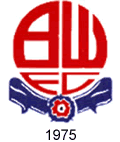 colours of the lettering and the scroll were sometimes reversed, for example, while for some seasons it was placed on a shield.
Bolton briefly wore Admiral kits for the latter part of the 1976-77 season. Admiral seem to have had problems with consistency of production and at least three different versions appeared.
Unable to sustain their success,
the club were relegated again in 1980 and over the next seven years they
dropped all the way down to Division Four. At this, the club's lowest
point, a partnership was forged with the international sports goods manufacturer,
Reebok which has proved to be 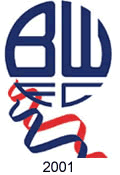 one of the most enduring in the game. With
Reebok's support, the club acquired a brand new stadium adjacent to the
M61 and began a steady climb back up the leagues that would lead them all
the way back to the Premier Division in 1995.
one of the most enduring in the game. With
Reebok's support, the club acquired a brand new stadium adjacent to the
M61 and began a steady climb back up the leagues that would lead them all
the way back to the Premier Division in 1995.
Although the club were relegated again the following season, they have remained in the top flight since 2001. That year an updated version of the crest introduced, retaining the instantly recognisable BWFC motif and replacing the scroll with a pair of ribbons in red and dark blue. This, like its predecessor was sometimes placed within a shield or lozenge.
 After a remarkable 19 seasons, Bolton switched kit supplier from Reebok to Adidas although the former continued to sponsor the club and hold naming rights over their stadium.
In May 2012 Wanderers were relegated to the Championship on the final day of the season.
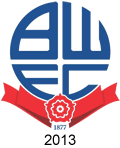
A new crest was introduced in May 2013 after consultation with supporters and at the same time a planned shirt sponsorship deal with payday loan company QuickQuid was dropped after protests. The new badge was a reworking of the popular 1975 version and included the year of Wanderers' formation for the first time. The ribbon crest remained in place as the emblem of the Reebok Stadium until October when the new version was installed to coincide with the unveiling of a statue of Nat Lofthouse.
In 2018-19 Bolton were relegated to League One owing over £1m to HMRC who took out a winding-up order. After a proposed takeover by former Watford owner, Laurence Bassini (who in 2013 was given a three-year ban on holding any position of authority with an EFL club) collapsed, the club announced they would enter administration, incurring a 12 point penalty for the 2019-20 season. A fresh takeover by Football Ventures was delayed due to what the administrator described as "unhelpful" interference by Bassini and the obstructive attitude of the club's owner, Ken Anderson, who "used his position as a secured creditor to hamper and frustrate any deal that did not benefit him or suit his purposes." Faced with the imminent threat of expulsion the sale was finally agreed on 28 August. During this hiatus temporary kits were ordered from Hummel before new sets were made up by a Leeds sportswear company.
Poor form at the start of the 2019-20 season meant Bolton faced an uphill task and when matches were suspended in March 2020 they were firmly rooted to the bottom of the table. Even without the points penalty incurred in August they would have been relegated when final positions were allocated on the basis of points-per-game. The following season, however, Bolton finished third and regained their place in League One.
Sources
- (a) Club Colours (Bob Bickerton 1998)
- (b) Sporting Heroes
- (c) BWFC Official Website
- (d) Football Focus
- (e) True Colours (John Devlin 2005)
- (f) Picture the Past
- (g) Pete's Picture Palace
- (h) Association of Football Statisticians - provided by Pete Wyatt
- (i) Football League Review provided by Simon Monks
- (j) Alick Milne
- (k) Simon Monks
- (l) Christopher Worrall
- (m) Peter Ferrette
- (n) British Film Institute archive (Youtube)
- (o) Steve Flanagan
- (p) Keith Ellis (HFK Research Associate)
- (q) Jonathon Russell
- (r) Burnley Express July 11 1891 researched by Kjell Hanssen
- (s) Tony Sealey
- (t) Bryn Lunt
- (u) Charles Alcock's Football Annuals 1868-1891 researched by Robin Horton
- (v) Lost Teams of the North (Mike Bradbury 2016)
- (w) Villa News & Record (January 31 1920) submitted by Bernard Gallagher
- (x) The Senior Tigers Club
- (y) Cricket & Football Field (2 January 1886) submitted by Andy Boocock
- (z) Athletic News (15 November 1887) retrieved from the Everton Chronicles
- (A) Mark Alton
- (B) Martin Nisbet
- (C) YouTube submitted by Martin Nisbet
- (D) The Bolton Daily Chronicle (August 31 1885) submitted by Lee Gauntlett
- (E) Dick Waite
Photograph courtesy of Bolton Wanderers website. Crests are the property of Bolton Wanderers FC.