


Blackpool
Formed 1887
Elected to Division Two 1896. Failed re-election 1899.
Elected to Division Two 1900.
Kit History
South Shore
Formed 1879
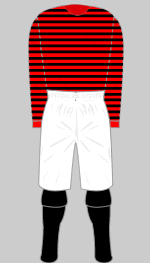
1879-1880 H

1880-1885
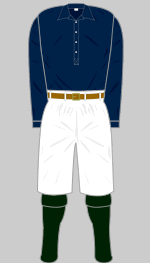
1885-1890 H
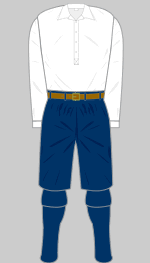
1893-1894 I
1894-1898
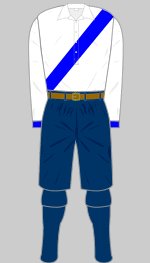
1898-1899 J
Blackpool
Formed 1887
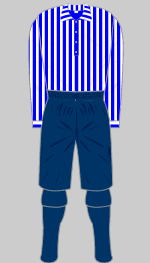
1887-1899 a k p v K
Blackpool
Formed by the merger of South Shore & Blackpool in 1899
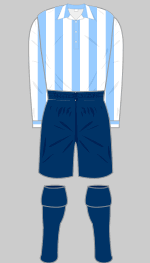
1899-1900 v
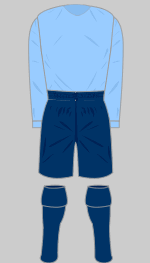
1900-1901 t
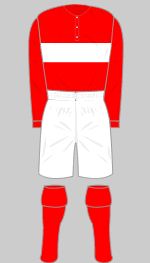
1901-1902 a k t x G
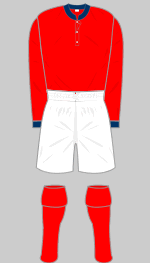
1902-1903 t
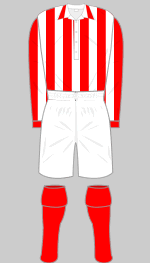
1903-1904 E
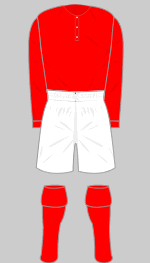
1904-1908 v

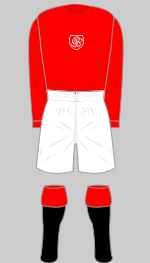
1908-1909 v
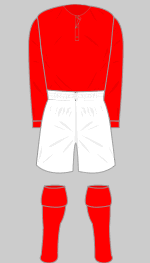
1910-1913 v x
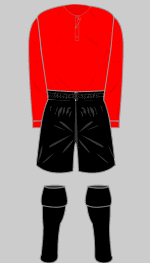
1913-1914 x
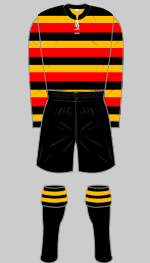
1914-1915 a t
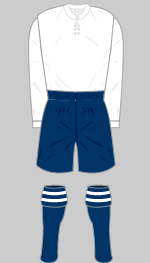
1915-1923 a t v x
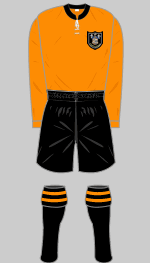
1923-c1925 a
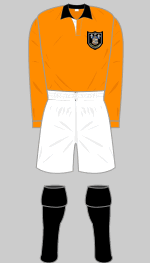
1925-1926 v
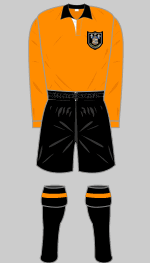
1927-1928 v x
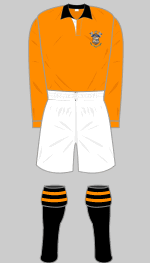
1928-1930 v x
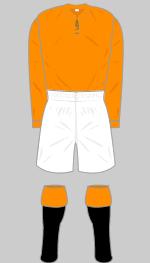
1930-1931 a t
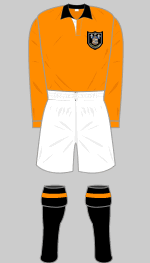
1931-1932 v x
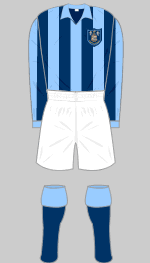
1933-1938 a h k v
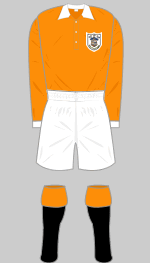
1938-1952 x A
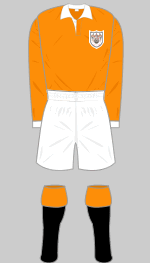
1952-1955 b g k A

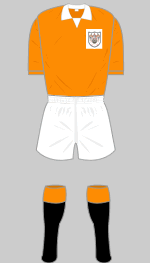
1955-1956 g x A
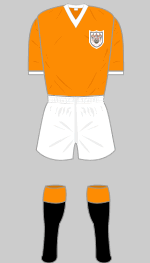
1956-1958 v w x A
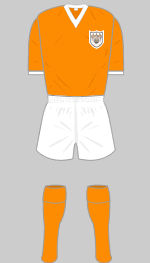
1958-1962 b g x
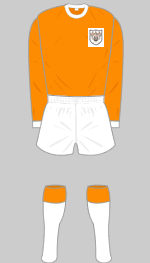
1962-1963 j
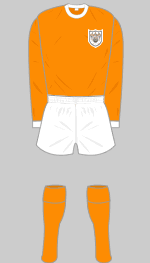
1963-1964 v
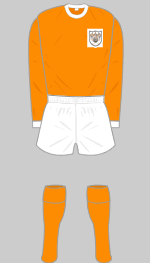
1964-1967 b v
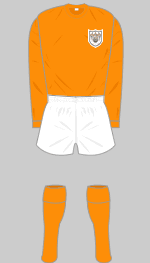
1967-1968 j
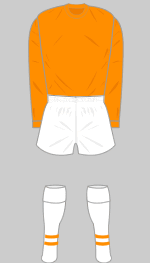
1968-1969 1 h
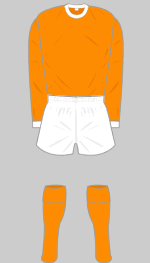
1968-1969 2 F
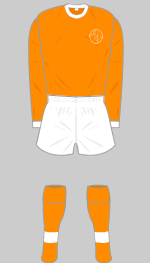
1969-1970 b
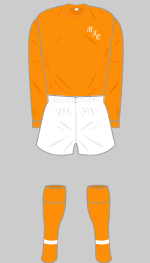
1970-1971 x
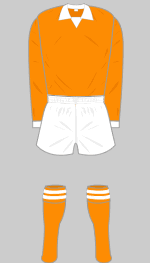
1971-1973 b g v
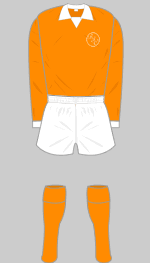
1973-1974 b g
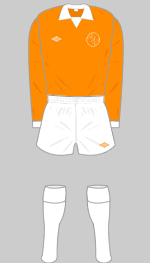
1974-1976 i q
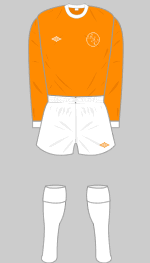
1975-1976 alt v
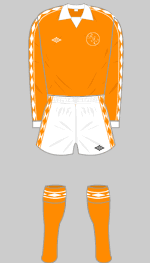
1976-1978 g j q v
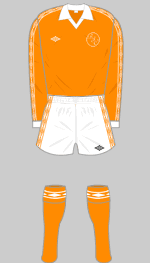
1978-1979 v
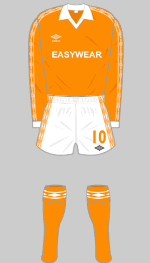
1979-1981 b h v
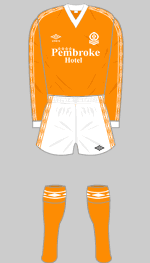
1981-1983 b v
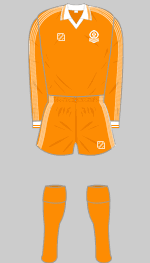
August 1983 y
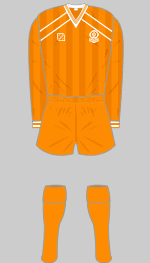
Sept 83-Feb 84 r s
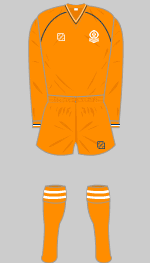
March-May 1984 y
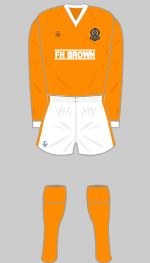
1984-1985 c D
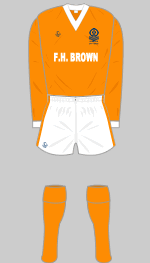
1985-1986 y D
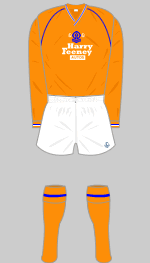
1986-1987 i v D
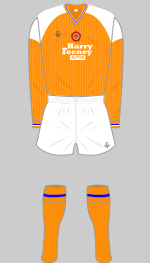
1987-1988 n o
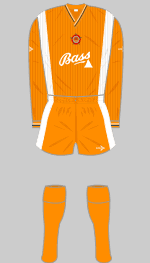
1988-1989 c s v y
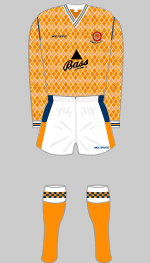
1989-1990 i v y D
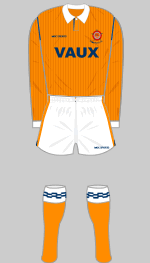
1990-1991 b v D
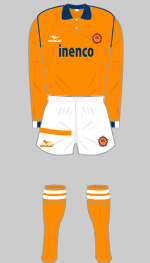
1991-1993 b i y
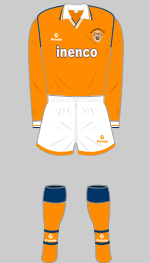
1993-1994 o
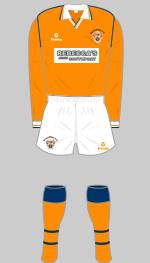
1994-1995 e o
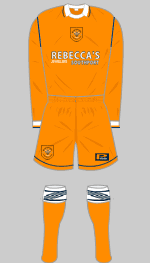
1995-1996 v D
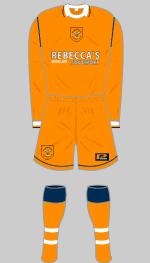
1996-1997 d o v D
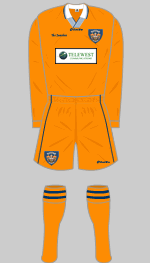
1997-1999 d D
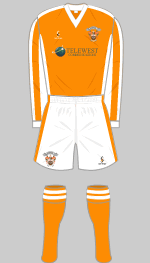
1999-2001 d C
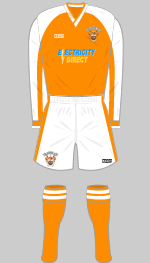
2001-2003 d l o u C
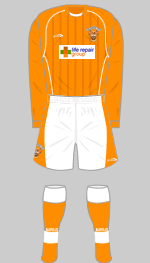
2003-2004 d C
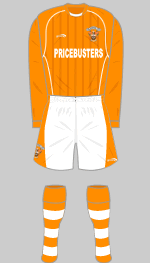
2004-2005 f u z C
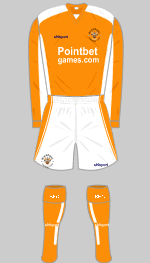
2005-2007 f u
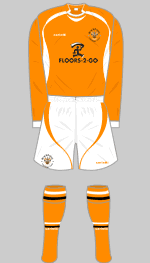
2007-Sept 2008 f
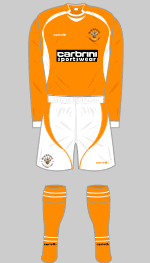
Oct 2008-2009 f
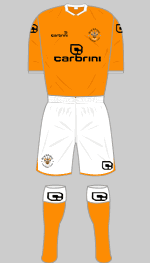
2009-2010 f
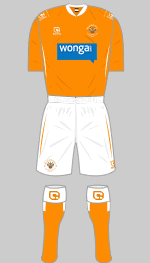
2010-2011 f
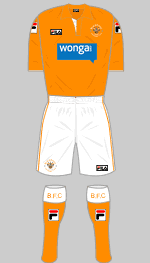
2011-2013 f
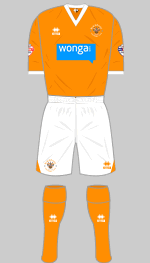
2013-2015 f
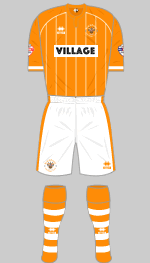
2015-2016 f
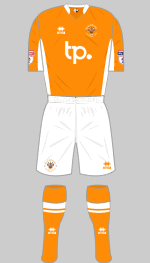
2016-2018 f
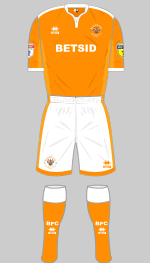
2018-2019 f
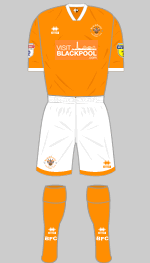
2019-2020 f
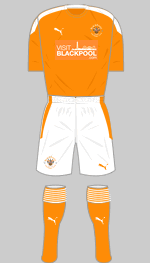
2020-2021 f
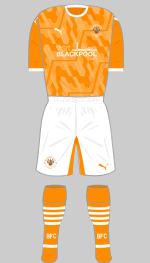
2021-2022 v
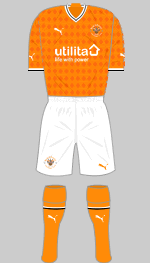
2022-2023 v
Background
 Blackpool FC are forever associated with the "Stanley Matthews Final" of 1953, when the aging genius created the goals that led to the seaside club winning the FA Cup for the first and only time in their history. The famous tangerine jerseys worn in that epic match have become synonymous with the club. In fact they were a relatively recent innovation.
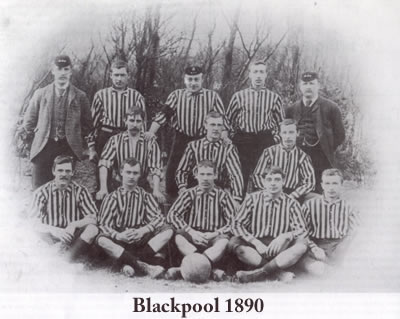
The club can trace its roots back to a church team, Victoria FC, founded in 1877 which folded after nine years. After another local team, Blackpool St John’s, rejected a proposal to drop the denominational title and represent the town, supporters in favour of re-forming Victoria met at the Stanley Arms in July 1887 and Blackpool Football Club as we know it today was formed. A year later the team was accepted into the Lancashire League, winning the title in the 1893/94 season. The seaside resort was then in its Victorian heyday and bursting with confidence. After a couple of unsuccessful attempts to join the Football League, Blackpool's application was finally accepted in 1896. The team played in blue and white shirts and were known as ’The Merry Stripes’. In 1899, Blackpool lost their League status after finishing third from bottom of Division Two. A merger with local rivals South Shore FC followed in December 1899 with the united club taking over South Shore's newly acquired Bloomfield Road ground. A year later Blackpool were re- admitted to Division Two and the start of the 1901/02 season saw the club begin its permanent association with Bloomfield Road. The team played in red for the first time against West Bromwich Albion on 26 October 1901, the new shirts having been "supplied by a Mr Donnelly of Foxhall Road." (G) Red was the colour of choice until the outbreak of war in 1914. A crest appeared on the team's jerseys in 1908-09, which appears to be a monogram on a shield.
The 1914-15 season was played out against the background of war and in August 1914, a large number of Belgian refugees arrived in Blackpool. As a gesture of support, the football club adopted the red, black and yellow colours of the Belgian flag. This attractive kit may have only lasted a single season, the team turning out in white shirts and navy blue shorts for the first game of 1915-16. They wore this outfit when league football resumed in 1919 and became known 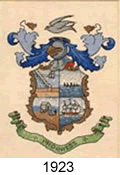 as "The Lilywhites," a nickname they shared with local rivals Preston North End.
Blackpool remained a doggedly mid-table Second Division side for the next 10 years and for the 1923/24 season the club first adopted deep tangerine shirts after one of their directors, Albert Hargreaves, also an international referee, had officiated at a game between Belgium and the Netherlands. He was impressed with the orange shirts of the Dutch side and on his return he persuaded his fellow directors that this would be a distinguished colour for their team. No other Football League had worn plain shirts in this colour before. The town's coat of arms was also emblazoned on the new tops.
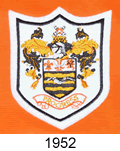 After winning the Second Division title in the 1929/30 season the club won promotion to the First Division, where they tenuously remained for three seasons. In 1937, now wearing dark and light blue striped shirts, the club were promoted once again and for the 1938/39 season they adopted tangerine jerseys once again, this time for good. (The shirts are never, ever described as "orange.") The more familiar version of the town crest on the left was adopted around 1952 and worn right up until 1968.
The years immediately after the war were Blackpool's golden era. With players of the stature of Stanley Matthews and Stan Mortensen the club were regular challengers for the League title and reached two FA Cup finals (1948 and 1951) before that epic victory over Bolton Wanderers in their third Wembley appearance in 1953. Sadly there would be no more glory and  although the Seasiders held on to their First Division status until 1967, the abolition of the maximum wage meant that clubs of modest means like Blackpool could no longer afford to keep star players on their books. The club's decline was a long and protracted affair and for ten years they languished in Division Two (even returning briefly to Division
  One in the 1970/71 season).
The fashion for modernism during the late-Sixties and Seventies was reflected in the decision to drop the traditional crest. Plain shirts became the order of the day until a simple cypher appeared in 1969. This was replaced in 1979 with a semi-abstract representation of Blackpool Tower standing above waves.
In the first part of the Seventies, Blackpool regularly finished in the top ten of Division Two but in 1978, they dropped into the Third Division for the first time in their history. The return of one their most famous sons, Alan Ball, in February 1980 could not halt the 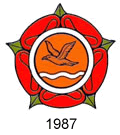 decline and a year later Ball was sacked as the club headed into the Fourth Division.
The Seasiders spent the Eighties languishing in the lower two divisions while their debts mounted to such an extent that their future was in serious doubt. The team was rescued from bankruptcy when it was bought by local millionaire estate agent, Owen Oyston. Yet another new crest was introduced, incorporating a seagull on a tangerine background superimposed on a red, Lancashire rose.
In 1990 Blackpool were struggling near the foot of the Fourth Division when Assistant Manager Billy Ayre took over and the team began a run of 13 consecutive home wins that helped secure a 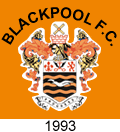 place in the play-offs. Beaten in the final they made the play-offs again the following season and this time were successful in a final decided on a penalty shoot-out, and were
  promoted into the new Division Two (third tier).
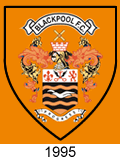
The Nineties brought a welcome return of the club's traditional crest which appeared with various backgrounds. From 1995 the club's name appeared out of a scroll above the arms.
Oyston was jailed for serious offences unrelated to his role in the football club in 1996 but his family, firstly through wife Vicki and then son Karl, retained  their interest and kept the club afloat.
The Seasiders spent time in the lowest two divisions until the 2006/07 season when they were promoted to The Championship (second tier) via the League One play-offs.
 After 39 years in the wings, the Seasiders finally made it back to the top tier in 2010, becoming the first side ever to have won promotion from the bottom to top divisions via the play-offs each time. The 2009-10 season was the most memorable for the club since the 1953 FA Cup win and the 1955-56 campaign when they finished as
  runners-up in Division One. Sadly 'Pool were relegated on the final day of the season.
The team reached the play-off final once again in May 2012 but were narrowly beaten by West Ham.
 Disquiet at the way the Oyston family were running the club came to a head in 2014-15, leading to protests by supporters and allegations that parachute payments were being syphoned off into the Oyston's personal accounts and their associated companies while the team and facilities were starved of investment. Owner, Owen Oyston, in a rare public statement, pointed out that his family had invested millions in the club over 27 years and protected it from debt. Relationships with supporters became increasingly fractious as the club plummeted towards League One and their final game of the season had to be abandoned after fans staged a protest on the pitch. Worse was to follow: Blackpool were relegated again in 2016 and the club president, Valeri Belokon, launched legal action against the Oyston family alleging "unfair prejudice" and asset stripping.
In 2017 Blackpool beat Exeter City in the play-off final to win back a place in League One. Only 6,000 supporters travelled to Wembley because of an ongoing boycott aimed at forcing the Oyston family to sell the club.
In November 2017 the High Court found that the Oystons had illegitimately stripped £26.77m from the club and ordered them to repay £31m to Belokon. Only £10m was handed over and after Belokon applied to the High Court in February 2019, the club was placed in receivership and ordered to be sold to pay off the debt, while the Oyston's were removed from the board. Belokon was unable to take control of the club himself as he had a conviction for fraud in Kyrgysztan, which he claimed was politically motivated. In June 2019 a local business man and lifelong fan, Simon Sadler, bought the club and it's assets to the delight of supporters. It was not long before the new regime achieved success, the team winning the play-off final in 2021 to regain their place in the Championship.
I am grateful to Gerry Wolstenholme and Peter Gillatt who have added considerable detail to this section.
Sources
- (a) Blackpool Football: The Official Club History (Robin Daniels 1972)
- (b) www.seasiders.net
- (c) Tranmere Rovers FC - Images of Sport
- (d) empics
- (e) Crewe Alexandra FC - Images of Sport
- (f) Blackpool FC Official Website
- (g) Football Focus
- (h) The Football Encyclopaedia (Associated Sporting Press 1934) - information provided by Arthur Fergus
- (i) Ralph Pomeroy
- (j) Pete's Picture Palace
- (k) Association of Football Statisticians - provided by Pete Wyatt
- (l) Keith Ambler
- (m) London Hearts
- (n) jumpers4goalposts
- (o) David King
- (p) Greger Lindberg
- (q) Alick Milne
- (r) Mark Alden
- (s) Ralph Pomeroy
- (t) Gerry Wolstenhome
- (u) Tom Howcroft
- (v) Peter Gillatt - HFK Research Associate.
- (w) The Lordprice Collection
- (x) Keith Ellis (HFK Research Associate)
- (y) Christopher Worrall
- (z) Damian Feeney
- (A) Billy Lewis
- (B) Joshua Malpass provided crest details 1993-2005
- (C) oldfootballshirts.com
- (D) @80tribalcolours
- (E) Athletic News (18 January 1904) submitted by Kingsley (Wrexham AFC)
- (F) YouTube
- (G) Blackpool Times (30 October 1901) submitted by Anthony Sharkey
- (H) Charles Alcock's Football Annuals 1869-1891 researched by Robin Horton
- (I) The Straw Plaiters
- (J) The Athletic News (8 May 1899) submitted by Alick Milne
- (K) Football Soccer Cards
Crests are the property of Blackpool FC.