

Blackburn
Rovers
Formed: 1875
Founder member of the Football League
Kit History
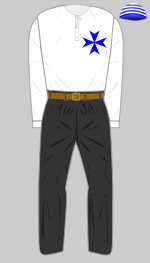
1875 q
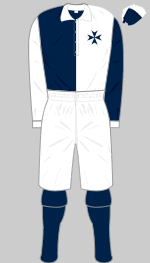
1878-1880 c v z
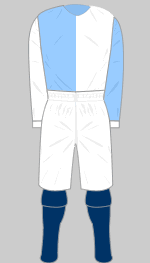
1881 g z
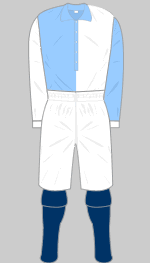
1883-1891 c u
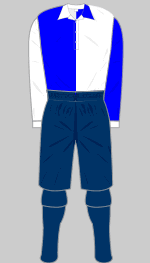
1891-1892 g
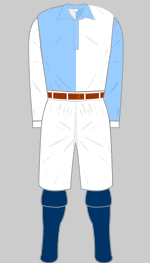
1894-1896 c s
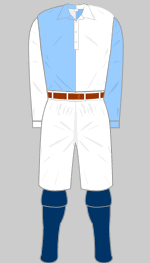
1896-1897 s
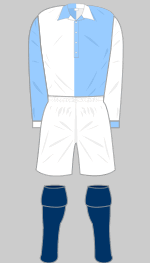
1902-1903 B
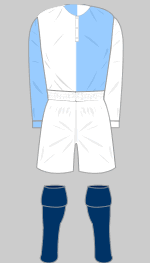
1903-1904 s
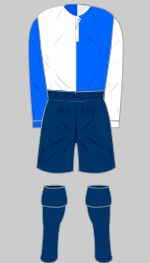
1904-1905 k2 o
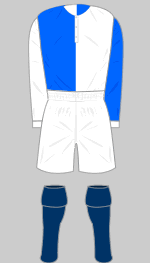
1905-1906 s
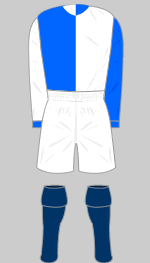
1905-1910 b c s
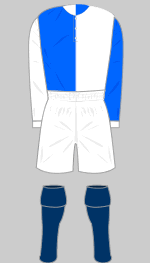
1910-1911 s
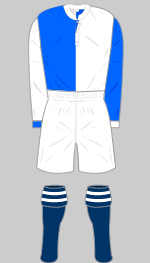
1911-1915 p r s
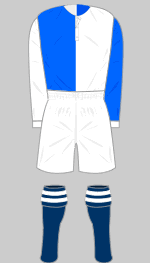
1919-1920 s
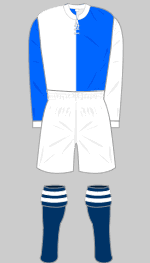
1920-1923 k1 s
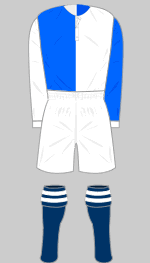
Jan 1923 s
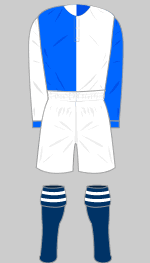
1923-1924 t
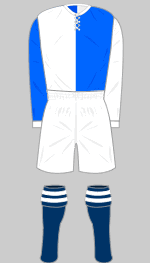
1924-1926 s t
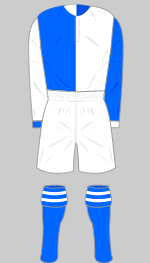
1927-1930 c h p t
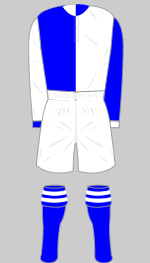
1932-1936 b s t
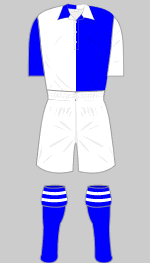
1937-1939 s
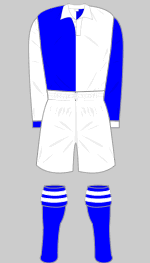
1939-1941 c s
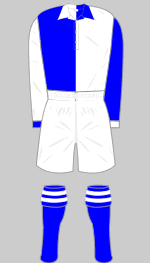
1941-1942 s
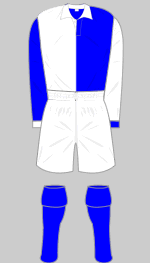
1946-1947 b
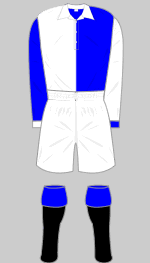
1947-1949 d h l
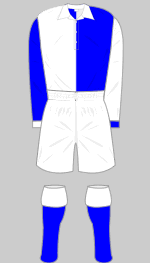
1949-1950 h
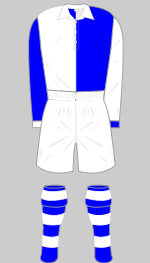
1950-1952 h s
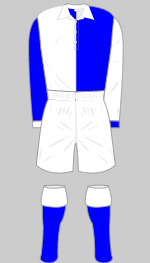
1952-1955 s
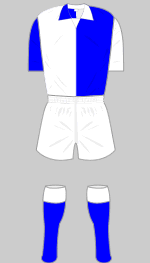
1955-1956 i
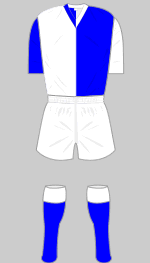
1956-1959 e l s
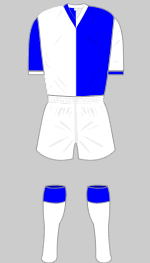
1959-1960 s t
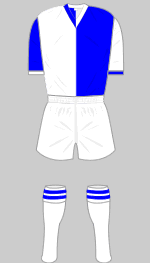
1960-1964 h l s

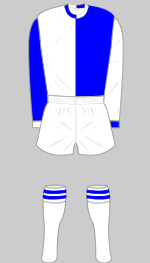
1964-1971 e l t
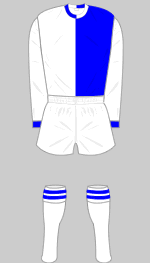
1971-1972 f
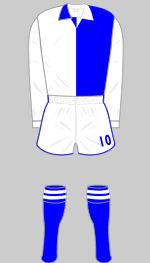
1972-1973 m
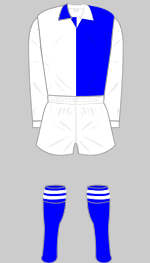
1973-1974 m
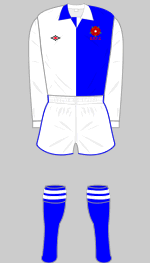
1974-Jan 75 m
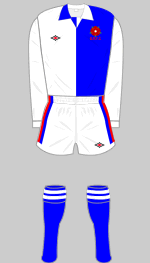
Feb 75-1976 m C
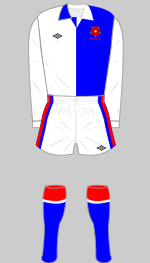
1976-1977 e m
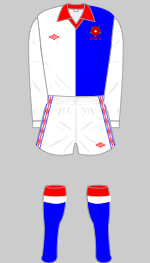
1977-1978 e j
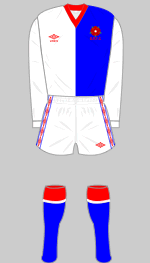
1978-1981 e j
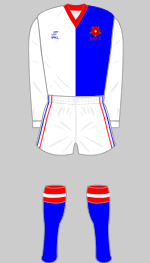
1981-1984 j
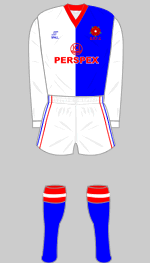
1984-1986 b j
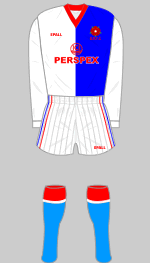
1986-1987 j
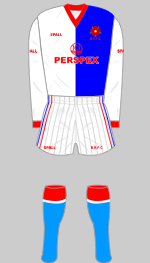
1987-1988 j
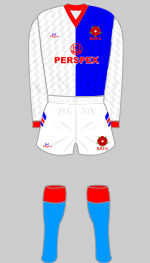
1988-1989 j
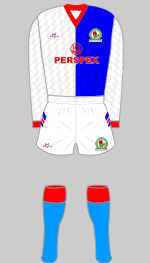
1989-1990 j
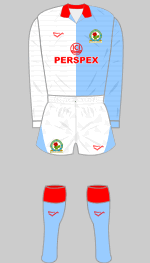
1990-1991 b y
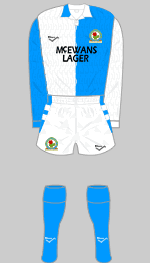
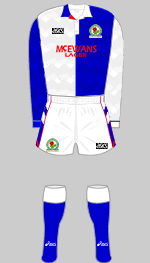
1992-1993 e
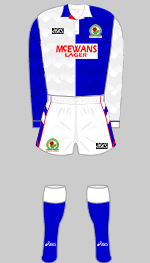
1993-1994 e

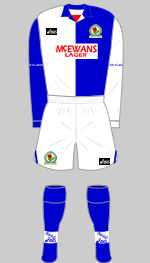
1994-1995 e

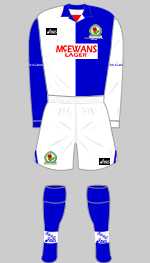
1995-1996 n
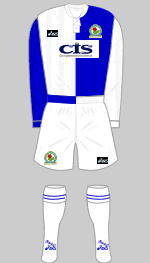
1996-1998 e
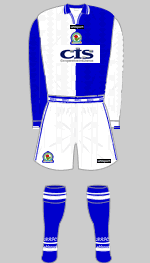
1998-2000 e
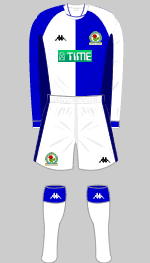
2000-2002 e
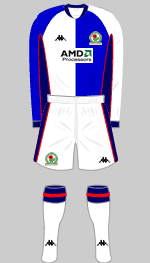
2002-2003 e
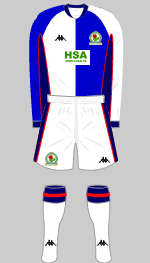
2003-2004 e
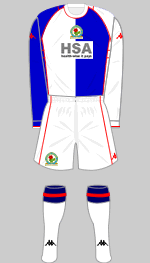
2003-2004 A
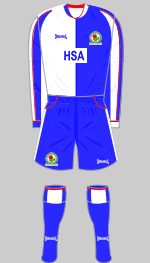
2004-2005 b
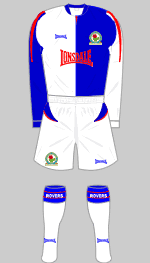
2005-2006 c
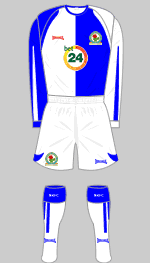
2006-2007 c
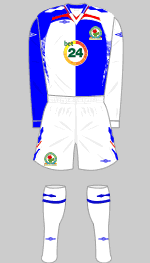
2007-2008 c
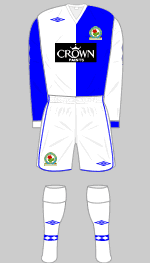
2008-2009 c
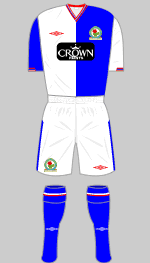
2009-2010 c
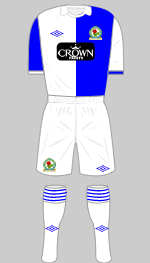
2010-2011 c

2011-2012 w
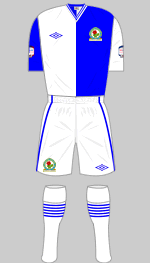
2012-Jan 2013 c
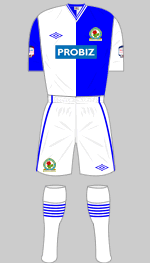
Jan-May 2013 x
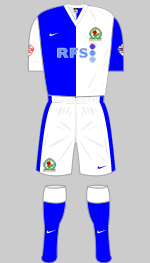
2013-2014 c
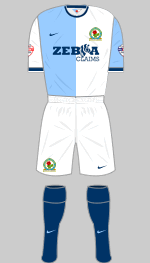
2014-2015 c
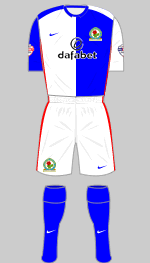
2015-2016 c
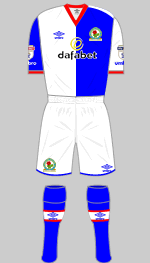
2016-2017 c
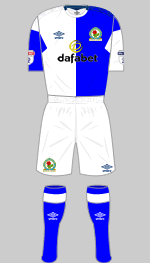
2017-2018 c
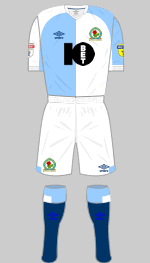
2018-2019 c
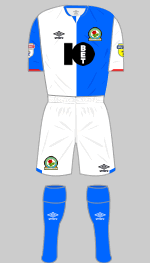
2019-2020 c
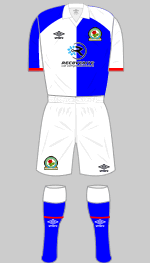
2020-2021 c
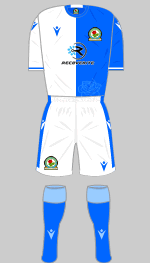
Aug-Dec 2021 c
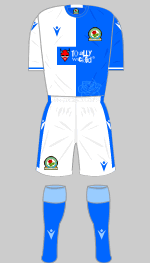
Jan-May 2022 D
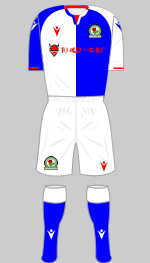
2022-2023 c
Background
 This famous Lancashire club was formed by John
Lewis and Arthur Constantine, old boys from the famous Shrewsbury public school. They won support
from local businessmen at a public meeting held at the
St Leger Hotel in November 1875. According to the 1905 Book of Football (researched by Jonathon Russell) the original minute book records that "the colours be white jersey, blue and white skull cap, trousers optional" and "that a Maltese cross be worn on the left breast." This motif was worn by both the Shrewsbury and Malvern school teams and two former Malvernians played in that first team alongside the two old Salopians, so there is a clear link with these public schools.
This famous Lancashire club was formed by John
Lewis and Arthur Constantine, old boys from the famous Shrewsbury public school. They won support
from local businessmen at a public meeting held at the
St Leger Hotel in November 1875. According to the 1905 Book of Football (researched by Jonathon Russell) the original minute book records that "the colours be white jersey, blue and white skull cap, trousers optional" and "that a Maltese cross be worn on the left breast." This motif was worn by both the Shrewsbury and Malvern school teams and two former Malvernians played in that first team alongside the two old Salopians, so there is a clear link with these public schools.
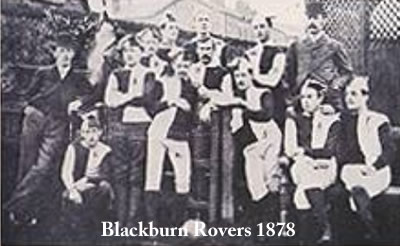
This account of the club's first colours is contradicted by an account found in the Blackburn Standard, January 6 1894, discovered by Kjell Hanssen, which states: The club was founded in December 1874 at the St Leger Hotel, in King William street as “The Rovers Football Club, Blackburn.” Mr Thomas Greenwood was elected captain, Walter Duckworth secretary, and Johnny Lewis treasurer. The dress decided upon at that time was navy blue and white quartered jersey, white knickers, and navy blue hose; it is the same yet (1894), but the blue is a lighter shade. Photographic evidence shows the team in navy/white in 1878 and the contemporary Charles Alcock's Football Annuals confirm these colours were worn until 1881.
Although Rovers' founders had public school backgrounds this is where the similarity with the clubs made up of gentlemen-players ends. Rovers were backed by hard-nosed local businessmen interested in profit and engaged players who worked in the town's mills and factories. Labour reforms meant that most working people now had Saturday afternoons off and football provided a ready means of cheap entertainment. Rovers were among the first to realise the commercial potential of charging spectators and inducing the best players to play for the club. Many of these were recruited from Scotland, where the game was technically more advanced, and became known as the "Scotch Professors". Rovers along with arch rivals Darwen would later be at the centre of the row that led to the introduction of professionalism as a result of these adventures.
The club became associated with halved shirts (described as "quartered" at the time because the body was made up of four panels - Rovers kept this terminology until well into the 20th century). These were initially white and Oxford blue but by 1882 Cambridge blue was used. The shade of blue became darker in the Edwardian period but the light blue and white theme was revived briefly in the 1990s. The blue half could appear on the left or right side of the shirt and team pictures show players wearing both right and left-handed versions. Since 1935, when the deeper shade of mid-blue we are familiar with seems to have been adopted. After the Second World War the left-hand side was always blue until 2013.
In 1882, Rovers reached the English FA Cup Final for the first time, losing 0-1 to the Old Etonians. The following season local rivals Blackburn Olympic became the first northern club to win the competition. Not to be outdone, Rovers promptly poached Olympic's best players with illicit offers of payment and triumphed three times in succession (1884, 1885, 1886) and were awarded a special commemorative shield by the FA. When the Football League was formed in 1888, Rovers were naturally invited to join. For the rest of the century, however, the club continued to regard the FA Cup as their main business and in 1890 and 1891 they again won the competition.
Team photographs of the late Victorian period often show players with a three-lions crest sewn onto their tops leading some to suppose that this was the club's crest. In fact, these are FA badges which players capped for their country cut from their England shirts and had sewn onto their club shirts to distinguish them from their uncapped colleagues. This practice died out in the 1890s.
As the professional game matured during the Edwardian
era, Rovers remained a formidable side even if they no longer dominated.
In 1912 and again in 1914, they won the First Division Championship but
FA Cup success did not return until 1928. Thereafter Rovers fell into
decline, being relegated in 1936: although they 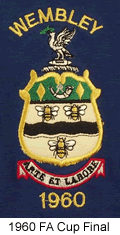 bounced back in 1939,
they dropped back into Division Two in 1948, only two seasons after league
football resumed, and spent the Fifties languishing in the Second Division until 1958 when they were promoted to Division 1.
bounced back in 1939,
they dropped back into Division Two in 1948, only two seasons after league
football resumed, and spent the Fifties languishing in the Second Division until 1958 when they were promoted to Division 1.
Another FA Cup Final in 1960 (the town's crest was added to the team's shirts just for the final) heralded a brief period of success but by the end of the decade, Rovers, along
with their Lancashire neighbours from Bolton, Preston, Burnley and Accrington,
were eclipsed by the big city clubs from Liverpool and Manchester. Their
decline took them  down to Division Three in 1971.
In 1974, a crest, consisting of a Lancashire rose with the club's initials embroidered below) was added to the shirts, the first time that the team had sported a badge outside of an FA Cup final. Appearing out of the blue part of the shirt, this was not easy to see and in 1989 it was replaced by a far more distinctive version, which is still in use today.
Promotion in 1975 was followed by more disappointment when the club were relegated again in 1979 but the club bounced back to assume what now seemed to be their natural place in the lower regions of Division Two.
 The arrival of millionaire Jack Walker in 1991
led to a remarkable transformation. Walker persuaded Kenny Dalglish, recently
resigned from Liverpool, to return to management and he took Rovers back
to the top flight (now the Premier Division) in 1992 via the play-offs.
Walker invested millions in the club's facilities and in the transfer
market to secure leading players including Alan Shearer. In 1995, Rovers
won the Premier League title, their first trophy for 81 years. Sadly,
the success proved to be unsustainable: Dalglish and Shearer departed
and a succession of high profile managers could not prevent a slide back
into the second flight (Nationwide Division One). After a long illness,
Walker died in August 2000 and it was fitting that the club returned to the
Premiership at the end of that season and lifted the Worthington (League) Cup
in 2002.
The arrival of millionaire Jack Walker in 1991
led to a remarkable transformation. Walker persuaded Kenny Dalglish, recently
resigned from Liverpool, to return to management and he took Rovers back
to the top flight (now the Premier Division) in 1992 via the play-offs.
Walker invested millions in the club's facilities and in the transfer
market to secure leading players including Alan Shearer. In 1995, Rovers
won the Premier League title, their first trophy for 81 years. Sadly,
the success proved to be unsustainable: Dalglish and Shearer departed
and a succession of high profile managers could not prevent a slide back
into the second flight (Nationwide Division One). After a long illness,
Walker died in August 2000 and it was fitting that the club returned to the
Premiership at the end of that season and lifted the Worthington (League) Cup
in 2002.
Rovers became a solid mid-table Premier League side, qualifying for Europe in 2007 but further honours eluded them. In November 2011 the club was bought by Venky's London Ltd, a subsidiary of the Indian VH Group for £23m. The new owners sacked the popular manager, Sam Allardyce, and attempted to manage the club from India, bypassing the board. Supporters, unhappy with the new regime, mounted increasingly vociferous protests during a miserable and shambolic season. The deputy Chief Executive was sacked for expressing concerns about the way the club was being run and on the final day of the 2011-12 season Blackburn were relegated after eleven seasons in the top flight. Supporters continued to express their unhappiness at the way the club was being run with demonstrations against the manager and a boycott of home matches the following season
In 2013 Nike took over as technical sponsor following after selling off Umbro and introduced a new set of shirts with the white section on the left for the first time in over 70 years. The blue section on the left hand side was restored in 2015.
Venky's mismanagement of the club continued to prompt fan protests while debts mounted and on the final day of the 2016-17 season, Rovers were relegated to the third tier on goal difference although they bounced back immediately.
Sources
- (a) Blackburn Rovers Mad
- (b) empics
- (c) BRFC Official Website
- (d) Association of Football Statisticians
- (e) Sporting Heroes
- (f) English Football Cards
- (g) BRFC Supporters Site
- (h) Football Focus
- (i) Bury FC - Images of Sport (Peter Cullen 1998)
- (j) True Colours (John Devlin 2005)
- (k1) Cotton Town Museum
- (k2) Cotton Town Museum
- (l) Pete's Picture Palace
- (m) Alick Milne
- (n) Chase Hoffman
- (o) My photo library
- (p) Willie Kay
- (q) Jonathon Russell
- (r) The Lord Price Collection
- (s) Keith Ellis (HFK Research Associate)
- (t) Simon Monks
- (u) Richard Essen
- (v) Kjell Hanssen
- (w) football-shirts.co.uk
- (x) Roger Whiteside
- (y) Francesco Del Vecchio
- (z) Charles Alcock's Football Annuals 1879, 1880, 1881 researched by Robin Horton
- (A) Tony Sealey
- (B) Sunday Pictorial (November 3 1929) submitted by Tony Sealey
- (C) Ian Herbert
- (D) Shane Nieuwenhuizen
Photograph courtesy of BRFC Supporters. Crests are the property of Blackburn Rovers FC.