

Kit History
Dial Square
1886
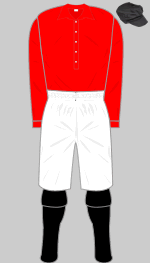
1886-1887 s
Royal Arsenal
1887
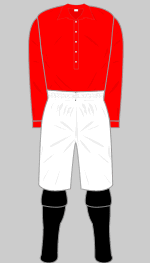
1887-1889 a e r s
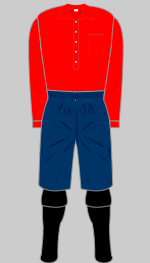
1889-1893 n r s y
Woolwich Arsenal
1893
1894-1897 a i n s
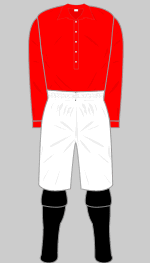
1897-1900 a i s
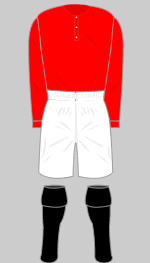
1901-1905 n s
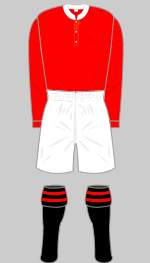
1905-1906 a e p s

1906-1908 a e s
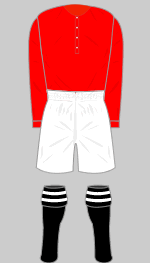
1908-1911 n
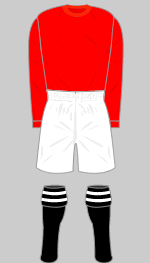
1911-1912 n
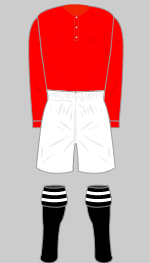
1912-1914 a e n
Arsenal
1914
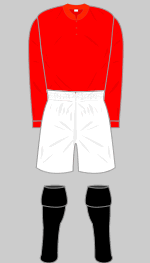
1914-1915 n
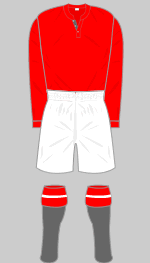
1914-1917 2 p x
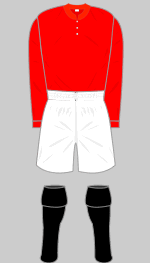
1917-1918 n
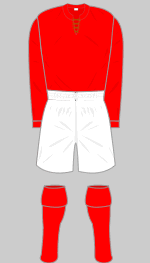
1919-1920 a m z
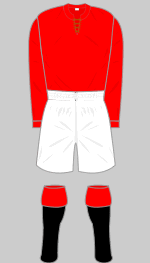
1920-1928 a e m n
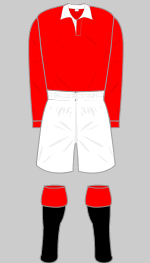
1928-1929 m
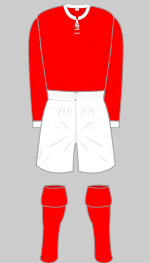
1929-1930 p
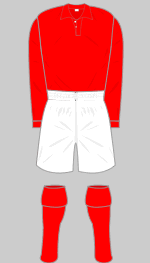
1930-1931 a l
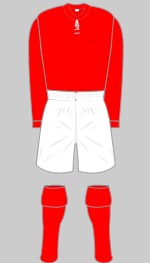
1931-1932 e
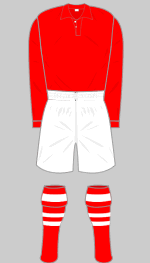
1931-March 1933 e l n
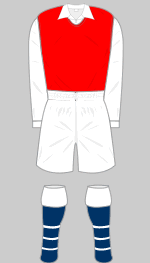
March 1933 s
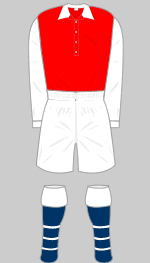
4 March 33-35 a e l p
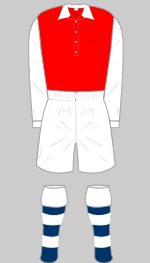
1935-1943 a e n
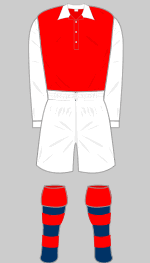
1945-1946 j
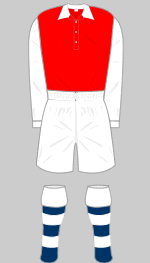
1946-1957 e f l
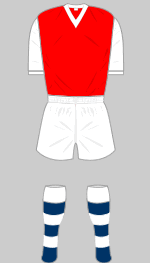
Aug-Nov 1957 e f g l
Nov 57-May 58 i
1958-1960 l

1960-1961 early k n

1960-1961 k l
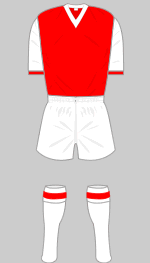
1961-1962 e h n u
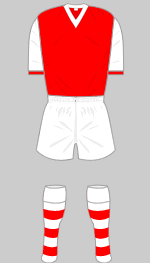
1962-1963 v w

1963 -Dec 64 e h n u


Dec 1964 l
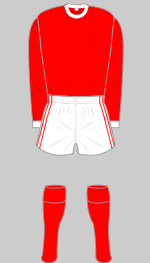
1965-1967 e h
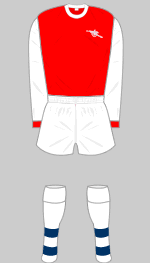
1967-1969 e f

Sept 1967 r
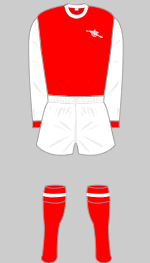
1969-1978 e f g
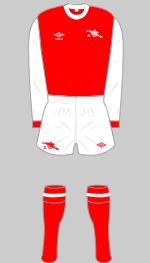
1978-1981 d e
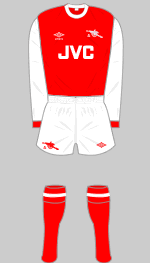
1981-1982 f
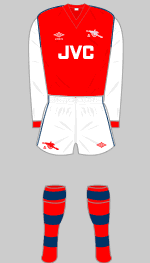
1982-1983 d
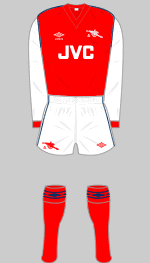
1983-1984 d
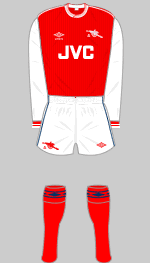
1984-1985 d
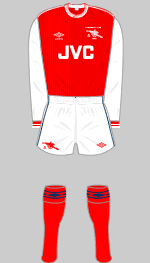
1985-1986 o
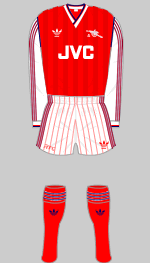
1986-1988 d
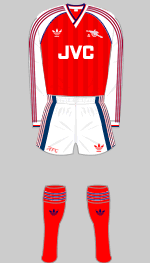
1988-1990 d

1990-1992 d
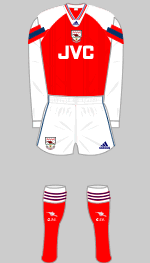
1992-1994 d

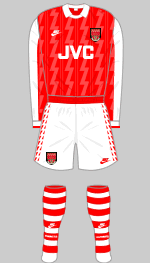
1994-cOct 1995 d
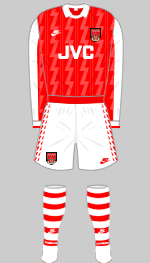
cOct 1995-1996 t
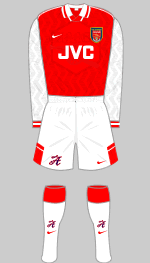
1996-1998 d p
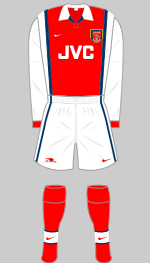
1998-1999 d
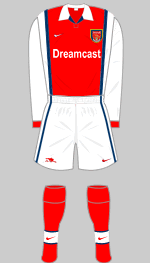
1999-2000 d
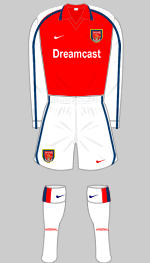
2000-2002 d
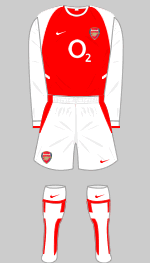
2002-2004 e
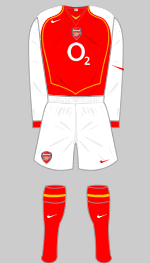
2004-2005 c
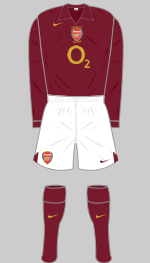
2005-2006 e
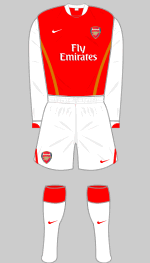
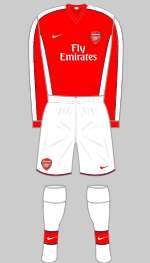
2008-2010 e
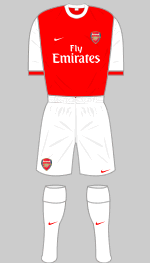
2010-2011 e
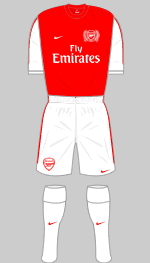
2011-2012 e
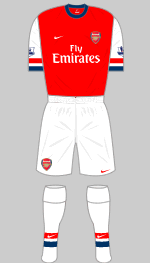
2012-2014 e
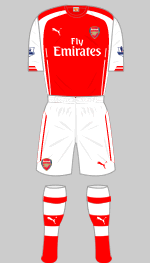
2014-2015 e
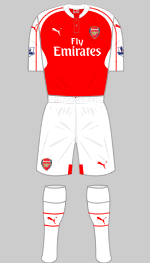
2015-2016 e
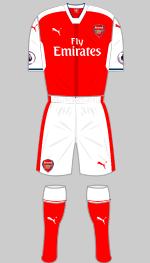
2016-2017 e
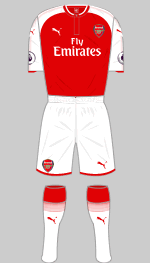
2017-2018 e
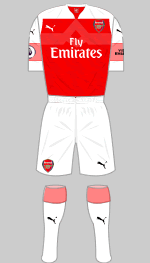
2018-2019 e
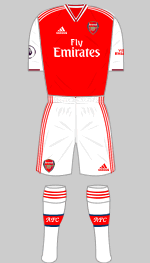
2019-2020 e
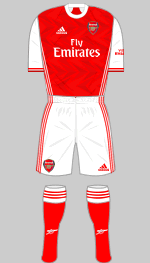
2020-2021 e
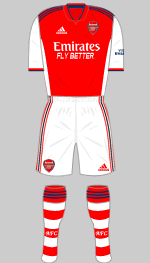
2021-2022 e
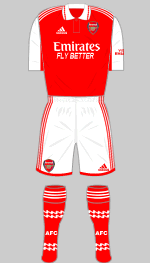
2022-2023 e

2023-2024 *e
Background
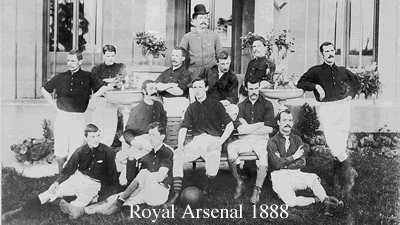 Arsenal
were originally formed as Dial Square FC in 1886 by workers at the Woolwich
armaments factory in South London. The name was changed to the more imposing Royal Arsenal a year later.
Arsenal
were originally formed as Dial Square FC in 1886 by workers at the Woolwich
armaments factory in South London. The name was changed to the more imposing Royal Arsenal a year later.
It has been widely reported that the club were given a set of Garibaldi Red shirts by Nottingham Forest but research by Mark Andrews and Andy Kelly has cast doubt on this. One of Arsenal's founders was Fred Beardsley, a native of Nottingham who, according to his obituary had the idea of adopting Forest's colours. As an amateur, Beardsley continued to turn out for Forest in cup games and this may have given rise to the apocryphal story. In an interview published in 1938, Beardsley described the team's first strip as "red shirts, white three-quarter master pants, black stockings and caps." He also mentioned that Forest donated Arsenal's first football.
Having turned professional in 1891, the club found themselves ostracised by their amateur peers (association football in the metropolitan area was still dominated by gentlemen-players from the upper classes) and expelled from the London FA. Their initial attempts to form a professional league foundered (it would be another two years before the Southern League was formed) so, after a gruelling 1892-93 season of friendly matches against teams (including Football League sides) from the north, midlands and Scotland they applied to join the Football League. To this end the club became a limited company in 1893 and were required to drop "Royal" from their title. As Woolwich Arsenal, their application was successful and they became the first club from south of Birmingham to play in the Football League.
According to the Official History, the team experimented with red and blue striped shirts for the 1895-96 season and photographs of two key players, Harry Storer and Caesar Jenkyns appear to show these tops. In his extensive research, however, Mark Andrews found no contemporary press reports of the team wearing stripes and all the team photographs of the period show the regular, plain tops. We have now concluded that  the Official History is incorrect on this point and that the surviving photographs show shirts worn in 1892 when the team changed for a game with Nottingham Forest.
A crest, based on the civic arms of Woolwich, was adopted around 1888 according to the official history but work by Andrews and Kelly has established that this is impossible as the municipal crest was not designed until 1901. It appears that this is one of several innaccuracies perpetuated by the club's vice-chairman, Arthur Kennedy, in articles he wrote about the club's origins and which then passed into the accepted history. In fact it appeared just once, in an article written by Kennedy for The Book of Football 1904-05.
Arsenal won promotion to the First Division in 1904 and survived for nine
years until they were relegated 1913. That year the club left Plumstead
in south-east London to move to Highbury despite vigorous protests from Tottenham Hotspur. When League football resumed after the First World
War in 1919 the First Division was expanded. Arsenal's chairman, Sir
Henry Norris, contrived to have his club (who had finished fifth in Division
Two in 1915) replace Tottenham  (bottom of Division One).
After several mediocre seasons, Arsenal appointed Herbert Chapman as manager. Having previously guided Huddersfield Town to two of their three successive League titles, Chapman set about transforming Arsenal from an average First Division club into one of the great names in world football. He had the nearby underground station renamed "Arsenal" and pioneered the use of shirt numbers.
It was Chapman who devised the iconic Arsenal shirt with contrasting white sleeves. According to The Arsenal Story (Tom Whittaker 1957) it was inspired by a conversation between Chapman and the celebrated cartoonist, Tom Webster, in which the latter recalled playing golf with Claude Kirby, the chairman of Chelsea FC, wearing a natty blue sleeveless sweater over a white shirt. Kirby was struck by the combination and suggested to his manager that Chelsea adopt a similar outfit but this was rejected. Chapman asked Webster to sketch out his idea, which he did after ordering up some red ink.
Armed with Webster's drawing, Chapman contacted Hollins & Co of Nottingham and ordered a set of thin, red sleeveless pullovers to be made in viyela, a mixture of merino wool and cotton. Andrews and Kelly have discovered that these were to be worn over white cricket shirts (their change kit at the time). This outfit proved troublesome to wash and it appears that it was not worn in a competitive game. When Arsenal did turn out in the new design against Liverpool at Highbury on 4 March 1933, they wore conventional flannel shirts.
Under Chapman's guidance the club went on to dominate English football
over the  following decade.
Although crests were not worn in league games, they did appear in FA Cup finals, the first being a monogram in 1927 followed, in 1930, by a version with a cannon.
 The FA Cup became Arsenal's first major trophy
in 1930 and their first League Championship in 1931 was followed by a
further four titles and another FA Cup over the next seven years. A new art deco crest was designed and appeared on the shirts worn in the 1932 FA Cup Final and other pre-war finals. A slightly different version appeared prominently in the club's fabled marbled halls, over the East Stand and in the boardroom. All the bespoke shirts worn in the pre-war finals were made by Bukta and it seems likely that this company also made their regular strips.
The FA Cup became Arsenal's first major trophy
in 1930 and their first League Championship in 1931 was followed by a
further four titles and another FA Cup over the next seven years. A new art deco crest was designed and appeared on the shirts worn in the 1932 FA Cup Final and other pre-war finals. A slightly different version appeared prominently in the club's fabled marbled halls, over the East Stand and in the boardroom. All the bespoke shirts worn in the pre-war finals were made by Bukta and it seems likely that this company also made their regular strips.
After the interruption caused by the Second World
War, Tom Whittaker forged another  great team winning two more titles (1948
and 1953) and an FA Cup (1950) with the 1951-52 season also seeing the
Gunners narrowly miss the elusive double, runners up in both league and
FA Cup. The crest worn in the 1950 and 1952 finals was slightly different to the pre-war version and were made by Hope Brothers.
great team winning two more titles (1948
and 1953) and an FA Cup (1950) with the 1951-52 season also seeing the
Gunners narrowly miss the elusive double, runners up in both league and
FA Cup. The crest worn in the 1950 and 1952 finals was slightly different to the pre-war version and were made by Hope Brothers.
Whittaker's death in 1956 presaged a barren 14 years.
Around 1957 Arsenal adopted the modern Umbro continental style shirts but the older style, with buttoned collars and long sleeves was used until at least 1962 in cold weather.
 Club physiotherapist Bertie
Mee took over as manager in 1966 and in 1967, after two seasons wearing plain red shirts, the classic Gunners' strip was reintroduced, now enhanced by a smart new crest consisting of a cannon. Mee had tried to reintroduce these the previous season but the deadline for registration had passed: they were however, worn in the FA Cup. (The plain red shirts reappeared in September 1968 against West Brom and Newcastle.)
Club physiotherapist Bertie
Mee took over as manager in 1966 and in 1967, after two seasons wearing plain red shirts, the classic Gunners' strip was reintroduced, now enhanced by a smart new crest consisting of a cannon. Mee had tried to reintroduce these the previous season but the deadline for registration had passed: they were however, worn in the FA Cup. (The plain red shirts reappeared in September 1968 against West Brom and Newcastle.)
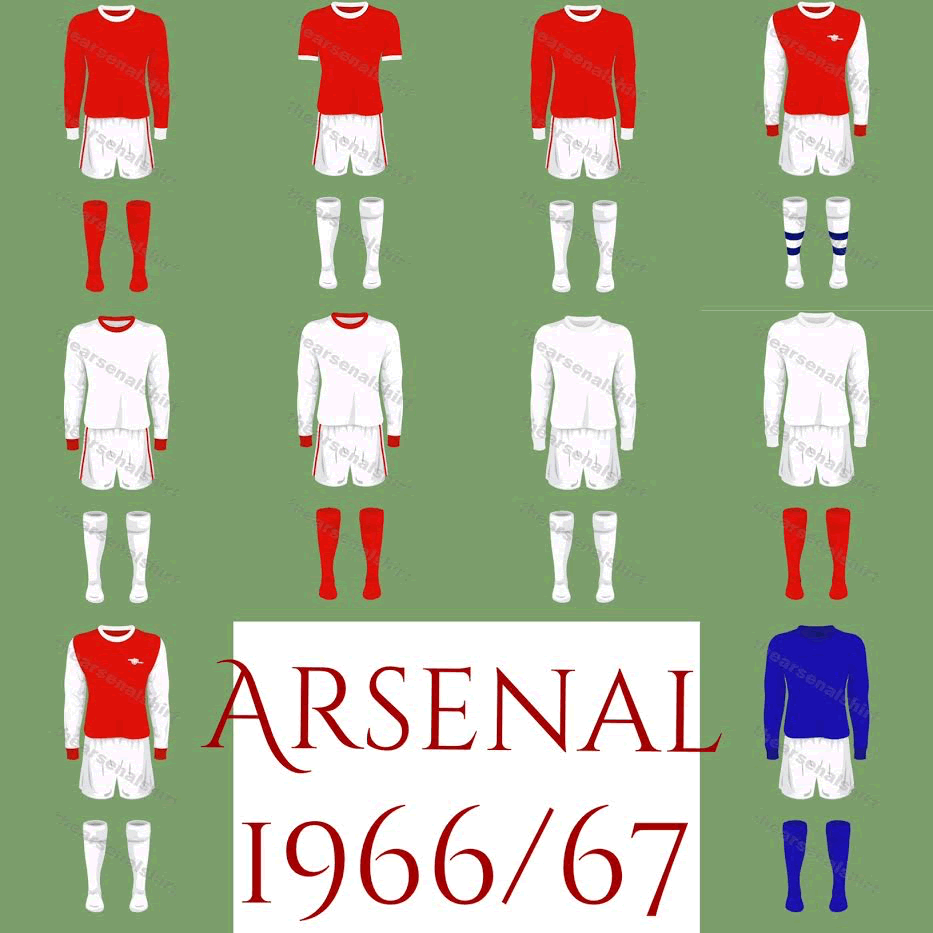
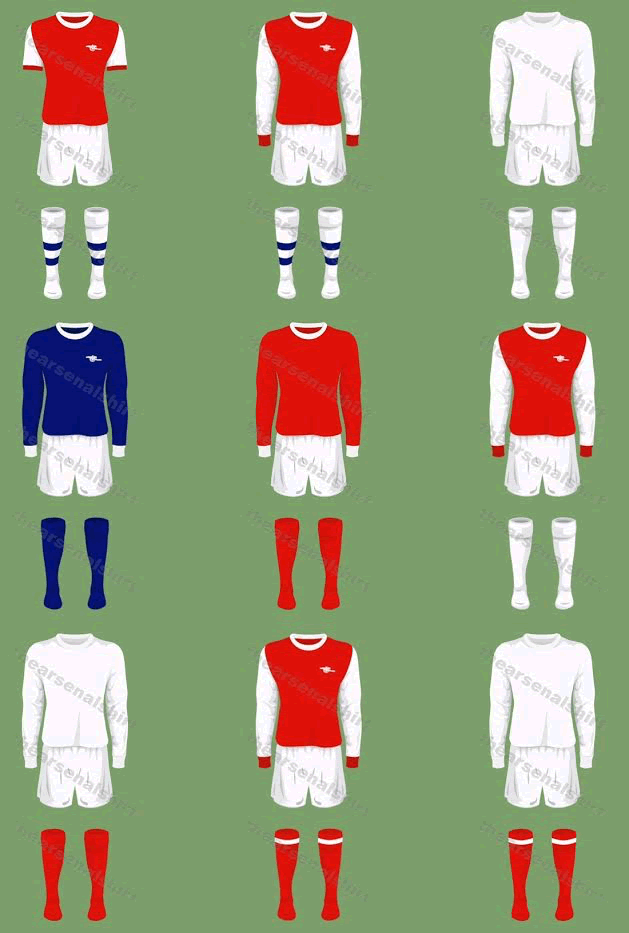
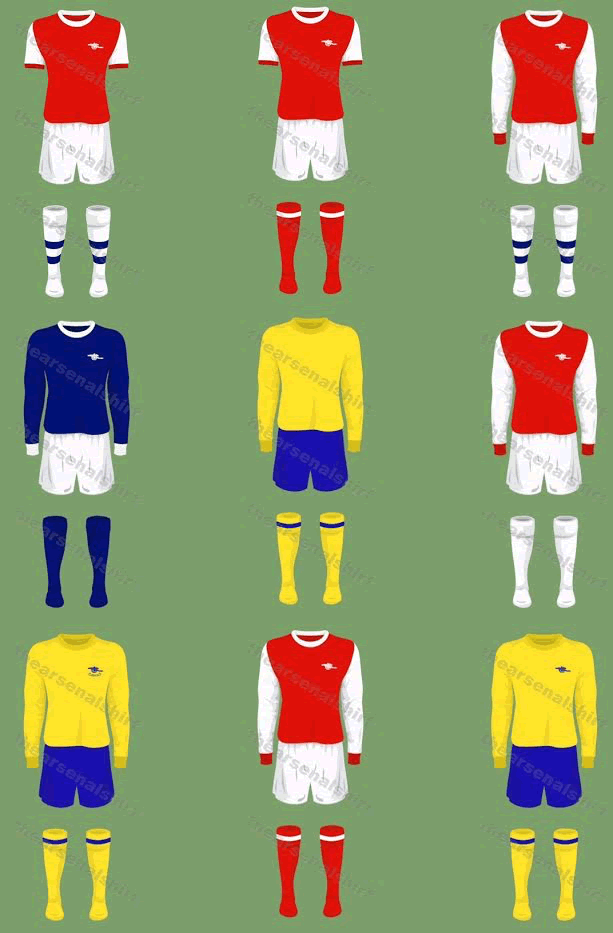
Between 1966 and 1969 the team wore a bewildering variety of different versions of their "home" and change kits. Simon "Shakey" Shakeshaft recently commissioned Daniel Gellatley to illustrate these and I am grateful for their permission to publish these here.
1966-67 Variants | 1967-68 Variants | 1968-69 Variants
Defeat in the League Cup final of 1969 at the hands of Third Division Swindon did not bode well but a year later Arsenal captured their first European trophy, winning the Inter-City Fairs Cup against Anderlecht. The following season Arsenal achieved the domestic "double," clinching the League championship with a 1-0 win over Tottenham. Days later a Charlie George goal won the FA cup in extra time at Wembley against Liverpool.
 Despite reaching the FA Cup final again in 1972
and finishing second in the league the following season Arsenal became
a mediocre side during the mid seventies. Towards the end of the decade
Terry Neill and Don Howe achieved some success when Arsenal reached the
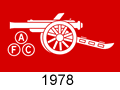
FA Cup final in 3 successive seasons. This coincided with a slight modification to the crest, which now had "AFC" superimposed on three, stacked cannonballs, a motif now repeated on the shorts. Only the middle visit to Wembley,
in
Despite reaching the FA Cup final again in 1972
and finishing second in the league the following season Arsenal became
a mediocre side during the mid seventies. Towards the end of the decade
Terry Neill and Don Howe achieved some success when Arsenal reached the
FA Cup final in 3 successive seasons. This coincided with a slight modification to the crest, which now had "AFC" superimposed on three, stacked cannonballs, a motif now repeated on the shorts. Only the middle visit to Wembley,
in 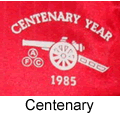 1979, was triumphant, a thrilling last minute 3-2 victory against Manchester
United. The following season saw cup heartbreak when Arsenal lost the
FA Cup final to West Ham, and 4 days later the European Cup Winners Cup
final to Valencia on penalties.
1979, was triumphant, a thrilling last minute 3-2 victory against Manchester
United. The following season saw cup heartbreak when Arsenal lost the
FA Cup final to West Ham, and 4 days later the European Cup Winners Cup
final to Valencia on penalties.
In the 1985-86 season the legend "Centenary Year 1985" was added to the crest.
After George Graham took over in 1986, Arsenal
won six major trophies in the next eight years. A League Cup triumph in
1987 was built upon, and in 1989 the League Championship returned to Highbury
after an 18 year absence when Arsenal pipped Liverpool to the title on
 goals scored. In the most exciting finish to the league season ever witnessed
in English football the final, deciding match at Anfield was won 2-0,
the decisive second goal coming in injury time. Another championship followed
two years later when Arsenal lost only one league game and conceded just
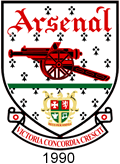
18 goals in 38 matches. In 1990 the club adopted the crest first designed in 1949 and now worn on the pitch for the first time.
goals scored. In the most exciting finish to the league season ever witnessed
in English football the final, deciding match at Anfield was won 2-0,
the decisive second goal coming in injury time. Another championship followed
two years later when Arsenal lost only one league game and conceded just
18 goals in 38 matches. In 1990 the club adopted the crest first designed in 1949 and now worn on the pitch for the first time.
 In the Premiership's inaugural year 1992-93
Arsenal became the first team ever to win both domestic cups in the same
season. The following year the European Cup Winners' Cup was won
in Copenhagen. Despite the cup successes, Arsenal's league results remained
ordinary and following a scandal over illicit transfer payments, Graham
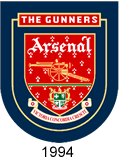
was sacked in the middle of the 1994-95 season. Also in 1994, the crest was altered to more subtle colouring which,
In the Premiership's inaugural year 1992-93
Arsenal became the first team ever to win both domestic cups in the same
season. The following year the European Cup Winners' Cup was won
in Copenhagen. Despite the cup successes, Arsenal's league results remained
ordinary and following a scandal over illicit transfer payments, Graham
was sacked in the middle of the 1994-95 season. Also in 1994, the crest was altered to more subtle colouring which, 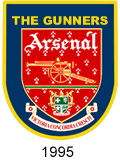 with slight modifications in 1995 and 1998, appeared on a navy shield until 2000.
After a period of turbulence, Frenchman Arsene
Wenger was confirmed as Arsenal's new manager at the end of September
1996. Wenger set about transforming Arsenal's traditional cautious playing
style. In 1998 Arsenal won the double 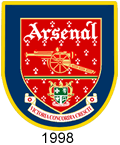 for the second time, eclipsing Manchester
United after trailing them by 13 points in January. The second half of
the double, the FA Cup, was achieved with a comfortable 2-0 win against
Newcastle at Wembley in May. The following season Arsenal fell just short
of repeating their triumph, losing unluckily in the FA Cup semi-final
in extra time to Manchester United and missing out on the title to the
same deadly rivals by just one point. As the new millennium approached,
the balance of power between Sir Alex
for the second time, eclipsing Manchester
United after trailing them by 13 points in January. The second half of
the double, the FA Cup, was achieved with a comfortable 2-0 win against
Newcastle at Wembley in May. The following season Arsenal fell just short
of repeating their triumph, losing unluckily in the FA Cup semi-final
in extra time to Manchester United and missing out on the title to the
same deadly rivals by just one point. As the new millennium approached,
the balance of power between Sir Alex 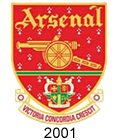 Ferguson's Manchester United and
Wenger's Arsenal tipped towards the Londoners.
Ferguson's Manchester United and
Wenger's Arsenal tipped towards the Londoners.
In 2001 the crest was modified again for commercial reasons with solid yellow replacing the gold tones and the club motto rendered in clearer script to make the whole image easier to reproduce but this version was not applied to the team's shirts.
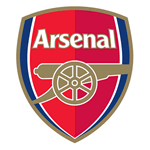
Because Arsenal's crest had evolved over many years, incorporating design elements from several sources, the club was unable to register copyright. To overcome this and to 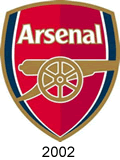 emphasise the renaissance of the club, a new crest was introduced in 2002, which combined Arsenal's traditional colours with metallic gold, all of which would be featured in Nike's kits over the following seasons.
Another double was achieved in 2002 and in 2004, the Gunners won the Premiership title without being defeated, a feat that has not been achieved since Preston North End won the first ever League title in 1888, undefeated in 18 games. Arsenal were unbeaten in 38 League matches. A year later club won the FA Cup in a penalty shoot-out against Manchester United, the first time the competition had been decided in this way.
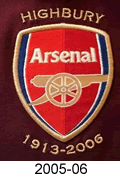 In June 2005 the club announced that they would
play in dark "red currant" jerseys for one season to mark their last season at Highbury. The marketing campaign asserted that the colour was based on the dark, plum coloured shirts worn when the team moved to north London, with a poorly colourised team photograph from the period in support. With help from Mark Andrews and others, HFK is now convinced that there is no truth in this story and the team has always worn bright red shirts. The dark appearance of their early tops is due to the photographic emulsions in use at the time, which were over sensitive to red light.
In June 2005 the club announced that they would
play in dark "red currant" jerseys for one season to mark their last season at Highbury. The marketing campaign asserted that the colour was based on the dark, plum coloured shirts worn when the team moved to north London, with a poorly colourised team photograph from the period in support. With help from Mark Andrews and others, HFK is now convinced that there is no truth in this story and the team has always worn bright red shirts. The dark appearance of their early tops is due to the photographic emulsions in use at the time, which were over sensitive to red light.
The following season a more traditional strip was introduced, restoring white sleeves (with metallic gold trim on the body) and in 2008, Nike took something of a risk by reintroducing 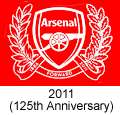 predominently red shirts with white and "red currant" trim.
Nike's 2010 strip marked a popular return to tradition with a recreation of the iconic shirt from the Seventies, matched by a similarly bold but simple outfit for the club's 125th anniversary in 2011-12. For this occasion a special crest was introduced. This featured 15 oak leaves (representing the fifteen founders of the club who met in the Royal Oak public house), 15 laurel leaves (taken from the threepenny bits each paid to establish the club) and the club's first motto, "Forward."
Back-to-back FA Cup wins in 2014 and 2015 meant that Arsenal had won the trophy for a record 12 times while Arsene Wenger equalled the individual record of Aston Villa's manager George Ramsay, set between 1887 and 1920, of six wins. An indifferent 2016-17 season put Wenger's future in doubt but when his team secured yet another FA Cup, the board renewed his contract without demur. After another unspectacular league performance the following season (albeit they did qualify for Europe), Wenger announced he would leave the club in April after 22 years in charge. He received a standing ovation from supporters when he entered the field of play for his final home match in charge. His place was taken by the Spanish manager, Unai Emery. After steering the side to a fifth place finish in the Premier League and runners-up in the Europa League, Emery was sacked in November 2019. One month later former Arsenal captain Mikel Arteta was appointed Head Coach. Although they managed only eighth place in the league they did beat Chelsea in the FA Cup final for a record 14th FA Cup win.
You are welcome to Contact Me with corrections and additions.
Sources
www.arseweb.com Fansite has an entertaining club history and comprehensive stats. See also the useful Kit History section on the Arsenal Website.
- * Graphic by Daniel Stoker.
- a The Official Illustrated History of Arsenal (Phil Soar & Martin Tyler 1998)
- b Photograph - source unknown
- c empics
- d www.sporting-heroes.net
- e www.arsenal.com
- f Football Focus
- g Kuen-Wah Cheung
- h Pete's Picture Palace
- i Association of Football Statisticians - provided by Pete Wyatt
- j Pete's Picture Palace
- k The Big Book of Football Champions 1960-61 provided by Simon Monks
- l Dick Waite
- m Simon Monks
- n Keith Ellis (HFK Research Associate)
- o Christopher Worrall
- p Jonathon Russell
- q Andy Potts
- r Tony Sealey
- s Mark Andrews & Andy Kelly The Arsenal History
- t Stein Jacobsen
- u Arsenal One Two Five
- v FA Year Book 1963-64
- w Arsenal Obsessed
- x BFI Newsreel clip submitted by Tony Sealey
- y Illustrated Sporting & Dramatic News (10 December 1892) submitted by Richard Essen
- z Football and the First World War
Club crests are the property of Arsenal FC - for a complete history visit Arsenal.com. Photograph courtesy Arsenal.com.